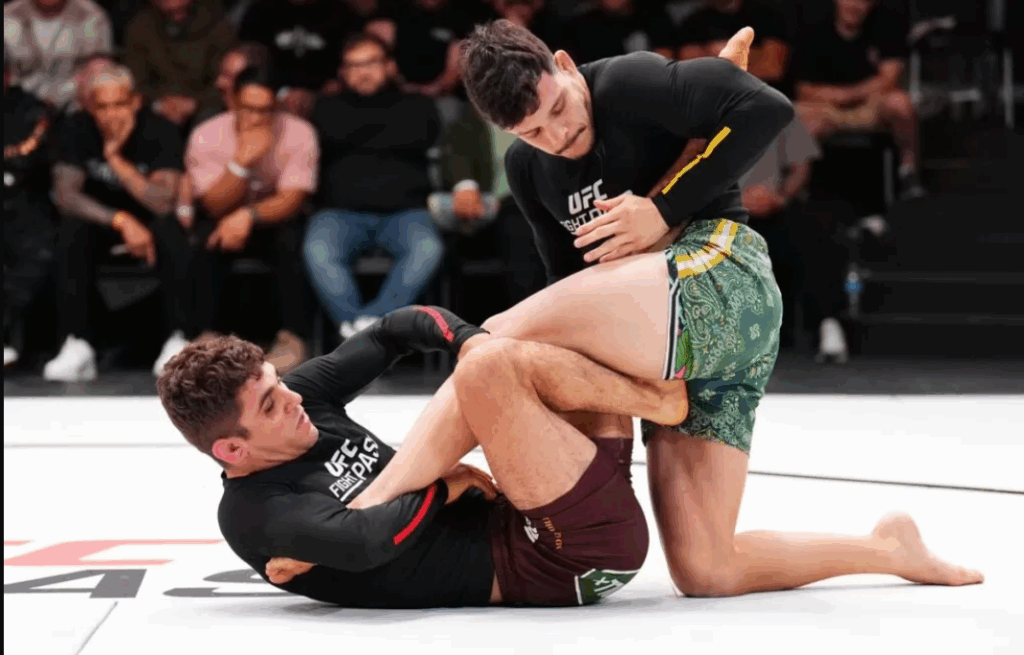






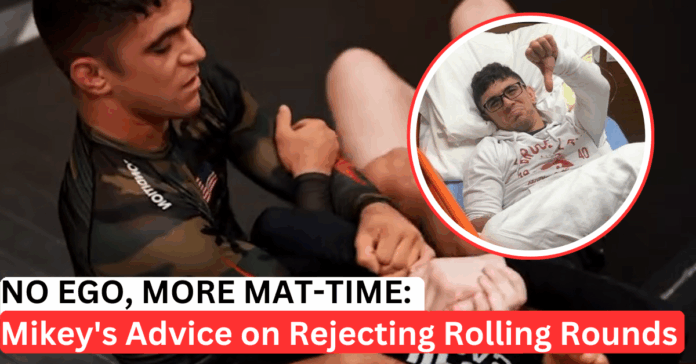
- Mikey Musumeci on saying no to rolling: he argues it should be normal—and expected—to decline rounds with partners who feel unsafe, reckless, or vindictive.
- He frames the choice as performance-enhancing: safer rounds = more experimentation, more mat-time, fewer layoffs.
- The message pairs with his efficiency-first training philosophy (he’s said he improved when he stopped lifting) and a simple litmus test for partners.
- Coaches can hard-wire consent into class culture with posted policy, opt-out language, and mid-round partner swaps.
“I’m Not Here To Please The Room—I’m Here To Improve”
Musumeci’s position is blunt and practical. He says the social pressure to accept every round is hurting athletes and shortening careers. The heart of Mikey Musumeci on saying no to rolling is the reminder that agency is a skill:
“I think that’s so important that you get used to saying no and having self respect for yourself, not just trying to fit in with the people around you and trying to please them.”
– Mikey Musumeci –
The calculus is simple: one bad round can wreck a month of training. That’s why he keeps telling students to reframe “no” as a performance decision, not an insult.
“Again it can be uncomfortable to say no to someone, but just think in your mind the hassle you have to go through if you get injured from that [round].”
– Mikey Musumeci –
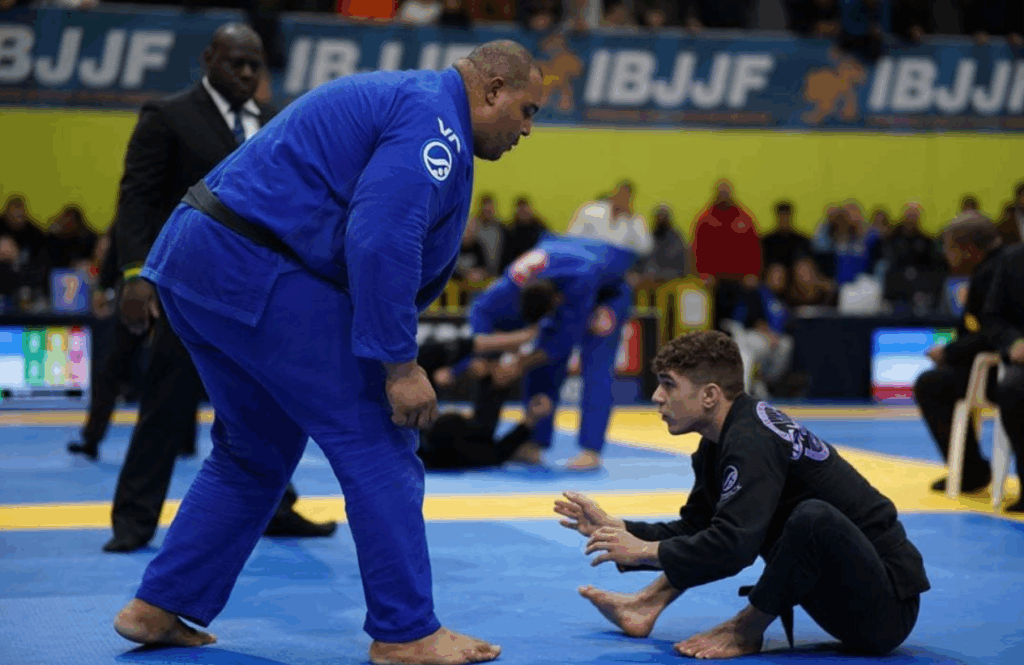
BJJ Rolling Consent Isn’t A Trend—It’s Risk Management
Call it “partner selection” or call it consent; the result is the same. You protect your body so you can train more.
Musumeci’s boundary list is common sense: skip the BJJ training partners who cranks after the tap; pass on the person who treats every round like a grudge match; say no when you’re returning from injury or a heavy camp day.
None of this is about ducking hard training. It’s about building the kind of rounds that compound: positional starts, clean pace, controlled finishes, and agreed-upon focus (e.g., guard retention, passing, back-takes) that let both partners explore without gambling tendons.
What does that buy you? More attempts at the moves you actually want to sharpen; fewer survival scrambles that teach bad habits; and far more continuous mat-time across weeks and months.
In Musumeci’s framework, saying no is the prerequisite to saying yes to the kind of purposeful training that moves the needle.
Efficiency Over Ego (Yes, Including The Weights Debate)
Musumeci’s boundary talk dovetails with the broader philosophy he’s repeated for years: prioritize efficiency over optics. He even links that idea to physical prep, arguing he improved once he stopped lifting and redirected energy to mechanics and timing:
“When I stopped lifting weights and doing conditioning I actually got stronger in training because I started learning how to become more efficient with how I use my body.”
– Mikey Musumeci –
Agree or disagree on strength work, the logic matches his rolling boundaries: trade volume that risks breaking you down for work that builds capacity to train more. For high-level technicians, efficiency and availability often beat raw output.
A Litmus Test You Can Use Tonight
Here’s a dead-simple filter, straight from the spirit of Mikey Musumeci on saying no to rolling:
Would you experiment with this partner? If the answer is “no,” because you’re bracing for payback or panic scrambles, decline the round.
Are you fresher afterward? Good partners give you room to build patterns. If every round feels like a final, you’re not developing—you’re surviving.
Did you both stick to the brief? If you agreed on pace/positions and still got whiplashed by ego, change partners. Boundaries are only as real as your willingness to enforce them.
None of this absolves coaches. Class culture either rewards partner choice—or quietly punishes it. Musumeci’s point lands hardest in rooms where “no” still gets side-eye. The fix is leadership.
Your Rounds, Your Rules
The endgame of Mikey Musumeci on saying no to rolling isn’t a softer sport—it’s a smarter one. Boundaries protect bodies, which protects time, which protects progress.
If “no” helps you train tomorrow, it’s the most pro-team choice you can make. Treat it like a technique: practice it, deploy it, and defend it when it’s tested.