10 Best Pieces Of Advice For White Belts by Tom DeBlass

10 Best Pieces Of Advice For White Belts by Tom DeBlass

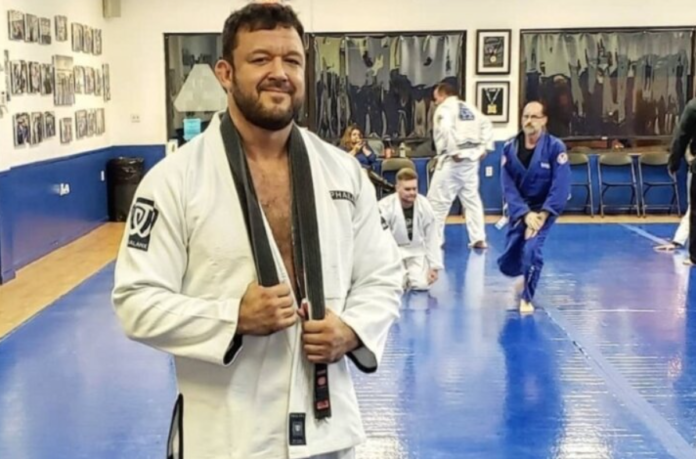
Tom DeBlass is one of the most charismatic and inspirational people in Jiu-Jitsu. He constantly takes time to share his thoughts, helping countless students become better in the process, sharing important for white belts and black belts alike.

Giving people involved in Jiu-Jitsu advice is easier the further along their Jiu-Jitsu journey they are. however, giving advice for white belts is hard and should not be taken for granted. It is important to know exactly what to tell them in order to motivate them, and not confuse them more than they already are.

Here are 10 pieces of priceless advice for white belts by Tom DeBlass, pointing out exactly what white belts need to know and focus on when embarking on their life-long journey of learning BJJ:

  1. Jiu-Jitsu is hard, never forget that. It doesn’t get easier. As you get better, so does everyone else.
  2. Jiu-Jitsu is worth it. It’s more than submissions and wrestling around. It is a connection of your mind, body, and soul.
  3. Jiu-Jitsu is more mental than it is physical. Having a strong body helps, but technique, strategy, and timing are the most important.
  4. Take a rest day if you need it.
  5. You don’t need to train until exhaustion every single day. Leave some in the tank for the next day.
  6. More is not better, being present at the moment is what matters.
  7. Do not compare yourself to others, ever.JJ Lesso
  8. Find the parallels between Jiu-Jitsu and life, there are many.
  9. Allow yourself to make mistakes, you’re supposed to. Belt
  10. Success on the mats doesn’t happen overnight. It is a lifelong commitment to the pursuit of excellence.


View this post on Instagram


A post shared by Tom DeBlass (@tomdeblass)

Big Muscles In BJJ: Can You Get Jacked From BJJ?

Big Muscles In BJJ: Can You Get Jacked From BJJ?

With the onslaught of steroid-infused physiques in BJJ, and the multiple professional competition platforms that essentially shamelessly promote said physiques, it is easy for the everyday BJJ practitioner to feel out of place and ask themselves if big muscles are going to bring about a positive impact on their grappling progress. The question is not whether or not you need muscles for BJJ, but rather how big they should be, and if you can build them up just by grappling.

The Best Body Type For Jiu-Jitsu

Yeah, there is no such thing. As you can see, many people are wildly successful in the sport without sharing a very specific body type. Jiu-Jitsu is ever-changing and super adaptable which means there’s no real standard for the ultimate Jiu-Jitsu physique, despite some people claiming that lanky people hold an advantage.

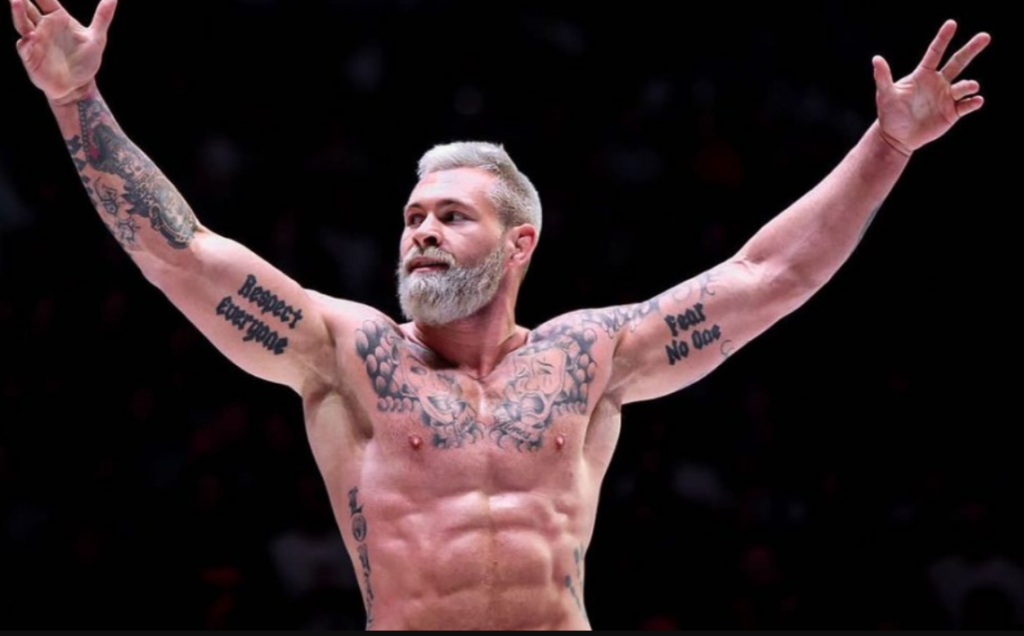
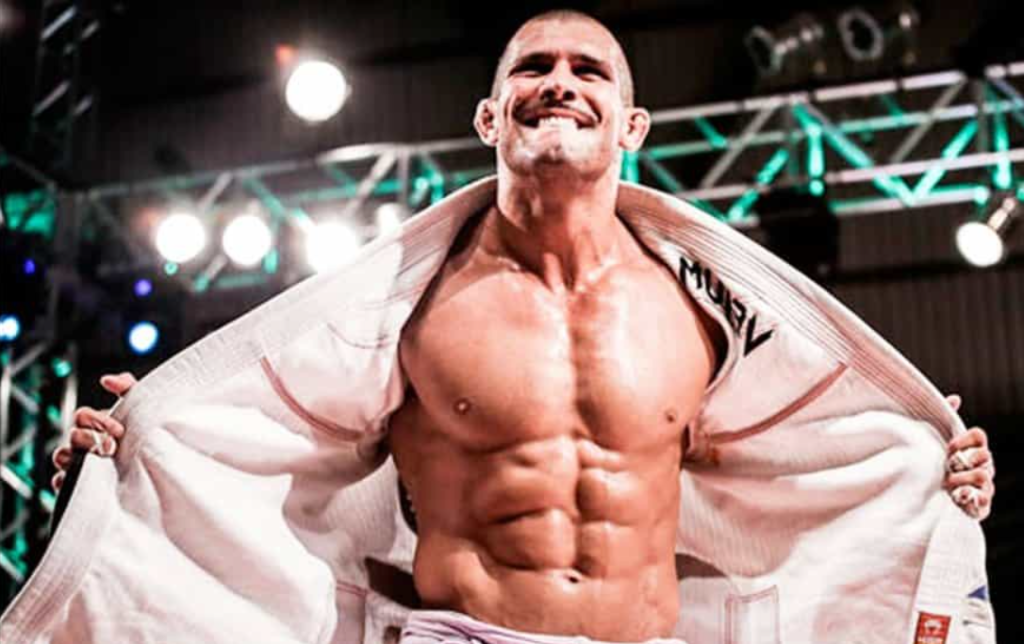
It comes down to the game you’re going to play. Your body type is going to reflect your game, and vice versa. If you want to carry big muscles (think Gordon Ryan, Andre Galvao, Nick Rodriguez, Rousimar Palhares…) you will have a game centered around your body’s strong suit.

If you are a hardgainer, then you might favor the more flexible and movement-based approach to BJJ (think Mikey Musumeci, Garry Tonon, Keenan Cornelius…).

Of course, you have those in between, like the Ruotolo brothers who seem to be able to switch between the ultra-flexible motion-based game and the powerful pressure game often associated with big muscles in BJJ. The endpoint here is that the body type that you have and can sustain is going to be the best one for your Jiu-Jitsu.

And still, if you’re all about muscles and that bodybuilder physique as a grappler, you need to understand a few things, including how and if you can build muscles with BJJ and the advantages and disadvantages of going the big muscles route.
Build Big Muscles With BJJ

Disadvantages of Having Big Muscles for BJJ

As with everything else, carrying around a lot of muscle tissue is not always going to help you in your grappling. On the contrary, there are detriments to consider in terms of mat performance. Two major drawbacks are the tradeoffs in mobility for carrying around big muscles for Jiu-Jitsu and the metabolic demands that come with a muscle-filled frame.

Decreased Mobility

The larger the muscle, the less mobility there will be for the adjoining joints. A great example is the shoulder. Every grappler who has big muscles on their shoulders has mobility issues with the shoulder joint. When it comes to defending bent armlocks, this might be a problem, as there is next to no margin for you to apply defense before the pain starts as a result of the reduced mobility of the shoulder.

The same applies to joints across the body, from hips and knees to the spine.

Metabolic Demands

Every tissue in the body burns energy, and the muscles are big spenders in particular. The demands for muscles come in the form of glycogen, which is actually stored inside them so it is easy to access. The drawback is that glycogen runs out and oxygen is required to keep the muscles working, albeit at a slower rate compared to glycogen.

This means that your cardiovascular system and your conditioning need to be up to par with the amount of muscle tissue you’re carrying around when grappling. That is why most grapplers with big muscles have slow-paced games based on pressure rather than jumping around and spinning in every direction. Plus, steroids help with endurance.

Advantages of Having Big Muscles for BJJ

Having big muscles in BJJ is not all bad, though, as you’ve probably experienced when one of those huge but technical powerlifters starts using you as a Rubik’s cube.

The muscles definitely help when it comes to strength, pressure, and even tactics during grappling.

Weight Distribution

When you understand how to distribute weight so that you feel like a mountain on top of someone, having the muscles to actually weigh like a mountain only helps increase the feeling of desperation in the person on the bottom.

Big muscles are great when you’re on top of someone, or dragging someone in a battle while standing that requires them to carry your weight. The bigger the muscles, the easier it is to be heavy without even looking to apply weight distribution principles, which gives you a tactical advantage that is almost unfair.

Specific Strength

Big muscles, when trained properly, can not only be strong but also explosive. This gives you a multifaceted use of athletic abilities, changing between strength and power to aid in the technical execution of your Jiu-Jitsu.

Do not fall for the old “technique beats strength” dogma. What happens when technique meets superior strength and technique? You already know the answer to that.

While strength is relative, and big muscles do not always equal big strength (BJJ and bodybuilding are a much less potent combination than BJJ and powerlifting), being stronger can only be helpful in BJJ, whether it is to finish that submission, or power your way up for that all-important sweep.

Tactical Advantages

This is where you start using your muscles and larger frame to prevent people from being able to execute Brazilian Jiu-Jitsu techniques. For example, positioning your shoulder so that Darces and triangles become extremely difficult to sinch in.

Another example would be rolling the big shoulder muscles to prevent collar ties and frustrating people that take your back with wide lats that make keeping a hold of the seatbelt a real chore.
Can You Get Jacked From BJJ?

Can Brazilian Jiu-Jitsu Build Muscle?

The short answer is yes, but there is a “but’. There always is one, isn’t there? BJJ can help you build muscles but only to a certain extent, and in certain parts of your body. If you want big calves for example or huge thighs, you will need to look elsewhere.

The bottom line is that you can build muscle with BJJ but it is one of the least optimal ways to do so, and it won’t help you build big muscles in a balanced way throughout the entire body. There is ad dedicated sport for that. It is called bodybuilding.

Muscle Groups That BJJ Strengthens

Apart from looking like Popeye in your forearms, which is basically unavoidable especially if you train exclusively with the Gi, there are certain muscle groups that will benefit a lot from BJ training. In fact, there are some muscles, like the deep muscles of the core that can only get developed through activities like BJJ.

The muscles that get the most attention during Jiu-Jitsu are the core, the hip muscles, and the muscles of the torso, predominantly the pulling ones.

Core Muscles

The core muscles involve not just the abs, but also the muscles of the lower back, mid back, front shoulder muscles, and some hip muscles. Most of these are not clearly visible and having big muscles in those areas is going to help your BJJ, but not do much for your physique.

Most of the strength we use during grappling comes from the core. It is responsible for twisting, stabilizing, extending, flexing, and isometric holds, which means that Jiu-Jitsu is the premiere activity, along with gymnastics, to develop a well-rounded core musculature.

Hips

The hips are an often overseen group of muscles when it comes to bodybuilding. They are mostly rated in the realm of flexibility, but strong hips are crucial to unlocking a huge athletic potential for rigorous movement activities like grappling.

Similar to the core, these muscles are not overly visible but are crucial to your performance on the mats.

Torso

The upper and lower muscles of the torso, in the form of the muscles around the spine, abs and obliques are going to not only get bigger but also develop the ability to function in a high-performance fashion while growing.

The muscles of the upper part of the torso, the traps, lats, shoulders, and even portions of the chest also get a real workout every time you grapple. Moving the muscles against resistance through planes of motion that are impossible to achieve with weight training will help you develop big muscles that are also functional just by rolling on a regular basis.
Big Muscles In BJJ

Building Muscle With Jiu-Jitsu Training

The approach to building big muscles through Jiu-Jitsu is the same as powerlifting or bodybuilding. First, you need to determine your goal, note your starting point, be sure to be aware of what and how much you eat and put as many muscles as possible under the correct tension and resistance in optimal frequencies. As stated, it’s just like making a weight training gains plan.

Starting Point

The starting point means you are aware of your weight, and preferably your percentage o bodyfat. When you’re looking to gain some muscle, you will gain some fat along with it, so starting a gains cycle, even if it is by BJJ only, should begin with you at a relatively low percentage of fat, somewhere along the 10-15% range.

Calculating Calories

As boring as it sounds you will need to know your BMR (basic metabolic rate) and the maintenance threshold that your body requires just to stay at your current weight. Then, you will need to increase it by several hundred calories (depending on your size, age, sex, and goals) and take it from there.

Fueling your training is key, and the calculations are actually very easy to do as there are plenty of BMR calculators online that will do all the math for you.

Resistance Training On The Mats

When you’re looking to build big muscles by mostly grappling, you will need to make sure you’re not slacking on the mats. Every roll is a hard roll, and you will need to make sure you push, pull, and squeeze your training partners repeatedly. Every round is a competition round, which means you’ll need training partners to accommodate your needs.

You will also need to give yourself time to rest. There’s no rolling round after round. In fact, shorter rounds and longer rest periods in combination with the surplus in calories will allow you to see muscle growth from BJJ.

Supplemental Training

If you really want to have bigger muscles that will work in BJJ, you’ll need to build muscles in a balanced way all over your body. Consider powerlifting as it will involve only core lifts, like bench press, squat, and deadlift, rather than bodybuilding splits and modern CrossFit -style types of training.

Supplement your BJJ training with at least two days of lifting per week, to introduce some balance and watch those big muscles pop!

FAQs About Big Muscles in BJJ

Let’s try and clear up some of the most common questions and inquiries people have about big muscles and BJJ, from building them to training with them and looking like a model on the cover of Men’s Health.

Does BJJ Make Your Muscles Bigger?

Brazilian Jiu-Jitsu is going to help you increase the size and strength of all muscle groups when you start training. However, it will keep improving the size and performance of certain muscle groups more than others, and it will only take your muscle growth to a certain point, after which you’ll need supplemental weight training.

Can Brazilian Jiu-Jitsu Build Muscle?

Yes, BJJ can build muscle, especially if you are a complete beginner that is not weight training on the side. If you’re already used to weight training, BJJ won’t do you much good in the big muscles building department.

How Much Muscle Is Too Much?

When muscle tissue becomes difficult to keep on, and you feel it impacting your mobility while providing no strength in return, you’re at the threshold of your muscle size for Jiu-Jitsu. If you notice your cardio going notably down, you should also consider giving building muscles a rest.

Also, if you’re bound by weight classes, you’ll only have so limited room for improving your body composition in the direction of building big muscles.

Can You Get In Shape With BJJ?

Yes, BJJ will get you in shape. It will help you lose fat and build some muscle, but remember that it will get you in shape for Jiu-Jitsu and grappling, and not a general shape suited for everything, In other words, you’ll still suck at swimming.

Will BJJ Make You Stronger?

In most cases, yes, Jiu-Jitsu will help you build strength by building muscle and connective tissue over time. There are many types of strength and BJJ will help you increase your relative strength and strength speed.

Does BJJ Build Legs?

Given that most of the exchanges happen on the ground, and there’s no real external resistance against the legs while grappling, BJJ is not going to help you build either big or powerful legs.

Can You Get Abs From BJJ?

You can get abs from every activity you do, including BJJ, under one condition – that oy have a clean and sustainable diet.

Will BJJ Get You Ripped?

It depends on your perception of ripped, but at the end of the day, Jiu-Jitsu will help you improve body composition, but it won’t get you looking like Gordon Ryan or UFC fighters during weigh-ins.

If getting ripped is your goal, BJJ is going to work best as your means of cardio in your quest for a specific physique.

In Conclusion

Do you need big muscles n BJJ? Yes.

How big? It all depends on your game and end goals.

Can BJJ help you build big muscles? To a certain extent, and specific muscles yes. In order to develop all muscles in a balanced way, you’ll need to introduce weight training as well.

Nganou Turned Down The Biggest Contract In History And Left The UFC, Jon Jones Got The Opponent For His Heavyweight Debut

francis ngannou and jon jones

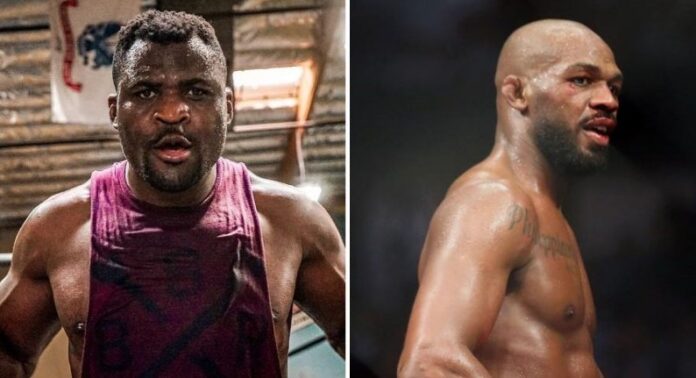
February 8 (2nd month) 2020. That date was the last time we saw Jon Jones in the cage, at least for now. One of the greatest fighters in the history of MMA at that time defeated Dominick Reyes by a rather controversial decision and made his 11th overall title defense in the light heavyweight division.

Not long after, Jones abdicated the light heavyweight throne and announced a move to heavyweight. He talked about it back in 2013, but many thought better late than never. It was believed that Jones could take a maximum of a year to put on a few pounds of muscle mass, but we are still waiting for Jones’ heavyweight debut, although it is now 1/15/2023.

There were rumors that Jones would soon return, and there were rumors about matches against Francis Ngannou and Stipe Miocic, but it seems that the whole “soap opera” has come to an end and that Jones will soon make his real debut among the heavyweights. A lot happened last night regarding the unfolding of this story, so let’s start in order.

The people in charge of advertising at the T-Mobile Arena in Las Vegas were all “hot”. In that hall, an advertisement for the UFC 285 event scheduled for March 4 (3rd month) appeared, with Jon Jones and Cyril Gane in the main roles.

This was already a very good sign that Jones had a match scheduled, and soon Ariel Helwani announced himself as one of the most reliable sources in the world of MMA. Ariel clarified that Jones was supposed to debut on December 10 (the 12th month), but the UFC decided to wait for Ngannou until the third month. Negotiations with Ngannou and his new contract did not go well, and Stipe Miočić jumped out as the next most likely option.

The UFC and Miocic also did not agree on Helwani, and that’s where Cyril Gane came in. Helwani stated in his address that it is not yet a 100% certain information, but right after the UFC Fight Night 217 event ended, we got all the confirmations.

Dana White confirmed the fight between Cyril Gane and Jon Jones at the UFC 286 event scheduled for March 4. Gane and Jones will fight for the heavyweight championship. Yes, you read that right, it won’t be a match for the interim champion, but for the vacant heavyweight title. So what about Francis Ngannou then? That may be even bigger news than Jones’ debut.

“We will fire Francis Ngannou. We give up our rights to him and he can go wherever he wants,” said Dana White at a press conference.

This is truly incredible news and a huge blow to the UFC. Ever since the beginning of 2022, Francis Ngannou has emphasized that he will not sign a new contract with the UFC, until they allow him a trip to the boxing waters. The UFC was not ready to allow him boxing appearances, and perhaps they did not even agree on financial terms. Thus, the UFC was left without a “royal” heavyweight champion.

It will now be very interesting to see how the UFC recovers from such a blow to its reputation, and it will also be interesting to see where Francis Ngannou ends up. A boxing match against Tyson Fury is a much more realistic option now that Ngannou is not under contract with the UFC, but the “Predator” will certainly sign a contract with one of the big MMA organizations.

A truly incredible night in the UFC, but the conclusion is that Jon Jones is finally returning to the cage and on March 4 (the third month) he will headline the UFC 285 event. Cyril Gane will be his opponent, and the winner will become the new UFC heavyweight champion.

Francis Ngannou is no longer the UFC Heavyweight Champion, nor is he a UFC fighter at all.


Step by Step Guide To The Fireman’s Carry Wrestling Takedown

Step by Step Guide To The Fireman Carry Wrestling Takedown

If you’re looking for an effective takedown technique for BJJ, try looking into the Fireman Carry takedown. Why? Well, it works in wrestling and it works in Judo. That makes it Gi and No-Gi, plus applicable under any rulesets on top of the move obviously being a staple of two oly[pic level grappling sports. That’s all the pedigree you need when looking for effective moves to broaden your BJJ horizons.

What Is the Fireman’s Carry Takedown?

The Firman Carry position is one that is not just common in grappling martial arts, but also in the army and first aid circles. It is an effective way of carrying around a person’s weight without straining yourself. This automatically should put it on your radar as an effective Brazilian Jiu-Jitsu move to add to your arsenal.

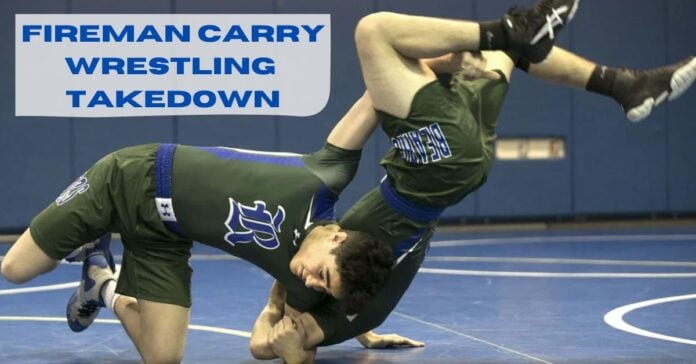
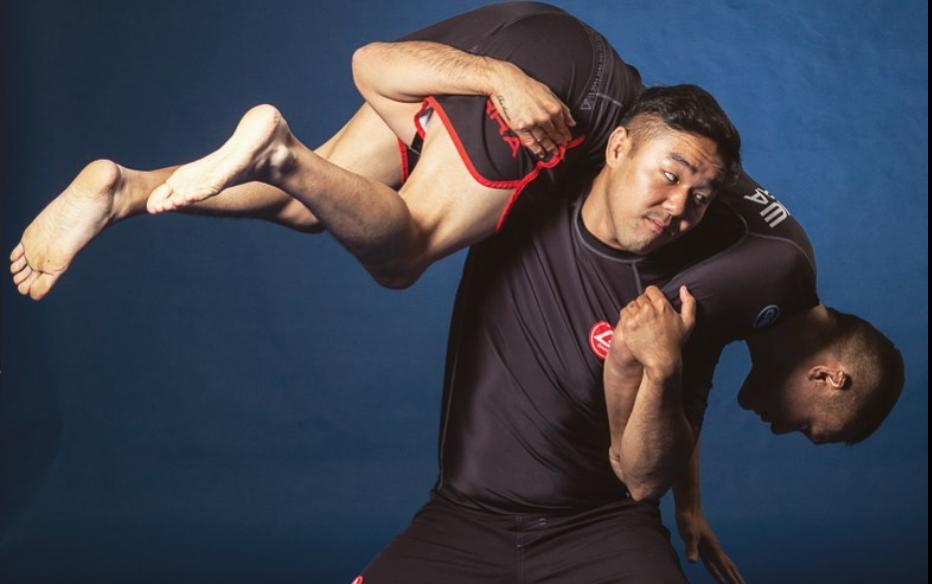
The Fireman’s Carry wrestling move has you picking a person up and putting their torso along the length of your shoulders, leaving their head hanging on one side, and their legs on the other side of your body. The anchor points are usually one arm and one leg of the opponent, but as you’ll see in the variations depicted in this article, these can change according to your setup preferences.

After picking someone up in the position, which is essentially the tricky part, slamming them down is really not that difficult. there are directions that are optimal for both you and your opponent. Our step-by-step approach will ensure you understand just how easy it is to pick a grown person up on your shoulders and slam them to the ground at your convenience.

Fireman Carry Throw For BJJ No-Gi

Step-by-Step Fireman’s Carry Wrestling Setup

While you might think there is shooting for the legs involved in a Fireman’s Carry throw when looking at people executing it, it is actually not true. The legs literally just happen to be in a position that helps bring attraction and direction to the throw, but the setup is all about upper body manipulation and angles.

This is why the move is easy to master – you only have to think about establishing grip and engaging one of the opponent’s arms, which is then going to open up entries and opportunities to pick them up and “run with them”. That leaves your mind to focus on just one task, as opposed to thinking about grabbing the arms while also shooting for the legs.

1. Engagement And Grips

As with every other throw and takedown, the Fireman’s Carry begins with grips and specific engagements. The initial control you need for the throw is of one of the opponent’s arms. There are different ways of gripping to set up the Fireman’s Carry wrestling takedown, but one you should avoid is the overhook, as it is going to telegraph your intentions to people that are aware of the move.

An inside biceps tie grip is common practice in wrestling and works perfectly in Jiu-Jitsu too. Gripping the triceps, Judo-style with the Gi, or directly in No-Gi is also a great alternative.

2. Creating Openings

Once you have the grip, you’re far from guaranteed a Frieman Carry throw. Entering into position to bait the opponent on top of you so you can lift them is where the magic happens.

Before you enter into a position, though, you’ll need to create a door to enter through, i.e. an opening. Elevating the arm you are controlling is the opening you’re after.

While lifting the arm directly might work against the less skilled opposition, you’ll need to play the action-reaction game against seasoned grapplers. Snapping the head down (or pretending to do so) is going to cause an upward motion of the opponent’s upper body, leaving little to do for you, as they’ll raise their arm for you, as long as you provide the correct direction.

3. Entry (Level Change)

The all-important part of any throw or takedown in grappling is entering into a position that will off-balance the opponent and allow you to execute the move in question. The entry for Fireman’s Carries is what makes them effective and attractive-looking.

It is actually much easier than it seems, once you’ve sussed out the grips and created an opening. Your aim is to get down deep underneath the opponent’s center of gravity. The entry is relatively straightforward – drop your knee between the opponent’s legs, opening up your body towards the side where you control their arm. A simple drop to both knees will do the trick.

4. Off-Balancing Your Opponent

No takedown (or sweep) will work without off-balancing an opponent first, the concept known in Judo as Kuzushi. Once you’re deep underneath the opponent, use the control you have over their arm via the grip to pull them on top of your shoulders, making them bend forward in the process.

Gravity will help you here, all you need is to drop quickly into the entry, holding on to the initial grip tightly, and the opponent will have no choice but to bend over in a last-ditch attempt to stay on their feet.

5. Controlling The Leg(s)

The one part I mentioned is not a big deal during a Fireman’s Carry takedown is controlling the legs. They are, however, helpful in giving you a direction for the throw, and helping you further off-balance the opponent.

When the knee drops in between the opponent’s legs, one arm usually sneaks in with it, opening up different controlling opportunities in terms of the legs. At the end of the day, all you need Is to grab them in order to flip the opponent over, which you can do by hugging the thigh low, right above knee level.

6. Finishing The Fireman’s Carry Takedown

The all-important finish of the Fireman’s Carry wrestling (and Judo) throw depends heavily on your understanding of which is the best direction to throw the opponent toward.

Remember that you don’t have to stand up to throw someone with Fireman’s Carry. In fact, it is much better if you remain on your knees, as you aim to topple the top person over.

There are two main directions where you can “dump” the opponent. One is to throw them to the side where their head points, which is the Judo version (a.k.a. Kata Guruma). Wrestlers often favor throwing the opponent forward, so they land in a much more precarious position that is easy to control. Ultimately, the direction is going to be a matter of choice and reading the situation and the opponent’s reactions.

Fireman’s Carry Technique Variations For BJJ

Apart from the step-by-step action described above, there are variations of the Fireman’s carry takedown you can use, depending on preferences and your own understanding of upper body tie-ups when standing.

Russian Tie Variation

The grips do not have to be either an inside biceps tie or a triceps grip. The Russian tie is an excellent way to set up a Kata Guruma. When you have the Russina tie position set up, you’ll need to circle your head inside the opponent’s trapped arm, so that you end up in a position for the Carry.

The tie-up is so powerful, though, that there’ll be no need for you to reach to control the legs. Throwing the opponent toward the direction of the head is optimal in this case.

Legless Variation

This variation of the Fireman’s Carry position works without leg grips, which helps mitigate the dangers, however small, of the top person entangling you into a crucifix position as you’re attempting to finish the throw.

Once again, you can use the Russian tie or any of the other grip options to set everything up. When the time comes to throw the opponent over, if inertia nad the grips have not done the trick, you can use the shoulder that this in between the opponent’s legs form the level change to ensure you get an extra push to finish the takedown.

Inverted Legless Variation

Here’s a variation coming from Sambo. It starts with a collar and sleeve control on the same side. Instead of elevating the arm before dropping for a level change entry, you push it across the opponent’s body with the sleeve grip, essentially entering the Firaman Carry position from the outside of the opponent’s body rather than the inside.

Head & Legs Fireman’s Carry Variation

There is also a wrestling version of the Fireman’s Carry where you enter into the position off of a front headlock instead of any type of arm control. While it requires a bit more dexterity and precision, it does offer a much more powerful off-balancing and is perfect for setting up forward finishing carries.

Armpit Variation

One more variation that allows you to adjust a Fireman’s Carry throw on the fly is the armpit variation. In this instance, the opponent’s arm ends up underneath your armpit as they reach for inverted body lock control to try and prevent the takedown.

This means you’ve lost the initial grip on their arm, but can re-adjust by grabbing their wrist and switching the direction of the throw. Instead of trying to throw the opponent forward or to the side of their head, you’ll throw yourself backward once you load them up on your shoulders.

Conclusion

The Fireman’s Carry is going to change your life after you give it a try and implement it in your takedown game. After all, you can go for the same move regardless of rulesets and in both Gi and No-Gi. That is what high-percentage grappling is all about.

Fighters Who Passed Away In 2022

Fighters Who Passed Away In 2022

2022 was not an easy year for the combat sports community. Lots of big-name superstars passed away in 2022, and the tragic aspect of it all is that most of them passed well before their time. In honor of their legacy, here’s the complete list of the MMA, BJJ, Judo, and other combat sports notable that are no longer with us as of 2022.

Leandro Lo

One of the most charismatic people in Brazilan Jiu-Jitsu, the 8 X BJJ world champion was shot in the head and killed in a nightclub by an off-duty police officer who started a commotion with the Jiu-Jitsu legend over a bottle of tequila. The unfortunate incident happened in August of 2022 and took the entire BJJ world by surprise, with many still having a hard time processing the loss of Lo. He was 33 at the time of the incident.

Stephen Bonnar

One of the two men who managed to turn the UFC, and along with it, MMA into the worldwide acknowledged, multi-million sport it is today, Stephan Bonnar passed away in late 2022, as a result of heart complications.

Bonnar was one half of the duo behind one of the most exciting UFC matches ever, sharing the octagon with Ultimate Fighter co-star Forrest Griffin, putting MMA on the map of combat sports for good. Bonnar also worked as an analyst and had a stint in pro wrestling after his UFC career.

he was 45 at the time of his death in December 2022.

Gene LeBell

The Judo legend and one of the first people to take part in an MMA match against boxer Milo Savage in 1963. LeBell won the fight by a rear naked choke in what is considered to be America’s very first televised MMA bout.

“Judo” Gene won everything in the US in Judo during the 50s and even tried a bit of professional wrestling. He was also a stuntman, actor, fight manager, author, and one of the best grappling coaches on the planet. Ronda Rousey is just one of his many famous and successful proteges.

LeBell passed in August at the age of 89.

https://www.youtube.com/watch?v=nPH5WWybcBk

Anthony Johnson

Anthony “Rumble” Johnson is another one of the fighters who left this world too soon. The UFC veteran had 18 bouts inside the octagon, two of which were championship battles, both against Daniel Cormier at light heavyweight. Rumble also fought for the Titans Championship and Bellator after his death.

His latest match was a Bellator victory by way of a knockout over Jose Augusto Azevedo in May of 2021. He announced he was ill afterward, withdrawing from Bellator’s light heavyweight tournament due to medical reasons.

He passed away in November of 2002, as a result of non-Hodgkins lymphoma and hemophagocytic lymphohistiocytosis at the age of 38.

Orlando Sanchez

Orlando Snachez was a very beloved character in the BJJ world. the legendary ADCC champion and Gracie Barra coach was always fun to be around, drawing attention both with his larger-than-life behavior off the mats, and his technical prowess on them.

The exact cause of death is still unknown, with only the information that his passing was abrupt available to the public. The ADCC Hall Of Famer died at the age of 40 in December 2022.

Maiquel Falcao

Falcao spent most of his fighting exploits in Bellator, apart from a one-time appearance in the UFC. He was crowned the baddest man in Bellator after winning the 2012 heavyweight tournament, and his 2013 war with Alexander Shlemenko.

Falcao had a 25-3-1 record, the last one being in the win column, against Igor Pokrajac in Serbian Battle Championship. Maiquel was stabbed to death outside a bar in his native Pelotas, Brazil, at the age of 40 in January 2022.

Christian Lubenga

Lubenga was a young and promising prospect, learning Business Analytics and training at Black Woles MMA, and chasing the dream of becoming the first-ever Democratic Republic of Congo champion in the UFC.

In an unfortunate and tragic situation, Lubenga suffered fatal brain damage in his debut MMA fight just days shy of his 26 birthday. The incident happened in March 2022.

Barrington Patterson

Patterson was the W.A.K.O. European Kickboxing Champion in 1996 before deciding to pursue MMA on a more permanent basis. He had a mixed career, balancing four victories with four defeats in the span of nine years.

“One Eyed Baz” passed away from a heart attack at the age of 56 in his home in Birmingham, England in March of 2022.

Nikolai Zouev

A former Russian Sambo and freestyle wrestler is a name you might recognize from Japan’s Fighting Network back in the 1990s. He is also known as one of the best coaches of numerous PRIDE, M-1 Global, and Bellator MMA fighters.

Zouev died aged 64, as a result of heart disease in May 2022.

Mariusz Linke

The first ever Polish BJJ black belt (and accomplished Judo black belt), a multiple-time European Champion, and No-Gi Pans champion. He also fought 16 times as a professional MMA fighter, winning 11 of them, with 10 submission finishes.

Linke died at 52, following complications ns from myocarditis, which were a direct result of a serious staph infection. He passed away in May of 2022.

Tomasz Walentek

Walentek was a compatriot of Linke and fought several different European MMA tournaments, as well as the Polish Gliwice championship.

In a very tragic turn of events, Walentek is one of the many casualties of the Russian-Ukraine conflict. He was killed in July, at age 37 by Russian artillery fire.

https://www.youtube.com/watch?v=KvWYwqnvW_4

Elias Theodorou

The Canadian MMA prospect was undefeated in 8 bouts before joining the Ultimate Fighter Nations: Canada vs. Australia. He kept his run going on the show, eventually winning the middleweight tournament and ending up on the UFC roster, continuously ranking in the top ten.

Previously he was a ring boy for Invicta Fighting Championship, and a cannabis activist. He was the first professional athlete to get a therapeutic use exemption in both Canada and the US from the athletic commissions.

Colon cancer was the reason for his demise, with 34-year-old Theodorou passing away in September 2022.

Antonio Inoki

One of the best professional wrestlers to ever come out of Japan also passed away in 2022. Inoki was the man behind two pro wrestling promotions, Inoki Genome Federation and New Japan Pro-Wrestling.

Inoki famously fought Muhammad Ali in an “MMA” match in 1976, with Gene LeBell stepping in as the referee The fifteen-round fight which was declared a draw was witnessed by over one billion viewers across the globe.

Antonio suffered from a rare illness called systemic transthyretin amyloidosis, which was the cause of his death in October 2022, at the age of 79.

Katsuya Kitamura

A wrestler from an early age, Kitamure blew an opportunity to perform at the Olympics due to a steroid scandal that got him banned. He instead chose bodybuilding and pro-wrestling as a career path, ending up as a legend in the New Japan Pro-Wrestling Dojo. It took a serious concussion to force him into retirement, with only one MMA bout to his name under the RIZIN banner.

Kitamura passed away quite suddenly, with his health deteriorating quickly due to an undisclosed illness. He died aged 36 in October 2022.

https://www.youtube.com/watch?v=wfPQJLQgelU

Alexander Pisarev

The Russian was an expert in grappling and hand-to-hand combat sports, and already had 3 victories on his professional MMA record against some of the sternest opposition from M-1 Global, and Fight Nights Global.

The Central Federal District of MMA champion was found dead in an apartment in Moscow in October 2022, after a suspected case of food poisoning. He was 33 at the time.

Jason David Frank

Perhaps better known as Tommy from “Power Rangers”, the actor was actually an accomplished and successful martial artist, holding an 8th-degree black belt in Shotokan Karate, black belts in Wado-ruy Karate, Taekwondo, and Judo, as well as a purple belt in BJJ.

Jason also tried his hand at MMA, winning four amateur and one professional fight in eight months in 2010.

Aged 49, Jason David Frank took his own life in November 2022.

Jerald Gregori

The Montana-born two-time Junior Golden Gloves boxer held the fastest record for a knockout in the state before focusing on MMA. He fought in amateur bouts for 7 years (2013-2020) with a record of 2-6. He followed up on that with four Bare Knuckle Fighting Championship appearances in 2021.

Gregori took his life in November 2022 at the age of 28.

Tanner Marlow

One of the brightest prospects in American MMA, young Marlow had four fights to his name, all by way of stoppage, for an unblemished professional record. “The American Psycho” debuted for Legacy Fighting Championships in June 2022.

30-year-old Marlow died while fighting off a home invader, protecting his girlfriend and her ex-partner. Tanner managed to kill the intruder, but succumbed to the injuries later. The incident happens on Christmas Eve.

https://www.youtube.com/watch?v=kmZSRMBcM_M

Victoria Lee

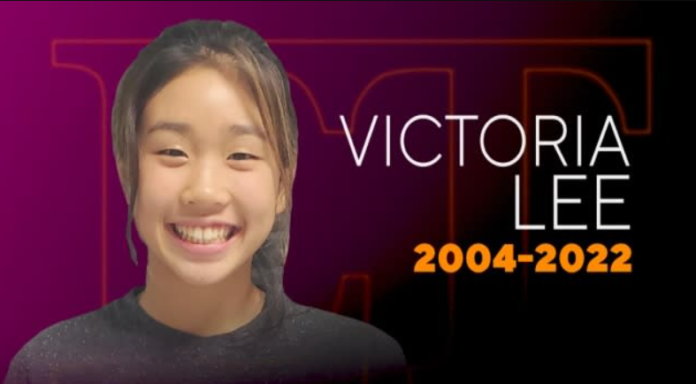
The case of Victoria Lee’s death is arguably the saddest one on this list. This one really shook the combat sports community, as Lee was only 18 at the time of her passing.

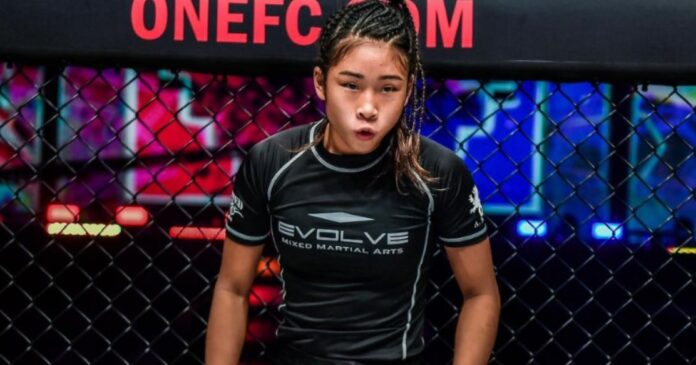
The sister of ONE champions Angela and Christian Lee, Victoria came from a strong martial arts family and was on her way to stardom herself. She already had several Pnkaration world championships in Hawaii, and she debuted in ONE in 2021, becoming the promotion’s youngest-ever MMA fighter.

Lee passed away at 18, in December 2022 of undisclosed reasons.

Abdul-Kerim Edilov

The UFC fighter turned professional boxer had an impressive 17 victories in professional MMA bouts in the span between 2010 and 2017. He even holds a first-round submission victory over current UFC light heavyweight champion Jiri Prochazka.

Edilov was found dead in late December 2022, under mysterious circumstances.

Watch John Danaher Training With The Mysterious Boris (VIDEO)

Watch John Danaher Training With The Mysterious Boris (VIDEO)
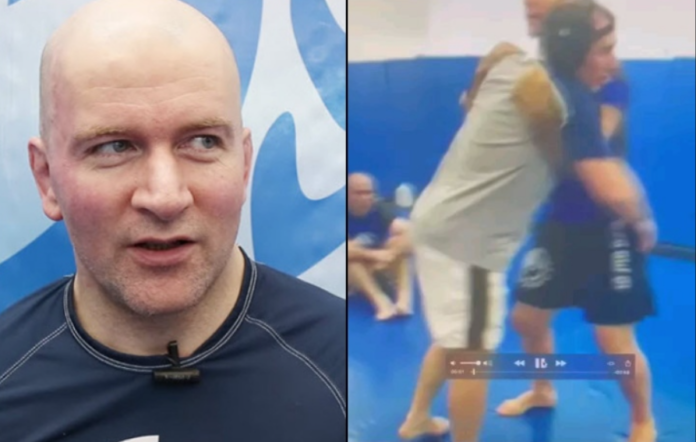
xIf you’ve heard John Danaher tell his crazy stories about the blue basement at Renzo’s, you’ve heard him mention the curious case of Boris. The subject of Boris is not one that Danaher dwells on. Still, since it came up again in that marathon podcast John did with Lex Freidman recently, stirring up some old footage of the pair (Danaher and Boris) training together in the Renzo Gracie Academy in New York almost 20 years ago.

The story of Boris is strange, even by Danaher’s story standards. the most likely Russian-born grappler came to Renzo Gracie’s Academy as a wrestler, looking to train something different. Everyone in the room, including John held him in very high regard, although even Danaher himself found his demeanor weird and amusing:

“Boris came from Long Island, he was a wrestler. He was of Russian-Jewish descent. Highly intelligent, of shorter stature, but very powerfully built and compact. Very nice, polite young man… But also slightly eccentric, which I always liked about him.

He would always come dressed with the glasses on and he would leave the gym dressed like a “complete nerd”. Now, he was heavily muscled, but he would dress in such a way that it didn’t appear so when he left,” said Danaher on the Lex Friedman Podcast.

Boris became one of Danaher’s best students and one of his very first black belts. Despite the huge potential he had, he never really shows any tendencies to compete, not allowing even the atmosphere at Renzo’s legendary gym to change his mind:

A very young Georges St-Pierre came to train with us at that time and he would come at 6AM, for his morning class. And he was one of the main training partners for Boris.
Boris, being a wrestler, used to generally prefer top position – and I would always encourage Georges to play bottom position… And Boris had very strong guard passing.

And I remember, one of Georges’ happiest days was when, after two years, he swept Boris, got on top and finished him.

So, what happened to Boris, and why did;t this mysterious grappler ever make it to the Danaher Death Squad or anywhere alongside John, for that matter? The story of Boris ends as abruptly and mysteriously as it began. As Danaher explains it:

The funny thing about Boris is that, every time we would have a conversation, he would say: “I am only going to do this sport until I’m 40 years old, and then I’m gonna stop.”

And I was like: “Why? Why not be a life-long martial artist? You’ve become so good at Jiu-Jitsu, you’ve got great skills, you’ve worked hard. Why not just keep going”?

And he was, like: “It’s ridiculous for a man to train after 40, there is no need.

The moment Boris turned 40, he was never to be seen again on the mats of the Renzo Gracie Academy, and the only video footage of him taking part in John’s classes emerged recently, dating back to 2005:

(VIDEO) An MMA Fighter Finds Pedophiles, Forces Them To Do Push-Ups, and Then Hands Them Over to the Police

(VIDEO) An MMA Fighter Finds Pedophiles, Forces Them To Do Push-Ups, and Then Hands Them Over to the Police

With the progress of social networks and the increasing appearance of various applications for meeting and finding a partner, the number of “sexual predators” who try to get sexual relations even with underage girls or boys through such applications has definitely increased.

It’s something that is, unfortunately, becoming more and more widespread, but one professional MMA fighter decided to contribute to finding and punishing pedophiles. Dustin Lampros (8-0) is a fighter who participated in the 29th season of “The Ultimate Fighter” and fought in Alexander Volkanovski’s team.

In the first fight, he lost by technical knockout to Vince Murdock and continued his career with three victories under the auspices of the Shamrock FC promotion. However, the reason why Dustin Lampros will find a place on the front pages of the world’s MMA media in the coming period is something much bigger than the performances he performs inside the cage.

The 28-year-old American fighter embarked on a mission to expose men who try to engage in sexual relations with minors. MMA Island shared a video where Lampros can be seen holding such men and forcing them to do push-ups and squats.

“You say you’re sorry, but you came with weed (marijuana), condoms and a blanket to hang out with a 13-year-old girl in the park,” Lampros said to the first man in a video posted on MMA Island’s social media, and soon the sex offender had to do push-ups and squats.

While doing the exercises, sex offenders must also make certain promises.

“I am a sexual predator and I will never talk to 13-year-old girls again,” said one of the men whom Lampros found and forced to do squats and push-ups.

After they have done their penance, Lampros calls the police and hands such people over to the authorities to do their job. It is not known how Lampros ended up with the men from the video, but it can be assumed that he introduced himself as a 13-year-old girl through one of the “dating” apps, and then unpleasantly surprised the men who were ready to meet the 13-year-old girl.

”What if a 13-year-old girl showed up tonight? You are a 31-year-old male and drove 45 minutes (to meet a 13-year-old girl). Are you serious? Those are two criminal acts.

A commendable action by this so far undefeated fighter (a defeat in TUF is not considered a professional match). We hope that this will prevent many who even think about having sex with underage girls in the first place.

Victoria Lee (18), ONE Championship fighter, has passed away

Victoria Lee in start of the fight

Yesterday, ONE fighter Angela Lee announced some sad news. Namely, her younger sister Victoria, who also fought in ONE, passed away on December 26 (12th month). By the way, their brother Christian is also a ONE fighter and is the welterweight champion. The cause of death is currently unknown, and Angela wrote that she will not go out with him in public.

Victoria was only 18 years old, and she started her journey in ONE when she was only 16 years old. She made her debut in 2021, in which she played three matches, and she celebrated in all three. She last fought in the ninth month of 2021 when she defeated Victoria Souza, and did not perform after that.


View this post on Instagram


A post shared by Angela Lee Pucci (@angelaleemma)

“26. December our family experienced something that no family should have to go through. It is very difficult to say this… Our Victora has passed away. She left too soon and our family has been devastated ever since. We miss. More than anything in the world. Our family will never be the same. Life will never be the same again,” Angela wrote on her Instagram profile.

“Please give us respect during this most difficult time. And please check on your loved ones. Keep checking back. Hug them and tell them how much they mean to you. You never know,” she wrote at the end.

Vicotria was only 18 years old and this is truly a great tragedy. We hope that her family will gather the strength to get through this.

Rest in peace.

Navy BJJ: Sailors Practice Jiu-Jitsu On Board The USS Nimitz

Navy BJJ Training - Soldiers Roll on board the USS Nimitz
Brazilian Jiu-Jitsu is a first-choice option for many law enforcement professionals from different police departments and agencies around the world. It also appears to be sipping into US military, with the Army already practicing a stripped-down Combatives version of it regularly, and now Navy BJJ training becoming a standard not just in military bases, but also on US Ships.

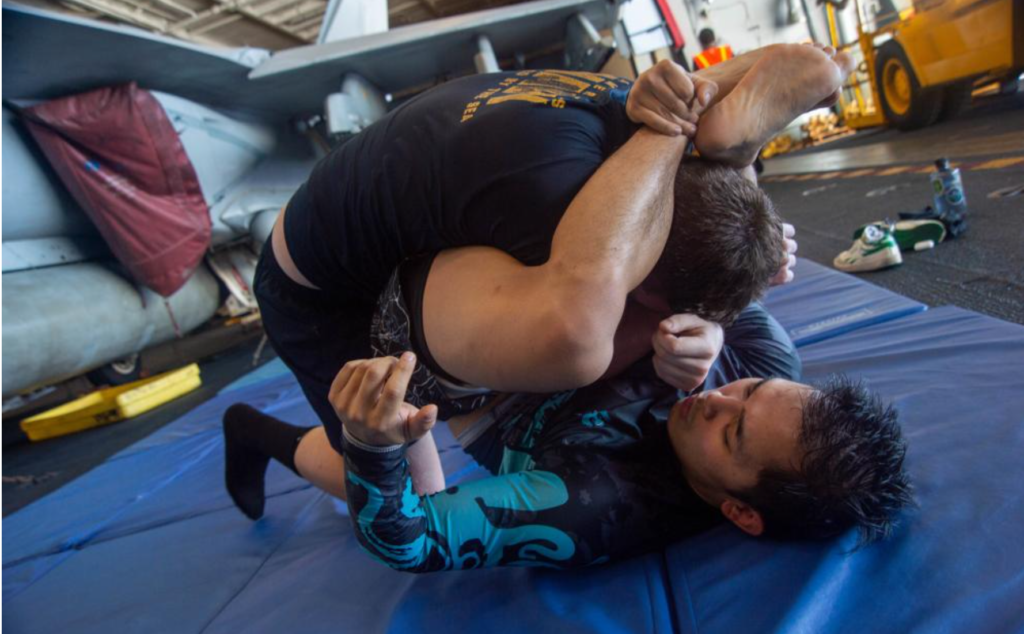
Recent photos taken on board the USS Nimitz show sailors taking place in Brazilian Jiu-Jitsu in a hangar on the ship, in what seem to be regular Navy BJJ training sessions.

A hangar bay aboard the aircraft carrier USS Nimitz is the training area for BJJ which the sailors on board are gladly using in their pastime to improve upon their grappling skills. It appears that it is not just Navy SEALs that take training BJJ seriously.

It is understandable the t Navy BJ Jtrianign is on the rise, with the ever-vocal ambassador of the sport, ex-SEAL Jocko Willink already inspiring civilians to sign up for the Gentle Art. You can imagine the influence he must be having on fellow sailors.

So far, despite it having no official status, Navy BJJ training is taking place all over military bases, with sailors who have belt ranks from civilian training leading the sessions, but the Navy is more than willing to provide the training spaces.

Navy BJJ Training - Soldiers Roll on board the USS Nimitz

Given that original Japanese Ju-Jitsu was designed for Samurai to dominate in hand-to-hand combat against opponents wearing armor and headgear (so strikes make no sense) it is logical that modern-day warriors, who might have to face the same issue on the battlefield are expanding their existing expertise with additional Brazilian Jiu-JItsu training.

As Jocko himself puts it, BJJ involves a careful mental game preceding the physical exchanges, all happening in fragments of a second, which are crucial skills for people in the military. In other words, Navy BJJ training, extending to personnel and not just special operators is a great way of conditioning soldiers in more than just a physical manner.