A UK festival staged a jiu-jitsu world record attempt for the largest coordinated BJJ lesson.
Reports say more than 1,000 people took part in the mass training session.
The lesson was led by renowned black belt Braulio Estima.
It remains an attempt, pending any formal verification; the bigger story is mainstream visibility.
What The Jiu-Jitsu World Record Attempt Looked Like
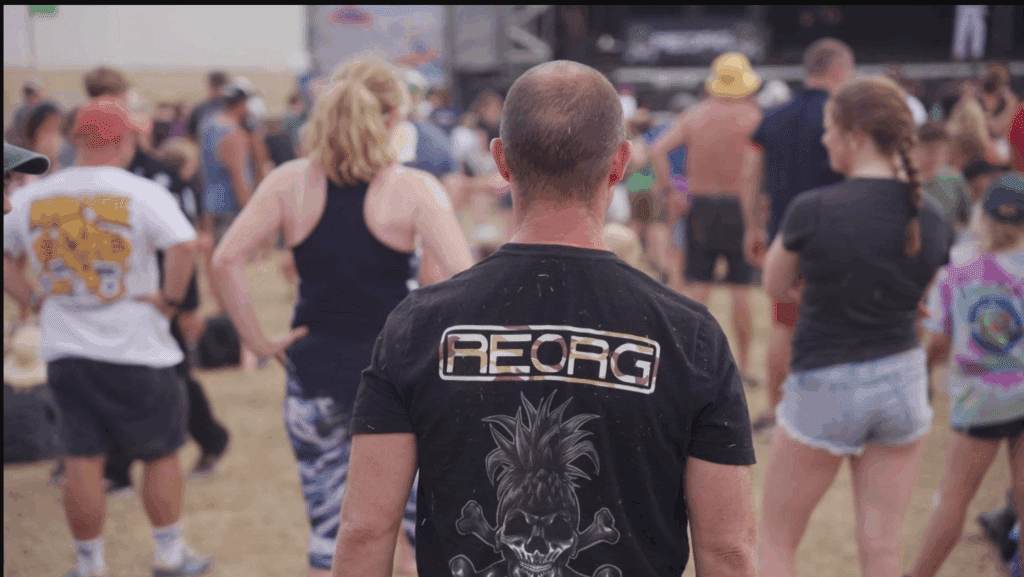
Picture a festival field turned into a temporary academy: rows of pairs moving through basic positions while a lead instructor sets the pace. That’s the scene described in coverage of the UK event, which built the day around a single, synchronized lesson rather than a competition.
Organizers framed the gathering explicitly as a jiu-jitsu world record attempt, and reporting from the event put the headcount at more than 1,000 people on the mats.
The choreography mattered—simple mechanics, clear cues, and steady timing so first-timers and experienced grapplers could keep pace together.
The point wasn’t to test who could win; it was to prove how many could learn in unison. For a sport that’s usually taught in classes of a few dozen, the image of a four-figure crowd drilling side-by-side was the headline.
How A Festival Jiu-Jitsu Session Came Together
The setting wasn’t incidental. Festivals pull families, casual sports fans, and curious onlookers who might never walk into an academy on their own.
By packaging the experience as a festival jiu-jitsu session, organizers lowered the barrier to entry: no brackets, no weigh-ins, no winners and losers—just a timed, coached walk-through of core movements.
Having Braulio Estima at the front gave the effort a recognizable anchor; even for people who don’t track tournament results, a world-class black belt signals credibility and safety. The design choice worked because it treated participants like a single class rather than a crowd. Line up, listen, try the movement, reset—repeat.
Framed that way, the jiu-jitsu world record attempt became less about spectacle and more about access. It invited parents, kids, and first-timers to try BJJ without the intimidation of sparring or scoring.
From Headcount To History
Coverage is careful with the language, and it should be. A jiu-jitsu world record attempt is not the same thing as an officially recognized record.
Large-scale participation records usually demand defined start and stop windows, a reliable counting method, and independent verification before anyone can claim “largest ever.”
The event organizers set out the goal; the crowd showed up; and the media documented that more than 1000 participants took part in a single, coached session.
Whether any governing body ultimately certifies that number is a separate process with its own paperwork and criteria. The organizers’ approach—keep the structure tight, the instructions simple, and the count clear—maximized the chance that the attempt stands up to scrutiny.
Why This Matters For UK BJJ’s Next Step
For years, UK Brazilian Jiu-Jitsu scene’s growth was measured by academy openings and local tournament calendars. A festival mounting a jiu-jitsu world record attempt pushes the sport onto a bigger stage—literally.
It normalizes Gis, grips, and groundwork in the same spaces where music acts, obstacle courses, and food stalls usually dominate. That visibility matters.
The attempt also reframes BJJ’s public image: instead of a niche combat sport, it reads as a shared, teachable practice that rewards attention and patience. That’s the kind of message mass-participation events can deliver in a single afternoon.
If festivals can host one marquee session each summer, academies can meet that energy with structured intro cycles each autumn—two weeks of basics, loaner gis, and a no-pressure graduation roll.
Whether or not this specific Jiu-Jitsu world record attempt is eventually certified, it already did the important work: it put BJJ in front of a mainstream crowd and proved the sport can scale beyond the walls of a gym.
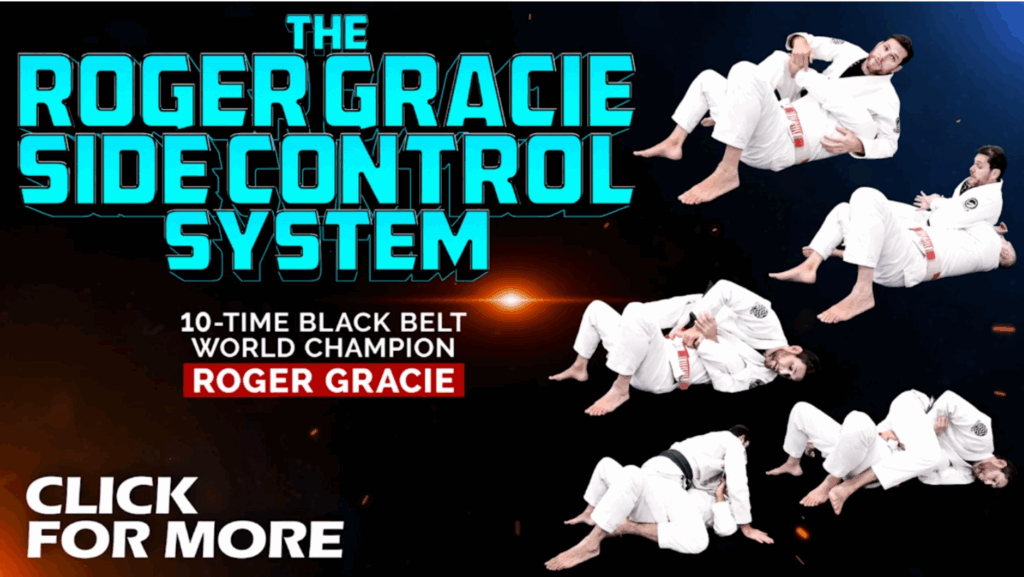
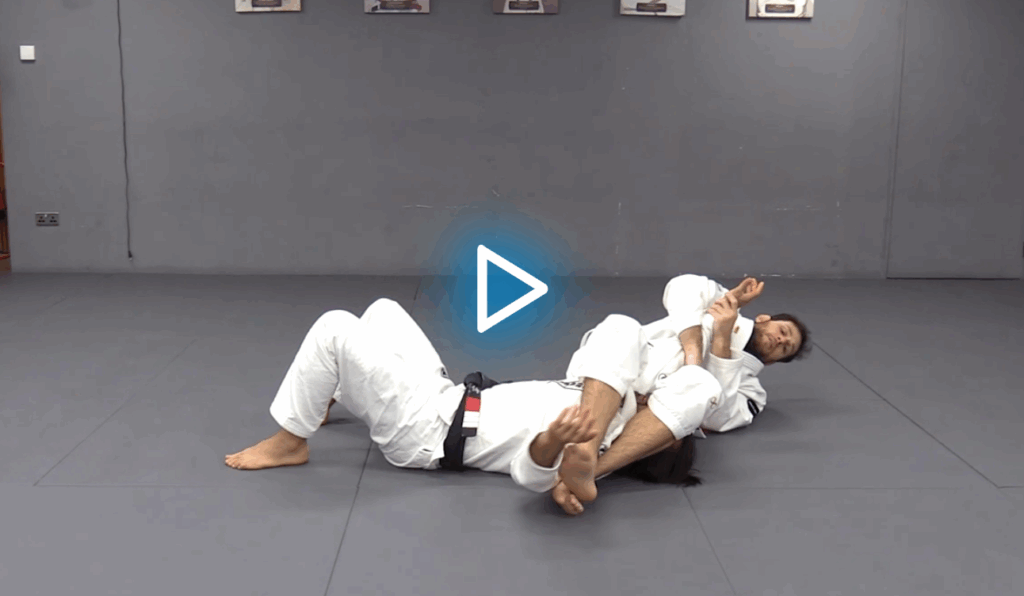
The Side and Mount System Roger Gracie DVD Bundle is as close as you’ll ever get to grappling like Roger Gracie. What it will do for you is improve your chest-to-chest pinning more than you thought was possible. It will also improve your finishing rate from those positions.
What it won’t do for you is automatically turn you into a world champion, allow you to tap everyone in your gym, or advance your BJJ progress in a Derek Mooneyberg-like fashion. Is it worth exploring? Yeah, it is, but since you find it prudent to ask that question about Roger Gracie material, check out the detailed review.
Roger Gracie: Simplicity Embodied
Deciding to go the Roger Gracie way means you’re already quite advanced, probably brown belt or beyond, or you’re unusually smart for a white/blue belt. Roger offers fundamentals at such an advanced level that you’d likely miss out on tons of details if he didn’t guide your attention to them.
The man did what very few have managed to come close to, and even fewer to replicate over the years. He’s won everything in Gi and No-Gi, had a solid career in MMA, but it was the way he did it that made him the GOAT—even according to Danaher. He submitted everyone in his way during his World and ADCC victories—on more than one occasion.
Roger always chose to do the basics—he likes to use closed guard, simple chokes, mounted pressure—but in such a way that he puts other black belts to shame. This Roger Gracie Bundle contains quite a lot of info on how he sets up his top positions, and you’d be a fool not to go for it.
Side and Mount System Roger Gracie DVD Bundle Review
The Roger Gracie Side and Mount Bundle is simple and straightforward, just like his game—seven volumes total, two DVDs, and just over three hours of material. Somehow, it’s all you’ll ever need to become a real nuisance from top pinning positions.
The Side and Mount System Roger Gracie DVD Bundle begins with Roger’s dreaded mount system that was impossible to defend against—and yes, it features the notorious cross choke with all the juicy details.
Key Points Covered:
Roger’s introduction is a 15-minute-long chapter on the concepts of control and positioning from mount, which will teach you more about the position than 15 months of training. He then shares how to isolate the arms, gaining the ultimate control over the bottom person.
The cross choke doesn’t appear until the third volume of the Side and Mount System Roger Gracie DVD Bundle. Before you get ~20 minutes of details on it, you can enjoy control details on different mounts (low to high), grip tactics, and re-guard prevention. Oh, and there are armlocks too—bent and straight!
Technical DVD Specifications:
Just over an hour of material opens up the account in the Roger Gracie Side and Mount Bundle. Gracie spreads it all over three volumes and does every demonstration with the Gi on. Old-school.
Part two of the Side and Mount System Roger Gracie DVD Bundle is all about holding side control, setting up Kimura traps, lapel chokes, and eventually getting to the mount.
Key Points Covered:
Once again, Roger opts for concepts first, devoting almost all of the material in the first volume of this DVD to control details and principles. A short introduction of the Kimura grip is the only other subject in this opening volume.
Once that’s out of the way, this second portion of the Roger Gracie bundle delivers plenty of chokes (paper cutter, lapel, baseball bat, and triangle) and armlocks (Kimuras, wrist locks, and armbars). Everything you need to dominate everyone you ever trap in your side control.
Transitions to the mount also feature, involving concepts like being a “side control bully” and enforced by back exposure. Sequencing of attacks from side control and how to constantly threaten your opponent is another major theme in this DVD.
Technical DVD Specifications:
This Roger Gracie DVD offers around two hours of supercharged details on side control domination and contains four volumes. Both conceptual and technical instructions, with the Gi, feature in it.
Copying the Games of BJJ World Champions
You’ll never be what Roger Gracie is (or was). Before you go off thinking you can beat everyone with his material, you need a reality check—be sure to come back to these every time you get frustrated with the Side and Mount System Roger Gracie DVD Bundle.
That said, there is something unexplainable when you pull off something so super simple and sick like a cross choke from mount against your gym rival for the first time. It’s way better than catching them in a buggy choke or some nutty leg lock from an overcomplicated position.
The only way you can hope to copy anything from world champions is if you manage to understand what they’re doing. In the case of Roger Gracie, as opposed to others, this is fairly easy, as he loves to stick to simple fundamentals. So if you’re dead set on copying someone—start with Roger. You’ll likely end there as well.
Well, almost like Roger, even if you have his body type and his weight. The principles outlined in the opening parts of each of the instructionals in the Side and Mount System Roger Gracie DVD Bundle are all you need to feel like you’re 300 lbs heavy from top. It kind of makes all the submissions that follow feel like an unfair advantage—almost like playing with cheat codes.
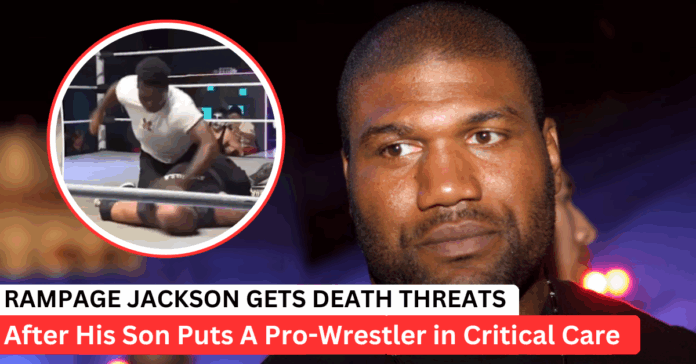
Quinton “Rampage” Jackson says he received Rampage Jackson death threats after his son Raja’s in-ring attack on independent wrestler “Syko Stu.”
The injured wrestler, Stuart “Syko Stu” Smith, is reported stable but in critical care; police are investigating.
Jackson claims event organizers pushed for punches; the promotion has denied that account.
A clip of Jackson saying there are “a lot of racist people” sending threats is circulating.
The incident has reopened questions about online toxicity, responsibility at shows, and safety protocols.
From Viral Ring Chaos To Real-World Blowback
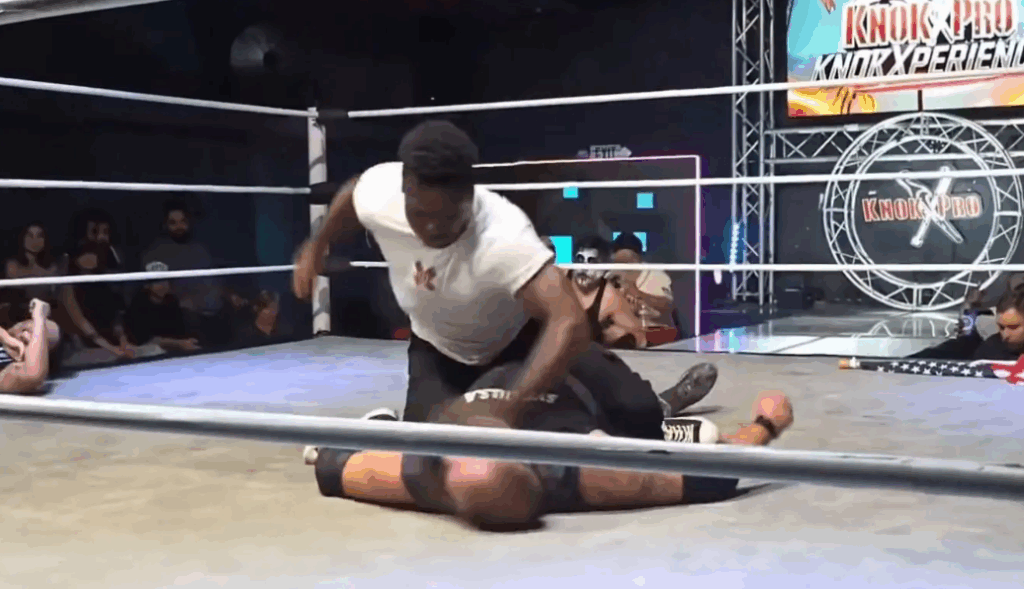
The clip raced around combat-sports timelines: Raja Jackson, son of UFC legend Quinton “Rampage” Jackson, body-slamming independent wrestler Stuart “Syko Stu” Smith before unleashing a barrage of punches on a motionless opponent.
Within hours, the story had leapt from pro-wrestling circles to MMA feeds—and, according to Jackson, it triggered a wave of Rampage Jackson death threats.
The phrase quickly became shorthand for a larger storm: how a viral moment inside the ropes can spill into harassment, fear, and finger-pointing outside them.
Police Probe And Rampage Jackson Death Threats
Authorities are investigating the bout, while Smith’s family says he remains stable but in critical care with significant facial injuries. His brother publicly thanked supporters and urged patience as doctors work.
“Thank you everyone for your prayers, concerns, and kind words for my brother Stu… He’s currently stable but in critical care.” – Andrew Smith
That update steadied a frantic news cycle but didn’t slow the debate. Fans are replaying the sequence, frame by frame; investigators are gathering statements; and the promotion is defending its procedures amid scrutiny of how a planned spot unraveled so violently.
In the background, Rampage Jackson death threats keep arriving, by Jackson’s own account, as the torrent of reaction grows.
This wrestling incident didn’t just light up the algorithm—it exposed a darker layer of fandom that athletes and families often face when controversies trend. Jackson says the death threats messages have crossed the line, invoking race alongside threats of violence.
“There’s a lot of racist people giving me death threats and stuff like that.” – Quinton “Rampage” Jackson
It’s a reminder that viral outrage routinely morphs into personal harassment.
The Rampage Jackson death threats don’t exist in a vacuum; they’re part of a familiar spiral where shock clips breed pile-ons, rumor outruns reporting, and real people absorb the impact.
The Promotion, The Punches, And Conflicting Accounts
As the video spread, two competing narratives formed. Jackson has said organizers told Raja to throw the punches—an assertion that, if true, complicates blame.
The promotion, meanwhile, has publicly pushed back, calling the barrage an unacceptable escalation that violated the plan. What’s not in dispute is the result: a wrestler hospitalized, a police investigation active, and Rampage Jackson death threats fueling the discourse around everyone involved.
This is where the industry’s gray zones show. Independent shows rely on trust—between performers, agents, and promoters—that stunts will be executed safely.
When the trust breaks, aftermaths tend to be messy: lawyers, police, statements, and social-media trials. Add a famous surname, and the temperature spikes.
That’s exactly what happened here, and why the repeated emphasis on Rampage Jackson death threats has become both an alarming headline and a symbol of a story careening beyond the ring.
After The Chaos, Rampage Jackson Death Threats Are The Test Ahead
For Smith, the priorities are medical care and recovery. For Raja Jackson, it’s cooperating with investigators and navigating the fallout from a video that won’t stop looping.
For the promotion, it’s demonstrating that protocols exist—and worked or failed—when the spot went sideways. And for Rampage, the target of Rampage Jackson death threats, it’s about drawing a line between criticism and criminal harassment.
There’s a broader fix, too. Indie events need crystal-clear communications, rehearsed contingencies, and empowered referees to halt action the moment a performer can’t protect themselves.
Fans need better media literacy—understanding that early footage rarely tells the whole story. And everyone needs to cool the temperature before the ugliest voices define the conversation.
Where this goes next will say a lot about the culture we’ve built around combat sports and spectacle. The video is indelible; the injuries are real; the police work continues. But how the public—and platforms—respond to Rampage Jackson death threats will tell us whether outrage rules the day, or whether accountability and empathy can share the ring.
People often ask about the best guard to use in No-Gi. BJJ is highly dependent on guards for the bottom player, but given the sport’s roots, the presence of the Gi has influenced how we play guard to a point of detriment.
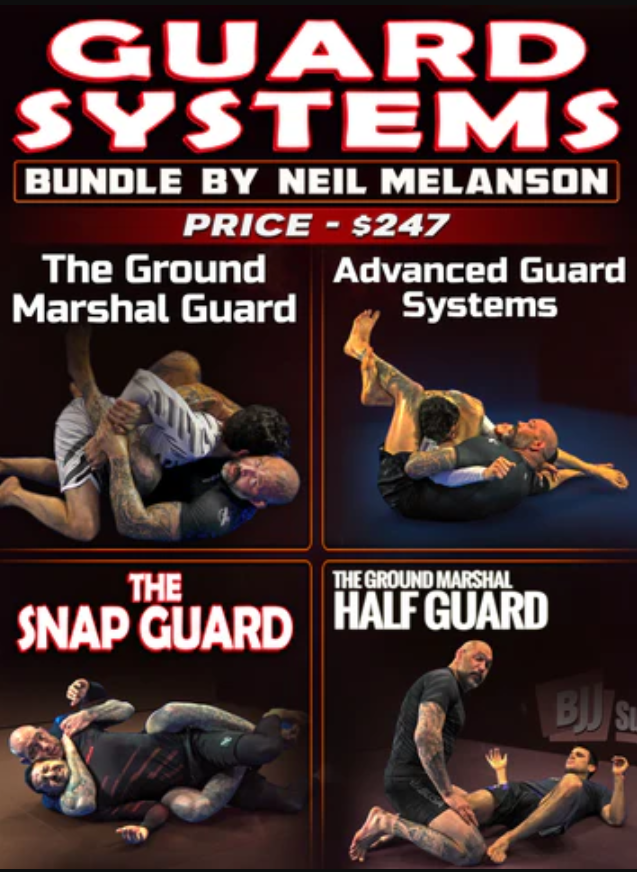
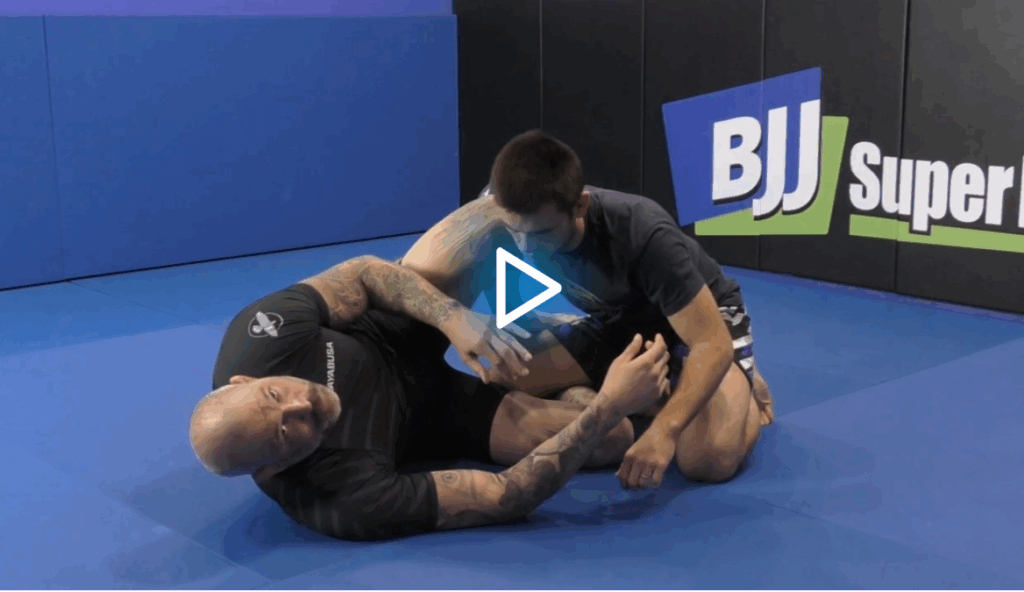
If you take away the kimono, you’re left with a slippery, sweaty opponent who can move way better than you — they are on their feet while you’re lying on the mats. Only one winner there. Unless you can attach and trap — now the game changes. But how can you hope to do that without learning the systems and tactics from the Guard Systems Neil Melanson DVD Bundle?
Ground Marshal Neil Melanson
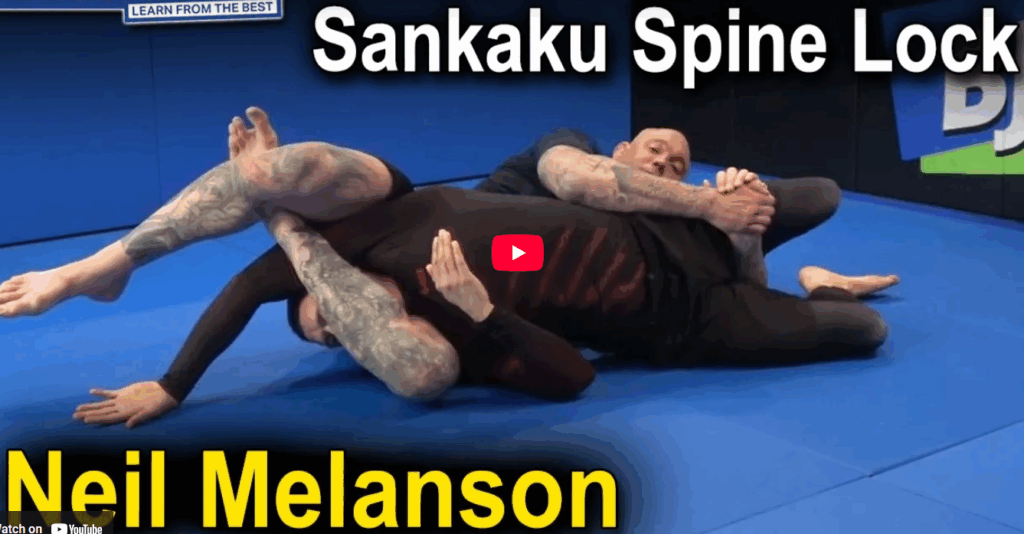
If you’ve never seen a Neil Melanson DVD, you have been missing out, and then some! Of course, with Neil, you get everything but your run-of-the-mill BJJ instructions. In fact, it’s not even BJJ — it’s something better: pure submission grappling focused on stuff that works reliably. And it’s painful.
Neil himself hasn’t walked, or better said, rolled, the usual progression in Jiu-Jitsu. He started off as a catch wrestler, and a darn good one, then Judo (he is a black belt under Karo Parisyan), and he also holds a black belt in whatever crazy submission style Gokor Chivichyan teaches. You know, leg locks and neck cranks based on pain — that kind of stuff.
Neil Melanson managed to take all this combined knowledge to a different level, introducing the logic and systematization of Jiu-Jitsu to the brutality of catch wrestling and submission grappling. His systems are as close to unstoppable as anything can get.
The Guard Systems Neil Melanson DVD Bundle is just one example of his work, but it is one that will surely revolutionize the way you set up guard attacks.
Our Guard Systems Neil Melanson DVD Bundle Review
Neil Melanson has a very unique style of putting together BJJ DVDs, which is apparent throughout this Neil Melanson Bundle. He likes to explain sequences rather than moves, and he uses longer (but fewer) chapters per volume to make his point. You’ll learn more in a three-chapter Neil Melanson volume than in entire Danaher DVD sets — there, I said it.
Guard Systems Neil Melanson DVD Ground Marshall Guard
Subject Matter:
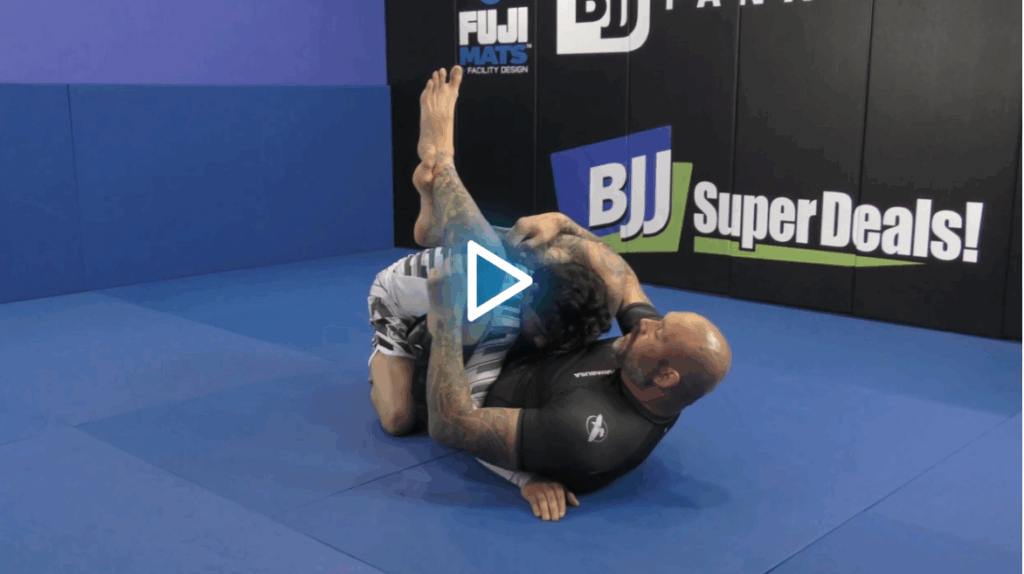
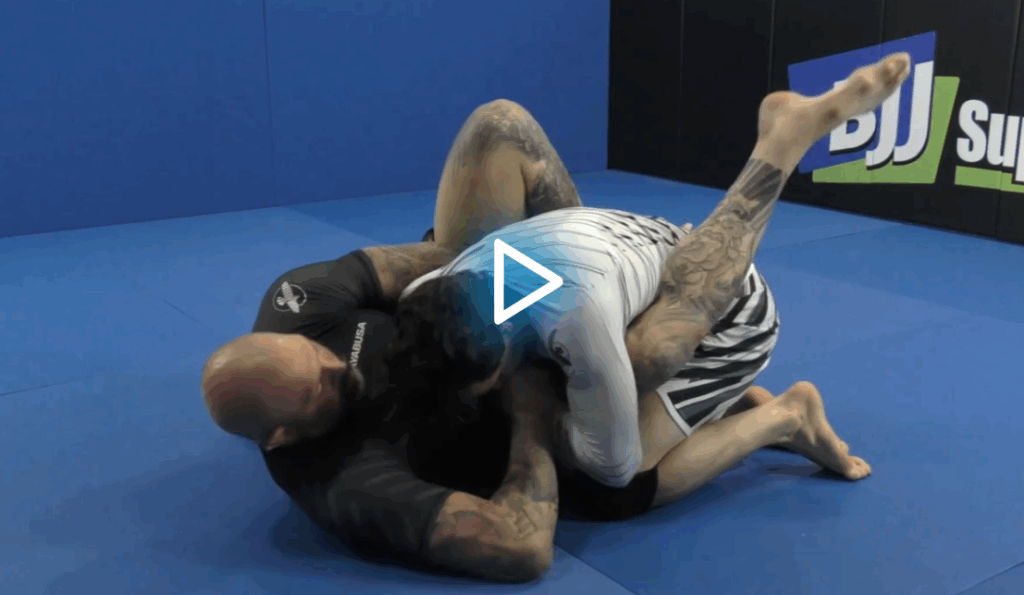
The Ground Marshall Guard, Neil’s signature guard system, is up first in this bundle, delivering a No-Gi system built around innovative traps from a closed/K-guard variation Melanson developed himself.
Key Points Covered:
You’ll learn how to attack from the bottom in a way that surprises everyone. The catch is, they won’t be able to create distance while you do. Neil begins with some basic positioning, sharing leg and foot control, and arm placement to set up the trap.
His signature triangles appear quite soon in this DVD and linger throughout. Later on, they’re joined by arm bars from high guard, Kimuras, and another one of Neil’s contributions to BJJ — the Irish Collar system.
Technical DVD Specifications:
This opening instructional of the Guard Systems Neil Melanson DVD Bundle contains four volumes, each with a different running time. The full length of this No-Gi instructional is around three hours.
This DVD is for folks who like to hit unexpected stuff from guard. It features an overhook variation that is very similar to the Williams guard, but somehow even more dangerous.
Key Points Covered:
The most diverse part of the Guard Systems Neil Melanson DVD Bundle is all about connecting different types of attacks from a guard that’s even stickier than the trap-ridden Ground Marshall Guard.
Neil immediately kicks it off with chokes, using the Guillotines as an intro before re-introducing the Irish Collar and, of course, triangles. Taking traps to a different level is the snare, and super-charging submissions are the Reverse Kimura, arm bars, and plenty of super-powerful sweeps.
A rendition of K-Guard also appears in this Melanson instructional, which means one thing: leg locks. Understandably, Neil pairs them with triangles and some catch wrestling craziness, such as fin locks. You’ll have to see it for yourself.
Technical DVD Specifications:
Another four-volume Neil Melanson bundle contribution, this one running for the better part of four hours. I doubt Neil has ever recorded something with the Gi, so this is another one intended for the No-Gi crowds.
Technical DVD Specifications:
Another four-volume Neil Melanson bundle contribution, this one running for the better part of four hours. I doubt Neil has ever recorded something with the Gi, so this is another one intended for the No-Gi crowds.
My personal favorite from the Guard Systems Neil Melanson DVD Bundle is the piece that breaks down the Snap Guard. It explains how to base your entire guard game around snap downs.
Key Points Covered:
This one contains lots of wrestling, with moves such as the Russian tie and arm drag featuring heavily, but it’s all done from the guard — there’s absolutely no standing involved. Neil uses these two attachments to launch a series of triangle-Kimura combos paired with some special, unique finishing moves that will turn you into a Neil fan instantly.
For those who really love headlocks, Melanson does a Schultz headlock breakdown better than the brothers who came up with it — it’s all here, along with cement mixers, cow catchers, and plenty of Whizzers.
Technical DVD Specifications:
Melanson delivers consistency throughout the bundle — this instructional offers an additional two and a half hours of guard nastiness, spread over four volumes.
The final part of the Neil Melanson guard puzzle is the half guard, appearing as a remake, or better said, an adjustment of the original Ground Marshall Guard already covered by Neil in this bundle.
Key Points Covered:
Just like the full guard version, the GM half guard is based on trapping the top person in a web of super-painful submission holds. These all depend on positioning, which is why the opening volume is all about hand and leg placement.
Once Neil smells blood, though, there’s no stopping him as he layers sweeps and submissions on top of each other until he gets a tap. Plenty of interesting ways to get on top feature first, followed by a set of triangle setups, nasty hammerlocks, and back takes.
The half guard is also a hub connecting all other guards from this Guard Systems Neil Melanson DVD Bundle, while also presenting a new position to hunt from — the octopus guard.
Technical DVD Specifications:
Neil provides around three hours of material with the quality, grit, and humor that we’ve come to expect (and love) from him. Structure-wise, he sticks to the proven four-volume format.
A Different Type of Guard Game
Melanson’s approach to guard may be simple, but it doesn’t make it easy. Quite the contrary. You won’t be watching long-winded explanations of how to pinch your arm when you grip, but rather get stuff that works.
Neil likes to get down and dirty as soon as possible. His guard systems all have the same tactical background — trap the opponent so they can’t move first, and attack with combinations rather than one-off moves.
In terms of trapping, you’re actually killing passing even before it begins, effectively taking guard retention off the table and reducing the stuff you need to worry about. It is smart, effective, and fun — no stalling with this game.
As for attacks, well, it’s safe to say that the Guard Systems Neil Melanson Bundle has such an abundance of attack options that I doubt anyone reading this and getting the DVDs is going to be able to hit all of them. I dare you to try it.
You’re struggling to figure out guard in No-Gi anyway — why not get a helping hand? The Guard Systems Neil Melanson DVD Bundle offers four helping hands, in the form of super-specific and just-as-effective instructionals on using guards. It’s not BJJ, and that’s exactly why it works perfectly!
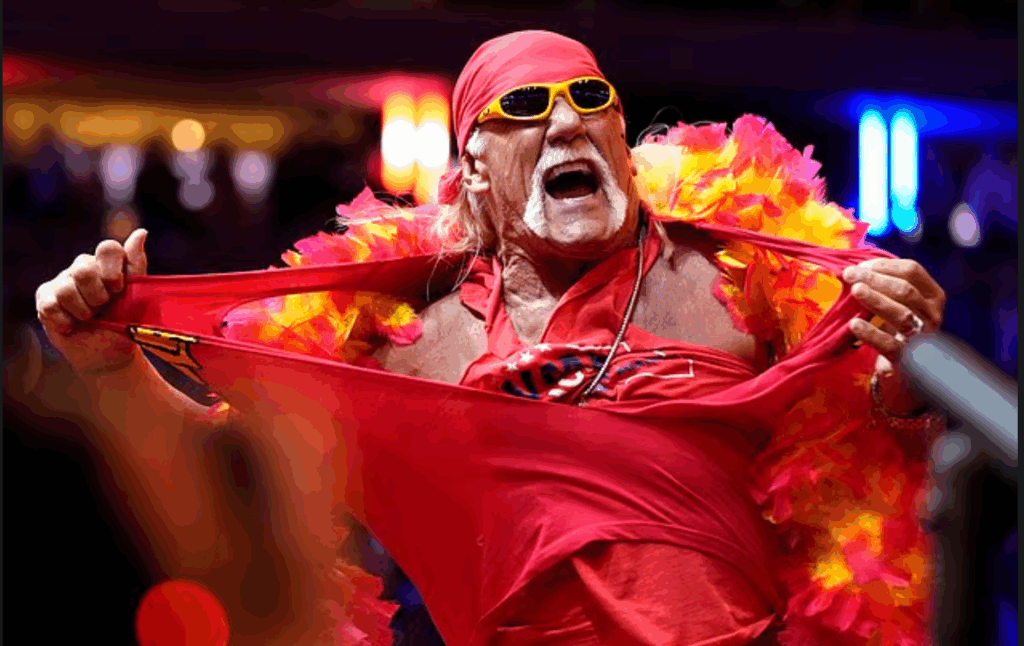
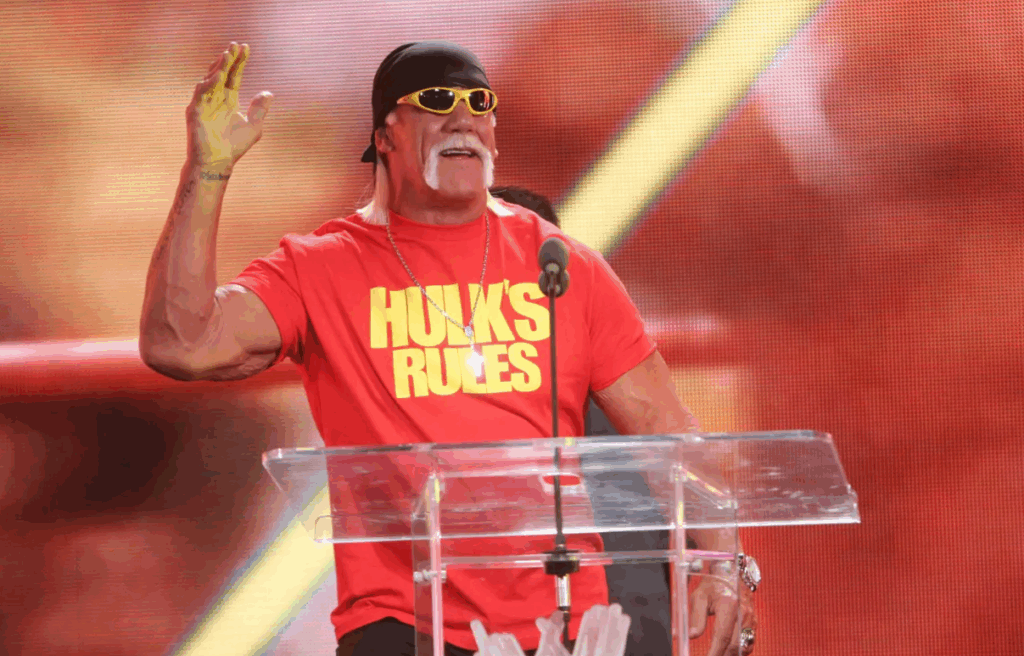
Hulk Hogan death was officially recorded as an acute myocardial infarction (heart attack).
A recent medical procedure and a reported phrenic nerve complication are drawing malpractice questions.
Hogan’s widow says the nerve was “compromised”; his daughter voiced doubts about other reported medical claims.
Authorities and medical reviews will clarify whether a surgical issue contributed to the Hulk Hogan death.
What We Know So Far About The Hulk Hogan Death
The Hulk Hogan death was recorded in late July 2025, with officials listing an acute myocardial infarction as the cause. That’s the medical term for a heart attack.
In the immediate aftermath, reporting noted first responders were called and Hogan was transported to a local hospital, where he was pronounced dead. Those baseline facts—the timing, the transport, and the heart attack finding—anchor everything that has followed.
Then came a new thread: the Hulk Hogan death may involve a complication from a recent procedure. Specifically, attention has zeroed in on the phrenic nerve, which controls the diaphragm and is crucial for normal breathing.
If damaged, patients can experience breathing difficulties that, in severe circumstances, contribute to respiratory distress.
That context is why the medical conversation around the WWE superstar’s death shifted from a straightforward heart attack to a more layered question: did something else meaningfully contribute?
Why A Phrenic Nerve Complication Is In The Spotlight
The phrenic nerve controversy isn’t internet rumor; it traces back to statements that the nerve was “compromised” during a recent procedure.
The Hulk Hogan death narrative, therefore, now involves two overlapping medical storylines—cardiac and respiratory. Doctors will tell you these systems are intertwined: compromised breathing can stress the heart, and cardiac events can follow complex physiological cascades.
That said, it’s important to separate what’s documented from what’s alleged. The official record cites a heart attack.
The phrenic-nerve angle remains under scrutiny, with potential implications for medical malpractice questions if any breach of standard of care is substantiated.
Until the complete medical file and any investigative findings are made public, the Hulk Hogan death remains a case with a clear official cause but unsettled contributing-factor questions.
What The Family Has Said—And What’s Still Unclear
Amid the speculation, the most relevant public statements have come from Hogan’s family. His widow, Sky, has said the phrenic nerve was affected during a recent procedure:
“The phrenic nerve was compromised during the procedure.” – Sky Daily (Hogan’s widow)
The quote is the crux of why the Hulk Hogan death is being discussed through a surgical lens at all. Meanwhile, Hogan’s daughter, Brooke, has publicly questioned other reported medical claims surrounding her father—another reminder that not every detail circulating online is settled fact:
“That’s what has me puzzled… they’re saying he had leukemia. I saw his blood work every time.” – Brooke Hogan
These statements do two things. First, they keep the Hulk Hogan death conversation grounded in the family’s on-record remarks rather than anonymous speculation.
Second, they underscore the information gaps that only official documents and reviews can fill—operative reports, hospital records, and any independent evaluations.
Is Anyone to Blame?
Where does this go from here? Expect a paper trail and a timetable. If a surgical complication materially contributed to the Hulk Hogan death, you’ll likely see requests for operative notes, anesthesia charts, and post-operative monitoring records.
If there’s a medical malpractice action, the standard of care—what a reasonably prudent clinician would have done in similar circumstances—will be the decisive yardstick. The Hulk Hogan death already has an official cause, but whether a phrenic nerve injury played a clinically significant role is a medical question, not a social-media vote.
The biggest question regarding the half guard is not which variation is the most effective, but rather what variation fits a given situation and when to shift to a different one. That’s a question that’s not easy to answer, and yet, the Basics To Advanced Half Guard Aaron Benzrihem DVD Bundle manages to deliver.
Aaron’s take on basics that lead to advanced tactics is right up there with the best of them, and he does an excellent job at delivering, and more importantly, organizing the material. This Gi instructional is one that you need to pick up if you like the half guard—it’ll make you better in no time!
Bernardo Faria Protégé Aaron Benzrihem
If you have no idea who Aaron Benzrihem is, you can be forgiven—he is not a staple name in BJJ just yet. You can expect that to change quickly though, partly because of his success in competition, and partly because of his impeccable coaching work which results in releases such as the Basics To Advanced Half Guard Aaron Benzrihem DVD Bundle.
Aaron has been Bernardo Faria’s trusted sidekick since the World Champion’s move to Boston, following him from Florida so that he could train and teach at Faria’s academy. A light featherweight competitor himself, and a black belt under Bernardo, Benzrihem has been building himself on YouTube as much as on the mats.
He has a very recognizable style, looking for lots of leg locks, but not in the way you think—he likes calf slicers and has really developed an understanding of them that’s possibly unrivaled in BJJ. He loves using the half guard to set everything up, which is exactly what he breaks down in the bundle we’re looking at here.
The Basics To Advanced Half Guard Aaron Benzrihem DVD Bundle Review
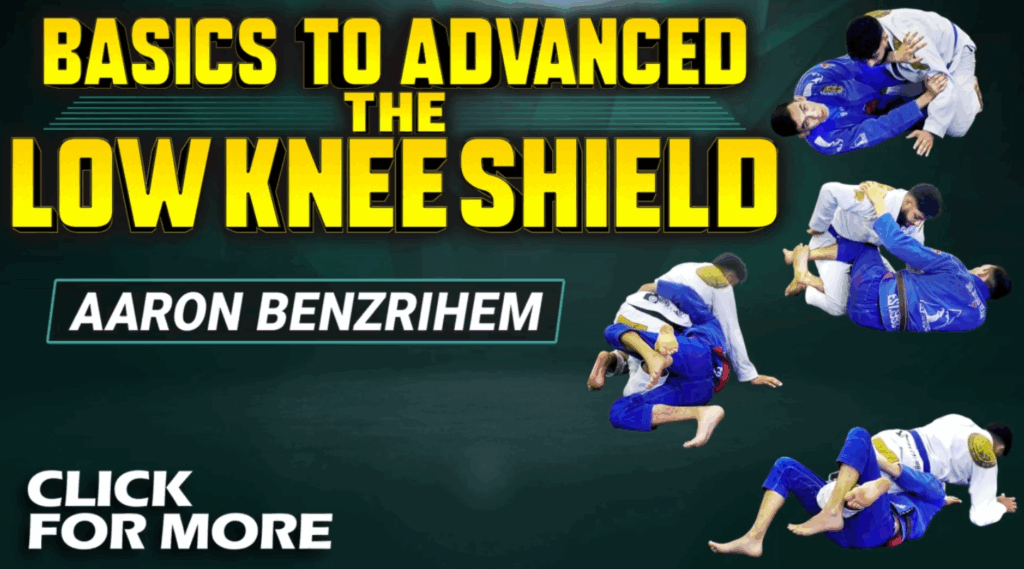
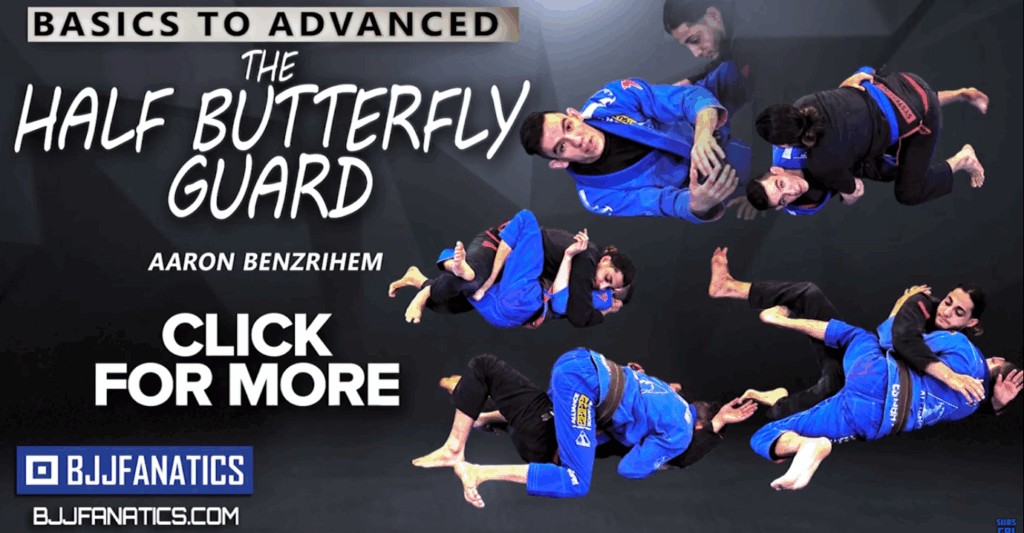
The Aaron Benzrihem Half Guard Bundle delivers over seven hours of info on playing and connecting two of the most commonly used half guard variations: the low knee shield and half butterfly. It is a Gi instructional, but almost all the material transfers directly to No-Gi as well.
First up in the Aaron Benzrihem bundle is the knee shield, more precisely the low variation that most people tend to avoid. Aaron explains why, and how it offers different and maybe even better options than the high knee shield.
Key Points Covered:
The Basics To Advanced Half Guard Aaron Benzrihem Bundle kicks off with a long instructional on the low knee shield half guard. It features positional control principles, key info on when it works best, and great details on the key element—clamping.
Entries to the position from various other guards and scrambles are up next, leading to different strategies for dealing with top players attacking from different levels. Aaron uses attack positions to set up a reactive game that is all about baiting and waiting until the right moment.
Sweeps, submissions, and back takes are scattered in almost every chapter of the DVD, including Aaron’s signature calf slicers. Pass prevention and guard recovery methods also feature toward the end, with a great review of all the material, including discussions wrapping things up.
Technical DVD Specifications:
This six-part BJJ DVD instructional by Aaron Benzrihem contains about three hours of material on the low knee shield half guard that’s jam-packed with awesome details. The instructional is intended for Gi Jiu-Jitsu players.
Part two of the Aaron Benzrihem Half Guard Bundle targets the half butterfly, a subject covered by many. What makes this instructional stand out is its carefully segmented delivery of the material that makes it easy to build a game around it—even for white belts.
Key Points Covered:
Aaron starts off with core principles again, offering control points, gripping strategies, and crucial movement mechanics. With that base, it is easy to deliver the details on sweeping with under and overhooks, hitting super-fast Choi bars, and recovering the guard.
What you can expect to learn from this DVD is how to connect passes directly with your sweeps from the half butterfly position, and how to end up in mount or the back. There is a dedicated volume to exploring leg entanglements, and the low knee shield and deep half also make an appearance.
Finally, since this is a Gi DVD, collar chokes also appear, mostly in the form of baseball bat and cross-collar chokes. Omoplatas, Kimuras, and plenty of inverted (a.k.a. violin armbars) also feature toward the end.
Technical DVD Specifications:
The final part of the Basics To Advanced Half Guard Aaron Benzrihem DVD Bundle delivers 4 hours of top-quality material on the half butterfly. Six volumes ensure precise organization of the material and make it super easy to browse and search once you’ve gone through it once.
Understanding the Hierarchy of Half Guards
Let me ask you this—Which half guard variation is the best one? If your answer is “It depends,” no matter how vague it may sound, you’re correct. That, however, brings us to another conundrum—what does it depend on? How do we know when to use each one and when to give up on it?
These are the details that divide the world champions from everyone else, and also the details that can make you a very dangerous half guard player. The bottom line is that you need more than just one half guard variation. Ideally, you’d have at least three to shuffle when you roll or fight.
That said, sticking to the most commonly used variations, which also happen to be quite intuitive to use, is your best bet if you’re about efficiency and an attack-oriented game. The Aaron Benzrihem Bundle offers a couple of half guard variations along with the roadmap to connect them. Not a bad place to start.
What you’ll notice when going through the BJJ ranks is that what you consider to be fundamental is actually as advanced as possible, and what you think is advanced is just noise. There, I said it. Going from basic to advanced doesn’t mean replacing all your moves with more complex ones—it means getting incredibly efficient at the basics.
The Basics To Advanced Half Guard Aaron Benzrihem DVD Bundle is one of the rare BJJ DVDs that can guide you through this process, at least when you’re targeting half guard improvements. Try it out—you won’t end up disappointed, that much is guaranteed.
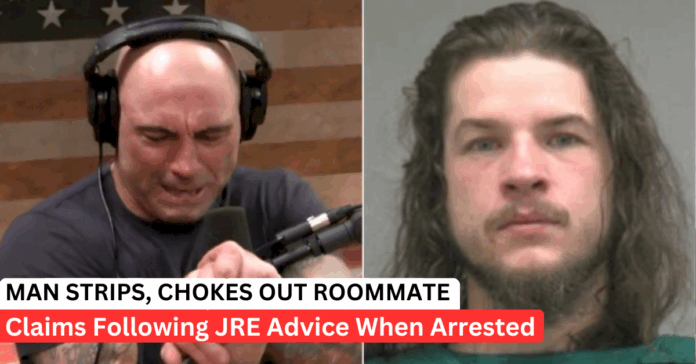
Police say a Gainesville, FL resident was a man arrested for choking roommate during a late-night confrontation.
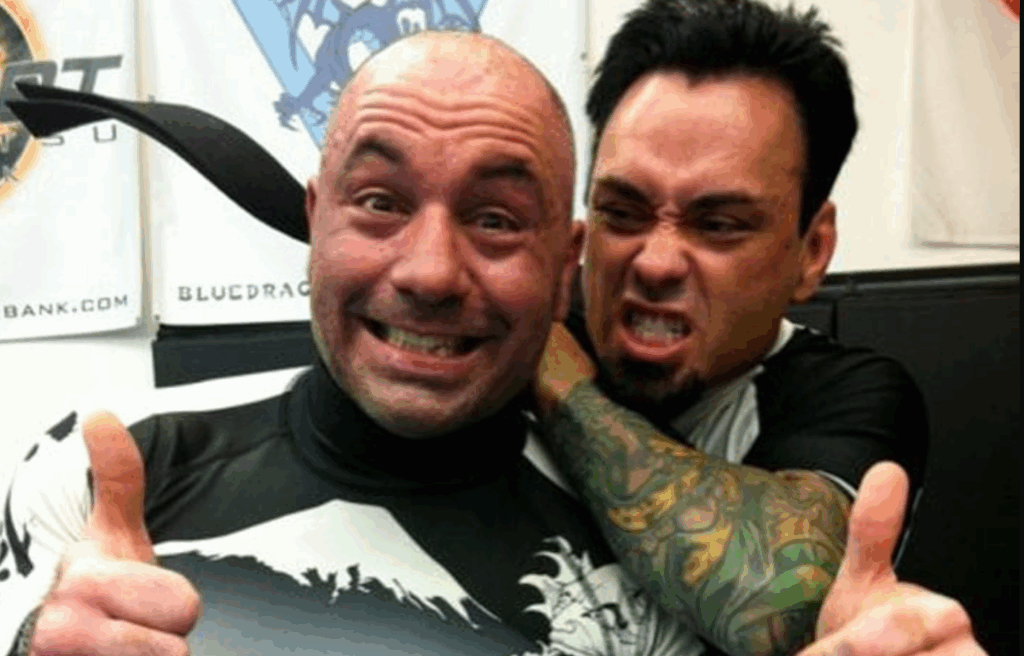
The arrest report cites a rear-choke attempt, shorts removed “to reduce friction,” and a claim of advice learned from a Joe Rogan podcast.
The suspect, identified as Evan Trlak, 24, was booked on misdemeanor battery and later released on his own recognizance with no-contact conditions.
Officers noted the victim escaped without airway restriction; the incident unfolded inside the pair’s shared residence.
What Happened Inside The Gainesville Apartment
According to the arrest narrative, officers responded around 3 a.m. to a domestic disturbance at a shared residence in Gainesville.
There, they described a man arrested for choking roommate after an argument escalated in the living room. The report identifies the suspect as Evan Trlak, who allegedly approached his roommate from behind on the couch, after stripping his clothes, and initiated a choke attempt.
The victim, whose airway was not fully restricted, managed to break free and create distance, per the officer’s account.
“[Trlak] walked to the east side of the couch, took off his shorts to be in just his underwear, climbed on the couch, and placed the victim in a chokehold from the rear… The victim’s airway was not restricted, and he was able to escape quickly after.” – Officer Brandon Vidal, Gainesville Police Department –
The report further notes the confrontation began after frustrations over the victim’s gaming on the couch. In the immediate aftermath, police documented no life-threatening injury; nonetheless, the late-night call ended with a man arrested for choking roommate on a battery charge.
Police Report Details And The Podcast Angle
Post-Miranda, the officer wrote, Trlak gave a rationale that turned heads: he said he removed his shorts to cut down friction—something he claimed to have picked up from a Joe Rogan podcast—before attempting the rear choke. Investigators also recorded his stated motive as an effort to “assert dominance” over the roommate.
“Post Miranda, [Trlak] stated he removed his shorts to create less friction (per some advice he received from a Joe Rogan podcast) and placed the victim in a chokehold.” – Officer Brandon Vidal, Gainesville Police Department –
While the arrest report references the Joe Rogan podcast, there is no indication Rogan or the show advised criminal behavior. What is documented—and central to the charges—is the sequence of actions officers say culminated in a man arrested for choking roommate during a domestic dispute.
“[Trlak] said the victim has been in the house doing nothing but playing video games and sitting on the couch… [He] stated he wanted to assert his dominance over the victim, so he placed him in a chokehold and took off his pants.” – Officer Brandon Vidal, Gainesville Police Department –
Man Arrested For Choking Roommate And Released With Conditions
Police took Trlak into custody on a misdemeanor battery count. After booking at the Alachua County Jail, he was released on his own recognizance with a no-contact order concerning the roommate, per the report.
That sequence—getting arrested for choking his roommate, then released under conditions—tracks with standard local procedure in comparable low-level domestic battery cases where no severe injury is recorded and a judge imposes protective terms.
The arrest narrative also underscores that the victim freed himself before the choke could threaten breathing, a detail that factored into how officers documented the encounter and the resulting charge.
Even so, the incident remains a criminal matter, triggered by what officials describe as an unprovoked choke attempt inside a shared home—legally framed as a man arrested for choking roommate.
When Internet Advice Meets A 911 Call
The episode highlights a simple boundary: content consumed online is not a defense for physical confrontation.
The arrest report’s references to a podcast and “dominance” are context, not justification—particularly in a case recorded as a man arrested for choking roommate inside a private residence.
The decision to apply a chokehold, even one that didn’t fully restrict the airway, is precisely the kind of escalation that moves an argument into criminal territory, as reflected in the battery charge documented by Gainesville police.
Ultimately, the file speaks for itself: a late-night dispute, a choke from behind, and the man arrested for choking out ahis roommate on a misdemeanor battery allegation—followed by release under court-ordered limits.
Whatever someone thinks they learned online, the consequences land in the real world, on a booking sheet and a judge’s docket.
Ivanka Trump Jiu-Jitsu training is suddenly part of a larger conversation around a potential UFC White House event.
The discussion blends sport, politics, and pop culture in a way few MMA stories do.
A White House Event with UFC would be unprecedented and raises both logistical and ethical questions.
For BJJ training and women in grappling, the visibility could be significant—if handled responsibly.
Ivanka Trump Jiu-Jitsu Skills
Ivanka Trump Jiu-Jitsu has become a shorthand for the sport’s growing cultural reach.
That a high-profile public figure is linked to Brazilian Jiu-Jitsu—at the same time talk swirls about MMA At The White House—underscores how mainstream the grappling arts have become.
It’s not simply novelty; it signals that BJJ training is now a lifestyle choice embraced by executives, entertainers, and political families alike.
For the UFC White House conversation, this detail adds a human subplot: a daughter in a historically political family tied to a sport that prides itself on meritocracy and grind.
The reason this resonates is the dual identity of modern MMA. On one hand, the UFC is a global entertainment product; on the other, its roots remain in small gyms where technique matters more than status.
Ivanka Trump, a Jiu-Jitsu enthusiast, sits at that intersection. It makes the potential White House Event feel less like a stunt and more like a reflection of how combat sports now live in the center of American culture.
How A UFC Fight Night At The White House Would Work
A UFC White House Event would be a first-of-its-kind production with moving parts that go well beyond a typical fight week. Security, capacity, cage placement, medical operations, and broadcast infrastructure would all need to align with the standards of both the promotion and a federal complex.
Think tight load-in windows, credentialing layered on top of existing Secret Service protocols, and contingency plans for weather and protests.
Dana White’s organization has a history of building shows in unorthodox settings, but the symbolism of staging MMA at the White House is on another level.
You’re not just talking about hospitality tents and camera trusses—you’re grappling with what it means to put a cage inside the nation’s most recognizable address. That symbolism cuts both ways: it’s a marketing dream and a governance headache, and either outcome would be dissected in prime time.
Optics, Politics, And The MMA Crossover
The optics debate is unavoidable. Supporters will see a White House Event as a cultural milestone—an acknowledgment that MMA has earned the same ceremonial oxygen as championship teams visiting with trophies.
Critics will argue it blurs the lines between political branding and private enterprise. In that swirl, Ivanka Trump Jiu-Jitsu becomes a talking point that’s easy to headline: it personalizes the story and makes it relatable beyond fight diehards.
But strip away the noise and you’ll find a question that matters to the sport: does a spectacle like this elevate the athletes and the craft, or does it reduce them to backdrops for a news cycle?
The answer depends on execution. If the event platforms technique, history, and the sport’s safety evolution, then the crossover is constructive. If it leans only on celebrity cameos, it’s a missed opportunity.
Ivanka Trump Jiu-Jitsu and a White House UFC Fight Card
Here’s the bottom line: Ivanka Trump Jiu-Jitsu is a symbol that MMA’s center of gravity now includes boardrooms and briefing rooms, not just fight camps.Whether or not a UFC White House Event happens, the mere fact it’s on the table proves the sport’s ceiling is higher than pundits thought a decade ago.
If it goes forward, the measure of success won’t just be ratings—it will be whether the production showcases the discipline, craft, and athlete welfare that built this community.
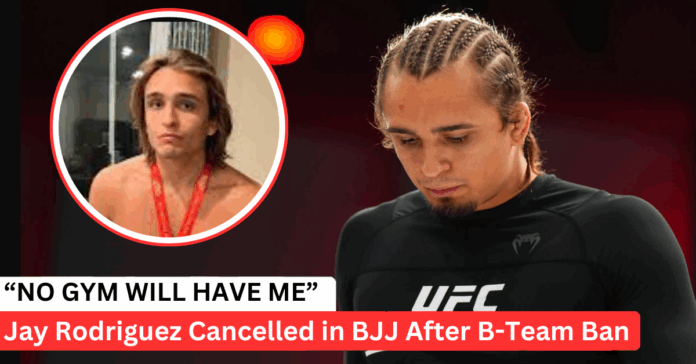
Jay Rodriguez Cancelled in BJJ is the central claim after his split from B-Team, with access to elite rooms reportedly drying up.
He says he’s “blacklisted” in top Austin gyms and hasn’t trained for months after the B-team ban, highlighting how gatekeeping works in practice.
The story spotlights BJJ politics: brands, sponsors, and risk management often decide who trains where—more than merit alone.
Whatever you think of the controversy, the case forces a debate about due process, athlete support, and the real meaning of “team.”
Jay Rodriguez Cancelled in BJJ isn’t just a headline—it’s the thesis he’s been pushing since his sudden ejection from B-Team.
In a recent sit-down, Rodriguez described a chain reaction that started with his ban after abuse allegations and ended with a cold reality: the best rooms don’t want him. The ripple effect isn’t theoretical; it’s where training actually happens—or doesn’t—for a high-level competitor.
“I can’t train in Austin specifically… anywhere worth going to.” – Jay Rodriguez
Inside The Fallout Of Jay Rodriguez Cancelled In BJJ
For an athlete who lives in the room, the “ban” isn’t symbolic—it’s the gym doors that no longer open. That’s where Jay Rodriguez Cancelled in BJJ becomes a career limiter, not just a social stigma.
He’s been blunt about the practical impact: elite mats are scarce and geographically clustered. In Austin, the density of world-class rooms makes it a super-hub. Lose access there, and the daily sparring that shapes your timing, reactions, and confidence evaporates.
When Jay Rodriguez Cancelled in BJJ moves from rumor to reality, it shows up in the quality of partners he can (or can’t) find.
“I don’t train at all… for like maybe two or three months.” – Jay Rodriguez
Blacklists, Closed Doors, And A Shrinking Map
Let’s talk mechanics. If you’re persona non grata at one flagship gym, the message can travel fast.
Owners share information, sponsors worry about optics, and suddenly the “Where can I drop in?” question becomes a game of musical chairs with no empty seat. That’s why the phrase Jay Rodriguez Cancelled in BJJ keeps popping up—it reflects how quickly informal networks can harden into practical roadblocks.
It also reframes how we think about “team.” BJJ markets itself as a meritocracy: tech beats clout, leverage over muscle, points over politics.
But teams are brands now, tied to events and streaming numbers. If a brand decides you’re a reputational risk, your route back isn’t just “win a few superfights.”
It’s reputational rehab plus months of drilling without the partners who made you sharp in the first place.
Training Without A Tribe — What That Really Costs
Every contender knows the difference between hobbyist rounds and rooms that feel like shark tanks. Lose the latter, and your feedback loop breaks. You’re no longer getting punished for small mistakes by peers who can exploit them in a heartbeat.
Over time, that erodes match fitness, decision-making under fire, even self-belief. That’s why Jay Rodriguez Cancelled in BJJ is not mere rhetoric—it’s a training-camp death by a thousand cuts.
Rodriguez has tried to reframe the downtime—lifting, eating, recalibrating—while stressing he’s made personal changes. But high-level jiu-jitsu is a timing sport.
Without regular exposure to top-tier scrambles, even an ADCC medalist begins to feel a step behind. Jay Rodriguez Cancelled in BJJ ultimately measures out in beat-the-count details: late wrestle-ups, missed back exposure, the half-second windows that once felt automatic.
“I feel like I got cancelled in BJJ, like for real… The reaction I got from people in the community was just insane.” – Jay Rodriguez
Ethics, Process, And The Power Of Team Brands
There are two debates running in parallel. One is about behavior and accountability—non-negotiable topics in a sport that’s finally confronting how athletes, teams, and influencers wield power.
The other is about process: who decides the penalty, how long it lasts, and whether a path back exists. When Jay Rodriguez Cancelled in BJJ becomes the default setting with no clear off-ramp, the sport ends up outsourcing justice to whispers and sponsorship calculus.
Supporters argue that gyms are private businesses and have every right to refuse entry. Critics respond that a sport built on personal reinvention needs a transparent framework for suspensions, reinstatements, and conditions for return.
Both can be true: protect the room, protect the brand—yet still outline a due-process model that doesn’t reduce a career to rumor management.
Where Jay Rodriguez Cancelled In BJJ Goes From Here
The next chapter hinges on whether any high-level room gives him a structured lane back—clear expectations, timeboxed restrictions, and an accountability plan. Without that, Jay Rodriguez Cancelled in BJJ remains the story, and the practical effect is straightforward: fewer elite rounds, fewer reps under pressure, fewer meaningful opportunities.
If a gym does open its doors with guardrails, the narrative changes. Now you’ve got a test case the whole sport can watch: can a top athlete rebuild trust, recalibrate, and compete at the same level after months on the shelf?
One decision from a single room could turn Jay Rodriguez Cancelled in BJJ from a verdict into a transition period. That’s the tension—between protection and possibility—that will define what happens next.
Mica Galvao PEDs story has re-ignited debate after the prodigy framed his failed test around guidance he received from people in his circle.
The framing shifts attention from individual responsibility to coaching, medical, and managerial oversight in elite BJJ.
Even with a USADA sanction in the rearview, the sport is still grappling with how to educate young stars and prevent repeat outcomes.
The conversation now centers on safeguards, not scapegoats—and what accountability looks like for athletes and teams alike.
A High-Profile Defense, With The Spotlight On Others
When a generational talent speaks, the room listens. That’s why the renewed attention on Mica Galvao PEDs matters: he’s not simply rehashing a suspension; he’s characterizing the misstep as an outcome influenced—at least in part—by those around him.
For fans, the framing lands like a plot twist. For coaches and managers, it’s a reminder that advice given to a 19- or 20-year-old phenom carries enormous consequence. For the athletes who idolize him, it’s a cautionary tale about the blurry line between trust and due diligence.
“When I went to [the] US, they told me that my testosterone level was very low. They said that they could help me up just to bring it back to normal. For me, I didn’t understand a lot. I was 17. I was just trying to compete and I put my trust in into the doctor at that time and I think it was a mistake.” – Mica Galvão, in “The Year of Mica”
Whether you see the comments as context or deflection, the hard truth doesn’t change: anti-doping rules put the final responsibility on the athlete. That’s not just legal boilerplate—it’s the foundation of competitive integrity.
And yet, Mica Galvao PEDs discourse now forces the sport to interrogate the ecosystem: Who’s vetting supplements?
Who’s educating prospects on strict-liability? Who’s tracking paperwork and therapeutic exemptions—if any exist?
A star’s confession that “others” played a role resonates because everyone in BJJ recognizes the informal networks that shape careers long before the bright lights of a world final.
Mica Galvao PEDs And The Question Of Accountability
There’s a reason the phrase Mica Galvao PEDs keeps ricocheting across the community: it sits at the intersection of agency and influence.
Young grapplers often operate inside tight inner circles—coaches, S&C staff, teammates, sponsors—where the line between mentorship and management blurs. If that circle even hints that a gray-area shortcut is normal or necessary, the slope is greased.
Still, accountability can’t be a moving target. If an athlete embraces the benefits of a professionalized team—travel managed, camps programmed, nutrition curated—he also inherits the burden of asking hard questions.
“When I went to [the] US, they told me that my testosterone level was very low. They said that they could help me up just to bring it back to normal. For me, I didn’t understand a lot. I was 17. I was just trying to compete and I put my trust in into the doctor at that time and I think it was a mistake.” – Mica Galvão, in “The Year of Mica”
What’s in the bottle? What’s the batch number? Has this specific compound ever triggered an adverse finding?
The most uncomfortable part of the Mica Galvao PEDs narrative is that it challenges every aspiring champion to become a skeptic, not a passenger, when the stakes are career-defining.
What The USADA Sanction Still Means
USADA sanctions are more than dates on a calendar. It lingers in the metadata of a career—Google results, broadcast mentions, the quiet second glance from a future sponsor.
That’s why the current focus on Mica Galvao PEDs doesn’t just revisit a timeline; it underscores how a single result reshapes public trust.
In practical terms, the sanction forces a reset: clean testing, transparent protocols, and a return to competition where every dominant exchange is viewed through a newly skeptical lens.
This is also a teachable moment for organizers and gyms. Anti-doping in BJJ isn’t a switch you flip at elite events; it’s an education pipeline. Seminars for junior belts, standardized supplement policies at major academies, and documented sign-offs for anything ingested or injected—all of it reduces risk.
If the sport doesn’t want the next Mica Galvao PEDs-style headline, then safeguards must become culture, not crisis management.
The Ecosystem Problem: Young Stars, Big Pressure, Bad Information
The youngest breakout names are also the most vulnerable to bad guidance. They’re asked to be full-time athletes before they’ve had a full semester of anti-doping literacy.
That’s how the pressure cooker creates rationalizations: “Everyone’s doing something,” “This stack is safe,” “You’ll be fine by test day.”
The Mica Galvao PEDs discussion exposes how quickly that logic can warp priorities. The antidote is unglamorous: third-party tested supplements only, a named compliance lead in every camp, and independent medical advice that isn’t filtered through incentives.
For teams, the cost of discipline is far cheaper than the cost of scandal. One flagged product can unravel a decade of careful brand-building.
And for athletes, a single mistake can become the asterisk that chases them from Abu Dhabi to Las Vegas.
How The Message Lands With The Next Generation
Here’s the twist: even as he points to external influence in one of the most high-profile cases of doping in Jiu-Jitsu in 2025., Galvão is also telling kids not to repeat the mistake. That duality matters.
The safest interpretation is the most useful one—treat Mica Galvao PEDs not as a pass, but as a warning label.
“People think that it’s kind of normal for you to use stuff on jiu-jitsu. And I don’t want kids to grow up thinking about it.” – Mica Galvão, in “The Year of Mica”
If you’re 16 and on a rocket ship to the black-belt ranks, assume every supplement is suspect until proven otherwise.
If you’re a coach, assume your advice will be treated as gospel and documented like a prescription. If you’re a parent, ask for the paper trail. This is the boring, meticulous work that prevents careers from detouring into arbitration and press releases.
The Comeback Starts When The Blame Stops
At some point, the conversation has to pivot from explanation to example. If the Mica Galvao PEDs saga ends with an athlete who competes clean, advocates loudly, and helps install guardrails for the next wave, then the legacy of this moment changes.
That won’t erase a sanction, but it can outgrow it—and in a sport that prides itself on solving problems under pressure, that’s the only win that matters.