

BJJ Instructor Arrested At Academy Hours After Alleged Domestic Assault

BJJ Instructor Arrested At Academy Hours After Alleged Domestic Assault
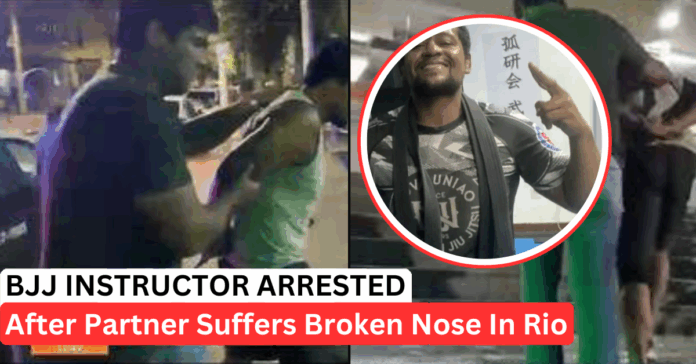
  • BJJ instructor arrested in Rio de Janeiro on Friday, Oct 10, after an alleged assault inside a Mangueira residence.
  • Victim suffered a broken nose and extensive bruising; police say punches and kicks were used.
  • Suspect detained at the Tijuca academy where he teaches; custody reportedly converted to preventive detention.
  • Investigating chief says the suspect acknowledged a “disagreement” on arrest; police dispute his account versus the injuries.

Gym Pickup Just Hours After The Alleged Attack

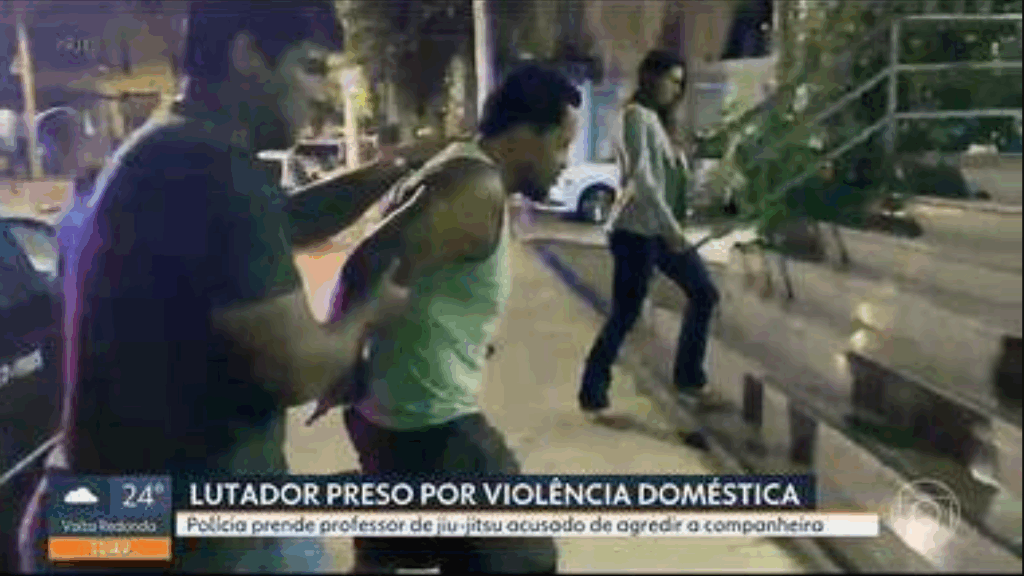
A BJJ instructor arrested in Rio de Janeiro was taken into custody on Friday evening, Oct 10, mere hours after an alleged domestic assault at a home in Mangueira, North Zone.

Investigators tracked the suspect—identified in local reports as Weniton Barker Modesto—to the academy where he teaches in Tijuca, detaining him before a scheduled class.

Early medical reports cite a nasal fracture and “extensive bruising,” injuries police say were caused by repeated strikes.

“He confessed. He said there was a disagreement and claimed he was also assaulted by his partner. However, from the moment we arrived, he said: ‘I know I had a disagreement with my wife,’ showing he knew exactly why we were there.”
– Police Chief Maíra Rodrigues –

Authorities say the victim called emergency services and was treated at Souza Aguiar Municipal Hospital before filing a report. After the flagrante (in-the-act) arrest, a judge converted custody to preventive detention, signaling seriousness of the allegations while the case proceeds.

Inside The Case File: Injuries, Threat Allegations, And Police Skepticism

The case file lists a broken nose and widespread bruising consistent with blunt-force trauma. Investigators also note threats allegedly made during the incident.

The suspect reportedly offered a partial admission—calling it a “disagreement”—while attempting to minimize the violence. Detectives, however, say the statements don’t align with the documented injuries.

“The problem is that the entire version he presented is not compatible with the injuries the victim suffered—especially the broken nose and bruising across her body.”
– Police Chief Maíra Rodrigues –

With preventive detention in place, the next steps are standard: complete medical documentation, witness statements, and the suspect’s formal testimony.

The charges fall under Brazil’s Maria da Penha Law, which increases penalties and procedural protections in domestic violence cases.

What We Know (And Stuff We Don’t)

Some facts of the incdent are suepr clear, but not everything is cut and dry at this point:

  • Confirmed: BJJ instructor arrested on Oct 10; pickup at a Tijuca academy; incident location in Mangueira.
  • Confirmed: Hospital treatment, a nasal fracture, and extensive bruising.
  • Confirmed: Preventive detention ordered while police continue the investigation.
  • Disputed/Alleged: Suspect’s attempt to frame the episode as mutual aggression; investigators say injuries contradict that narrative.
  • Pending: Defense counsel comment; full judicial schedule; any additional protective measures.
BJJ Instructor Arrestedin Rio After Alleged Domestic Assault

This Story Is Exploding In BJJ Circles

The story of the Jiu-Jitsu teacher arrested in Brazil on domestic violence charges hits hard because BJJ instructors occupy positions of trust—in rooms with minors, families, and newcomers.

This case shot across Brazilian news and grappling outlets in hours because of three ingredients: a same-day arrest, graphic injury detail (broken nose), and on-the-record police quotes directly challenging the suspect’s version.

As the investigation advances, prosecutors will decide whether to formalize charges of bodily harm and criminal threats under Maria da Penha.

Preventive detention means the suspect remains jailed as the file develops. For readers following the case: expect a court date and more filings in the coming days. For gyms watching from afar: this isn’t a social-media referendum—it’s a police file with medical exhibits and sworn statements.

Bottom line: A BJJ instructor arrested in Rio now faces a high-stakes legal battle, with medical records and police testimony at the center. We’ll update when the court calendar lands.

Magids Abstract Armlocks Magid Hage DVD Review [2025]

Magids Abstract Armlocks Magid Hage DVD Review

Key Takeaways

  • A No-Gi DVD that explores arm submissions from angles most opponents never expect. 
  • Magid Hage shows how to hunt arms from guard, top position, scrambles, and even “bad” spots.
  • Hage provides chains and sequences that turn single attempts into multi‑step traps.
  • BJJ World Expert Rating: 8.5 out of 10. 

ABSTRACT ARMLOCKS MAGID HAGE DVD GET HERE

Magids Abstract Armlocks Magid Hage DVD aims to reinvent the way grapplers think about armlock submissions. Instead of focusing on classic straight arm bars alone, it presents an abstract system for isolating and finishing arms from virtually anywhere.

In this review we’ll examine the structure of the instructional, discuss the often‑overlooked world of armlocks, explore Magid Hage’s background, and then evaluate each part of the instructional before offering practical advice and final thoughts.

How Many BJJ Armlock Variations Do You Know Of?  

Armlocks are among the most underrated submissions in grappling, very often taken for granted. Apart from being the most efefctive/most used finish in BJJ history, they are versatile, sneaky, and simple. Plus you can hit them in Gi or No‑Gi from guard, passing or transitional positions.

There are a lot more armlocks than you can imagine. Yeah, it goes way past just Americanas, armbars, and Kimuras, or the odd Omoplata, if you know what you’re doing. There are plenty of super quick finishes that you can do from spots that shouldn’t offer submission (like inside the closed guard—something covered in this Magids Abstract Armlocks DVD).

Craig Jones managed to build a great game based on the threat of his Choi bars, and others have replicated that. Armlocks will help you become better at BJJ simply because even if people manage to defend them, they’ll do so at the expense of positions or other submission setups.

Magid “Gorilla Hands” Hage

Magid “Gorilla Hands” Hage IV is known for his big hands, fluid style and love of surfing. Born in Brazil and introduced to Jiu‑Jitsu by his father, Magid Hage III, he started training at 10 years old when there were no kids’ classes.

The family moved to San Diego in 1999 where his father taught at Gracie Barra; this is where his Jiu‑Jitsu journey truly began. Hage received his black belt at age 19 and quickly gained international attention by submitting high‑level black belts with his signature baseball‑bat choke.

The lightweight competitor is now one of the head instructors at Surfight, a Jiu‑Jitsu academy in the Del Mar area of San Diego. He balances teaching with his passion for surfing and snowboarding—he surfs every day in summer and snowboards in winter.

Hage describes his grappling style as “sneaky… very sneaky” and emphasizes drilling basics while maintaining a couple of unpredictable moves. He has won titles such as Copa Pacifica, the California State Championship, and took second at the Pan American Championships.

In recent years, Hage returned to high‑level competition, earning a silver medal at the ADCC West Coast Trials. He credits his success to constant experimentation—copying the styles of peers in his gym and refining them.

His imposing grip strength gives rise to the moniker “Gorilla Hands,” and he notes that when he applies submissions, his large hands make escape nearly impossible. While you might not have his hands, you can certainly have his armlock attacks, courtesy of this Magid Hage DVD we’re looking at today.

Detailed Magids Abstract Armlocks Magid Hage DVD Review

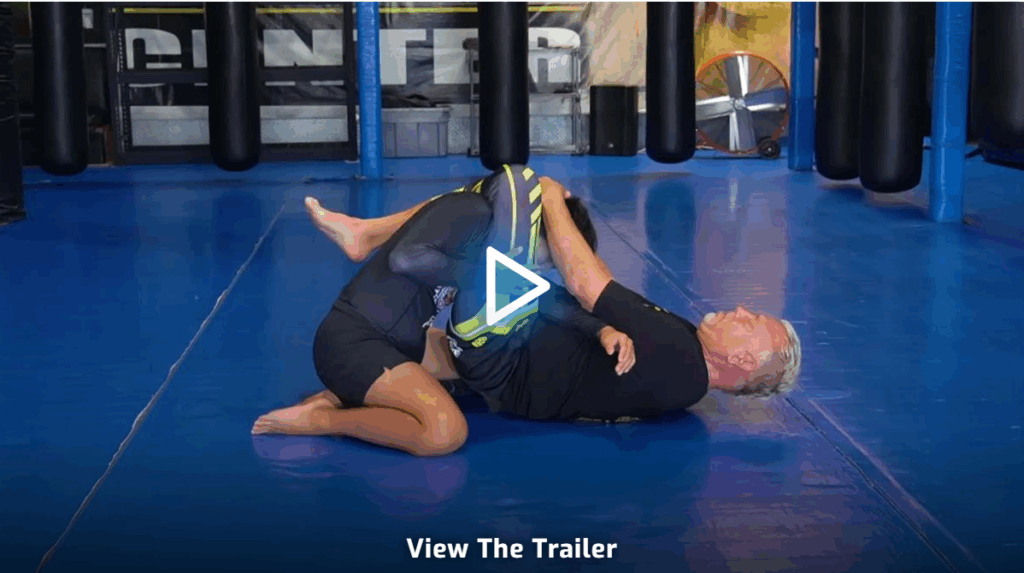
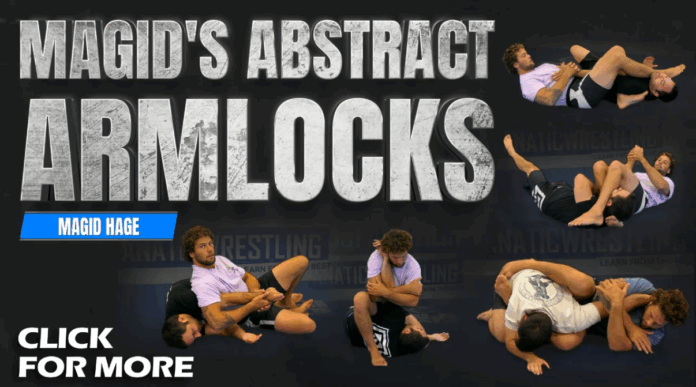
Magids Abstract Armlocks DVD latest instructional consisting of four volumes totaling roughly two and a half hours. Each volume focuses on attacking the arm from different positions and blends detailed instruction with conceptual insights.

Part 1—Mounted Armbars

The first volume of the Abstract Armlocks Magid Hage DVD opens with an introduction and then dives straight into armlocks from the mount. Hage demonstrates how to isolate the arms using cross‑grips and weight shifts before transitioning into straight armbars, spinning arm locks, and sneaky wrist‑involved finishes.

The only other chapter of this volume is devoted to set‑ups, where Magid explains how to trap opponents’ arms during scrambles or while threatening chokes. He repeatedly points out that you can attack the arms even when your opponent believes they are safe.

Part 2—Side Control Armbars

Volume two of the Armlocks Magid Hage Armlocks DVD moves to side‑control armlocks. Hage begins by showing how to maintain heavy pressure while isolating an arm, then flows into the Americana‑to‑armlock transition and his own variation—the Margarida armbar.

The standout segment is the Deadlift armbar, where he demonstrates a unique grip that allows you to lift the opponent’s elbow off the mat and rotate into a fully locked armbar.

Throughout this part of hte DVD he encourages students to blend submissions, chaining one to another. Magid is big on chains and sequences, something he mentions throughout this instructional.

Part 3—Armbarring While Passing

In Volume 3, Hage attacks arms while passing and from closed guard. He begins with armlocks from passing positions, demonstrating how a knee‑cut pass can become an armlock by hugging the triceps and stepping over the head.

Next, he shows how to set up armlocks during leg drags and float passes, turning seemingly defensive movements into submission attempts. The second half of the volume covers closed‑guard armlocks, including cross‑wrist traps and a sneaky armbar from a inside the closed guard.

Each technique in the Abstract Armlocks Magid Hage DVD focuses on surprising the opponent, reinforcing the promise that you will learn to attack arms from guard, top, scrambles, and bad positions.

Part 4—Specialty Armlocks

The final volume dives into specialty submissions. Magid teaches a reverse armlock, showing how to invert the classical armbar by turning the opponent’s hand towards their head. The shotgun armbar demonstrates how to use your entire body like a shotgun lever to hyper‑extend the arm.

He follows with the Choi bar, everyone’s favorite arm lock finish from guard these days,  before finishing with arm attacks from top and bottom turtle situations. The Magid Hage DVD closes with a quick outro summarizing key concepts.

MAGIDS ABSTRACT ARMLOCKS MAGID HAGE DVD DOWNLOAD HERE

How to Use This Magid Hage Armlocks DVD

Magids Abstract Armlocks Magid Hage DVD is best suited for intermediate or advanced grapplers. The instructional assumes you understand basic armbars and focuses on layering creative setups on top.

Because armlocks and wristlocks can come on quickly, you should always practice them slowly with cooperative partners. Incorporate the concepts gradually by adding one new armbar variation to your current game, rather than trying to learn everything at once.

For example, use the deadlift armbar as a follow‑up when an Americana fails, or experiment with knee‑cut armlocks during passing rounds. Hage’s emphasis on principles—grip, weight distribution, and timing—means these techniques can transfer to Gi and No‑Gi contexts.

Finally, pair the Abstract Armlocks Magid Hage DVD with fundamental wristlock and wrist‑control training; as noted earlier, wristlocks are surprising and effective submissions that complement armlocks by opening opponents up for larger joint attacks.

Becoming an Arm Collector

The Abstract Armlocks Magid Hage DVD offers a fresh take on one of Jiu‑Jitsu’s most iconic submissions. While beginners may benefit from a more fundamental armbar instructional first, seasoned practitioners will appreciate the creativity and depth. The bottom line is that you’ll get way more arm lock taps than you ever have before, so why not just jump into it?

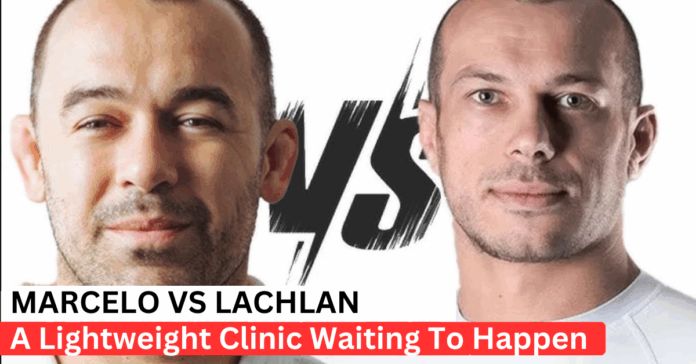
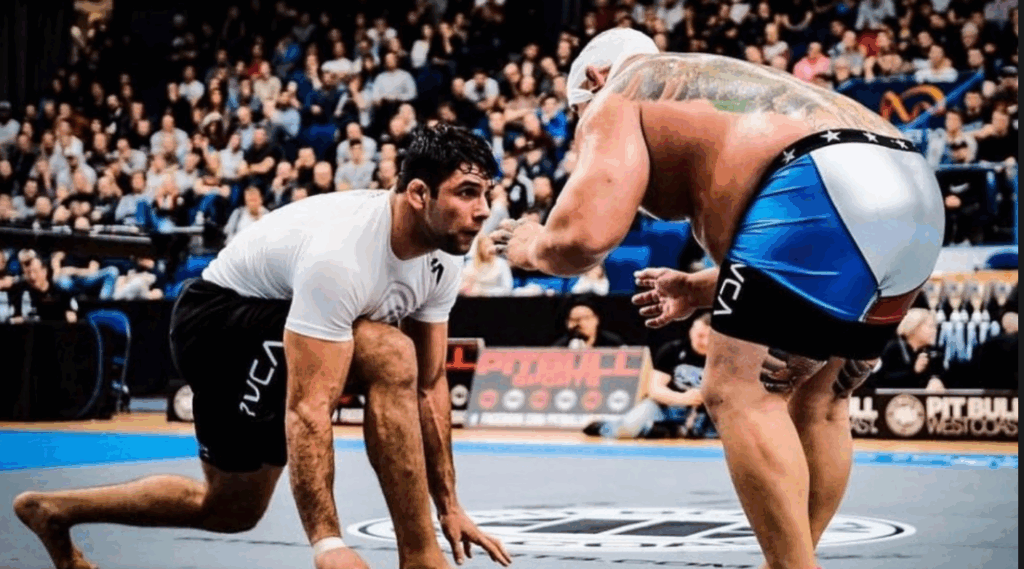
Marcelo Garcia vs Lachlan Giles: Legendary Giant-Slayers Finally Share A Stage

Marcelo Garcia vs Lachlan Giles: Legendary Giant-Slayers Finally Share A Stage
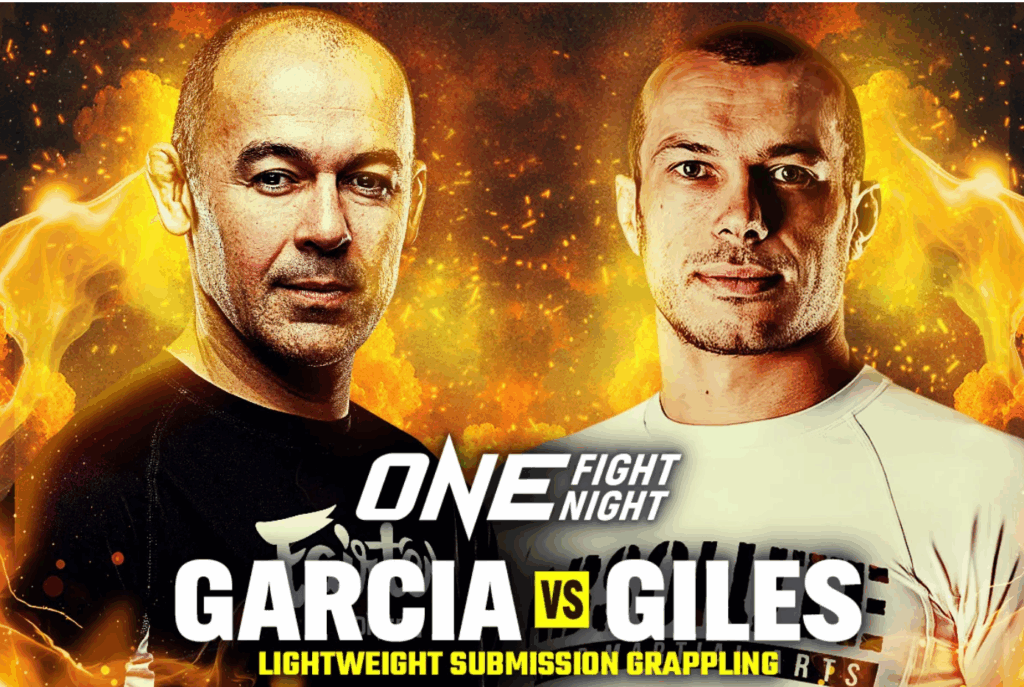
  • Marcelo Garcia vs Lachlan Giles is booked for ONE Fight Night 38 in Bangkok’s Lumpinee Stadium on Friday, December 5 (U.S. primetime).
  • Lightweight submission-grappling bout between two era-defining “giant slayers.”
  • Garcia’s pressure, arm-drag to back-take, and choke game vs. Giles’s K-Guard entries and inside-heel-hook system.
  • Stakes: a rare cross-generation measuring stick for how classic fundamentals match up against modern leg-lock meta on a global stage.

Why Marcelo Garcia vs Lachlan Giles Matters Right Now

Grappling doesn’t give us many true “event” matches, but Marcelo Garcia vs Lachlan Giles is exactly that: a once-in-a-generation meeting between two technicians who made careers out of dismantling bigger men.

Garcia is the pound-for-pound archetype—four-time ADCC champion and IBJJF legend. Giles, the modern systems designer, authored a 2019 ADCC absolute run that became a required study for smaller athletes everywhere.

Putting them together at ONE Fight Night 38, in Bangkok’s iconic Lumpinee Stadium and in U.S. primetime, signals something bigger than nostalgia: it’s a public R&D test for where the art has gone—and what still wins.

Butterfly To Back-Takes Vs. The Leg-Lock Game

If you had to put the sport’s last twenty years on a whiteboard, you’d sketch Garcia’s engine first: arm-drags that become angles, pressure that becomes passes, passes that become chokes.

That sequence taught a generation to value relentless, top-down control that ends fights. Across the mat stands Giles, the poster coach for modern lower-body offense: K-Guard entries that wedge inside space, invert around the knee line, and turn hesitation into heel-hook finishes.

Between them sits the match’s central question: can classic positional grappling pin and suffocate the meta’s slipperiest entanglements, or can precise leg-lock sequencing steal initiative from the opening tie-up?

In Marcelo Garcia vs Lachlan Giles, that’s not theory—it’s the whole plot.

ONE Fight Night 38: Lightweight Submission Grappling On The Big Stage

ONE has given submission grappling a marquee home: bright lights, broadcast clarity, and the theater of Lumpinee. This one is set as a lightweight submission-grappling contest on Friday, December 5, aligned for U.S. primetime.

That matters. Casual fight fans will recognize Garcia’s name from GOAT lists and highlight reels; modern nerds know Giles as the coach-competitor who weaponized K-Guard.

On a platform designed to translate niche brilliance to mainstream viewers, a clean, decisive performance from either man could set the tone for how lightweight grappling is packaged—and taught—next season.

Résumés That Bend Weight Classes

Garcia’s numbers are history: four ADCC World Championships (’03, ’05, ’07, ’11) and a trophy case full of IBJJF gold. His signature looks—arm-drag to back-take, north-south choke, guillotine—weren’t just finishes; they were templates.

Giles’s calling card is that 2019 absolute bracket, where a 77-kg technician heel-hooked heavyweights and left the sport double-checking its assumptions about size.

Add his reputation as a systems thinker—codifying entries, control beats, and finish mechanics—and you get a matchup that’s not about “old vs. new” so much as “first principles vs. modern optimizations.”

What To Watch For

For fans, Marcelo Garcia vs Lachlan Giles is a living seminar: the canon of butterfly-to-back vs. the textbook of structured leg-lock offense, both taught by their original authors:

  • First contact tells the tale. If Garcia wins the collar-tie and hand-fight to an angle, he’ll convert to snap-downs, front-head control, and pressure passes that punish any exposed hip.
  • Giles needs early wedges. K-Guard and inside position must appear before Marcelo establishes top pressure; once flattened, leg entries get exponentially harder.
  • Transitions decide it. Expect short bursts where guard retention meets knee-cut momentum. Whoever wins those 2–3 scramble windows likely dictates pace.
  • Finish priorities differ. Garcia’s chokes still end fights against experts; Giles’s inside heel hook remains a fight-ender even when the rest of the game is even.

For competitors and coaches, it’s homework with the answers at the end—how to pressure safely into modern entanglements, how to build leg entries that survive world-class counters, and which details still matter when the names are this big.

Marcelo Garcia vs Lachlan Giles

Finally, a Good Grappling Matchup in 2025

Cross-generation matches often feel like exhibitions. This doesn’t. Lightweight rule-set, neutral stage, and two minds that prefer hunting subs to sitting on advantages—everything points to an honest test.

However it breaks, the tape will be studied to death by rooms full of blue belts and black belts alike. And that’s the real prize of Marcelo Garcia vs Lachlan Giles: a definitive snapshot of where elite technique meets elite problem-solving in 2025.

Attacking And Defending Guard Templates Erik Paulson DVD Review [2025]

Attacking And Defending Guard Templates Erik Paulson DVD Review

Key Takeaways

  • A No-Gi DVD providing guard templates covering plenty of attacks and some crucial defensive principles.
  • Lots of upper and lower body submissions, clinching, and practical advice on how to play a more catch-wrestling-oriented guard.
  • Features a template in each chapter, containing attacks, defenses, and transitional information.
  • BJJ World Expert Rating: 10 out of 10.

GUARD TEMPLATES ERIK PAULSON DVD GET HERE

The guard gets people stuck in BJJ. Very often, grapplers pick one or two variations and tend to stick with them throughout their careers. While effective, this strategy is far from optimal.

The smarter thing to do is to combine as many of the most effective guards together in a system that is versatile but easy to remember. You’re probably thinking, How can you combine a bunch of different guards and still keep things simple? The Guard Templates Erik Paulson DVD has the answers to that.

A Different Approach to Guard

Ever since Royce Gracie tangled up people at the first UFC, the guard has been a position that every respectable martial art and combat sport has added to its systems. Once people figured out they could fight from the back, the whole landscape changed—but some took to this new position more than others.

While most were (and still are) content with copying BJJ’s version of the guard as the only template, others dared to innovate, even back in the early ’90s. Paulson was one of them, incorporating the guard into his already established system of catch wrestling and Judo.

This Erik Paulson Guard DVD delivers a taste of what it’s like to think differently about the guard position, both offensively and when you’re on defense. It also provides a different approach to conceptualizing the game, using templates rather than just stacking moves.

Legendary Cath Wrestling Expert Erik Paulson

Erik Paulson is an American mixed-martial-arts pioneer best known as the first U.S. fighter to win Japan’s Shooto world light-heavyweight title, before transitioning into a full-time coaching career. A Minnesota native (born 1966), he started in Judo as a kid, later cross-training widely and working in film as a stunt performer/actor alongside his competitive years.

As a coach, Paulson founded Combat Submission Wrestling (CSW) and STX Kickboxing and runs the CSW Training Center in Fullerton, California. Through CSW, he’s helped develop or cornered elite athletes across eras—names like Josh Barnett, Ken Shamrock, Cub Swanson, and others.

Paulson’s BJJ curriculum—branded “Combat Submission Brazilian Jiu-Jitsu”—emphasises pressure passing, transitional submissions, and integration with wrestling and clinch work. He publishes detailed manuals and course material for affiliates and frequently tours for seminars, keeping the coaching network active and consistent.

Paulson has released numerous instructionals over the years, including his recent Guard Templates Erik Paulson DVD, which packages his approach into repeatable positional blueprints rather than isolated moves.

Attacking And Defending Guard Templates Erik Paulson DVD Review

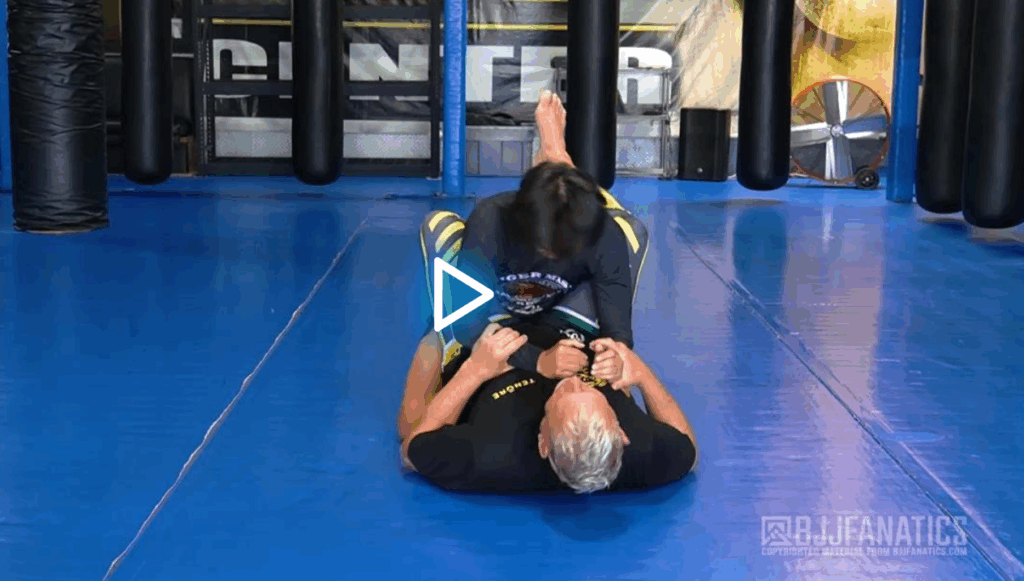
The Attack and Defense Templates Erik Paulson Guard DVD has “only” two volumes—but that’s more than enough. In almost two hours, it delivers a bunch of super-useful templates to apply immediately to your guard game.


Part 1 — High & Half Guard

This Guard Templates Erik Paulson DVD does not contain any standout techniques but rather delivers full templates in each chapter of both volumes. He goes over several different guards here, some staples and others not known to BJJ folks.

The usual suspects include the half guard and closed guard, with the high closed guard being Paulson’s go-to for attacking while staying safe. The “staying safe” part is in terms of passes, but more focused on preventing strikes than specific BJJ sequences.

Lesser-known guard variations include the S guard, the crooked guard, the wedge guard, and the shin guard. From each, Erik covers sweep-submission combos that highlight the optimal attacking options. Transitions between the guards are also covered.

Part 2 — Leg Locks & Tie Ups

In the second portion of the Guard Templates Erik Paulson DVD, the focus is more on lower body submissions and MMA-specific tactics. Paulson is one of the top leg lockers in the grappling world, but don’t expect Danaher-like deliberation here—it’s all about snappy, catch-wrestling-inspired finishes.

I particularly liked the tie-up template, which covers clinching from guard as well as from standing exchanges. The trapping template is another to watch out for. A few more half guard classics, like the John Wayne, appear toward the end. Of course, they’re all spiced up with Paulson’s unique insights, making them more effective and less flashy.

Attacking & Defending at Once

Not many people have the ability to use the guard in such a versatile way. It’s a shame, given how many variations the guard has. Why switch between attack and defense when you can simultaneously have both?

All it takes is to change your approach to how you see the guard. Context matters, so once you figure out how to make your guard hard to pass, use that position that makes it impenetrable to launch attacks. Easy, right?

Only in theory. The moment people change from a solid defensive guard to attacks, their defensive structure goes to bits. It happens to seasoned grapplers more than others, and it has more to do with how you perceive your overall guard game than with moves and tactics.

That’s where templates come in. You get to think about which template to apply to a given situation, ending up with a much more versatile game. If you’re using Paulson’s instructional, you’ll be able to shuffle attacking, defensive, and mixed templates, and respond to any situation super effectively.

Attacking And Defending Guard Templates Erik Paulson DVD Free SampleWATCH A FREE DVD SAMPLE: Attacking And Defending Guard Templates Erik Paulson DVD

DOWNLOAD HERE: GUARD TEMPLATES ERIK PAULSON DVD

Play More Guard

The Guard Templates Erik Paulson DVD delivers plenty of food for thought. It also provides an easy-to-follow template for those who like to immediately apply material without thinking too much. It’s one of a kind—but then again, so is Paulson’s entire style. Jump on this fast, because it’s going to give you a huge edge over your opponents.

How Good Is Mark Zuckerberg In Jiu-Jitsu, Really?

How Good Is Mark Zuckerberg In Jiu-Jitsu, Really?
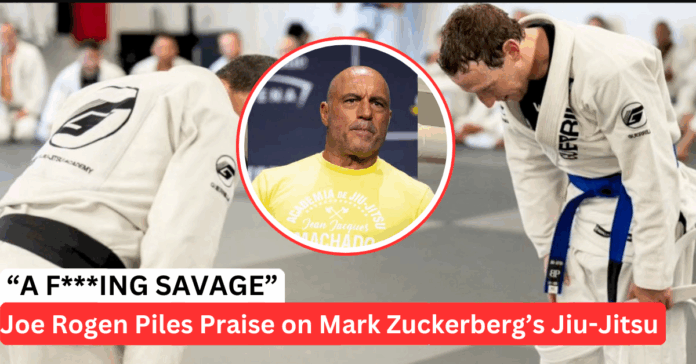
  • The clip of Joe Rogan calling Zuck “a f***ing savage” reignited the question: how good is Mark Zuckerberg in Jiu-Jitsu?
  • Evidence isn’t just viral rolls: local-tourney medals, legit coaching (Guerrilla Jiu-Jitsu/Dave Camarillo), and hard training partners.
  • Zuck has competed in public (and tried to do it incognito), and he’s explicit about minimizing brain risk while he trains.
  • Bottom line: for a busy tech CEO, he’s unusually technical, competition-tested, and improvement-obsessed.

How Good Is Mark Zuckerberg In Jiu-Jitsu—The Short Answer

If you want the speedrun: better than the joke, not close to elite pros—and far more serious than a novelty roll. Tournament hardware, respected coaches, and on-mat habits you can actually watch all point the same way.

So how good is Mark Zuckerberg in Jiu-Jitsu? He’s a real hobbyist competitor with real results, a real room, and a real plan to keep getting better.

The Rogan Meter: “A F***ing Savage” And Why That Matters

Rogan’s read on Zuck is not based on a handshake at weigh-ins; it’s from paying attention to training, competition, and how Zuck tries to game the spotlight.

“Mark Zuckerberg is a f***ing savage… This dude has been training Jiu-Jitsu.”
– Joe Rogan –

He also spelled out Zuck’s attempt to compete without a circus:

“This is what he did – he wore a COVID mask, put a hat on, hid, and used an alias.”
– Joe Rogan –

Why does this matter for how good is Zuckerberg in Jiu-Jitsu? Because people who cosplay the sport don’t chase anonymous brackets; people who care about the craft do.

Receipts, Not Reels: Medals, Coaches, And Real Rounds

Forget the hype; list the proof.

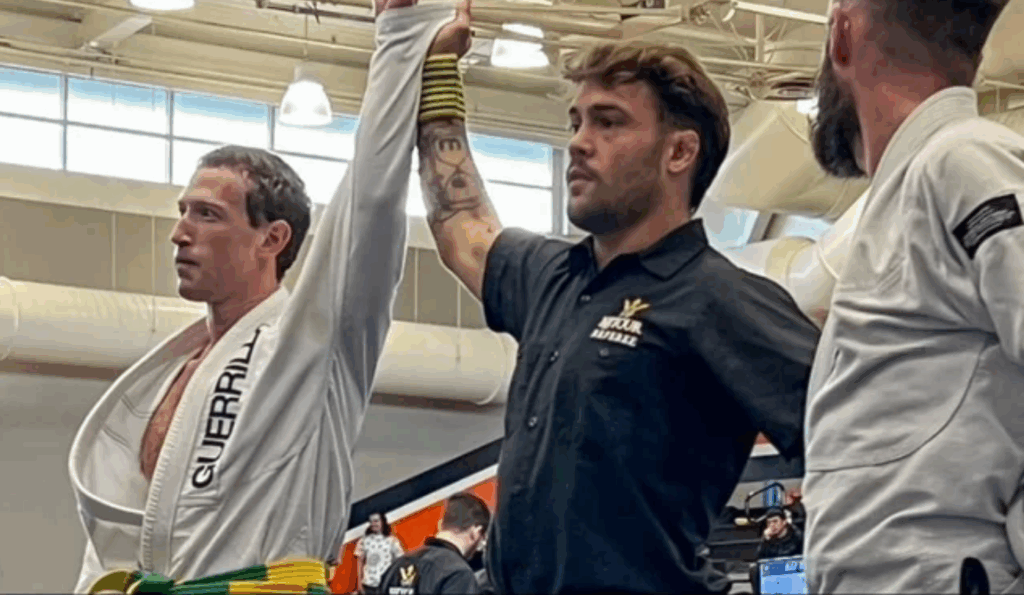
Medals in competition. Zuck has publicly celebrated winning gold and silver at his first local BJJ tournament, a small but real signal that he’s willing to test skills under pressure—and that he can win matches against peers.

“Competed in my first Jiu-Jitsu tournament and won some medals 🥇🥈 for the Guerrilla Jiu-Jitsu team.”
– Mark Zuckerberg –

Legit instruction. He’s trained under Dave Camarillo (Guerrilla Jiu-Jitsu), a respected black belt with a reputation for turning nerds into killers and killers into nerds.

Add in regular rounds with high-level MMA/BJJ names, and you’ve got a credible pathway to competence.

Real rounds on camera. You can watch extended rolls—e.g., sessions with Lex Fridman—that show not just effort but habits: posture in guard, insistence on frames, immediate hand-fighting on grips, resets without ego. None of that screams “tourist.”

That’s the stack answer to how good is Mark Zuckerberg in Jiu-Jitsu: competition + coaching + consistent mat time.

Disguises And Risk Management: Competing While Running Meta

Competing as one of the most recognizable people on Earth has… complications. Zuck has explained the calculus behind trying to stay anonymous and training safely:

“When I started training, not just Jiu-Jitsu, but striking, I was like all right, I want to find a way to do this where I don’t hurt my brain… I’m going to be running this company for a while, I would like to stay healthy and not take too much damage.”
– Mark Zuckerberg –

That line tells you a lot about how good is Zuckerberg in Jiu-Jitsu can realistically get. He’s not chasing CTE for clout; he’s optimizing—more grappling, careful striking, and competition formats that reward skill over damage.

The “mask and alias” chapter fits the same pattern: reduce noise, increase reps, get honest rounds without a media circus.

How Good Is Mark Zuckerberg In Jiu Jitsu?

So… How Good Is Mark Zuckerberg In Jiu-Jitsu? 

Here’s the clean verdict:

  • For a CEO: unusually dedicated, technically improving, and willing to face brackets where a loss would go viral in minutes.
  • For a hobbyist competitor: legit. He has bona fide medals, credible coaching, and footage that shows he’s not just surviving—he’s solving.
  • Compared to pros: it’s not a comparison. That’s not an insult; it’s the nature of a sport where black-belt killers live on the mat.

If you want a single sentence answer to how good is Mark Zuckerberg in Jiu-Jitsu: good enough that experts call him a savage, judges hand him medals, and training partners roll like it matters—because for him, it clearly does.

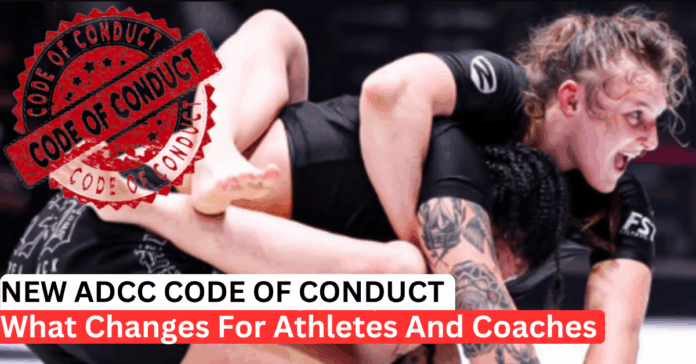
ADCC Code Of Conduct Lands For Opens: Sandbagging And Harassment On Notice

ADCC Code Of Conduct Lands For Opens: Sandbagging And Harassment On Notice
  • ADCC code of conduct now applies to ADCC Open events across North & South America.
  • Clear expectations for athletes and coaches: respect, safety, and accountability.
  • Ref/official respect, anti-harassment rules, and sandbagging penalties spelled out.
  • Sits alongside ADCC Open rules updates that tighten safety in youth/adult divisions.
  • Practical impact: fewer sidelines blowups, clearer recourse, and a cleaner competitive environment.

Why ADCC Code Of Conduct Arrives Now

ADCC’s Open calendar has exploded, bringing kids, teens, hobbyists, and elite hopefuls under the same lights—and under the same brand pressure.

An official ADCC code of conduct gives organizers a common playbook for handling flashpoints that routinely plague local shows: confrontations with referees, taunting and post-match shoves, and the grey area between “gamesmanship” and intimidation.

The move is less about optics and more about standardization—what happens in Miami, Dallas, or São Paulo should be handled the same way next weekend in Toronto.

Referees and judges must be treated with respect at all times.
– ADCC Open Tournament Code of Conduct –

The language is simple by design: respect for officials, respect for opponents and teams, and consequences that scale from removal to event bans. For a circuit that runs dozens of brackets per day, clarity is a safety feature.

What The ADCC Open Policy Covers

The new code of conduct addresses three friction points head-on: behavior toward officials, interactions between competitors/teams, and sidelines control.

It bans harassment, slurs, or threats anywhere connected to the event—on the mat, in the stands, and online—and codifies how disputes are handled (video review through the head judge rather than hallway arguments).

It also tackles competitive integrity: register at your real rank, don’t sandbag on Smoothcomp, and expect suspensions if you try.

Any form of harassment, intimidation, or bullying—verbal, physical, or digital—will result in removal and possible ban from future events.
– ADCC Open Tournament Code of Conduct –

Equally important, the text makes safety non-negotiable: illegal techniques for your division are your responsibility to know; yanking on submissions after a tap or referee stoppage is grounds for DQ and suspension.

The message to teams is unmistakable: the brand wants hard, fair matches—not chaos that overshadows them.

How It Interlocks With Current ADCC Open Rules

The grappling competition conduct policy sits next to the evolving Open-specific ADCC rules framework. ADCC’s public “legal techniques” sheet for Opens (revised in 2025) clarifies what’s permitted by age and skill—an essential companion to the ADCC code of conduct.

That table removes certain riskier actions from Open play (notably “slamming out of submission” in most non-elite cohorts) and introduces youth-safety mechanisms (referee discretion to stop mismatches; a coach beanbag to halt a dangerous sequence in kids’ bouts).

The net effect: fewer bang-bang edge cases, cleaner officiating decisions, and less room for arguments about “what’s allowed here.”

ADCC Code Of Conduct Lands For Opens

Mo Jassim’s Standard-Setting Push

ADCC’s head organizer has spent the last few years scaling the Opens while trying to keep the Worlds mystique.

The ADCC open code of conduct is the cultural piece of that project: it tells athletes, corners, and coaches what “acting like ADCC” means on a random Saturday at a high school gym.

It also formalizes the authority of officials and the head judge’s review process—vital in a sport where viral clips tend to drown out context. Put simply, the leadership wants intensity inside the bounds, not theatrics outside them.

By participating in ADCC Open events, you agree to this Code of Conduct. Let your actions reflect the honor of the sport and the ADCC legacy.
– ADCC Open Tournament Code of Conduct –

What It Means For Competitors This Season

If you’re entering an Open in the Americas, assume the ADCC code of conduct applies from check-in to parking lot. Practical takeaways:

  • Plan your corner: designate who talks to officials and keep instructions constructive—no profanity, no threats.
  • Know your division’s legal map: Opens use a tailored techniques grid; don’t bring Worlds-only assumptions into a kids or beginners bracket.
  • Register honestly: your Smoothcomp rank is on record; sandbagging invites DQs and suspensions.
  • Match hard, exit clean: respect taps and stoppages; no post-match contact beyond a handshake.

The bottom line for athletes and coaches: this codifies how ADCC wants its grassroots scene to feel—serious, safe, and scalable. Expect enforcement to follow.

Judo for Jiu-Jitsu Leo Leite DVD Review [2025]

Judo for Jiu-Jitsu Leo Leite DVD Review

Key Takeaways

  • A Gi DVD blending Judo and Jiu-Jitsu into a quick-to-learn system that involves both standing and ground techniques.
  • Goes over lots of motion and stance principles using examples rather than boring drills that don’t translate.
  • Provides plenty of combination options and follow-ups on the ground, including collar chokes and armbars.
  • BJJ World Expert Rating: 9 out of 10.

JUDO FOR JIU-JITSU LEO LEITE DVD GET HERE

Judo is awesome to watch, even better to use on the mats, and absolutely horrendous to be on the receiving end of. It’s down to you to pick which one you want for yourself. Watching it takes little effort, and getting thrown with Judo moves requires nothing at all.

However, if you want to become good at throwing people, you’ll need to put your back in it. Start by picking up the Judo for Jiu-Jitsu Leo Leite DVD. It will teach you that Judo doesn’t end with a throw, and open up new submission-attacking avenues on the ground for you.

Can Judo Help Your BJJ Game? 

Yes, if you let it. No, if you try to learn Judo as a judoka would, while also trying to figure out Jiu-Jitsu. It’s a difficult balance since Judo takes time to figure out, which means dedication, and that means less time for BJJ.

The truth is simple — you can’t get good at Judo fast, or just figure moves out enough to make them work. Since you’re standing most of the time, balance, timing, and deliberate motion matter a lot more than multi-step setups and combos, like with moves on the ground.

At the end of the day, if you want to use Judo moves in your BJJ game, you need to focus on two things:

  1. Don’t just look at throws and sweeps — get good ground-fighting Judo tactics as well.
  2. Find a coach that also does BJJ, preferably a black belt in both. They will filter out the nonsense for you.

If you can’t get a coach, you can always find an instructional featuring a teacher with these credentials. The Judo for Jiu-Jitsu Leo Leite Judo DVD ticks that box, but also delivers on the first point above — it teaches more than just Judo throws.

Leo Leite — The Most Successful Brazilian Judoka Ever

Leonardo “Leo” Leite is a Brazilian Judoka and Brazilian Jiu-Jitsu black belt under Alexandre “Gigi” Paiva (Alliance). Crossing over from elite judo to BJJ, Leite captured two IBJJF World titles (1999, 2000) at black belt and added multiple Brazilian National crowns, establishing himself as one of the most decorated Judokas to thrive in Jiu-Jitsu.

On the Judo mats, Leite represented Brazil’s national Judo program and stacked major results, including Pan American titles in both the −100 kg and Open divisions (2001) and a World Cup gold in Apia (2009). He also competed at the 2011 World Judo Championships, adding top-tier international experience to his résumé.

Leite later transitioned into MMA, where he compiled an 11–2 professional record and faced world-class opposition in Bellator after winning titles on the U.S. regional scene. His final bout came in 2022, when he returned for a farewell fight and exited with a unanimous-decision win.

Still active in the BJJ community, Leite continues to compete and teach—recently earning double gold in the IBJJF Master 4 division. You can check out what his all about in the Leite Judo for Jiu-Jitsu DVD we’re reviewing today.

Complete Judo for Jiu-Jitsu Leo Leite DVD Review

The Judo for Jiu-Jitsu Leo Leite Judo DVD is a straightforward instructional. It consists of two volumes, which deliver progressive material that builds on the stuff already presented. Leite shares just over an hour’s worth of Judo-for-BJJ knowledge that’s difficult to get anywhere else.

Part 1 — Engagement

The opening half of the Leo Leite Judo for BJJ DVD targets the key thing most people fail at in grappling — how to engage with the opponent. It’s not just about grabbing; it’s about holding on in a way that lets you set up attacks, while being relatively safe yourself.

What most people forget is that this is a dynamic process, something Leo reinforces in this DVD. He starts by exploring the optimal stance for stand-up battles in grappling, and builds on it by presenting motion patterns and spatial orientation.

Grips make up most of the instructions in this opening volume. Constantly recalling the info on stance and motion, Leite uses beginner-level throws like Kosoto Gari and Tomoe Nage to pinpoint the role of grips alongside motion and the art of off-balancing. The Kata Guruma at the end brings together his entire attacking strategy for scoring a takedown.

Part 2 — Best Judo Attacks for BJJ

Part two of the Judo for Jiu-Jitsu Leo Leite Judo DVD is more focused on what BJJ folks need from Judo. You might be surprised, but it’s more than just throws and trips, although they feature here.

The armbar is a staple Judo move, and judokas have very unusual (for us) ways of setting it up, often involving rolling. Leo delivers a few here, with the inverted variation particularly useful-looking. My personal favorite from this part is the series on clock chokes that help you finish an opponent when you can’t finish a takedown.

Seoi Nage variations (throws over your shoulder) make up most of the throwing techniques in this volume. A few more Kouchi variations, this time done from the half guard rather than from standing, bring this DVD to an end.

Easy Judo Options for Jiu-Jitsu Players

Stick to good sweeps. Actually, scratch that. If you’ve never wrestled or done Judo before, go for sacrifice throws. Yeah, I know, alarm bells are going off in your head now. Relax.

I say this as a former judoka. Looking for sacrifice throws means you have the comfortable fallback of guard, as you’ll end up pulling guard if you fail with the throw. Tactically speaking, the opponent is not going to be able to throw you, since you’re initiating the movement. Just watch out not to end up pulling side control or bottom mount.

Once you get good at that, introduce foot sweeps. Now you have complexity that will allow you to build a takedown game. Yeah, you don’t have it yet — you’ll find foot sweeps extra difficult to pull off.

They will, however, help you create off-balance and master movement, which eventually means you can do just about any Judo throw you set your mind on. The ones that you’ll find in the Leo Leite Judo for BJJ DVD are the ones that work. You can bank on them not just as beginners, but all the way to black belt matches as well.

DOWNLOAD HERE: JUDO FOR JIU-JITSU LEO LEITE DVD

Send ’em Flying

It’s a special feeling when you throw someone using Judo. For them, it feels as if they’ve been hit with the floor, and for a short while, they won’t know what’s up and what’s down. That’s the power of a good Judo throw.

Now, you just need a good coach to teach you good Judo throws. In the absence of one who also understands BJJ, pick up the Judo for Jiu-Jitsu Leo Leite Judo DVD. It’s a crash course in crashing people who don’t want to crash.

Former UFC Fighter Shot Dead In Suspected Gangland Hit

Former UFC Fighter Shot Dead In Suspected Gangland Hit
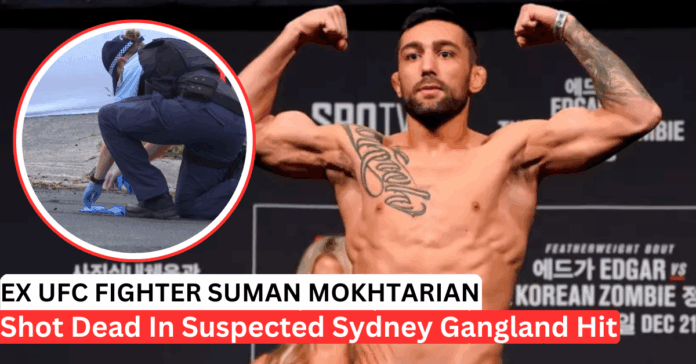
  • Former UFC fighter shot dead during an early-evening walk in Riverstone; police call it a targeted attack.
  • Witnesses point to a red Audi fleeing the scene; shortly after, burnt cars were found — a hallmark of organized hits.
  • CCTV captured rapid gunfire as Sydney coach and fighter Suman Mokhtarian was gunned down; investigators are probing possible underworld links as tributes flood in.
  • Prior threats and attempts shadow the case, raising hard questions about safety around local gyms.

UFC Fighter Shot Dead In Brazen Street Attack

A routine walk turned into a crime-scene dateline. In Sydney’s north-west, former UFC Fighter shot dead became the headline by dusk: multiple shots, neighbors frozen, sirens converging, and a fighter-turned-coach pronounced dead at the scene.

He was 33, known to UFC fans from TUF 27 and two featherweight bouts, and to countless Australian prospects as a hands-on coach and promoter.

What unfolded reads like a checklist straight out of organized-crime reporting. Shots ring out on a residential street; a red Audi is seen bolting; within minutes, torched vehicles are discovered nearby.

CCTV from around the block captures the chaos — a staccato of gunfire and neighbors ducking for cover — while first responders fight a losing battle on the pavement.

Eyewitness fragments stack up the same way: sudden shots, a getaway car, flames not long after. The forensic sprawl now stretches across multiple scenes — the Riverstone shooting site, the burned-out cars, and any camera that caught the Audi before it disappeared.

‘Targeted’ And ‘Brazen’

Public statements from senior officers leave little doubt about the tone of the investigation: “targeted,” “brazen,” and a threat to the wider community, not just one man.

“This was a targeted attack… very brazen, and it’s a shame that this is happening in our community.”
– NSW Police (senior officer) –

Detectives are working off classic markers — the getaway, the subsequent car fires — and are asking residents for dash-cam/doorbell footage.

“We are appealing to anyone who saw a red Audi in the Riverstone area around the time of the shooting to contact police.”
– NSW Police –

Officials haven’t publicly pinned motive for the former UFC fighter shot dead case, but the language is unmistakable: professional, planned, and timed for shock value (early evening, families outside).

“It was very brazen… we won’t tolerate this unmitigated violence on our streets.”
– NSW Police –

The Shadow Before The Shots: Prior Attempts, Gym Fallou

The brutality didn’t come out of nowhere. Reports over the past 18 months traced a grim drumbeat: attempted hits — including one by a shooter disguised as a delivery driver outside a busy gym — and even an event scrapped by authorities amid intelligence of a looming attack.

The pattern left a visible dent in Sydney’s MMA calendar and a psychological scar on the scene: packed kids classes one day, armed officers outside the next.

Inside the fight community, Mokhtarian was more than his UFC record.

He coached at Australian Top Team, mentored amateurs through small-show ladders, and helped push local prospects onto bigger stages. The tributes read like snapshots of a room leader — hard on details, big on loyalty.

Former UFC Fighter Shot Dead In Sydney

That tension — a beloved coach living under threat — is why a former UFC fighter shot dead hits like more than a headline. It’s a rupture in a tight circuit that treats gyms as second homes.

The Aftermath

This isn’t a generic “violence in sport” lecture—it’s a Sydney crime scene with names, timelines, and a city that has to keep moving. A beloved coach and fighter is gone, a red Audi is at the center of a manhunt, and two burned-out cars sit like punctuation marks on a planned escape.

Kids will still tie belts at 5:30, but every gym owner in the northwest now thinks about cameras, class times, and who’s loitering outside.

Tributes for a teacher and father will turn into scholarship rolls and benefit cards, but the details matter more than gestures: CCTV pulls, dash-cam uploads, plate sightings, and witnesses who remember the sound of those shots.

The headline will travel—UFC fighter shot dead—but the solution won’t come from headlines. It will come from residents who saw the route, students who share what they know, and a community stubborn enough to honor a coach not by whispering, but by helping detectives close the distance.

“More In 24 Hours Than My Whole Career”: UFC Fighter Pay And OnlyFans

“More In 24 Hours Than My Whole Career”: UFC Fighter Pay And OnlyFans
  • UFC fighter pay and OnlyFans collided again during UFC 320 week: Paige VanZant’s subscription windfall overshadowed a prelim storyline.
  • The economics are obvious: lumpy purses, scarce sponsorships, and medical bills nudge fighters toward paywalled content.
  • Antitrust checks are finally landing, but that’s a one-time patch—structural fixes (revenue share, minimums, injury coverage) are what matter.
  • Fans can love the athletes and still demand a system where fighting—not thirst traps—pays the rent.

UFC Fighter Pay And OnlyFans — Explained

Every few months we get the same whiplash: a fight week narrative morphs into a creator-economy case study. UFC fighter pay and OnlyFans keep showing up together because fight income is volatile, sponsorship restrictions still bite, and algorithms pay faster than athletic commissions. When a single day behind a paywall beats years inside a cage, this stops being a curiosity and becomes a labor story.

Paige VanZant Becomes Exhibit “A” 

UFC 320 added fresh oxygen to the discourse when a prelim fighter’s spouse trended for her earnings rather than his matchup. Paige VanZant’s own words have become the pull-quote of an era:

“I made more money in 24 hours on OnlyFans than I had in my entire fighting career combined.”
– Paige VanZant –

And she’s been blunt about the career pivot:

“Fighting, I have to understand now, is just a hobby; it’s my part-time job… OnlyFans is what’s providing everything for me.”
– Paige VanZant –

That’s not a dunk on fighting; it’s accounting. Which is why UFC fighter pay and OnlyFans keeps popping up in your feed—because an athlete who’s headlined mainstream cards can still look at the spreadsheet and choose the platform that guarantees a paycheck tomorrow morning.

Paige VanZant on Only Fans

The Vanderford–VanZant Household: Prelim Purse Meets Paywall Reality

UFC 320 turned into a split-screen moment: Austin Vanderford grinding through a welterweight matchup while Paige VanZant trended for subscription earnings that keep rewriting fighter economics.

The contrast isn’t gossip—it’s the cleanest example of how a modern fight household balances lumpy purses with platform income that hits tomorrow, not “after medicals clear.”

She’s described the launch moment like watching a slot machine catch fire—refreshing the dashboard, subscriber numbers spiking, turning to her husband and realizing their lives had just changed.

“I logged in… it had only been live for an hour, and I was seeing the subscribers going up… I was showing my husband… ‘Our lives just changed forever.’”
– Paige VanZant –

Vanderford’s role in all of this isn’t a footnote—it’s the point.

Paige VanZant broke her silence after UFC 320 with an Instagram post that doubled as triage and love letter—photos of Austin Vanderford’s deep facial gash alongside a message of support, gratitude to fans, and a promise to keep everyone updated while he heals.

In a week where UFC fighter pay and OnlyFans kept colliding in headlines, her first words weren’t about dashboards or dollars; they were about stitches, swelling, and standing by your person after a brutal night.

“Tonight wasn’t his night, but it was still his story – written with courage, passion, and the kind of bravery that only comes from love and purpose. I couldn’t be prouder.’”
– Paige VanZant –

Why The Math Pushes Fighters To Paywalls

Strip the emotion; run the numbers.

Revenue share reality. In the modern big-league model, athletes in stick-and-ball sports split roughly half of league revenues.

MMA fighters have long operated far below that. When your slice is small and your career is short, a platform that pays you directly (monthly, globally) becomes irresistible.

Purses are lumpy. Even when headline figures sound decent, fight camps, taxes, management, and travel devour them. Lose? Get injured? Income vanishes. Subscription platforms smooth cash flow.

Sponsorships are constrained. Centralized uniform deals removed much of the free-market apron-logo hustle. Fighters still monetize socials, but advertisers love safe brands; adult-adjacent platforms pay in cash.

Medical realities. Out-of-pocket imaging and rehab can turn a good night’s purse into a break-even month. If the sport doesn’t guarantee coverage, fighters will diversify by any means necessary.

Put together, it’s obvious why UFC fighter pay and OnlyFans trends: the octagon is the billboard; the paywall is the paycheck.

“More In 24 Hours Than My Whole Career”: Paige VanZant on OnlyFans

Is Fighting Really Just a Hobby?

There are green shoots—plus one big check.

Antitrust payouts are real. Court-approved settlement payments are finally reaching fighters. For some veterans, the sums are life-changing. For most, it’s a welcome cushion—not a new economic model.

A backpay windfall doesn’t fix tomorrow’s camp costs.

  • Minimums and buffers. The next frontier isn’t one-time settlements; it’s structural. A meaningful promotion-wide minimum, automatic injury/rehab coverage, and a clean revenue-share target would slow the talent drain to side platforms.
  • Open the sponsor lanes. Restore real estate for personal sponsors on fight week (beyond one tiny patch) and on broadcasts. Sponsors fund stories; stories fund training.
  • Content without compromise. Not every creator pivot means adult content. Instructionals, live seminars, brand-safe subscriptions, and gym-owned channels can stack into a livable income—if the ecosystem stops kneecapping them.

Until those pieces move, expect UFC fighter pay and OnlyFans to remain an uncomfortable marriage of convenience. 

The Paige quotes will keep going viral because they’re true and tidy. But if we want fewer headlines marrying UFC fighter pay and OnlyFans, the only honest answer is structural: better splits, clearer benefits, wider sponsor lanes.

Fighters will always hustle—that’s the job. The system should make it optional.

Gordon Ryan Mother And B-Team Unite To Pay BJJ Athletes’ Medical Bills

Gordon Ryan Mother And B-Team Unite To Pay BJJ Athletes’ Medical Bills
  • In a surprise crossover, Gordon Ryan mother and B-Team launched a fundraiser to cover BJJ medical expenses.
  • The initiative spotlights a grim truth: broken bodies aren’t covered by standard benefits in a sport built on small purses and bigger co-pays.
  • Early messaging urges athletes to apply with proof of injury and bills; social posts ask the community to boost, donate, and nominate cases.
  • It’s a truce with teeth—clout pointed at a problem money can actually solve.

Gordon Ryan Mother And B-Team Shock Everyone—To Help Injured Athletes

You didn’t have this on your bingo card. After years of chirps and callouts, Gordon Ryan mother and B-Team are sharing the same mission: raise cash to pay for grapplers’ surgeries, scans, and rehab when the insurance cliff shows up.

The announcement landed like a flying triangle on the discourse—sudden, clean, and impossible to ignore.

“Ezekiel is friends with Trish Ryan, mother of Gordon and Nicky, and she suggested an open mat to help raise money for Ezekiel.”
– Danaher –
Danaher, Gordon Ryan Mother And B-Team Unite To Pay BJJ Athletes’ Medical Bills

When Rivalries Pause Because Hospital Bills Don’t

No-Gi’s biggest story line since 2021 has been the No-Gi rivalry between Gordon Ryan and B-Team Jiu-Jitsu (the Craig Jones–Nicky Rod–Nicky Ryan axis).

The content was fun; the receipts weren’t—MRIs, ACL repairs, busted hands, chronic GI issues, you name it. Meanwhile, athletes outside the elite tier juggle part-time coaching, tiny purses, and American healthcare math that makes a meniscus tear feel like a mortgage.

That’s the context that turns Gordon Ryan mother and B-Team from a shock headline into a necessary coalition. When the ambulance ride costs more than the appearance fee, enemies start to look like co-signers.

“Let’s get together: Ezekiel Eze Zurita @buba_bjj is a jiu jitsu athlete from South America who has lived and trained here in Austin the last five years. He was a real fixture in local Jiu-Jitsu and helped us and other schools a lot as a training partner. Our ADCC camps would not have been the same without him.”
– Danaher –

This Sunday, One Roof, One Cause: Austin Rallies For Eze

On Sunday, October 12, two rival lineages share the same mats for something bigger than bragging rights. The seminar-style fundraiser will be hosted at Simple Man Martial Arts (formerly B-Team) in Austin

John Danaher’s New Wave team and Nicky Ryan’s Simple Man crew will train side-by-side to raise money for Ezekiel Zurita—a South American Jiu-Jitsu athlete and long-time Austin training partner who has fallen gravely ill.

The outpouring around Eze’s situation has turned private concern into public action, and the organizing engine behind it is Trish Ryan, better known to most of the scene as Gordon Ryan’s mother.

“Sadly he has fallen gravely ill with a brain tumor which has been operated on over the last week. He has racked up considerable medical expenses as a result.”
– Danaher –

What to expect from the day:

  • Unified mats: coaches and athletes from both rooms sharing instruction and rounds—no scorecards, just support.
  • Direct aid: proceeds earmarked for Eze’s medical needs (imaging, treatment, and recovery costs), with the goal of getting help to him quickly.
  • Community first: students, hobbyists, and pros invited to contribute—whether by training, donating, or simply showing up to amplify the effort.

Symbolically, it’s a full-circle Austin moment: the place once synonymous with rivalry becomes neutral ground for solidarity. Practically, it’s exactly what the sport needs more of—high-profile people turning attention into assistance when one of their own needs it most.

Danaher Booked to Teach at B-Team for Eze 

The Instagram announcement made it official: John Danaher is lending his brain—and mat time—to the effort.

In a move that would’ve sounded impossible two years ago, he’s scheduled to teach at B-Team as part of the medical-expenses fundraiser, with proceeds directed to injured grapplers who submit verified bills.

The post highlights a seminar-style session hosted at B-Team’s facility, plus donation and application details for athletes needing help.

Beyond the symbolism, it’s practical: Danaher’s draw means a packed room, bigger receipts, and faster payouts for imaging, surgery, and rehab. It also sets a precedent the scene has needed for a while—rivals can collaborate when the objective is athlete health.

In the end, the headline matters because it bends an old storyline into a new shape. Gordon Ryan mother and B-Team didn’t fix healthcare, but they did something that cashes today. In a sport where every scramble risks a bill, that’s not kumbaya—it’s triage.