









Key Takeaways
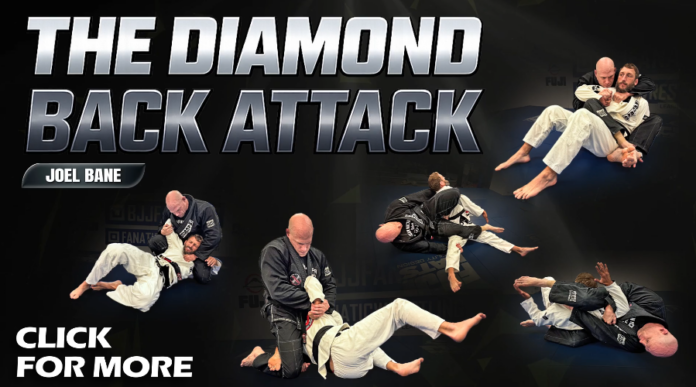
- The Diamond Back Attack is an eight-volume, primarily Gi back-control system built on Catch Wrestling pressure, wrist control and unusual finishing options — not a conventional seatbelt-and-rear-naked-choke course.
- The curriculum moves from control positions and a taught “safe bail,” through six foundational entries, into a deep attack matrix of chokes, armbars, shoulder locks, neck cranks and leg attacks.
- Roughly six hours of instruction across eight volumes, priced at $99 with streaming and download access at research time.
- Best for intermediate-to-advanced Gi grapplers, pressure players, wrestlers crossing into Jiu-Jitsu and Catch Wrestling students; a poor fit for complete beginners and No-Gi-only competitors.
- Rating: 7.5/10
The Diamond Back Attack Joel Bane DVD FULL DOWNLOAD
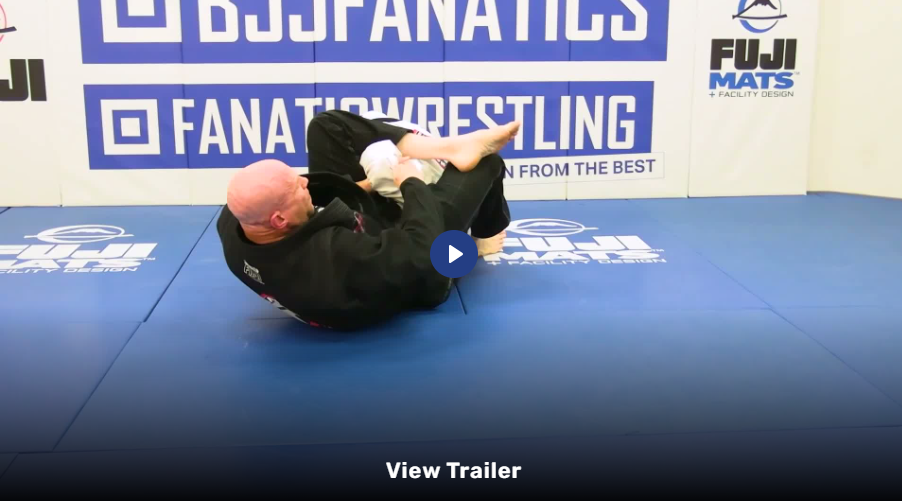
If you can take the back but keep losing it — or you get there and run dry after the bow-and-arrow — this The Diamond Back Attack Joel Bane review is written for you. Joel Bane, head coach of Snake Pit U.S.A., has built an eight-volume instructional that treats back control as a Catch Wrestling problem: pressure, wrist control and the smallest possible finishing adjustment, rather than the seatbelt, hooks and rear-naked-choke sequence most Jiu-Jitsu players reach for by default.
The central question the course raises isn’t whether Bane has enough attacks to fill eight volumes. It’s whether his “quarter-inch finish” approach — Bane’s stated idea that a submission is won by the smallest adjustment at the end of a control or transition — actually makes the back easier to keep and the finish easier to find than a conventional back-attack game.
That framing matters. The back is the most dominant position in grappling on paper, yet plenty of practitioners can’t convert it against someone who defends the choke well. The usual missing piece isn’t another submission; it’s control. Bane’s pitch is that a Catch Wrestling grip-and-pressure layer — wristlocks as threats, collar and shoulder controls, and a deliberate way to bail safely — closes that gap. Whether it delivers is what the rest of this review examines.
Who Is Joel Bane?
Bane’s credentials line up with what the course promises. He is the head coach of Snake Pit U.S.A., a 3rd-degree BJJ black belt under 9th-degree red belt Grand Master Rigan Machado, and a Luta Livre black belt under Grand Master Hugo Duarte.
He is also a fully certified Catch-as-Catch-Can Wrestling coach under the legendary Billy Robinson, and a former U.S. Air Force wrestler and coach. That combination — old-school Catch Wrestling lineage alongside a mainstream BJJ black belt — is exactly what this course sells: back control taught by someone who reaches for wrist control and pressure before he reaches for the choke.

Inside The Eight Volumes Of The Diamond Back Attack Joel Bane DVD
The Diamond Back Attack is eight volumes of digital streaming and download instruction through the BJJ Fanatics platform. It is primarily a Gi back control system, with a little No-Gi material built in. At research time it listed at $99, with the usual BJJ Fanatics 30-day refund window — provided you haven’t downloaded the course. That works out to roughly six hours of material, competitive with other multi-volume back-attack instructionals.
Volume 1: Control, Transition And The Four Submission Concepts
Bane opens with his four submission concepts and the three primary control positions, then moves through the three transitional attack controls before teaching the “safe bail.” This is the conceptual spine of the whole course: how to hold the back, how to move between controls, and how to leave the position without giving anything up. Treating the bail as a named, taught skill — rather than a failure you improvise — is one of the more useful ideas here, and it signals that this is a control system before it is a collection of finishes.
Volume 2: Six Foundational Entries
The entries are where the Catch Wrestling influence shows first. The Billy Robinson-style wristlock threat is the opening grip rather than a finishing move, used to force a reaction and clear the path to the back. The basic zipper choke and the bow-and-arrow entry with an inverted triangle round out a short, focused set. This is the “how you get there” material — a smaller group of entries chosen to feed the control positions from Volume 1, not a grab-bag of back takes.

Volume 3: Attacks From Basic Launch Pad Control
Here the unusual vocabulary begins. Bane chains icepick grips into short chokes and rear-naked-choke jaw locks, then moves into face-locks, the stockade, the dragon sleeper and a cross-side under-hook lapel choke. Several of these are neck cranks or crank-adjacent, so ruleset legality is a real consideration — much of this volume sits outside what an IBJJF Gi competitor would reach for. What it does well is show the quarter-inch finish idea in action: the same grip keeps feeding into the next threat.
Volume 4: Attacks From The Full Gi Diamondback
This is the meat of the Gi system and the longest volume at roughly 90 minutes. It runs from one-arm collar chokes and bow-and-arrow variations through a long half-leg-nelson chain that feeds scythe armbars, a Japanese armbar, leg scissor chokes and an omoplata-into-biceps-slicer-and-knee-bar sequence. There are also knee bar and inverted heel hook entries, plus a run of inverted and far-side triangle variations. It’s dense, but the recurring theme is a grip hierarchy: collar, then nelson, then a finish that appears from the smallest shift.
Volume 5: Collar Control
The collar-control section adds wedge chokes — including ratchet and half-nelson wedge variations — the reverse zipper, a Canto-style choke, and a head-and-arm neck crank and shoulder lock, closing with a transition to north-south crucifix. It’s where the course turns collar grips into a finishing system of their own, rather than treating the collar as just the setup for a bow-and-arrow.
Volume 6: Transitional 2-On-1, The Launch Pad
The shortest volume at roughly 20 minutes, and a bridge rather than a destination. It covers a side choke with a power choke grip and an armbar-to-short-arm-scissor-to-scythe-armbar chain. It’s the connective tissue between the collar material and the wrist-lock material that follows — useful, but thin enough that it reads more like an appendix to Volumes 3 and 7 than a standalone chapter.
Volume 7: Double Wrist Lock Control
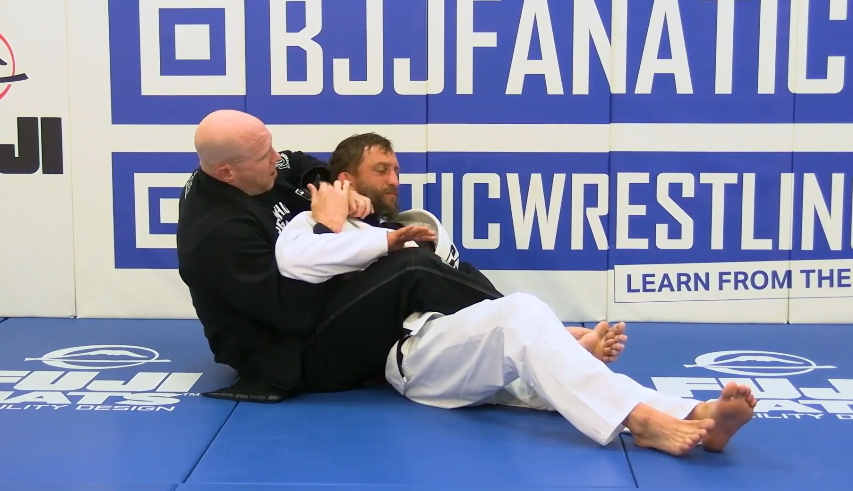
Bane’s signature material, applied from the back. The German pin double wrist lock is the centrepiece, feeding reverse double wrist locks, short arm scissors with an omoplata, leg scissor chokes and a crucifix matrix. If you’ve seen Bane’s other work, this overlaps with his double-wrist-lock instructional; if you haven’t, this is the most distinctive volume of the set. The double wrist lock doubles as both a threat and a control, which is what lets it chain into the finishes.
Volume 8: Transitional Russian Tie
The closer brings the Russian tie into the back system — a Russian salto grip shoulder attack, a far triangle to armbar and triangle finish, and a Russian salto stockade shoulder lock. It’s a natural handoff from the 2-on-1 work and ties the course back to Bane’s front-headlock and Russian-tie material. For wrestlers crossing into Jiu-Jitsu, this is the volume that will feel most familiar.
How To Actually Use This Course
Don’t watch eight volumes straight through. Start with Volume 1 — the control positions and the safe bail are the foundation everything else assumes — then pick one entry from Volume 2 and one attack chain from the volume that matches your game: Volume 4 if you play collar-and-nelson, Volume 7 if you already use the double wrist lock.
From there, drill positionally rather than technically. Spend rounds holding back control against escape attempts, then holding collar control, and work the “late defense counter” from Volume 2 as your default response to the opponent’s hand-fighting.
In live rounds, test three things: whether the wristlock threats actually force the opponent’s hands up and open the choke, whether the safe bail lets you recover a scoring position instead of giving up the back, and whether the quarter-inch finishing chains still work once an opponent knows they’re coming.
Two cautions. First, several showcase attacks — neck cranks, spine-on-spine bow-and-arrow variations, knee bars and heel hooks, and some shoulder locks — are illegal or heavily restricted in IBJJF Gi competition, so check your ruleset before building a game around them. Second, a few of these cranks and shoulder locks put real pressure on the neck and shoulder joint; drill them under coach supervision before applying them live.
GRAB IT HERE: The Diamond Back Attack Joel Bane DVD
Who Is This For? (And Who Should Skip It)
The sweet spot is intermediate-to-advanced Gi grapplers who can already get to the back but can’t convert it into finishes. Pressure players and wrestlers crossing into Jiu-Jitsu will find the wrist control and Russian tie familiar; Catch Wrestling and Luta Livre students will find Bane speaking their language. Coaches who want an alternative back-attack vocabulary beyond the standard bow-and-arrow game will get the most value.
Skip it if you’re a complete beginner — this is not a fundamentals course, and it assumes you can already take and hold the back. Skip it if you compete No-Gi only, since the bulk of the material is Gi-specific. And skip it if you want a clean, conventional seatbelt-and-rear-naked-choke system, or if you train under a ruleset that bans most of the neck cranks and leg attacks this course showcases.
How It Stacks Up Against Other Back-Attack Instructionals
For classical Gi back attacks, Marcelo Garcia’s Complete MG Back Attack System is still the cleaner entry point — collar-based, tournament-proven, and easier for a beginner to absorb. If you compete No-Gi, Gordon Ryan’s Systematically Attacking The Back or John Danaher’s back-attack material give you a modern control-and-hand-fighting system that transfers more directly than a Gi-first course. Demian Maia’s Backpack is the pick if you want a submission-focused back system built around the rear-naked choke. Ethan Crelinsten’s Finish On The Back and Felipe Pena’s Back Control And Submission sit in the middle — both strong, both conventional by comparison.
None of them is a universal winner. Bane’s differentiator is that none of the above builds Catch Wrestling back control the way this does — around pressure, wristlock threats and the Russian tie. The trade-off is transfer: much of Bane’s finishing volume doesn’t travel to No-Gi or IBJJF competition.
Within Bane’s own catalog, this overlaps with his other releases. If you already own Oops, I’ve Got Your Shoulder for the double wrist lock, or the No-Gi Front Headlock course for the Russian tie, you’ll recognise chunks of Volumes 7 and 8. Catch Wrestling Skill Level 1 is the broader foundation, and Legendary Leglocks covers the leg attacks. The Diamond Back Attack earns its place if back control specifically is your weak point; if you want a different position, one of those other titles is the better pick.
Pros & Potential Drawbacks
Pros:
- Coherent system, not a grab-bag. Control, entries and attacks are sequenced around a consistent theme — the quarter-inch finish — rather than assembled loosely.
- Genuinely differentiated. Catch Wrestling pressure, wristlock threats and the Russian tie are rare in back-attack instructionals.
- The safe bail is a realistic answer to back retention. You learn to leave the position without giving up points, which most back courses skip.
- Deep Gi attack matrix. Volume 4 alone is a full course’s worth of collar and nelson chains.
- Strong value. Roughly six hours for $99, with streaming and download access.
- Credible, distinctive instructor. A lineage that actually matches the material he teaches.
Potential Drawbacks:
- Primarily Gi. Limited No-Gi transfer for anyone competing without the jacket.
- No independent validation yet. The material is unproven outside Bane’s own presentation, with no community reviews to confirm it holds up in live settings.
- Ruleset-heavy finishing volume. A meaningful share of the attacks — neck cranks, leg attacks, some shoulder locks — is illegal or restricted in common rulesets.
- Overlaps with Bane’s other titles. Buyers already deep in his catalog will see familiar double-wrist-lock and Russian-tie content.
The Verdict – Diamond Back Attack Joel Bane DVD Review
The Diamond Back Attack is a legitimate system rather than eight volumes of loose techniques, and for the right grappler it’s worth the $99. The strongest reason to buy is the differentiation: a back control and submissions system built around Catch Wrestling pressure, wrist control and a taught safe bail gives you a control-and-finish philosophy you won’t find in the standard seatbelt-and-RNC material. The strongest reason to skip is transfer — if you compete No-Gi or under a ruleset that bans the cranks and leg attacks this course leans on, much of the finishing volume won’t help you, and you’d be better served by a No-Gi control system.
That’s the honest summary this The Diamond Back Attack Joel Bane review set out to give: buy it if you’re a Gi grappler who gets to the back and loses it, or who wants a pressure-first alternative to the conventional game. Otherwise, spend your money on the fundamentals this course assumes you already have.