










Key Takeaways
- A focused 2-volume breakdown of Ouchi Gari from an Olympic gold medalist in Judo
- Covers every major variation: basic, circling, diving, and one-hand entries against both Ai-Yotsu and Kenka-Yotsu grips
- Includes Judo takedowns combination chains with Osoto Gari, Tai Otoshi, Uchi Mata, and cross grip setups
- Features solo drilling methods (Uchi Komi) so you can train without a partner
- Best suited for BJJ practitioners at any level who want to upgrade their takedown game
- Rating: 8.5/10
DOWNLOAD: JAPANESE OUCHI GARI SECRETS SATOSHI ISHII DVD
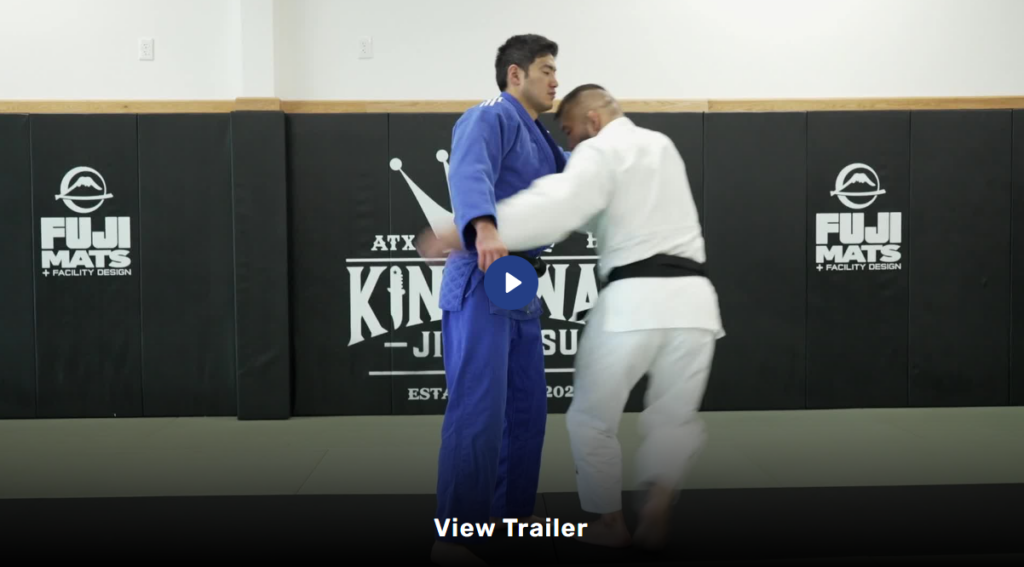
Ouchi Gari — the inner reap — is one of Judo’s most fundamental and effective throws, yet it remains surprisingly underexplored in BJJ. Most grapplers have a vague idea of the motion but lack the mechanical precision to execute it under resistance.
The Japanese Ouchi Gari Secrets Satoshi Ishii DVD changes that comprehensively. Across two volumes, the Olympic gold medalist breaks down every meaningful variation of the throw from both standard and opposite grips, then shows how to chain it with other high-percentage takedowns.
If your standup game currently relies on pulling guard or hoping for a lucky double leg, this Japanese Ouchi Gari Secrets Satoshi Ishii DVD gives you a reliable, repeatable option.
Olympic-Level Judo for BJJ
Takedowns are often the weakest link in a BJJ player’s game. The sport’s ruleset naturally incentivizes guard pulling, and the typical training environment prioritizes ground work over standup exchanges. But for those who want to control where the fight goes — or who compete under rulesets that don’t allow pulling — a reliable takedown is essential.
Ouchi Gari is one of the highest-value throws a grappler can learn. It uses a simple reaping motion at the opponent’s heel while driving them backward off their base. Unlike more complex throws that require precise hip positioning and off-balancing, Ouchi Gari can be effective even with basic Judo knowledge, and it pairs naturally with the grips BJJ players already use in the clinch.

The throw is also uniquely adaptable to Judo for No-Gi, where the inside leg reap provides control without relying on gi-specific sleeve and lapel grips.
Olympian Satoshi Ishii
Satoshi Ishii is an Olympic gold medalist in Judo and one of the most accomplished crossover grapplers of his generation. Born December 19, 1986, in Ibaraki, Osaka, Japan, Ishii won the gold medal in the +100kg division at the 2008 Beijing Olympic Games — notably without conceding a single point or receiving any penalties throughout the tournament.
He is the youngest and lightest champion in +100kg Olympic Judo history. Ishii also won silver at the 2006 Asian Games and two All-Japan Judo Championships. After his Olympic triumph, he transitioned into MMA, competing for organizations including PFL, Bellator, and Rizin, with a record of 25 wins across MMA, kickboxing, and boxing.

Ishii now trains under John Danaher as a member of New Wave/Kingsway Jiu-Jitsu, bridging Olympic-level Judo with modern No-Gi grappling. He holds a 6th dan black belt in Judo and has continued to develop his grappling through submission wrestling competition.
Japanese Ouchi Gari Secrets Satoshi Ishii DVD Review
Ishii’s credentials as an Olympic gold medalist and his experience training under John Danaher at New Wave give this instructional rare authority — this is Judo from someone who has applied it in MMA, submission grappling, and elite competition. For any grappler looking to add a reliable takedown to their game, this is a strong investment.
Volume 1: Ouchi Gari Fundamentals & Variations
The first volume is all about building a complete technical foundation. Ishii starts with the basic Ouchi Gari against both Ai-Yotsu (same-side grip) and Kenka-Yotsu (opposite-side grip), establishing the core mechanics of the reap before introducing progressive variations.
He covers circling Ouchi Gari, which generates momentum when the opponent is circling away from your attack, and the armpit pocket grip setup that prevents them from framing effectively. The one-hand Ouchi Gari is a particularly valuable addition for grapplers who often find themselves with compromised grips.
Ishii also shows the back grip variation against Kenka-Yotsu and the diving Ouchi Gari, an advanced entry used when the opponent is overcommitted to their own grip fighting. The volume closes with Ouchi Gari against extreme Ai-Yotsu gripping, preparing you for opponents who death-grip the collar and sleeve.
Volume 2: Ouchi Gari Combinations & Training Methods
Part 2 moves from single techniques to combinations, showing how Ouchi Gari connects to a broader takedown system. Ishii teaches Osoto Gari to Ouchi Gari sequencing for both grip types, allowing you to chain forward and backward throws when the opponent resists the initial attack.
The Tai Otoshi (one of my personal favorites) to Ouchi Gari transition is particularly clever — the opponent braces against the hand throw, and you drop straight into an inner reap on the opposite side. Cross-grip setups to Ouchi Gari are covered for situations where you’ve already established a dominant grip. Ishii also addresses Osoto Gari against double-grip stalling, a common defensive posture in BJJ. The Uchi Mata to Ouchi Gari chain rounds out the combination work.
The volume concludes with dedicated training methods, including Uchi Komi self-drilling — a solo practice method that allows you to build muscle memory and repetition volume without needing a training partner.
Starting to (Inner) Reap
This is a relatively compact instructional at two volumes, which makes it highly accessible. The recommended approach is to pick one variation per training cycle and drill it extensively in Uchi Komi before attempting it live.
The first volume should be studied first to establish mechanics, and the basic Ouchi Gari against Ai-Yotsu should be the first variation you integrate — it’s the highest-percentage entry for most BJJ players who fight from a standard collar-and-sleeve grip.
Once the basic version feels natural, work through the circling and one-hand variations, then move to Volume 2 for combinations. The Uchi Komi self-drilling section at the end is worth revisiting regularly as a warm-up routine — 5 minutes of solo Ouchi Gari reps before every training session will accelerate retention far faster than passive watching.
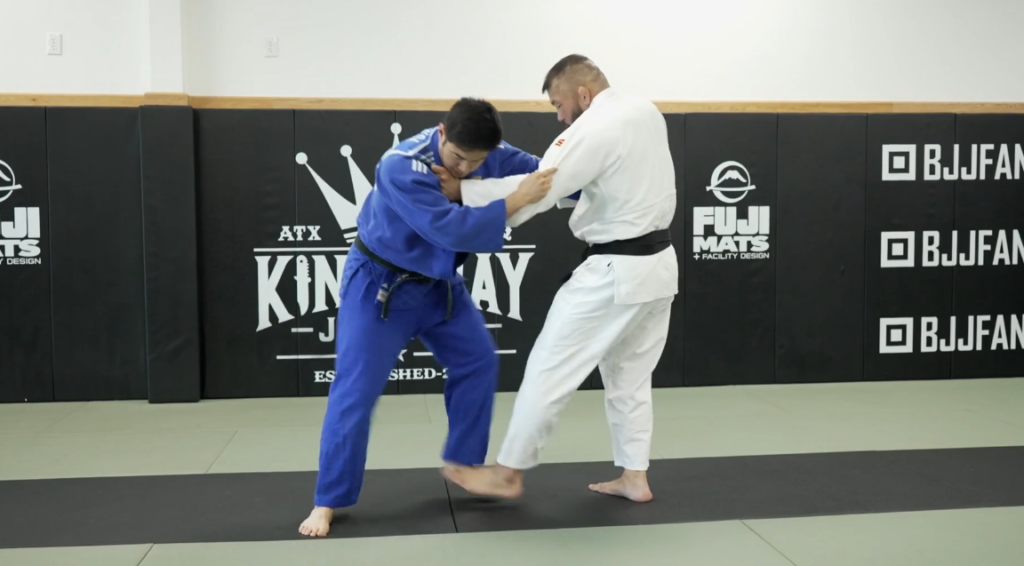
JAPANESE OUCHI GARI SECRETS SATOSHI ISHII DVD AVAILABLE HERE
Who Is This For?
This instructional is suitable for all belt levels. White and blue belts will benefit most from the fundamental mechanics in Volume 1, building a clean Ouchi Gari from scratch. Purple belts and above will get more out of Volume 2’s combination chains and the advanced variations like diving Ouchi Gari.
Gi players will find the most natural application since Ouchi Gari thrives with sleeve and lapel grips, but No-Gi grapplers will still extract significant value — the one-hand and circling variations work well with collar ties and underhooks. Competitors who struggle with standup exchanges will find this a low-risk, high-reward addition to their arsenal.
Pros & Potential Drawbacks
Pros:
- Olympic-level instruction from one of the most accomplished Judoka of his generation
- Compact format (2 volumes) makes it easy to study and revisit without overwhelming depth
- Covers both Ai-Yotsu and Kenka-Yotsu grips, ensuring relevance regardless of your stance
- Solo drilling section (Uchi Komi) is a rare and valuable addition for self-training
- Combination chains with Osoto, Tai Otoshi, and Uchi Mata provide system-level thinking, not just isolated techniques
Potential Drawbacks:
- The instructional is relatively short compared to most BJJ Fanatics releases; practitioners looking for 6+ volumes of content may want more
- Primarily focused on the Gi; No-Gi players will find value but won’t get the same depth as gi-specific takedown instructionals
- Some prior familiarity with basic Judo grip fighting is helpful to get the most out of the material
The One Throw You Need
This Japanese Ouchi Gari Secrets Satoshi Ishii DVD delivers exactly what the title promises — a thorough, technically precise breakdown of one of Judo’s most practical throws for BJJ. The two-volume structure keeps it focused and actionable, while the progression from basic mechanics through advanced combinations provides a clear learning path for grapplers at any level.