









Key Takeaways
- A two-volume instructional focused entirely on escaping one of the worst positions in grappling: back control.
- Best suited for No-Gi athletes, competitors, and anyone who keeps losing rounds once hooks or a body triangle are in.
- The strongest section is the lower-body defensive material, especially the attention given to hooks, triangles, and arm traps.
- This is not a full positional escape encyclopedia; it is a narrow, useful, back-specific survival system.
- Rating: 7.5/10
BACK DEFENSE LUKE GRIFFITH DVD DOWNLOAD
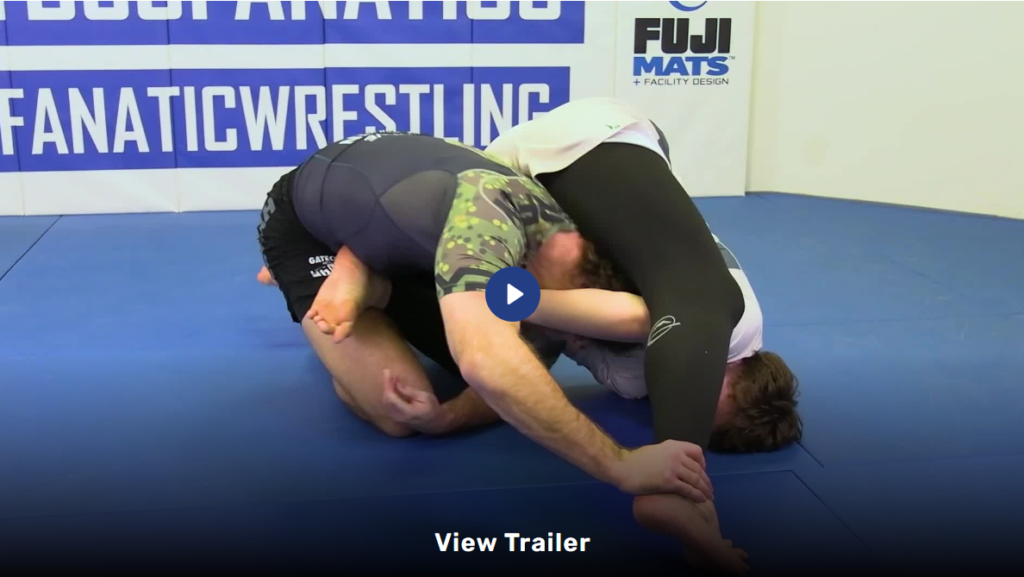
Back defense is one of those areas that everyone claims to work on, right up until a good back attacker gets behind them and makes them look like a white belt again. This review looks at a compact instructional from one of the most dangerous young heavyweights in modern submission grappling.
The Back Defense Luke Griffith DVD is built around a simple problem: how do you survive and escape when the opponent already has the position most people never want to concede? Griffith does not try to turn this into a giant defensive universe. Instead, he narrows the focus to lower-body control first, then upper-body escape mechanics and late-stage strangle survival.
That makes the instructional easy to understand, but also easy to judge. The value of the Back Defense Luke Griffith DVD depends on whether you need a targeted back escape resource, rather than a broad defensive curriculum. For grapplers who regularly get stuck under hooks, body triangles, arm traps, and rear naked choke threats, that narrowness is probably the point.
Learn Back Defense as Early as Possible
The back is the position where Jiu-Jitsu becomes brutally honest. You can be strong, athletic, explosive, and stubborn, but once someone good gets behind your shoulders and connects their legs properly, none of that matters unless your defensive habits are sharp.
Back control is also different from most dominant positions because the attacker does not need to pass through as many layers to finish. From mount or side control, there is often a larger positional battle before the submission arrives. From the back, the submission threat is already baked into the position. One trapped arm or one lazy hand-fighting exchange can end the round.

That is why a good BJJ back escape system has to address more than “turn to the safe side and peel the hooks.” The real battle is usually split into several smaller emergencies: clearing the choking arm, freeing a trapped arm, removing lower-body control, stopping the body triangle from freezing your hips, and knowing when to rotate without giving up the neck.
This course works from that reality. It treats back defense as a layered problem rather than a magic escape. That is a more useful way to study the position, especially in No-Gi, where there are fewer fabric-based stalling options and the rear naked choke is always waiting.
Luke Griffith: A Dangerous Person To Learn Back Defense From
Luke Griffith is a South African submission grappler associated with the New Wave Jiu-Jitsu team and the John Danaher coaching tree. He made his name internationally by winning ADCC European and African Trials, competing at ADCC, and collecting major No-Gi titles during his colored belt run.

What makes Griffith especially relevant for a back defense instructional is not just his general competitive success. It is the type of grappler he is. He is a heavyweight who attacks submissions at a high rate, with the rear naked choke sitting clearly inside his competitive identity. When someone who hunts the back and finishes from there explains how to escape the back, the material tends to come with a useful attacker’s perspective.
Griffith was later promoted to black belt by John Danaher, which adds context to the structure of this Luke Griffith back defense instructional. The teaching style is not chaotic or highlight-reel driven. It is organized around positional categories, side-specific reactions, and repeatable defensive checkpoints. That will not surprise anyone familiar with the New Wave style of system-building.
At the same time, this is still Luke’s product, not a Danaher marathon. The Back Defense Luke Griffith DVD is short, focused, and practical. It does not try to bury the viewer under ten hours of theory. It gives you the defensive lanes and expects you to go test them.
Defensive Strategies Back Defense Luke Griffith DVD Detailed Review
The Back Defense Luke Griffith DVD is divided into two volumes. The first volume deals mostly with lower-body problems from the back: hooks, body triangles, bottom-side triangles, top-side triangle situations, and arm trap issues. The second volume shifts toward upper-body escape mechanics, including turning escapes, misdirection, late-stage strangle defense, and back triangle escapes.
Volume 1 – Lower Body Back Defense
The first volume is the more detailed and, for most students, probably the more valuable half of the instructional. Griffith spends this section dealing with the configurations that make back control miserable: two hooks, body triangles, bottom-side triangles, top-side triangle situations, and arm traps.
The elbow wedge method is one of the recurring ideas here. Rather than relying on frantic bridge-and-roll escapes, the focus is on building frames and wedges that interfere with the attacker’s leg control. This is especially important against body triangles, where many grapplers waste energy trying to explosively pry the lock apart instead of first changing the angle and weakening the structure.
The product also separates overhook-side and underhook-side problems, which is a useful detail. Escaping the back is rarely symmetrical. The side your opponent controls, the side your shoulders are falling toward, and which arm is trapped all change the escape priorities. By splitting those scenarios, Griffith gives viewers a cleaner way to diagnose the position.
There is also material on escaping from arm traps, which deserves attention. At higher levels, the back becomes far more dangerous once one of your arms is removed from the hand-fighting equation.
If both of your hands are free, you can survive for a while. If one arm is trapped and the choking arm is active, you are suddenly playing a much shorter game. Griffith’s decision to include arm-trap defense early makes the first volume feel more realistic than a basic beginner escape sequence.
The limitation is that this section is not flashy. If you want wild inversions or immediate counters to submissions, this will feel very mechanical. But that is also why it is useful. Good defensive Jiu-Jitsu is usually not dramatic. It is boring, stubborn, and built around refusing to let the attacker connect their best pieces.
Volume 2 – Upper Body Escapes And Late Strangle Defense
The second volume is where the instructional becomes more directly concerned with getting out. Griffith covers turning escapes, misdirectional turning escapes, a rising turning escape, the reach back method, elbow cutback, late-stage strangle defense, and back triangle escape material.
This is the more dynamic section of the course. Once the lower-body control starts to weaken, turning becomes a legitimate option. The key is not just turning randomly, but understanding which direction still protects the neck and which direction gives the attacker cleaner choking access. That distinction is where many people lose the exchange.
The misdirectional turning escape is a useful inclusion because good back attackers are not passive. If they feel you moving one way, they will usually follow, tighten the control, or switch their finishing angle. Misdirection gives the defender a way to draw a reaction before committing to the real escape path. That kind of detail matters more as the level of training partners rises.
The late-stage strangle defense is also important, although it should be treated carefully. No one should build their back defense around letting the choke get deep and then hoping to survive. Still, late-stage defense has real value because competition and hard rolling are messy. Sometimes you lose the hand fight, sometimes the chin is exposed, and sometimes you need one emergency layer before tapping becomes unavoidable.
Surviving Back Mount
The best way to use the Back Defense Luke Griffith DVD is not to watch it once and expect your back escapes to magically improve. Back defense has to be trained positionally, because the entire skill depends on timing, patience, and recognizing small changes in control.
Start with the first volume and build short positional rounds from specific lower-body configurations. For example, begin with two hooks in, then body triangle, then arm trapped, then bottom-side triangle. Give the attacker a realistic finishing objective and give the defender one escape goal at a time. That will teach the body to stop panicking.
After that, layer in the second volume. Turning escapes and misdirectional exits need resistance to make sense. If the partner is too cooperative, you will get a false sense of timing. If the partner goes full competition pace immediately, you will miss the mechanics. The sweet spot is progressive resistance: let the defender find the route, then gradually increase the attacker’s ability to follow and re-attack.
For competitors, this kind of No-Gi back defense study is especially valuable because one back take can decide an entire match. Even if you never fully escape, learning to survive, clear danger, and deny the finish can change the scoreboard pressure and force the attacker to make mistakes.
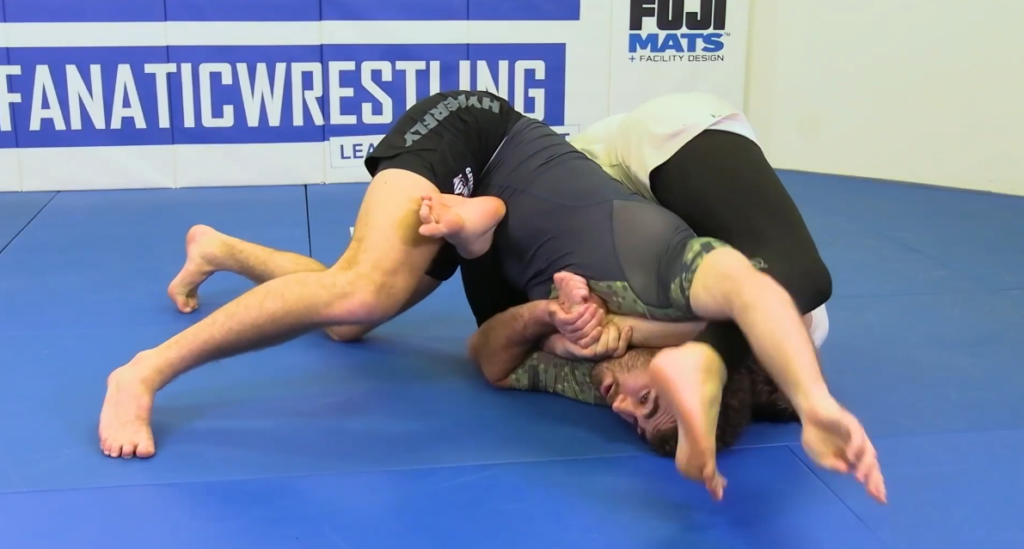
GET THE DEFENSIVE STRATEGIES BACK DEFENSE LUKE GRIFFITH DVD
Who Is This For?
The Back Defense Luke Griffith DVD is best for blue belts and above who already understand the basic back control positions but still feel stuck once a strong opponent settles in. White belts can use it too, but they may need a coach or more experienced partner to help them understand the overhook and underhook side distinctions.
No-Gi athletes will get the most out of it. The material is built around hooks, triangles, arm traps, hand fighting, turning mechanics, and strangle defense rather than lapel-based survival. Gi players can still benefit, especially because the core body positioning carries over, but this is not a Gi-specific back escape course.
It is also a good fit for bigger grapplers who face flexible or technical back attackers. Griffith is a heavyweight, but the system is not just “be large and turn hard.” The emphasis on wedges, angles, and side-specific escape logic makes it more transferable than a brute-force escape series.
The people who may want something else are brand-new beginners looking for a complete defensive curriculum, or advanced students who already have strong back escapes and want a much deeper study with more troubleshooting. This is targeted, useful, and compact, but not exhaustive.
Pros & Potential Drawbacks
Pros:
- Clear two-part structure: The instructional separates lower-body control from upper-body escape problems, which makes the position easier to study.
- Strong coverage of body triangle escape problems: Griffith spends time on the leg configurations that actually trap people in modern No-Gi back control.
- Useful arm-trap awareness: The course addresses one of the most dangerous back attack layers instead of pretending all escapes happen with both hands free.
- Practical side-specific organization: Overhook and underhook side differences make the material feel more realistic.
- Good competitive relevance: The ideas apply directly to No-Gi rounds, ADCC-style grappling, and submission-focused training.
- Compact and easy to revisit: The course does not require a huge study commitment before you can test something in training.
Potential Drawbacks:
- Narrow subject matter: It is back defense only, so do not expect broader pin escapes, turtle defense, or guard recovery systems.
- Not ideal as a first-ever escape instructional: New white belts may need more basic positional context before the details fully click.
- Limited depth compared with longer defensive courses: The upside is focus, but the trade-off is less time spent on every possible variation.
- Less useful for purely Gi-focused players: The concepts carry over, but the instructional is clearly more aligned with No-Gi back control.
Battle-Tested Defensive Strategies
The Back Defense Luke Griffith DVD is a focused, practical instructional that does exactly what its title suggests. It gives you a structured way to survive and escape the back, with special attention to the lower-body controls that make the position so hard to solve in the first place.
Its biggest strength is the organization. Griffith does not just throw random escapes at the viewer. He separates hooks, body triangles, arm traps, turning escapes, and late-stage strangle defense into a system that a serious student can actually train. That is what makes the instructional useful despite its relatively narrow scope.