







Key Takeaways
- A compact guard-retention system built specifically for modern, standing pressure passing (split squats, heavy knee-cuts, north-south switches, double-unders).
- Covers survival first then flips the script into offense with clear transitions into K-Guard and leg entanglement before ending with rolling and match footage.
- Best suited for No-Gi guard players (or anyone whose open guard keeps getting folded), with a small but real flexibility requirement if you want the attacking layer.
- Rating: 9/10
AVAILABLE HERE: BABY GUARD SEBASTIAN CURELARU DVD
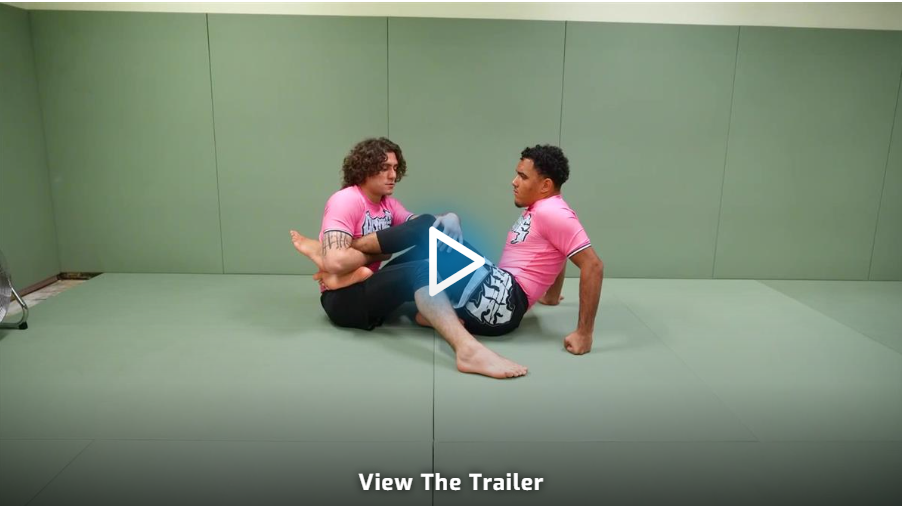
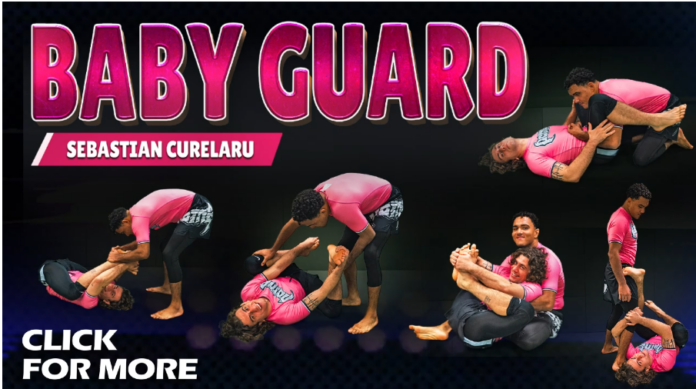
If your guard works until the passer stands up, and then everything collapses into knee-cut pressure, split-squat camping, and that miserable “you’re carrying my bodyweight with your shins” feeling, you’re the target audience for the Baby Guard Sebastian Curelaru DVD.
This instructional is not trying to turn you into a highlight-reel guard player. It’s trying to make you hard to pass—specifically against the kind of modern, upright passing that’s become the default in competitive No-Gi rooms. The promise is simple: build a compact, pressure-proof shell when your legs get compressed, then use it as a launchpad to either recover, re-guard, or counter into meaningful offense.
Having a Guard When You’re Not Suppoed To
A lot of guard instruction falls into two categories: “here’s my favorite guard” or “here are 47 entries into my favorite guard.” Guard retention instruction is rarer, and late-stage retention (when the passer is already standing and folding your knees toward your chest) is rarer still.
Modern passing isn’t only about speed anymore; it’s about geometry and weight placement. Passers use split-squat stances to pin one leg while freeing the other, they hover chest-over-hips to kill your ability to sit up, and they chain knee-cuts into back-steps and north-south switches until your frames break. In that reality, just keeping your knees inside is not a plan—it’s a wish.
A baby guard concept makes sense because it accepts the truth: sometimes you’re going to get compressed. Your job isn’t to pretend that won’t happen; your job is to have a structure that survives the compression and buys you time—time to reinsert frames, time to stop the passer’s hips from fully clearing, and time to force a reaction you can exploit.

When a guard is only defensive, you survive but you don’t improve your position. When it’s only offensive, you get passed while setting up the move. The sweet spot is a defensive shell that naturally feeds into offense—and that’s the lens the Baby Guard Sebastian Curelaru DVD is working through.
Sebastian “Curelao” Curelaru
Sebastian Curelaru presents himself as a competitor-coach whose calling card is guard survival in high-pressure rooms. On his own coaching site, he emphasizes competitive results in both Gi and No-Gi, along with a focus on building game plans through analysis and targeted training rather than random technique collecting.
He also positions his coaching as highly individualized—reviewing footage, diagnosing patterns, and prescribing specific drilling and positional work. A useful detail for context is that his professional profile describes him as someone who trains Brazilian Jiu-Jitsu while also working in fitness and studying toward physiotherapy.
That’s exactly the kind of background that tends to produce instruction with an eye for mechanics, structure, and repeatable problem-solving rather than just “feel.” Put together, Curelao reads as a modern, systems-first instructor: build a framework, give it a name, and make it usable under fatigue and pressure.
That matters here, because guard retention under standing pressure is one of those areas where vague advice is useless. You need clear positional checkpoints, and you need to know what to do when you’re already losing.
Detailed Breakdown: Baby Guard Sebastian Curelaru DVD Review
What stood out immediately is how practical the structure is. The material doesn’t wander through ten different guards, just in case. Instead, it focuses on a very specific problem: surviving and winning the ugly, late-stage passing battles that decide most rounds once someone is already halfway through your frames.
Volume 1 – When To Use Baby Guard
Volume 1 is essentially the emergency room layer of the system. It starts with an intro framed around when to use the Curelao guard, which is an underrated teaching choice. A lot of people fail with defensive positions because they enter too early (and give up opportunities to play normal open guard) or too late (when the passer has already cleared the last meaningful frame). Starting with timing makes the rest of the material easier to apply.
From there, you get targeted answers to the most common pressure-passing scenarios. There are sections on avoiding the split squat (and the half-guard-like compromises that come with it), avoiding J point camping, and direct defense against north-south passing and double-under passing. The closing chapters go into escaping/countering the split squat in two parts, which signals the real focus: this is the battle you’re meant to win.
What I like about this volume is that it doesn’t pretend you’ll always keep perfect distance. It’s built for the messy reality where your legs are pinned and you’re trying to stop the passer from settling into the finish. If you’re the kind of grappler who loses rounds because you get stuck defending late-stage pressure, this first volume alone is valuable.
Volume 2 – K-Guard, Cross Ashi, And The Bear Trap Layer
Part 2 is where the system becomes harder to pass. The chapters are explicitly about turning defense into attacks, starting with getting to K-Guard from the Baby Guard. That transition matters, because K-Guard is one of the most reliable modern hubs for leg-entry offense—especially when your opponent is committed to standing pressure and can’t easily disengage without giving you space.
From K-Guard, the instructional moves into Cross Ashi, then into sequences labeled around a failed reap leading into a bear trap calf slicer, plus a section on switching to the other leg from the bear trap. There’s also an entry into the bear trap from waiter guard, which suggests Curelaru is trying to give you multiple doors into the same attacking room—so you can arrive there even if the initial transition doesn’t land cleanly.
The last chapter in this volume is a flexibility-focused segment. That’s a smart inclusion because it quietly tells you the truth: some of this offensive layer will be easier if your hips and knees can comfortably move through certain ranges.
This volume is the difference between a retention system you use to stall and a retention system you use to score. It’s also where the instructional starts to feel like a complete game plan rather than a collection of defenses.
Volume 3 – Rolling And Match Footage
Volume three is short, but it’s important. It includes several rolling segments (with different partners) and finishes with match footage labeled as a match with Oliver Taza at European Trials. Conceptually, this is where you learn the pacing: when does Baby Guard appear, what triggers it, what does Curelaru prioritize first, and how long does he stay in the shell before transitioning?
In instructionals, narrated rolling is often where the why becomes obvious. Techniques can look clean in demos, but a retention system lives or dies on decision-making: do you accept bottom half for a second to avoid the pass? Do you force a re-guard first? Do you chase the leg entry immediately or stabilize your frames?
Even if you don’t copy exact movements, watching the system show up in live exchanges helps you understand the feel of it. It also gives you something many instructionals lack: evidence of how the material connects when the round isn’t cooperating.
The Value of Weird Guards
If you want the Baby Guard Sebastian Curelaru DVD to change your guard retention, treat it like a positional skill—not like a technique you know.
A simple approach that works:
- Entries and survival rounds – Start every round in the late-stage scenario you actually lose to (split squat pressure, north-south switch threat, or double-under pressure). Your goal is not to sweep—your goal is to stop the pass and reset to a safe guard state.
- Add one exit – Pick one escape/counter you can hit reliably. Drill it, then do short positional rounds where you’re only allowed to win by achieving that exit or returning to a stable guard.
- Layer the offense – Start connecting your survival structure to the K-Guard transition. Don’t force the finish—just hit the transition and stabilize the position.
- Decision-making rounds – Mix scenarios and allow yourself to either re-guard, sweep, or transition into the leg-entry layer depending on what the passer gives you.
This kind of system rewards consistency more than intensity. Ten minutes of focused positional work after class will do more than trying to “remember everything” and hoping it appears in rolling.
BABY GUARD SEBASTIAN CURELARU DVD DOWNLOAD NOW
Who Is This For?
The Baby Guard Sebastian Curelaru DVD fits best for solid white belts (with basic open guard concepts) through advanced competitors. Beginners can use Volume 1 immediately; Volume 2 will make more sense as your leg-entanglement literacy improves.
Guard players, counter-attackers, and anyone who wins by being hard to pass rather than by constant scrambling will love this instructional. No-Gi competitors will be able to use a new and unexpected weapon in their game.
On the other hand, the DVD is less ideal for if you’re a Gi-only specialists who want lapel-based retention solutions (this is not that kind of system). People who avoid leg entanglements entirely—you can still benefit from Volume 1, but you’ll be leaving points on the table by skipping Volume 2’s attacking layer.
Pros & Potential Drawbacks
Pros
- Directly addresses modern standing pressure (split squat, north-south switches, double-unders) rather than generic “keep your frames” advice.
- Clear defensive-to-offensive progression: survive first, then transition into K-Guard and leg entries.
- Practical chapter organization that mirrors real passing problems you actually face in sparring.
- Includes rolling and match footage to show timing, decision-making, and how the system appears live.
- Mobility section is honest and useful—it doesn’t pretend positions are free if your hips can’t access them.
Potential Drawbacks
- Relatively short runtime, so you’re getting a tight system rather than an encyclopedia of variations.
- Offensive layer assumes some comfort with leg positions (Cross Ashi / bear trap concepts). If you’re brand new to that world, you’ll need to learn the “language” as you go.
- Not tailored for Gi-specific grips and layers, so Gi-first players may want a complementary resource.
Time to be a Baby
The Baby Guard Sebastian Curelaru DVD is one of those instructionals that feels designed for real rounds, not highlight clips. It’s not a complete guard game from every distance. It’s a specialized solution for a specific problem—and that’s exactly why it works. If your guard retention fails once pressure passing begins, this is a high-value, low-fluff study.