






Key Takeaways
- Quick Concepts Underhook vs Overhook Garry Tonon DVD— a four-part No-Gi instructional from BJJ Fanatics that treats the underhook and the overhook as parallel attacking ties across standing, dog fight, half guard, and chest-to-chest positions.
- The product’s promise is a decision map: whatever tie your opponent gives you, you get a clear next move — a throw, back take, leg entry, or submission — rather than a stalemate.
- Tonon is a multiple-time EBI champion, an ADCC medalist, and a No-Gi specialist, so the material carries genuine competitive weight.
- The format is deliberately short, which is both the appeal and the limit: it surveys the tie game instead of drilling any single position to depth.
- Best for blue-to-purple No-Gi grapplers who want to turn upper-body ties into offense; too shallow for beginners and redundant for anyone who already owns Tonon’s larger instructionals.
- BJJ World Expert Rating: 9 out of 10.
Quick Concepts: Underhook vs Overhook Garry Tonon DVD DOWNLOAD
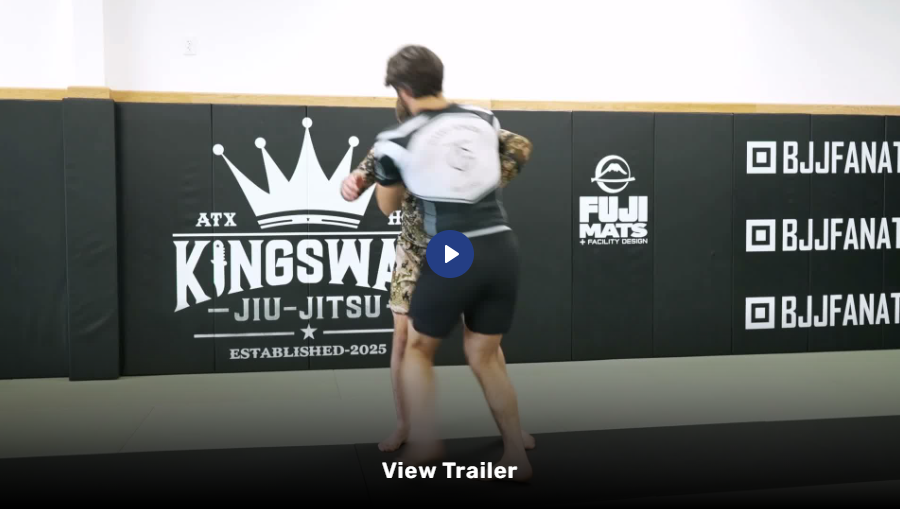
Garry Tonon built a reputation on refusing to accept neutral positions, and few competitors have converted both the underhook and the overhook into offense more consistently than he has. Quick Concepts: Underhook vs Overhook is a four-part No-Gi instructional listed at $97 on BJJ Fanatics, and it does something most tie-focused material avoids: it sets the two most common upper-body grips side by side as matched attacking options, then walks each one through four recurring situations — standing side-on exchanges, the dog fight, half guard, and chest-to-chest contact.
The Underhook vs Overhook Dilemma
The underhook and the overhook are the default vocabulary of the upper-body clinch, and the underhook vs overhook BJJ split usually gets framed as a one-sided debate: the underhook is the attacking grip, the overhook is the defensive reply. Tonon’s premise is that both are attacking ties, and that the real skill is reading which one you have — or which one your opponent gives you — and turning it into the next action.
That premise is why the course has value beyond a single-position series. Most instructionals isolate one tie in one place: the half guard underhook in a dedicated half-guard system, or the whizzer in a single-position overhook course like Adele Fornarino’s Overhook From Everywhere. Tonon instead cross-cuts the same two grips through four different positions, which is closer to how the ties actually show up in a No-Gi scramble — you chase an underhook in half guard, get a whizzer over the top in the dog fight, and land chest-to-chest all inside a single exchange.
The trade-off is inherent to the format. By spreading the underhook and overhook across so much territory, the course can show a lot of destinations but cannot linger on any of them. Grapplers who want a deep, systematic breakdown of a single tie will find more depth in something like Underhooks With Uncle Jeff Glover, which stays on one side of the equation for its entire run time.
Reminding You Who Garry Tonon Is
Garry Tonon is a Jiu-Jitsu black belt under Tom deBlass and Ricardo Almeida, promoted in 2013, who came up through the Renzo Gracie Academy network in New Jersey. He is widely catalogued as a No-Gi specialist whose competitive record runs through the sport’s submission-only boom: multiple Eddie Bravo Invitational titles across three weight divisions, IBJJF Pan and World No-Gi medals, and a bronze at the 2019 ADCC World Championship.

He is also closely tied to the modern leg-lock movement. Tonon trained extensively under John Danaher in New York, and the Danaher Death Squad label first circulated in large part because of the success he and Eddie Cummings had on the submission-only circuit before Tonon shifted his focus to mixed martial arts in ONE Championship in 2018.
None of that is incidental to this product. Tonon’s game has always been built on exactly these ties — underhooks that climb to the back, whizzers that become submissions — so the instructional is drawn from material he has actually relied on in competition, not repackaged fundamentals.
Details: Quick Concepts Underhook vs Overhook Garry Tonon DVD Review
The course is split into four parts, and each one pairs a tie with two positions rather than treating a single position in isolation. Across the set, the No-Gi underhook and the No-Gi overhook are treated as two halves of the same decision: both attack, but they attack differently, and the course is at its best when it makes that difference explicit.
Volume 1: Standing Side On Overhook and Dog Fight Overhook
The opening volume works the overhook as an attacking grip from standing side-on contact and from the dog fight. The material runs from the Double Trouble Roll through momentum-based Harai Goshi and Uchi Mata throws, then into the lat scoop juji and triangles, before closing with the whizzer toss. The through-line is that a whizzer is not a stall: it is an overhook that can throw, trip, or roll an opponent the moment they commit their weight.
Volume 2: Half Guard Underhook and Dog Fight Underhook
This volume flips to the underhook in half guard and the dog fight. The chapters move from the nearside scoop through leg engagement into back takes and the V-Grip, mapping the route most half-guard players already want — underhook, climb, back exposure — while adding the leg-entry option that makes Tonon’s version of the position feel distinct. The dog fight underhook is treated as a launching point, not a resting point.
Volume 3: Half Guard Overhook and Standing Side On Underhook
The third part covers the overhook from bottom half guard — the knee shield whizzer and the knee lever — before switching to the standing side-on underhook, where the trip entries, snapdowns, and back takes give a grappler a reason to want the underhook on the feet rather than settling for a clinch. This is the volume that most directly answers the “which tie do I want where” question, because it presents the overhook as the bottom-half answer and the underhook as the standing answer.
Volume 4: Standing Chest to Chest and Dog Fight Overhook
The final volume addresses chest-to-chest contact — the stalemate position that stalls most scrambles — and adds leg entanglements plus a section on quick underhook counters. The counter material is the closest the course comes to defensive troubleshooting, and it is useful, but it is framed as a finish to the earlier offense rather than a standalone defensive syllabus.
Over-Undering On Your Own
The realistic way to use this course is one position at a time, not all four at once. A grappler who already plays the dog fight can watch the first two parts in an evening and have a short, drillable chain — underhook to the back, whizzer to the toss — ready for the next open mat. The material is compact enough to be absorbed that way, which is the point of the Quick Concepts format.
What it will not do is replace a dedicated positional study. The leg entanglements are entries rather than a full leg-lock system, the half-guard chapters assume you already have a functional half guard, and the standing throws reward someone who has drilled basic grip fighting. Treat it as a tie-reading layer you can bolt onto an existing No-Gi game, and it holds up; treat it as a complete system, and it will feel thin.
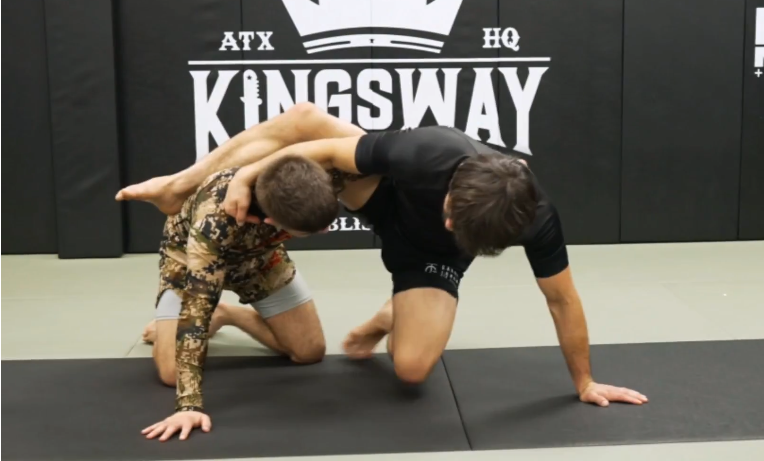
AVAILABLE HERE: Underhook vs Overhook Garry Tonon DVD
Who Is This For?
This course fits blue-to-purple No-Gi grapplers, and experienced wrestlers or judo-adjacent athletes who are comfortable in the clinch, best. It rewards a grappler who already recognizes the dog fight, half guard, and standing ties and simply wants a clearer set of attacks from each one. Submission-grappling competitors who play a scramble-heavy, upper-body-tie game will get the most direct return.
It is not for white belts. The material assumes grip and positional literacy, and the named throws and leg entries will read as disconnected techniques without that base. It is also a poor pick for anyone who wants a deep single-position system, and it will feel redundant to anyone who already owns Tonon’s broader instructionals — Unifying The Systems or Shoot To Kill cover much of this ground in greater volume. Readers who already worked through Front Headlock Highlights, the previous Quick Concepts entry, will recognise the format and should weigh whether a second compact course adds enough to justify it.
Pros And Potential Drawbacks
Pros:
- A genuine decision map, not just a technique list. The underhook-versus-overhook framing forces the question of which tie you want in which position, which is the exact decision most grapplers fumble mid-scramble.
- Unusually broad position coverage for a compact course. Standing, dog fight, half guard, and chest-to-chest are connected by a single idea rather than treated as four unrelated modules.
- Attack-first No-Gi overhook material. The whizzer and overhook attacks — tosses, rolls, and juji entries — reframe a grip many people use only defensively.
- Credible instructor. Tonon’s EBI and ADCC record, plus his No-Gi specialization, means the techniques are competition-tested rather than theoretical.
- Fast to consume and drill. The Quick Concepts format is built for a single viewing and immediate open-mat application.
Potential Drawbacks:
- Broad but shallow. No single position is developed into a full system, so the course depends on you already owning a base game to hang these attacks on.
- Somewhat light on defensive troubleshooting. Apart from the quick underhook counters, resistance-tested reactions and common failure points get little screen time.
The Over-Under Map
Quick Concepts: Underhook vs Overhook Garry Tonon DVD succeeds at the specific thing it promises: it turns the two most common upper-body ties into a clear set of next actions across four recurring positions, and it does so in a format short enough to watch and drill quickly. The underhook vs overhook comparison is the reason to buy, and Tonon’s No-Gi overhook and half guard underhook material is genuinely useful for grapplers who already live in the dog fight and the clinch.
Reviewed by: Ognen Dzabirski, BJJ black belt, full-time coach and gym owner. The views expressed by the author do not necessarily reflect the views of the publication