







Key Takeaways
- A compact, concept-first system that reframes the kimura as a control platform, not just a shoulder lock.
- Strong emphasis on hip positioning, angle, and structure to make finishes feel tight without muscling.
- Covers entries and follow-ups across common grappling hubs like closed guard, half guard (top and bottom), and top turtle/scramble situations.
- Short runtime means it’s easy to study and actually apply, but advanced grapplers may want more depth in a few branches.
- Rating: 8/10
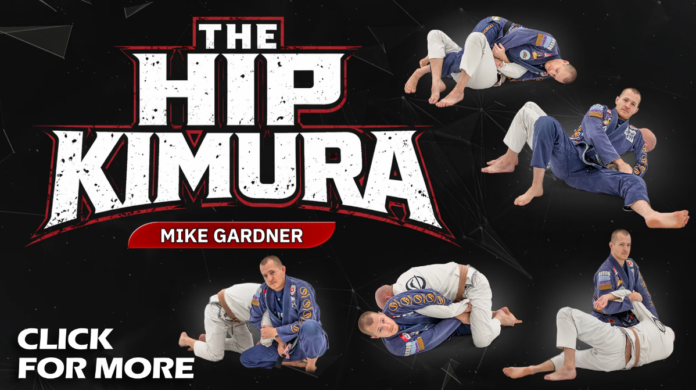
THE HIP KIMURA MIKE GARDNER DVD DOWNLOAD
If you’ve ever hit a kimura grip and felt like the rest was a coin flip—either you rip it with your arms, or you lose the position—this is exactly the problem Hip Kimura Mike Gardner DVD is trying to solve. The central idea is simple: the kimura works best when your hips are doing the controlling, not your biceps doing the begging.
Mike Gardner’s approach treats the kimura as a framework for breaking posture, steering reactions, and moving through positions while maintaining the same threat. Instead of presenting the kimura like a single finish you chase, he builds it as a system that can produce sweeps, transitions, and back takes when the opponent defends.
Kimuras Never Get Old
The kimura is one of the rare submissions in Jiu-Jitsu that doubles as a restraint. At a basic level, everyone understands figure-four the arm and finish. But in live rolling, most kimura attempts die in the same place: you get the grip, the opponent frames, turns, postures, or hides the elbow line—and your attack turns into a tug-of-war.
That’s why the best kimura players don’t treat it like a finishing move. They treat it like a control grip that forces choices. Once the figure-four is attached, you can often dictate where the opponent’s shoulders point, how their spine rotates, and which side they can safely move toward. In other words: the kimura can act like a steering wheel.
The hip part matters because the kimura is fundamentally about shoulder alignment and rotational control. When you connect your hips and core to the position, you stop being a person holding an arm and become a wedge that controls the entire upper body. That’s where the kimura becomes consistent: not because you got stronger, but because you built a better structure.

In that sense, a good Hip Kimura Mike Gardner DVD review should ask one question: does it actually teach you how to make the kimura feel unavoidable—without relying on brute force? This one largely does, and it does it by prioritizing angle, hip connection, and transitions over harder finishing mechanics.
Mike Gardner: “Combatch” and Teaching BJJ
Mike Gardner is a full-time Jiu-Jitsu instructor at Legion in San Diego, where he’s known for teaching both kids and adults and for taking a systems-based approach to coaching. His instructor profile highlights him as an AJJ black belt and a JJWL Champion.
What stands out most is how his background fits the style of this instructional. According to his bio, he leaned into problem-solving and systems thinking before going all-in on Jiu-Jitsu, eventually becoming a full-time coach.

He also created “Combatch,” a Jiu-Jitsu card game designed to help people practice the mental side of grappling away from the mats—another clue that he likes teaching frameworks, not just techniques.
He also openly isn’t framed as a super-competitor type; instead, his credibility here comes from teaching, building processes, and obsessing over a position he clearly loves (the bio even calls out that he loves the kimura). That coaching-first lens shows up throughout the Hip Kimura Mike Gardner DVD.
Detailed Hip Kimura Mike Gardner DVD Review
The Hip Kimura is split into two volumes. Based on the chapter timestamps, the total runtime lands at just under an hour, which immediately tells you what kind of product this is: a tight, practical system rather than a marathon deep-dive.
Volume 1 – Kimura Mechanics
The Hip Kimura Mike Gardner DVD starts by tightening the foundation: you get an intro, core kimura mechanics, and a specific T-position concept that frames how Gardner wants you to align your body around the grip. The instructional also includes a reverse Kimura and Choi Bar segment early on, which signals a theme you’ll see repeatedly: the kimura isn’t a dead end—it’s a connector.
From there, the rest of the volume is heavily entry-driven. Instead of dumping random scenarios, Gardner organizes the first half around named entries like shoulder sandwich and pass behind, then moves into half guard-focused entries. The point isn’t the novelty of the names—it’s that he’s showing multiple ways to arrive at the same hip-connected control, which is exactly how a useful kimura control system should be taught.
The back end of Volume 1 also includes top turtle stuff, which matters because turtle is one of the most common scramble hubs where people almost secure the kimura grip—then lose it as the opponent rolls or stands. Even without turning this into a giant turtle encyclopedia, it’s a smart inclusion: if your kimura system can survive scrambles, it becomes a real weapon.
Volume 2 – Transitions & Entries
Volume 2 feels like the make it work in motion section. It opens with “Kettle Transitions” (it’s as weird as it reads) and then goes straight into troubleshooting. That ordering is important: transitions first, then fixes. It reinforces the idea that the hip kimura is meant to travel—if you’re static, you’re easier to peel off.
This volume also introduces several entries that read like stand-up or front-head/drag style connections. That’s a big plus for anyone who wants their kimura threat to exist before the match becomes ground-only.
And once you hit the midsection of the volume, you get a sequence of escape-proofing style chapters—things like the infamous Ghost Escape and Houdini—which, at minimum, communicate that Gardner expects opponents to try to slip and spin out, and he’s prepared for it.
The later chapters in the first part of the Hip Kimura Mike Gardner DVD read like finishing/positional resolution and error-correction. He wraps it with re-hip Kimura, which is basically the thesis of the whole project: even if something slips, rebuild the hip connection and return to control rather than starting over from scratch.
Sticking to Kimuras
Because this instructional is concise, it lends itself to a very specific training plan: pick one entry, one control checkpoint, and one if they defend, I go here option—then pressure test it for two weeks.
Grip + hip connection only is the place to start exploring. In positional rounds, don’t even chase finishes. Your goal is to build the hip angle and keep the opponent carrying your control while they try to posture and frame.
When you’re comfortable, add one transition. Choose one of the listed transitions (the instructional clearly emphasizes movement and transitions as part of the system). The moment your partner starts escaping consistently, plug in one of the troubleshooting concepts rather than switching submissions out of frustration.
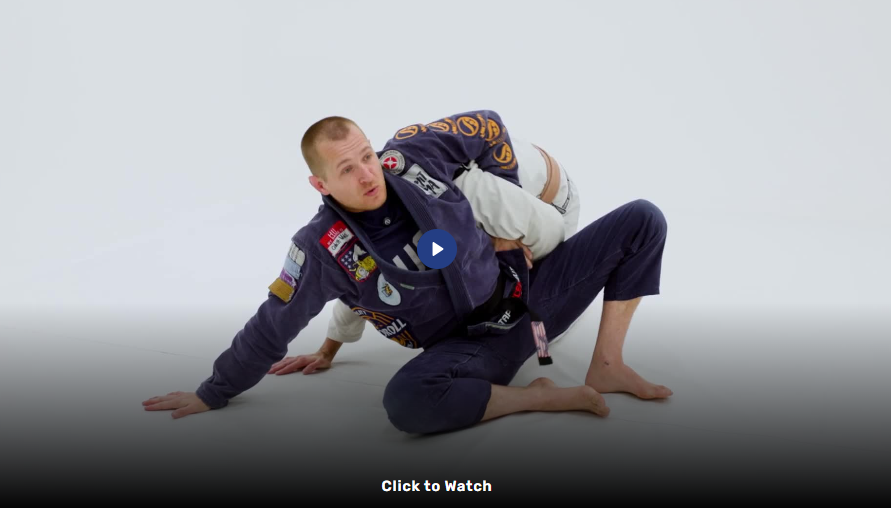
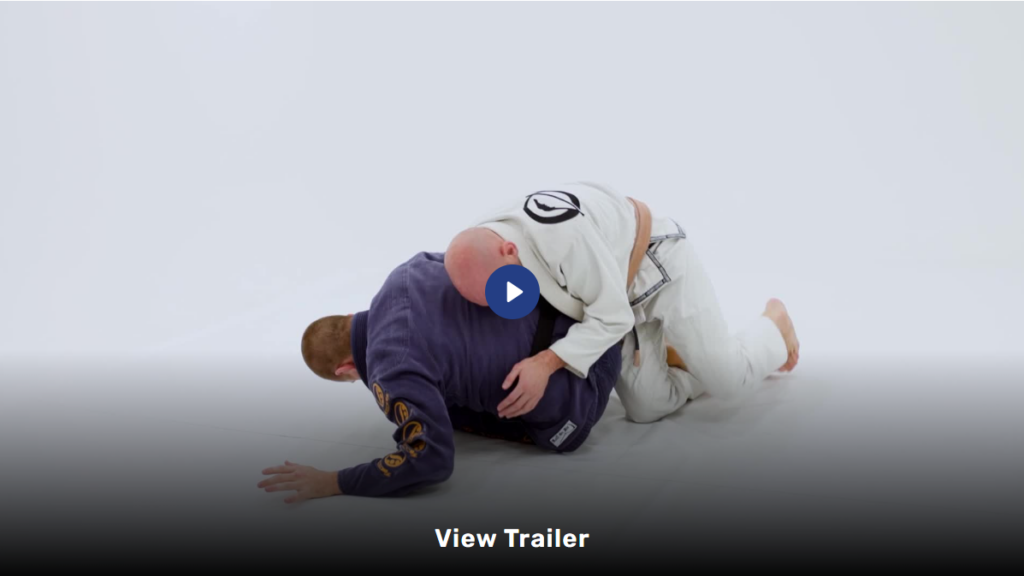
WATCH A SAMPLE: The Hip Kimura Mike Gardner DVD
AVAILBLE HERE THE HIP KIMURA MIKE GARDNER DVD
Who Is This For?
The Hip Kimura Mike Gardner DVD is best for white belts through purple belts who already know what a kimura is, but can’t keep people pinned long enough to finish it consistently. I’m pretty sure No-Gi grapplers and MMA-oriented students who want upper-body control that survives scrambles and transitions will also find it more than useful.
Brand-new white belts who don’t yet have basic positional stability should stick to basic Kimuras and perhaps skip this one (for the time being). The hip-driven approach is simple, but it still assumes you can hold a position long enough to apply structure.
If you specifically want a modern Mike Gardner Kimura instructional that’s structured around control first, you’ll likely get what you came for.
Pros & Potential Drawbacks
Pros:
- Concept-forward approach: It’s built around hip positioning and angle control, not finish harder.
- Two-volume, low-fluff structure: Easy to revisit and drill without feeling buried.
- Multiple entry points: The chapter list shows entries from half guard, closed guard, turtle/scramble, and more.
- Troubleshooting is included: Practical recognition that people will try to slip out.
- Strong for chaining attacks: The content clearly points to transitions, back takes, and follow-ups when opponents defend.
Potential Drawbacks:
- Short runtime: If you prefer long-form instructionals with exhaustive branches, this may feel more like a sharp blueprint than a full library.
- Not a Kimura from everywhere encyclopedia: It covers multiple positions, but it’s still focused on the Hip Kimura framework rather than every Kimura variant under the sun.
Use Your Hips
Overall, Hip Kimura Mike Gardner DVD delivers what it promises: a structured way to turn the kimura into a hip-driven control system that can lead to finishes, transitions, sweeps, and back takes—without relying on arm strength as the main engine.
It’s not a massive, four-hour masterclass. Instead, it’s a tight system you can actually install: mechanics, core positioning (including the T-position concept), multiple entries, and troubleshooting that matches what happens in live rounds.