


Key Takeaways
- A mechanics-first straight ankle lock instructional that’s built around why finishes work, not just how to copy a grip.
- Strong emphasis on alignment (hips, knee direction, pressure), plus clear decisions for belly-up vs belly-down finishing.
- Practical coverage of the positions people actually end up in: Outside Ashi, 50/50, and even top-position ankle locks.
- Best suited for grapplers who want a “reliable finisher” footlock that holds up under resistance, not a one-time surprise tap.
- Rating: 9/10
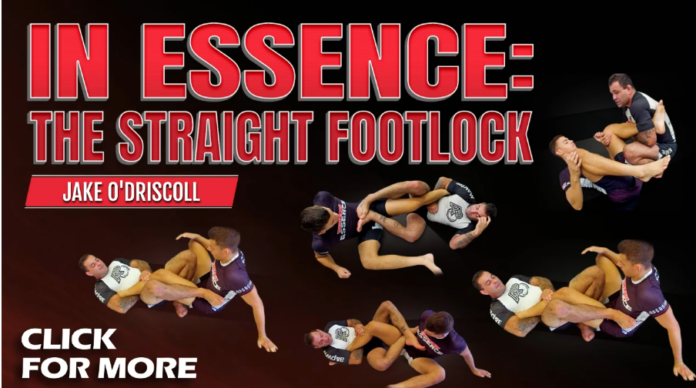
DOWNLOAD: THE STRAIGHT FOOTLOCK JAKE O’DRISCOLL DVD
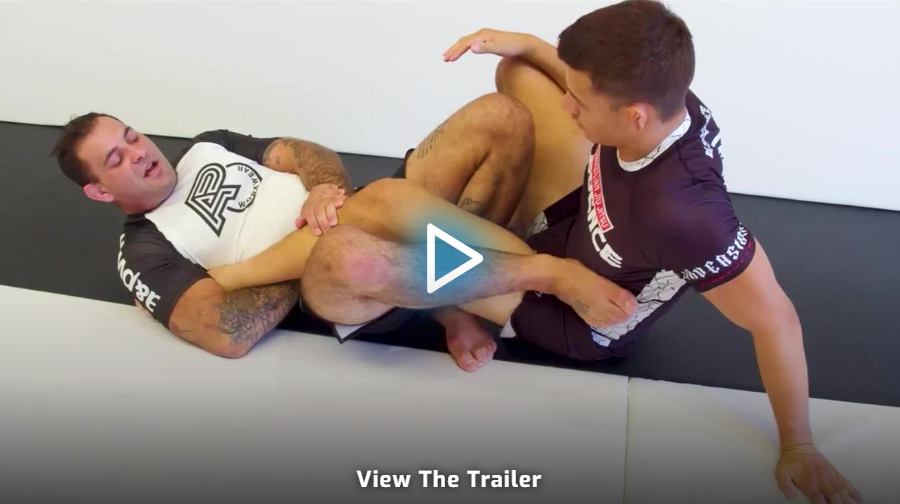
The straight footlock has a weird reputation in Jiu-Jitsu. Half the room treats it like a “white belt submission,” while the other half has that one training partner who makes it feel like your ankle is about to file for divorce. The difference is almost never strength—it’s mechanics, control, and decision-making.
That’s exactly why the Straight Footlock Jake O’Driscoll DVD is such an interesting release. It’s positioned as a system that strips the ankle lock down to its essentials and rebuilds it into something repeatable: consistent pressure, fewer escape windows, and clearer finishing routes depending on how the opponent reacts.
An Honest Submission
A straight footlock (straight ankle lock) is one of those submissions that exposes how honest your fundamentals are. If your control is loose, the opponent’s knee line slips. If your alignment is off, you end up cranking your own arms while their foot rotates into safety. If you chase the tap instead of building the break, you create the scramble that lets them heel-slip, stand, or counter-leg-lock you.
At a high level, the submission has three jobs:
Control the leg and isolate the escape routes – This is where people lose the plot. They “have the foot” but don’t actually own the knee line, hip position, or the opponent’s ability to rotate.
Create a structure that turns pressure into breaking force – The straight footlock isn’t magic. The breaking pressure comes from correct alignment—your body acting like a lever system—rather than you curling your arms and praying.
Make a smart finishing choice based on the opponent’s reaction – Belly-up finishes can be clean and fast, but belly-down finishes often become necessary when opponents are savvy and start clearing their knee or rotating. The best finish is the one that matches the position you’ve truly secured—not the one you wanted in your head.
What separates a “beginner ankle lock” from a competition-grade one is how well you manage those three jobs while the other person is actively trying to ruin your day.
Details Matter: Coach Jake O’Driscoll
Jake O’Driscoll is an Australian black belt and the head instructor at Essence Brazilian Jiu-Jitsu, where he’s built a reputation as a detail-heavy coach with a strong competitive room. He’s also widely known for coaching high-level athletes, including ADCC champions and medalists, which matters here because the modern leg lock game punishes sloppy teaching.

In other words: he’s not teaching the straight footlock like an isolated move. He’s teaching it like a reliable part of a bigger leg-entanglement ecosystem—where opponents are aware, defensive, and ready to counter. That coaching context shows up in how this material is organized: concepts first, then positional applications, then the messy reality positions like 50/50 and finishing from top.
The Complete Straight Footlock Jake O’Driscoll DVD Review
If your straight ankle lock usually feels like you’re almost there, or you finish some people but can’t finish the good guys, this is the kind of instructional that tends to fix the real problem: the small details you didn’t realize were non-negotiable.
Volume 1 – Footlock Mechanics
Volume 1 starts exactly where good footlock instruction should start: concepts and finishing mechanics before you get lost in cool variations. The early structure is all about understanding finishing positions and the breaking mechanics that actually create pressure. Then it gets specific in the right ways—details like the direction of the knee, whether you should flare or squeeze, and how your finishing choice changes depending on belly-up vs belly-down alignment.
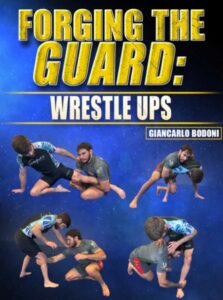
A particularly useful inclusion here is the attention to rules and legality. Regardless of your gym culture, straight ankle locks live inside a world of ruleset differences, and being clear about what’s allowed (and what puts you in danger) is part of building a footlock you’ll actually use in competition.
Volume 2 – Outside Ashi
Part 2 shifts into positional application through Outside Ashi ankle locks and inside-hip positioning—basically, the range where most people either become dangerous or get countered. The structure here is tight: establish the position, revisit breaking mechanics from a new angle, then move into finishing routes.
This is also where you start seeing the system part more clearly, because the finishes aren’t presented like random tricks. They’re presented like answers to predictable reactions: how the opponent tries to rotate, how they hide the heel, how they clear the knee line, and what finishing option matches the control you have.
Volume 3 – Developing the 50/50
The next volume is the one most grapplers will be grateful for, because it tackles 50/50—the position that turns a lot of leg lockers into philosophers. The instructional frames 50/50 footlocks with the right mentality first, then goes into the practical requirements: locking the legs correctly, bringing the knee to the middle, setting up the footlock, and then finishing from multiple body orientations (inside-hip, belly-down, flat back, backside, etc.).
This is a smart design choice. In 50/50, the straight footlock only works consistently if your control beats the opponent’s ability to rotate and hand-fight. The variety of finishing angles matters because opponents won’t sit still and give you the perfect look.
You also get reverse ankle lock material from backside configurations, plus a discussion of heel hook options. Even if your primary goal is the straight footlock, acknowledging adjacent threats changes how you finish—because the opponent’s defensive choices often expose other options (or force you to respect theirs).
Volume 4 – Footlocks From Top
The Jake O’Driscoll straight ankle lock instructional ends with a fun twist: straight footlocks from top. A lot of people treat ankle locks as something you hunt from leg entanglements only, but top-position footlocks pop up more than people admit—especially when opponents are building guards, framing, or trying to recover from half guard and open guard situations.
This volume covers the why of finishing on top, then deals with ruleset differences again (which is crucial here), and then moves through scenarios like top half guard, split squat positioning, leg drag contexts, and De La Riva situations.
What I like about this section is that it makes the straight footlock feel less like a niche leg-locker weapon and more like a submission you can threaten while passing. That’s a big deal for Gi players and pressure passers who want lower-body submissions without turning every exchange into a full leg lock shootout.
A Complete Footlocks System
The fastest way to get value out of the Straight Footlock Jake O’Driscoll DVD is to treat it like a mechanics project first and a submission project second. Pick one primary finishing configuration (belly-up or belly-down) and rep it with a partner who gives you realistic, progressive resistance. Your goal isn’t the tap—it’s repeating the same alignment every time.
Start rounds directly in Outside Ashi and in 50/50. Give the defender one main goal (clear knee line and stand/rotate) and give the attacker one main goal (keep control and finish clean). Short rounds, lots of resets. Then, focus on chaining: if the opponent rotates, you choose the finishing orientation that matches the control you still have. This is where your footlocks stop being “a move” and become a reliable part of your game.
This is also a good instructional for coaches, because it gives you a way to teach the straight ankle lock without making your room reckless. If you want people to train leg locks safely, you need them to understand control and alignment—not just yank harder.
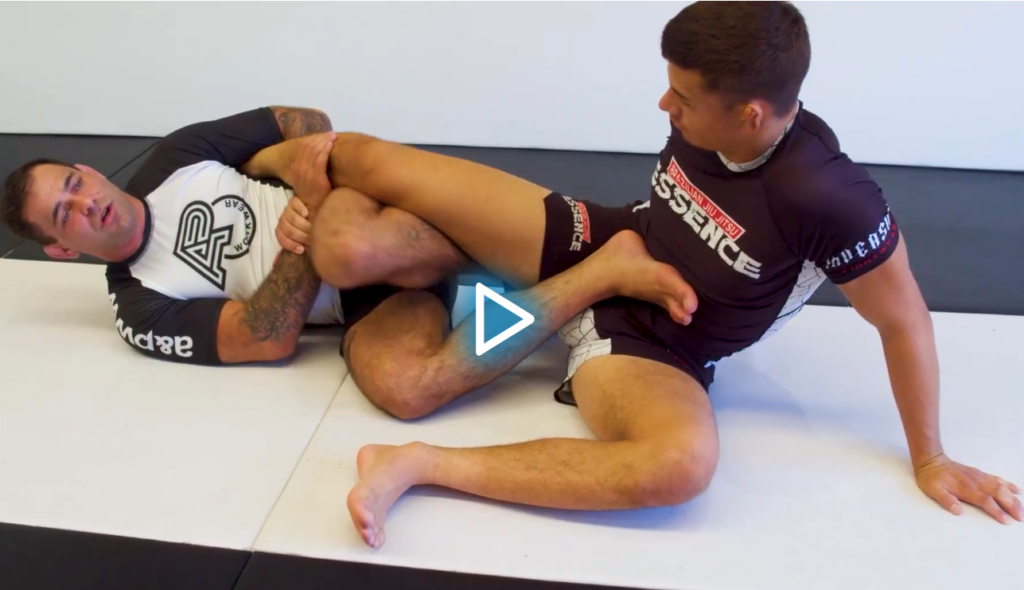
THE STRAIGHT FOOTLOCK JAKE O’DRISCOLL DVD AVAILBLE HERE
Who Is This For?
This is one of those instructionals that genuinely works across levels, but in different ways:
- White belts / new grapplers: You’ll get the most benefit from the conceptual foundation—why your footlocks fail, how to apply pressure without spazzing, and how to think about finishing positions.
- Blue to purple belts: This is the sweet spot. If you already attack legs but your success rate is inconsistent, the systematization (especially in Outside Ashi and 50/50) will make your straight footlock feel dependable.
- Advanced grapplers: The value is in refinement and decision-making—plus the top-position applications that can add a submission threat to your passing without changing your whole identity.
It’s less ideal for people who only want explosive, highlight-reel leg lock entries. This is more about making the finish inevitable than making the entry flashy.
Pros & Potential Drawbacks
Pros:
- Mechanics-first teaching that fixes real finishing problems. The focus is on alignment, pressure, and decision-making—not just a grip sequence.
- Clear distinction between finishing orientations. Belly-up vs belly-down is treated like a real choice, not an afterthought.
- Strong positional relevance (Outside Ashi + 50/50). These are the exact places most modern grapplers end up when ankle locks are on the table.
- Top-position ankle locks are a genuine bonus. This can plug into passing and guard scenarios without forcing you into a full leg-lock identity.
- System cohesion. The material feels connected across volumes, which helps you actually build a game plan instead of collecting techniques.
Potential Drawbacks:
- Not an “entries-heavy” course. If you wanted a giant library of leg lock entries from everywhere, this is more focused on making the straight footlock finish work reliably.
- 50/50 still demands patience. Even with good instruction, that position requires mat time and composure to apply under resistance.
- Some viewers may want more Gi-specific context. The concepts carry over, but the emphasis feels more universal/No-Gi-leaning in how it’s framed.
Essential Footlocks
The Straight Footlock Jake O’Driscoll DVD does what good instructionals are supposed to do: it takes something familiar, exposes why most people do it poorly, and rebuilds it into a dependable weapon. The straight footlock stops being a beginner submission and becomes a mechanical system—one you can apply from modern leg entanglements like Outside Ashi and 50/50, and even from top positions as you pass.