Two outstanding rivals, ESPN was able to conduct a joint interview.
Tonight’s event, which will be headlined by Islam Makhachev and Bobby Green, will be followed on Friday by Jorge Masvidal and Colby Covington fighting in the main event of The Ultimate Fighter Finale.
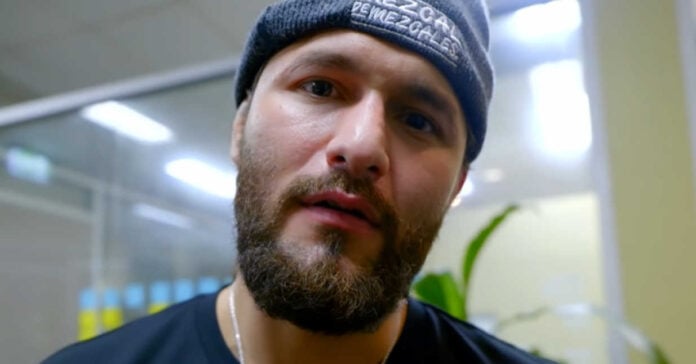
We should not be surprised by such actions, considering that this is a war that everyone has been anticipating for some time now. They are also well aware of it on ESPN, where Stephen A. Smith had Colby Covington and Jorge Masvidal on at the same time for an interview.
Naturally, squabbles and harsh words were not overlooked, but they had hoped for it at ESPN. Jorge Masvidal was the first to address the reasons for the animosity that exists between them, and he was extremely direct and cutting.
” It all started when this shit didn’t pay $ 12,500 to my coach who has been coaching him all his career. Then when he finally had a chance to get his money back, he didn’t do it. I paid the coach out of my own pocket and from that moment on I knew I would fuck him (Colby) one day. Watch him laugh, he can’t keep a serious face because everyone from the American Top Team knows that’s why he was kicked out. He will soon be kicked out of the hall he moved to, too, because he doesn’t pay his bills and is choking on debts because of the loans he took from guys from South Florida, because of his poker addiction. You know what will happen to you if you don’t return that money. Keep laughing little bitch. I can’t wait to break those artificial teeth. He has nothing to say because she is a bankrupt bitch. ”, Was Masvidal’s presentation, and then it was Colby’s turn.
” It’s fake news Stephen, fake news. Everything Jorge says is a lie. Don’t believe everything he says, he just talks, and deeds are missing. You can ask its owner Dan Lambert, he actually knows how much I earned. That night when I received the check, they paid me half of what was promised. The commission said that I earned twice as much as I said, and I earned half as much, ” Colby said.
Covington obviously wanted to explain why he did not pay Masvidal’s coach after one of his fights, and the reason for that lies in the fact that his fee was twice less than promised. Who is telling the truth in the whole story is difficult to determine with one hundred percent certainty. However, considering that Colby Covington is a man with countless “faces” and split personalities and a person who decided to cross all boundaries just to sell his matches better, it’s hard to take his side in this whole story. By the way, this is only a part of the interview in which both fighters were guests, and the complete recording will be released to the public on Tuesday. The information says that there were a handful of tensions and we will certainly not miss it.
It’s impossible to tell whether this is merely a provocation or if Masvidal, as his former roomie, has inside information.
On March 5, one of the most anticipated UFC fights ever is going to take place. On March 5, in the “main event” of the UFC 272 pay-per-view, former friends and roomies will be confronted as rivals.
Of course, these are Colby Covington and Jorge Masvidal, the world’s top welterweights. For those two fighters, who have a long-standing hatred for one another, there will be an opportunity to settle accounts on Saturday night into Sunday morning when they meet again.
There have been a lot of public provocations and mutual accusations since the bout was scheduled. They know each other well, and they are not bashful about airing personal information. Colby Covington told Kevin Iole from Yahoo that Masvidal has committed violence against women, in addition to mentioning Jon Jones, during a conversation with him.
”It’s a common thing for the two of them. We’re talking about two scumbags, two criminals. Who would want to hang out with them? They cheat and beat their wives. They also deal with tax evasion. They do nothing according to the law. I believe in law and order. Of course, I’m no longer good with these guys. They are scum. ”Chaos” was quite sharp.
However, Jorge Masvidal answered questions from fans on his YouTube channel, and he offered an especially intriguing evaluation of Colby’s most significant flaws. “Gamebred” stated three things.
His greatest flaws are drugs and gambling, according to Masvidal. The third category would be blunt force trauma. He dislikes being hit in the body. I should give him one or two of them, as he suggests (
Jorge continued his video by going through how badly Colby suffers when strikes to his torso land. Of course, Masvidal intends to take advantage of it, but Covington will be asked to do something as well.
In any case, this will be an incredibly exciting week for us. In the coming week, Covington and Masvidal will receive a lot of media attention, and there’s no doubt that we’ll hear some nasty insults as well as interesting accusations.
Bellator’s middleweight champion Gegard Mousasi easily defended his belt.
After defeating Jumabieke Tuerxhe (11-1-0) and Nyjah Huston in a combined total of 48 minutes, he was looking to add another victory and end his career so far on a high note. Namely, “Mr. VanZant” fought for the title against Geghard Mousasi in Bellator’s middleweight class, after defeating Jumabieke Tuerxhe (11-1-0) and Nyjah Huston in a combined time of just over two hours.
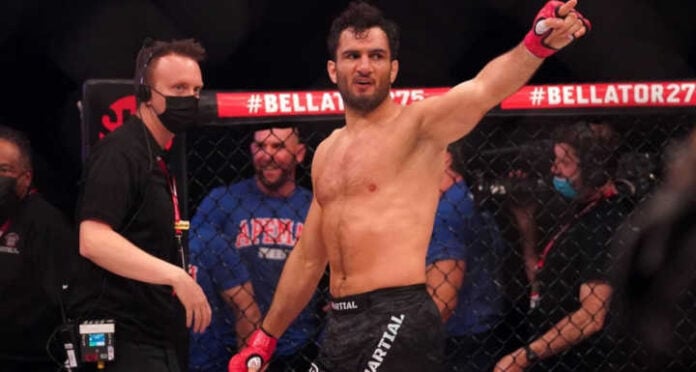
Nonetheless, Gegard defended the title with ease, despite his 36 years old. It only took 85 seconds for the Dutchman of Iranian descent to conclude the job with a technical knockout. He now enters his second consecutive belt defense and third overall, having previously held the title twice.
From the very beginning, the combatants began openly and traded blows. Mousasi, on the other hand, shook Vanderford with his left hand when attempting to break him down. He defended Gegard’s opponent’s frantic effort to take him down after that, gaining control of the bottom position and scoring a series of punches that forced the referee to call an end to the bout. Mousasi went unscathed in his title defense fight and called himself the world’s top middleweight after he won it.
Pure dominance from @mousasi_mma, finishing Austin Vanderford in less than two minutes at #Bellator275 ⏰
Gegard Mousasi has won four fights in a row, and three of them have been for the championship. Rafael Lovato, Jr. was the last fighter to beat Mousasi, which occurred in mid-2019. Lovato received a majority decision, but due to a brain cavern he had to vacate the middle category throne and it is uncertain if he will ever return to sports. In his previous 13 outings, Mousasi has 12 wins and one loss (to Rafael Lovato).
In the main event of the night, Sinead Kavanagh and Leah McCourt went at it in a battle for Ireland. A unanimous decision went to Kavanagh, according to president Bellator Scott Coker, who avenged her defeat to Cris Cyborg in 2018. Recall that Kavanagh was defeated by Cyborg by knockout in the first round in the 11th month of last year.
The tournament in Dublin featured 13 matches and up to seven finishes. The last of the results may be found at the bottom of the page.
Bellator 275 – results:
The main part of the event:
Gegard Mousasi def. Austin Vanderford via TKO – R1, 1:25
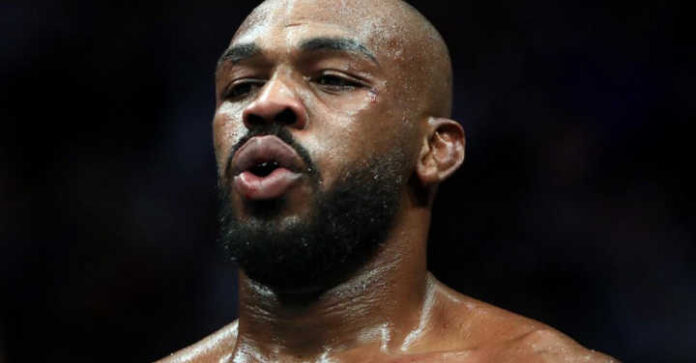
Since nothing concrete had come from Jon Jones regarding the continuation of his martial arts career, the UFC’s legendary fighter found himself on the sports media again this week. The cause of this was a video of his arrest last September released by Las Vegas police, which he then posted on Twitter in which he revealed that his fiancée Jessie Moses departed him two
He suggested that if people wanted to rejoice his calamity, they should be allowed to do so at this time. He got a variety of responses, including one which referred to his downfall. But with an optimistic speech, Jon refuted that sort of thing.
“No way, my friend,” Jones wrote. “I’m wise enough to realize how we all go through certain periods of time in our life. I’ve had a few fantastic and a few terrible experiences. I’m looking forward to the next one when I’ll be a heavyweight world champion who can accomplish anything on my own.” You may view
No way my guy, the story is far from over. I’m wise enough to know that we all go through seasons in life. I’ve had many great ones and several bad ones. I’m excited for the next one, about to be heavyweight champion of the world, capable of so many things, loved https://t.co/JKHzT69UJA
Since it became apparent that Francis Ngannou would not fight for some time, Jones has been linked with the interim title opportunity, and Stipe Miočić has become the most frequently mentioned opponent. However, since then, neither of them have stated more explicitly on this topic, and neither are any of the other top heavyweights. This was particularly aggravating for Chael Sonnen, who referred to the heavyweights as a group of idiots who don’t want to risk their own careers.
It has been two years since Jones last fought when he defeated Dominic Reyes. It might be another two and a half years before his next performance. Since becoming an MMA professional fighter, despite the numerous personal issues he had to deal with, the time between his fights has been one year and seven months on average. It was between his second fight against Daniel Cormier, in which his win was taken away due to a doping fall , and his second fight against Alexander Gustafsson, whom he defeated with one of the finest performances of his career.
Jones said the time has come for him to return, but he needs a little more time to fully acclimate his body to the demands and standards of the category he was moving into.
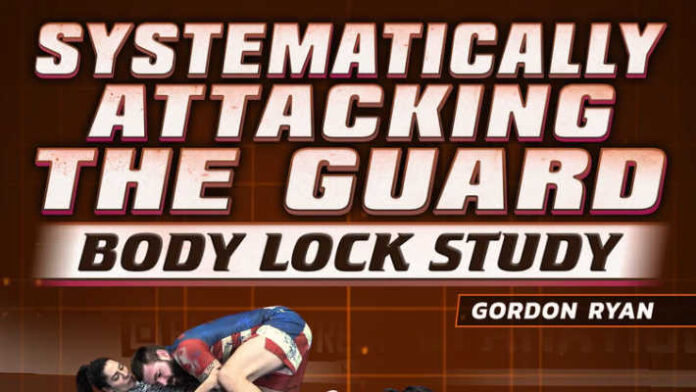
Today, we’ll take a look at a very interesting instructional by Gordon Ryan. I know, most of his instructional are interesting, and yes, I agree to an extent. So far, I’ve found his BJJ DVDs very helpful, but also quite confusing at times. The body lock position though is one I am really curious about, especially in the sense of using it while on the ground. The latest instructional is a Gordon Ryan Body Lock Study that focuses precisely on how to use the body lock to pass guards.
Click for Techniques List & More Info
Overview
With Gordon, you know exactly what you’re getting in his instructional – close to 9 hours of ultra high-quality instructional on the subject of making people feel helpless on the ground by using the body lock.
The Danaher Death squat (now ex-DDS) members are all known for using body locks to pass. Up to this point, they have not shared their body lock passing system, even though many people have been asking.
The Gordon Ryan Body Lock Study covers all types of body locks that can help you pin and pass someone – front, side, high, low, and everything you can think of in between. Of course, there’s also the mandatory rolling and rolling analysis at the end of the instructional, helping put things into perspective.
Instructor Background
Gordon Ryan is the person who was first exposed to fighting through his daycare teacher organizing “MMA fights” between the kids and showing the moves and went on to become the undisputed best grappler in the world. He has three ADCC gold medals, one silver, has won the IBJJF worlds, every EB in which he has competed, and beaten everyone in BJJ, not just the who-is-who, but all the up and comers as well.
Ryan is arguably Danaher’s best-known student and aged only 25 he still has a lot more to achieve in his lifetime (even though not much is really left for him to win). As we are waiting for the 2022 ADCC, where he’ll not just face off in a super fight with Andre Galvao, but also fight in the heavyweight division.
Subject
Body lock passing is an interesting approach to getting past the legs in BJJ. During the last few years, we’ve seen lots of wrestling staples pour out into BJJ, and definitely not just in the takedowns department. The body lock is an old wrestling move that usually helps wrestlers take someone down and get a pin. In BJJ terms, the move can be adjusted for uses in many different situations, particularly passing the guard.
That is exactly what Gordon explores in this instructional. The DDS members have been known to utilize body lock passing a lot in their game, and this is the first time they share some of the key details about it.
Complexity
Gordon Ryan starts at the very beginning with this one. He explains the basic concepts of passing before even touching on the subject of the body lock. That means this instructional is a good fit for everyone, regardless of belt level or previous grappling experience. As you’d expect from Gordon, there are details to every chapter in this instructional that will leave even most black belts in awe and scratching their heads.
In other words, The Gordon Ryan Body Lock BJJ DVD instructional is put together in a way that allows everyone to benefit from it.
Technical Details
This is the longest DVD that Gordon Ryan has to this day. It has 10 parts, with varying lengths. The total running time of the Gordon Ryan body Lock Study instructional DVD is around 9 hours.
The content is divided into sections, covering different types of body locks from different height levels. All sections are further divided into chapters, organizing everything in a neat system. As is customary with Ryan’s instructional, the final two parts of the instructional contain rolling footage with Gordon narrating the exchanges and uses of the material presented earlier.
The video and audio quality I in high definition, and the instruction is available both in DVD format and as a digital download.
Detailed Analysis
DVD #1
After the mandatory intro chapter, Gordon begins his instructional by talking about the different types of body locks. He then goes into one o the most important aspects of the body lock – how to position your grips to get the most out of the different types of body locks.
With the entire first part of the Gordon Ryan body Lock Study DVD focused on fundamentals, he follows up on gripping by explaining where on your opponent’s body you should be aiming to place a body lock for maximum efficiency. The centerline law is, well the law here, and Gordon does an outstanding job in explaining it.
A couple of chapters covering general cues for different types of body locking wrap up this first volume.
DVD #2
This is where Gordon starts exploring ways to enter into the body lock position, followed by some passing options.
The begins by covering entries into the body lock passing position from both kneeling and standing scenarios. He follows them up with some key concepts that will help you keep the person in place while you’re passing: shelving, stuffing, and splitting.
The first pass appears halfway in the second volume when Ryan demonstrates how to do the hip switch pass. Of course, he doesn’t leave things there but also covers “what if” scenarios, mainly in terms of the initial hip switch pass failing.
Something I’ve always found interesting in terms of passing, sprawling in order to pass, is also covered in this volume. Ryan does a great job in demonstrating sprawling for passing, which is quite different from sprawling in terms of takedown defense.
The second volume ends with Gordon explaining his shelving concept in more detail.
DVD #3
I found this volume of the Gordon Ryan body Lock Study DVD particularly interesting, especially the opening few chapters. They deal with the conundrum of having no knee exposure to initiate a pass. This volume is conceptual in essence, offering principle-based solutions to common passing issues.
Once again talking about the three concepts he pioneers in this DVD, Ryan explains the trilemma between shelving, splitting, and stuffing. There is also a lot on gripping, mainly covering V grips, centers vs, staggering hands, as well as strategically unlocking the hands at times.
What I like the most is that Ryan does not claim the body lock pass is the solution to all passing problems. Instead, he uses it to open up other passes, by forcing people into different guards, like for example the half guard. There are lots of examples of these, combined with appropriate passes that stem off the body lock.
DVD #4
This volume is all about level changes. Ryan starts with high passing (tripod position) exploring both low and high hip passing. The 3 directions of passing also make an appearance here, which is one of the most fundamental concepts of guard passing.
Furthermore, Gordon looks into leg rides and their relation to passing, coming back once again to the hip switch and half guard/butterfly half guard.
Past the halfway point in this volume, it is time for some additional passing avenues. Those come in the form of passing towards the inside and/or outside hip, thus offering a dilemma attack. Regardless of choice, both options appear whether you decide to split the top or bottom leg, which Ryan also demonstrates.
A few sneaky tactics to deal with both experienced and naive opponents mark the end of volume four.
DVD #5
Halfway into the Gordon Ryan Body Lock Study BJJ DVD instructional, it is time to look into pummeling. LEg pummeling is a key component of successful passing and Ryan connects it to body locks in a very intelligent manner.
Top pommels, getting a leg back on the inside, and using top and bottom pommels to create even more dilemmas are the focus of the first few chapters in this volume. In fact, they open the door to the “Golden Trilemma” which in turn, once more introduces the hip switch, high tripod passing positions, and helps connect more of the stuff presented beforehand.
In the second portion of this volume, Gordon switches his attention to double underhook passing, starting from the high tripod position. He continues to explore double underhook entries against the seated guard before covering how to connect the body lock to the double underhooks position.
A couple of chapters on front pommels wrap up volume number 5.
DVD #6
Just when you think that Gordon has everything covered, there’s more… a lot more! Part six of the Gordon Ryan Body Lock Study DVD is going to be a real hit among fans of the over-under pass. Ryan shows how to lock the hands, enter the over-under body lock, and, of course,l pass the guard with it.
Options include passing to the underhook side, tripoding, as well as passing to the overhook side. The law of locked hands features in several chapters I this part of the instructional, which by itself points to how important it is. After all, it is a law.
The end of this volume also marks the end of front body lock passing.
DVD #7
The seventh volume of the instructional starts with an introduction to side body locks. Entires quickly follow suit, from both standing and kneeling.
A good portion of this volume looks at the integration of front and side body lock passes. Ryan covers how to switch between the two when passing, and in order to counter common defenses. Head positions, controlling the hips, and a few important rules also appear here.
The options side body lock passing opens up is going to side control or getting the back – depending on what an opponent does. Ryan has the solutions to both.
The concept of back tracking is also introduced here and takes up the final third of this volume of the DVD.
DVD #8
The final part of the Gordon Ryan Body Lock Study Instructional has chapters containing technical directions. It covers head outside passing, offering ways to move forward to passing or taking the back while countering guillotines and other common obstacles.
Throughout this volume Ryan comes back to concepts like back tracking, far wrist control, forcing half guard, underhooks, pommels, etc. He also mentions claw rides, an extremely useful takeout from wrestling.
DVD #9
The penultimate part of this BJ DVD, lasting only around 25 minutes shows Ryan rolling with 5 different opponents, using everything he demonstrated in the previous 8 volumes throughout the rolls.
DVD #10
Part 10 of the Gordon Ryan Body Lock Study DVD goes over the same rolls from the previous volume, only this time with commentary. Gordon pauses the rolls, outlining important aspects of everything he does, as well as discussing his mindset in approaching the entire body look passing system.
How We Grade The Gordon Ryan Body Lock Study BJJ DVD Instructional
Considering this Gordon Ryan Body Lock Study instructional DVD’s technical aspects and quality of content, we come to an overall score for this instructional that I’ll deliberate in short below.
Technical Quality: 10/10
The DVD is produced by BJJ Fanatics, guaranteeing a very high level of audio and video quality. The commentary rolls are a feature that is specific mostly to Gordon’s instructionals. They are shot from several angles, offering a great view of everything Ryan is doing.
Quality of Content: 9/10
Once again, Ryan delivers an instructional that is different than others. There is no other DVD out there on the subject of body lock passing that is this detailed. However, I have to dock one grade because of the organizational style. Ryan does put everything into perspective but uses os many tangents along the way ait makes it difficult for people to follow him, especially beginners. The technical explanation of everything is pristine, but when it comes to the big picture, the DVD lacks cohesion.
Overall: 10/10
Still, all in all, the Gordon Ryan Body Lock Study BJJ DVD is an instructional that iw more than with acquiring. It will offer you a different take on passing, particularly if you are fond of head down – butt up the type of passing and pressure passing in general.
Wrap Up
Body locks are far more useful in Brazilian Jiu-Jitsu on the ground than they are standing. Passing is just one example of how you can base a good portion of your top game around one position of your arms. Using Gordon Ryan’s system you can pass, control and even transition towards the back by using just slight adjustments of your grips. Let’s face it, this is yet another game-changing DDS BJJ DVD that everyone that is serious about BJJ should look into.
Chael openly expressed disbelief over the behavior of UFC heavyweight fighters
Chael Sonnen’s YouTube channel is one of the most popular in the MMA world. Chael Sonnen, a former UFC challenger in two categories, speaks about each topic frankly and without reservation, which explains why he is so well known and covered by the media.
The UFC’s heavyweight division is the newest topic Chael has chosen to focus on, particularly regarding the actions of its competitors and their concern for their own marketing. In a nutshell, Chael has created a portal with the aim of keeping up with the latest news. He went through all of the major stories first before stating that there was no news in relation to the aforementioned category. And he expressed astonishment because he thinks that today’s heavyweights should “jump out of the pate” in light of the overall situation in the category.
“There is no division in the UFC that provides more chances than the heavyweight class right now. It’s the only category in which there are two vacant spots for a title fight. Every other division has a champion who already knows who his next opponent will be. The heavyweight division includes two vacancies, and I think it will come down to four at the end. I believe we will have a temporary title bout, followed by a real championship encounter. The right belt will either be discarded or used as a temporary one. But the chance is still there. In this sport, one category doesn’t provide as many open doors, according to Chael:
Stipe said it once, and so did Jon. On Twitter, he has 160 characters or less, according to Stipe. One at a time. The other heavyweights are ready to go.”
Chael felt he owed it to his colleague and friend, therefore he decided to put himself in their shoes. Of course, the one he would find himself in on such an occasion, and he compared it to a scenario in which he appeared on television. Those who have been competing for ten or more years are familiar with Chael’s form while climbing up the UFC middleweight ladder and may picture everything ahead of time.
He considered the scenario in which Francis Ngannou genuinely plans to wait out his contract before becoming a free competitor, which is something many people believe is probable.
I would share my experience with everyone in the room, and I wouldn’t stop being that “bully.” And Francis would be compelled to retaliate. This is one of the most basic rules in politics. If someone smacks you, you must hit him back. You won’t believe how accurate this is if you don’t follow it. As a result, I could go after the sport’s most dangerous individual with impunity. None of today’s heavyweights have accomplished what Chael claims,” he added.
Everything he says makes a lot of sense. After all, it’s from a person who is an authority on the subject, and that isn’t all he said to the big guys in this manner. He also referred to several individuals specifically, but we won’t tell you that here. Inside the text, watch the video. It’s well worth your time.
Charles Oliveira will defend his UFC lightweight title for the second time.
Oliveira has made consistent improvements over the years. The development that brought him to the UFC lightweight championship, something no one had seen him do previously. This is primarily due to his tireless efforts, which transformed a fighter known for grappling into an expert in all areas of MMA. Then, after some spectacular wins, he achieved a title he had previously held onto.
He’ll fight again on May 7, and he’ll face one of the sport’s most dangerous men, Justin Gaethje. To prepare for something like that, you must not cut corners when preparing, which Charles does not appear to be inclined to do. On Instagram, Charles has posted numerous videos of sparring, which shows how hard work is going in Brazil and with little restraint.
Gaethje will give Charles a legitimate battle in the Octagon, one that makes him a rising star but also someone other fighters despise to face across from. Win or lose, anyone who fights Gaethje leaves the octagon in a worse condition than when they entered it. Charles must be aware of this, yet it’s also obvious that champions must be prepared for all types of testing if they want to keep their crowns.
There’s no reason for us to believe that the Justin Gaethje Hall is working at a similar level, and we’re sure that the bulk of preparations will only begin in mid-March. We just hope it doesn’t create any injuries as fierce as everyone in the hall. It would be a real shame if this battle ended up being lost, one of those we are most anticipating.
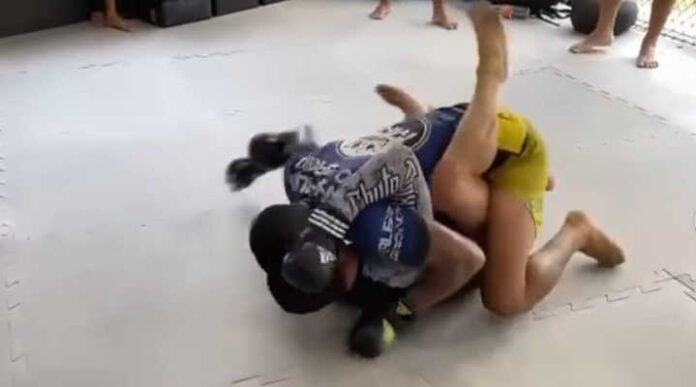
Kevin Holland appears to be serious about dealing with all of the “trolls” on the Internet who call him names. With a man who called him out via private messages on Instagram, Mr. Holland, a mixed martial arts fighter in the middleweight and welterweight divisions, recently uploaded a video in which he did grappling sparring.
”All I can say is, even though you’re a black belt, I’m convinced I could end you with a submission. Prove me otherwise,” was one of Jayden Draper’s messages.
After watching a video of Draper in action, Holland gave him a chance to show his stuff, but the UFC star disposed of a person who is far from being comparable to a professional fighter.
Even after demonstrating that recreational athletes have no chance against professionals performing at the highest level, he nevertheless received an offer to spar. However, it must be stated that the second “troll” had greater respect for Holland and appeared to genuinely just want to do sparring with a professional.
I’m not sure if the guy is a fraud. I’ve never met him, but he looks like a folk hero from my favorite medieval poem: “The Ballad of Brunson.” He claims to have taken part in 14 contests, eight of them against boxers and six more on paper. If we don’t count his record, the guy would win 9 fights out of 10. That’s how much power he has! Then why do people believe him? Perhaps they think it’s because he looks so similar to me that they assume it must be true. For example, after this clown tried to persuade me with emails displaying photos of myself during childhood and old age (he had no idea I was collecting these), someone as stupid as him makes
During the second round, it was kickboxing sparring, and Holland crushed his newest opponent with a barrage of middle kicks that his opponent could not reply to. In the video at the bottom of this article, you can observe how Holland’s new confrontation with the Internet “troll” went.
https://youtu.be/UGbu_C5p2zM
Here’s the video of the first internet troll choked by Kevin Holland.
A strange circumstance occurred with the UFC’s commentary crew for UFC 271. Joe Rogan was supposed to be one of the commentators at the table, but on just the day before the event, it was confirmed that he would not be there.
It was claimed that something new had come upon his calendar, implying he had important duties to attend to. Many people doubt this explanation, especially when public organs against him are being made due to various statements regarding the coronavirus pandemic, which he and his guests made in podcasts.
According to reports, the explanation for why Mark was not on commentary is that he wanted to avoid detracting attention from the show and the fighters, and thus not be boycotted by MMA fans who disagree with him on the pandemic.
At the press conference, White was asked about the organization’s reaction to Rogan’s canceled performance at last night’s event. Although it was claimed that Rogan had pressing duties, White now disputes this.
”There was no conflict within his schedule. Joe Rogan didn’t work tonight, but he could work. I don’t know what he had to do. You will have to ask him. But it’s not that ‘Joe couldn’t work’ or something like that. I know stories like that have come up, but that’s total bullshit,” White said.
By the way, while the show was taking place at Toyota Center, several people were heard shouting “Free Joe Rogan.” Instead of UFC’s most well-known commentator, Michael Bisping took up his job as a replacement.
Joe’s podcast, The Joe Rogan Experience, aired on platforms like Spotify, Apple Podcasts, and Google Play Music. As for Joe, his show went back to airing on platforms like iTunes and Stitcher no matter how many times they deleted it from those services. On Thursday, he addressed the press in an episode entitled “The Media,” particularly those who see him as a target.
”The solution is not to silence me, the solution is to start doing your job better. Find better arguments. When you say on television that I take horse paste (Ivermectin), and you know that’s not true, you say, ‘He takes a means of removing worms from horses.’ What you were supposed to say was, ‘How did Joe Rogan’s condition get so fast? How is it possible that he got COVID which kills everyone, and he was better in five days? He was negative after five days, and he practiced after six days. ‘ Why aren’t such topics discussed? ” Rogan began with his response to attacks by the mainstream media, then added:
”If you’re in the world of news and news and you want people to pay attention to you, you should be honest. I don’t hate CNN, I used to go every day to watch their news until they hated me. My advice to them is, if you want to be better, change your model and the way you work. Stop that editorial perspective with guys like Brian Stelter and Don Lemon that no one listens to. Set up people who give effective and objective news, then I will support you. Then I’m going to be one of the guys who’s going to tell people that I watched or heard something on CNN,” Joe Rogan explained.
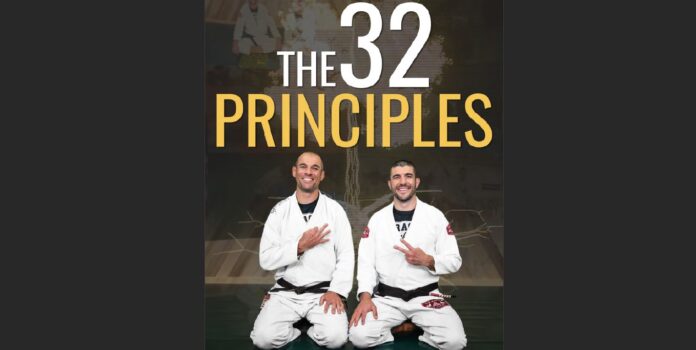
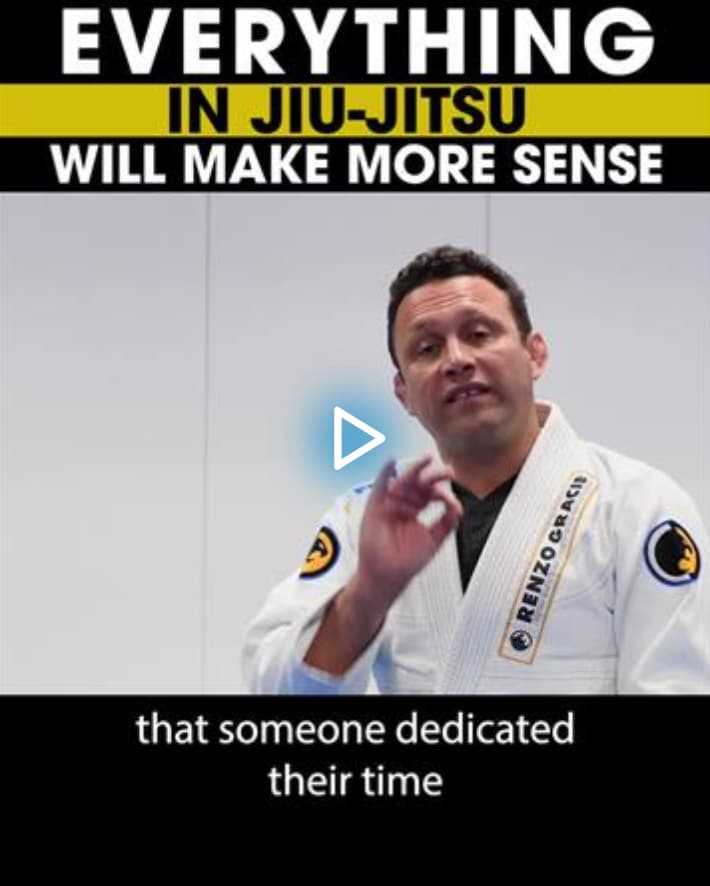
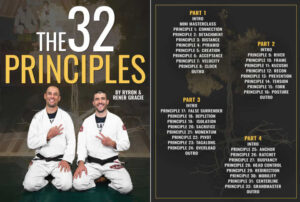
Do you want to learn Brazilian Jiu-Jitsu faster and become a really fast-learning Jiu-Jitsu practitioner? You have two options. First, start “living” in a gym. You’ve seen the results of the DDS, and you’ve seen the same happening to the Daisy Fresh crew. Too much for you? Your second option is to look into what other people in the BJJ community did to get their black belts in record time while learning how to grapple effectively (like Kit Dale). Start learning the principles that make Jiu-Jitsu work, instead of just techniques. Now, through Gracie University, run by Rener and Ryron Gracie, you can achieve exactly that. Check out their 32 Principles of Jiu-Jitsu Program, an instructional like no other! You’ll learn about core principles and fundamentals every Jiu-Jitsu practitioner should know.
What Is The Gracie University?
The Gracie University is an online program established by brothers Rener and Ryron Gracie, sons of Rorion Gracie. They created the first online training environment for learning Brazilian Jiu-Jitsu and named it Gracie University.
The online program offers an in-depth curriculum that takes students from white to black belt, without them having to be a part of a gym. However, it goes beyond just providing videos and awarding belts for cash. The University has belt testing, done at certified training centers by certified instructors. There’s also an option for students to upload a video of them performing techniques with a partner and get feedback from instructors.
Apart from curriculums for every belt level, there are also specialized programs available through the platform. These include Gracie Bullyproof, Women Empowered, Gracie Combatives, Street Choke Mastery, Rules Of Engagement, Junior Combatives, and others.
The Gracie University platform also has forums and outlines all affiliated gyms, making it easy to connect with other members. Rener and Ryron Gracie also upload weekly narrated sparring videos for registered students.
Who Are Rener and Ryron Gracie?
The original Gracie gym in the USA was the Torrance Gracie Academy in California. It was established by Rorion, Rickson, and Royler Gracie in 1989. Rener and Ryron Gracie are Roruion’s sons, and they have taken the gym to new heights after they took over from their father in the early 2000s.
Ryron Gracie is the older of the two brothers, born in 1981. He was promoted to black belt by his grandfather Helio Gracie and has been training Jiu-Jitsu since he could walk. He has several titles in Gracie Tournaments, which were huge in the early 2000s.
Rener Gracie, born in 1983 is also a Helio Gracie black belt. He completed a lot for a couple of years after receiving a black belt, winning the Southern California Pro-Am Invitational 16-man tournament in 2004 by submitting all of his opponents. He decided to focus more on teaching Jiu-Jitsu for self-defense rather than competing in point-based tournaments.
What are The “32 Principles Of Jiu-Jitsu” Program About?
One of the specialized Gracie University programs, now also available through BJJ Fanatics is the “32 Principles of Jiu-Jitsu Program”. It is a different take on learning Jiu-Jitsu, one that Rener and Ryron Gracie claim is unique and never before shown.
To be honest, there’s a lot of talk about techniques-based teaching/learning versus principle-based teaching/learning in Jiu-Jitsu. So far, not many people have attempted to produce content that can help understand the principle-based approach. Furthermore, only a few of those have, actually offer something of worth.
The 32 Principles of Jiu-Jitsu Program” is put together in a way that guarantees you will be able to immediately apply the principles to what you do in class. yes, you will still need to go to class, spar, and all that stuff. However, with principles in mind, instead of techniques, you’ll be able to move up the belt ranks much faster. At least that is the claim.
Learn BJJ Faster
In Brazilian Jiu-Jitsu, there is nobody that can name all the moves. There are so many moves, and people name so many stuff on a daily basis that it is impossible to track. After all, the entire martial art itself started off with a blend of Japanese and Portuguese terms, which were quickly joined by American phrases and terms. Add to that the local language of wherever BJJ is being taught, and then you have the Esperanto of martial arts – a common language that nobody can really speak in its entirety.
In order to actually learn Jiu-Jitsu, you’ll need to make sense of everything. The best way is to try and understand why things happen, how things happen, and when things happen. Simple right? Not so fast.
In order to be able to understand things, you will need structure. Otherwise, you’ll be just as lost as trying to follow a roll-o-deck of techniques. To that extent, a program that focuses on micro principles, like the one by Rener and Ryron Gracie offers the best of both worlds – principles you can apply across the board, along with an organizational system of learning them.
Principles vs. Techniques
This is a debate that I declare a draw. Change my mind. The fact of the matter is, you need both. If you avoid thinking in terms of one or the other, you can actually get the best out of both worlds. Namely, principles explain why techniques work, when to use them, and how to set them up in order to be able to execute them. Techniques, on the other hand, are the nuts and bolts – no matter how much theory you have, you can’t build something without the materials.
As I previously mentioned, most people have issues with technical instruction. Very few opt for the much more difficult thing and try their hand at principle-based instruction. Many (from both ends of the spectrum) fail. So far, nobody has attempted to show the BJJ world how to join both ends of the spectrum in order to “become enlightened” quickly.
Joking aside, Gracie University now promises to solve a big part of this riddle via its “32 Principles of Jiu-Jitsu Program”.
Reducing The Clutter
There are just too many things available in BJJ. A huge reason why coaches always tell their students to specialize or focus on “this” or “that” is an attempt to keep students from getting lost in the vast universe of grappling.
By focusing on principles, the clutter of moves, positions, and most importantly, their names will greatly decrease. All you have to worry about now is the gross aspects – are your top or bottom, passing, staying on top, submitting, escaping. Using common principles as guidelines, and the above-mentioned as a strong foundation for broad goals, you’ll quickly get the hang of this “BJJ thing”.
Better Teachers
But wait, that is not all! Principles will do as much, if not more, for teachers in Jiu-Jitsu than they will for students of the “Gentle Art”. Teaching based on principles will help coaches give more precise directions to their students by making them focus on the bigger picture. Yup, that’s right, focus on the big picture and you’ll figure out the details because you’ll know where they fit.
Dissecting The 32 Principles Of Jiu-Jitsu by Rener And Ryron Gracie
Ok, enough chit-chat. let’s take a look at all of the 32 Principles of Jiu-Jitsu by Rener and Ryron Gracie that promise to change our BJJ game the same way BJJ has changed our life.
1. Connection Principle
The connection principle refers to being as close to your partner as possible, both in terms of attacking and defending. A staple of many Gracie University programs, connection refers to creating movement, preventing movement, or predicting movement. All of these are possible because you’re able to feel even the tiniest shifts in your opponent’s body positioning by leaving no space between you and them.
Basically, all of the following principles are forms of connection with your opponent.
2. Detachment Principle
Achieving optimal efficiency in transitions through deliberate connections from your opponent. In other words, know when to let go in order to achieve a strategic goal. Holding on for dear life does not translate to better control.
3. Distance Principle
A true Gracie University staple, distance has the role of neutralizing the application of a technique against you by disrupting the optimal distance from which it is applied. What Rener and Ryron Gracie mean by this is that managing distance makes it impossible for the opponent to attack effectively. It will help you understand how to stay safe and attack more efficiently.
4. Pyramid Principle
Optimizing connections with the ground and with your opponent to maximize balance and control at all times. This one has to do with your center of gravity and being constantly aware of where it is in relation to both the ground and your opponent. The goal is to be like a pyramid, well-balanced and impervious to attack from every angle.
5. Creation Principle
Using targeted actions to force specific reactions in your favor is the core of the Creation Principle. This one is all about the art of counter-attacking in BJJ. Crate openings by making your opponents react in a predictable way. The principle is very interestingly presented by the brothers as “be first, and be third”.
6. Acceptance Principle
The acceptance Principle means being first to accept the inevitability of action so that you are best prepared for the outcome. Sometimes, you can’t do what you want, and the opponent will get their move (pass sweep, transition, etc.). let them, so that you can control the outcome rather than be forced into it.
7. Velocity Principle
Constantly changing your operational speed to confuse and overwhelm your opponent. Being fast all the time is predictable. So is being slow. Instead, break your rhythm and constantly change the speed at which you execute your moves. Alternating “fast and loose” and “slow and tight” is what they teach at Gracie University.
8. Clock Principle
Disrupting the anticipated timing of your opponent’s techniques to reduce or eliminate their effectiveness. If you understand what is happening, you can guess the timing of a move or technique, and do your best to stop it or capitalize on it using the “Creating” principle, for example.
9. River Principle
Bypassing resistance by flowing around it. Instead of trying to power through your opponent, go around them. If they’re focused on stopping one thing, go around like a river flows around a rock, and attack with something else.
10. Frame Principle
Substituting muscular strength with skeletal structure from every position in the fight. Rener and Ryron Gracie are great admirers of this particular principle. Instead of focusing on your muscles to do the work, use your entire body to achieve mechanical superiority, whether you’re looking to create space, or take it away.
11. Kuzushi Principle
Breaking your opponent’s balance in your favor. If there’s one thing that’s really important here it is the last part of the definition “in your favor”. Focus on deliberate, precise ways in which you can affect your opponent’s center of gravity, using the Pyramid principle against them.
12. Reconnaissance Principle
Gathering information about your opponent’s behavior for use against them. This is like a tactical strategy out of Sun Tzu’s “Art Of War”. What Rener and Ryron mean by it is that every exchange allows you to learn something about your opponent’s preferred approach to JIu-Jitsu. This is information you can use against them, preferably paired with the Clock principle.
13. Prevention Principle
Putting your opponent’s objectives before your own to prevent their progress. Often talked about in Gracie University videos of breakdowns, the 13th of the 32 Principles of Jiu-Jitsu addresses how to stop opponents from executing what they’re looking for. How? By provoking an overreaction that will open up a counter-attacking opportunity for yourself.
14. Tension Principle
Capitalizing on the offensive and defensive opportunities enabled by tension. When two points are connected, there is tension. keeping it or letting go of it can help you achieve your Jiu-Jitsu goal. It is all about determining which is the right course of action at a given moment.
15. Fork Principle
Creating positional dilemmas that force your opponent to choose how they lose. The “your money or your life principle”. Make your opponents choose the “least bad” option for them. For example, threatening with a sweep and submission at the same time.
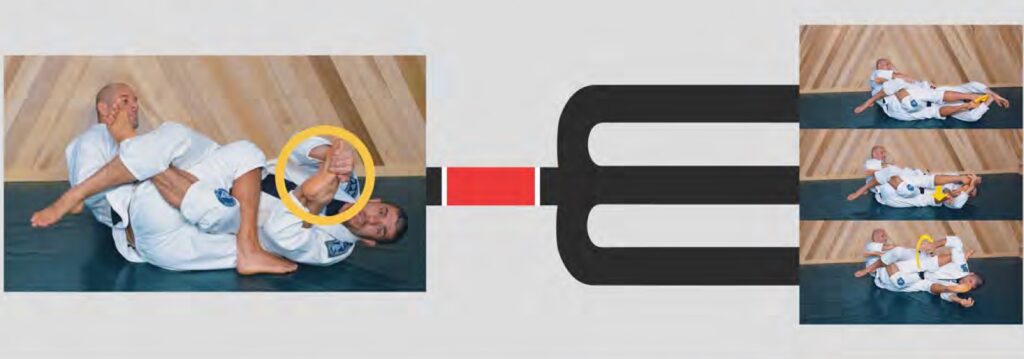
16. Posture Principle
Neutralizing a technique by disrupting the optimal posture from where it is applied. Halfway through the 32 Principles of Jiu-Jitsu Program by Rener and Ryron Gracie, we have another huge staple of Gracie University BJJ – posture. Standing, sitting, or supine, posture plays a role – it is the alignment of your vertebrae. Break this alignment and you will make opponents significantly weaker.
17. False Surrender Principle
Feigning surrender so that your opponent lets their guard down. Not quite “the Brazilian Tap”. but not too far either. Pretending to accept a bad position or allow entry into a submission hold does not mean you’re actually giving up. Tricky, but very efficient and highly-reliable principle.
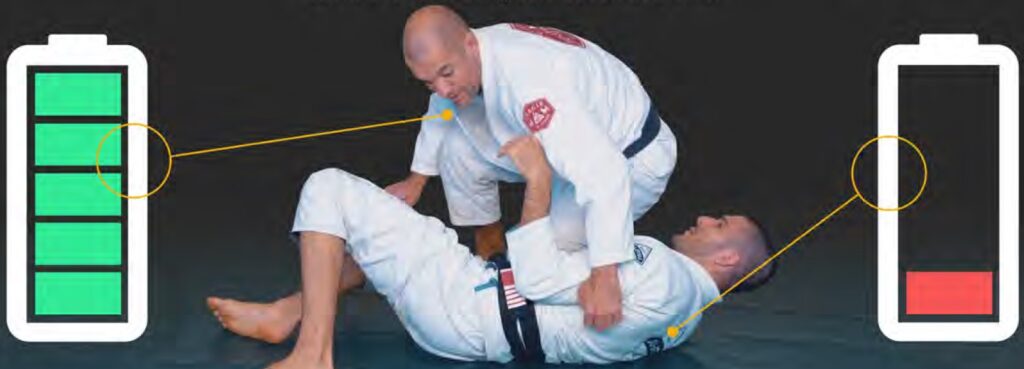
18. Depletion Principle
Draining your opponent’s physical and mental energy using targeted actions and connections. If two grapplers are equally skilled, conditioning will determine who wins. The depletion principle helps you exhaust opponents while staying fresh yourself. It involves using moves that save your energy while burning lots of your opponent’s energy at the same time.
19. Isolation Principle
Tactically contain one or more of your opponent’s limbs for your advantage. Simply put, Rener and Ryron Gracie here refers to restricting mobility by neutralizing a certain limb. You can use it to finish submissions, break through defenses, or control an opponent.
20. Sacrifice Principle
Give up something of actual or perceived value to gain a tactical advantage in another form. Unconventional, but then again, that is at the core of the Gracie University system. When you can’t seem to gain ground during a match, you’ll have to think in terms of chess- lose a battle o win the war. Be careful not to give up too much though, or this principle could backfire!
21. Momentum Principle
Capitalizing on mass in motion to maximize efficiency against your opponent. Either make the most of the momentum that is already there or create momentum in order to facilitate your own attacks/escapes.
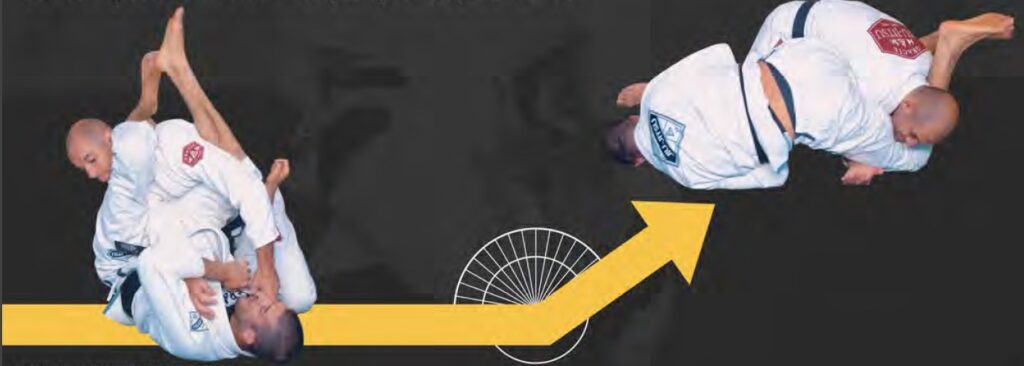
22. Pivot Principle
Increase the effectiveness of a technique by changing the angle of its application. He who dominates the angle will dominate the fight. Pivoting helps you change angles in order to get the best one for executing a technique of your choice.
23. Tagalong Principle
Seizing the “free rides” in the fight saves your energy while depleting the opponents. Goes hand in hand with the Depletion principle. Basically, it is all about surfing on your opponent from the top or allowing them to pull you from the bottom in order to achieve a better position, and conserve energy.
24. Overload Principle
Disproportionate application of your resources to target a specific part of your opponent’s body. This one is something you already know – think of submissions like an armbar, for example. Your entire body against the elbow joint of the opponent’s arm. Well, Rener and Ryron Gracie now show how this principle is available in other situations and not just when finishing joint locks.
25. Anchor Principle
Pinning any part of your opponent’s body to a surface to inhibit mobility. This a principle that will require some work on your part to fully understand. It works in terms of pinning an opponent to a surface, yourself to a surface, you to yourself, the opponent to you, you to your opponent, and the opponent to themselves.
26. Ratchet Principle
Creating persistent incremental advancements in one direction while preventing motion in the opposite direction. Out of all the 32 principles of Jiu-Jitsu, this one is my favorite. Ratcheting can be done in a “micro-ratchet” or “macro-ratchet” fashion. The former refers to moving parts of your body, while the latter involves moving the entire body. The key moment is that once you move, you set up in a way that prevents the opponent from moving you back.
27. Buoyancy Principle
Capitalizing on offensive and defensive surfacing opportunities throughout the fight. What is buoyancy? it is the upward force that prevents an object from sinking into a fluid. In BJJ terms, this means successfully getting a top position when you’re on the bottom, or retaining a top position when you have it.
28. Head Control Principle
Controlling your opponent’s head to limit or direct their movement. Where the head looks, the body will follow. Explore the different ways in which twisting, turning, tilting, framing, hugging, pulling, pushing, or pinning the head can help you control an opponent. This principle has both offensive and defensive applications.
29. Redirection Principle
Reducing your opponent’s effectiveness by controlling the direction of their energy. Instead of fighting force with force, redirect your opponent by changing the angle or intercepting their energy.
30. Mobility Principle
Moving yourself when your opponent cannot be moved. Can you move a wall away from you by pushing it? How about moving yourself away from the wall, like doing a push-up? Recognizing when to move your opponent, and when to move yourself will make Jiu-Jitsu a lot easier for you.
31. Centerline Principle
Limiting your opponent’s potential by taking control of their centerline. By either “splitting” or “breaking” the opponent’s appendages, you can make them weak and susceptible to your attacks. Particularly useful when hunting submissions.
32. Grandmaster Principle
Using the 32 principles to continuously improve Jiu-Jitsu. Rener and Ryron Gracie wrap the 32 principles up with a story about how their grandfather Helio Gracie constantly adjusted and evolved BJJ to make it work for his frail body. Through their Gracie University programs core teachings, and the principles above they encourage everyone to do the same!
How To Use The Program
Ok, so Rener and Ryron outlined the principles in a series of instructionals and explained each and every one in detail. What now? How do you put so much information to practice?
The brothers have that covered as well in their instructional. They suggest working on the principles one by one, focusing on things you can recognize easily first. As you do that, the goal is to develop them like you would any other BJJ technique – look for them during sparring, and make sure that you can recognize them. In other words, pick a principle, and spend some time trying to find it everywhere while you are rolling. It is the quickest way to learn them all.
The entire 32 Principles of Jiu-Jitsu Program started off as part of the brown and black belt curriculum for the Gracie University online classes. However, the brothers quickly realized that everyone, particularly beginners could really benefit from the program so they adjusted it to fit all levels of BJJ practitioners.
How Much For The 32 Principles Of Jiu-JItsu Program?
The price of one piece of the 32 principles of Jiu-Jitsu is $74 if you’re willing to buy 8 out of the 32 principles. At BJJ Fanatics you can buy “The 32 Principles Of Jiu-Jitsu” with a 25% discount via a discount code.
In conclusion
Not many principle-based instructionals out there can really help you learn Jiu-Jitsu and make an impact on your game. This one can. Granted, it has lots and lots of information to go through, but it is basically Brazilian Jiu-Jitsu broken down completely into 32 lessons. Learning 32 things is a lot faster than mastering 32.000 techniques. Just saying.
The 32 principles of Jiu-Jitsu is on sale on BJJ Fanatics right now with a 25% discount so check itHERE.