






Key Takeaways
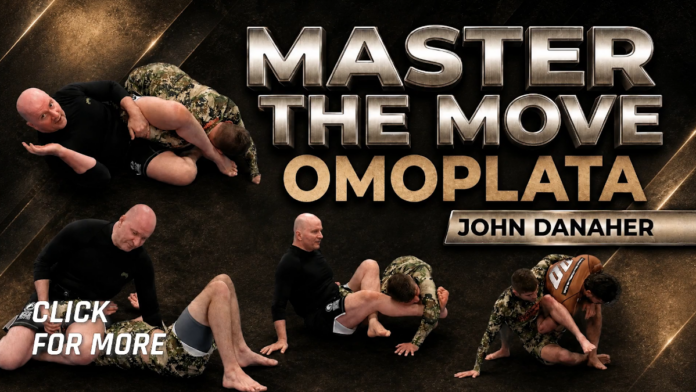
- The Omoplata John Danaher DVD is six-volume deep dive on the omoplata, part of his “Master The Move” series.
- Reframes the omoplata as a complete attacking position rather than a low-percentage submission.
- Covers entries, the “Switching Knees Method” breaking mechanic, ride time, sweeps, and submission finishes.
- Includes the less common cruciplata strangle and the omoplata’s relationship to the triangle.
- Best for guard players who want to build a genuine omoplata game in both Gi and No-Gi.
- Rating: 9/10
Master the Move: Omoplata John Danaher DVD DOWNLOAD
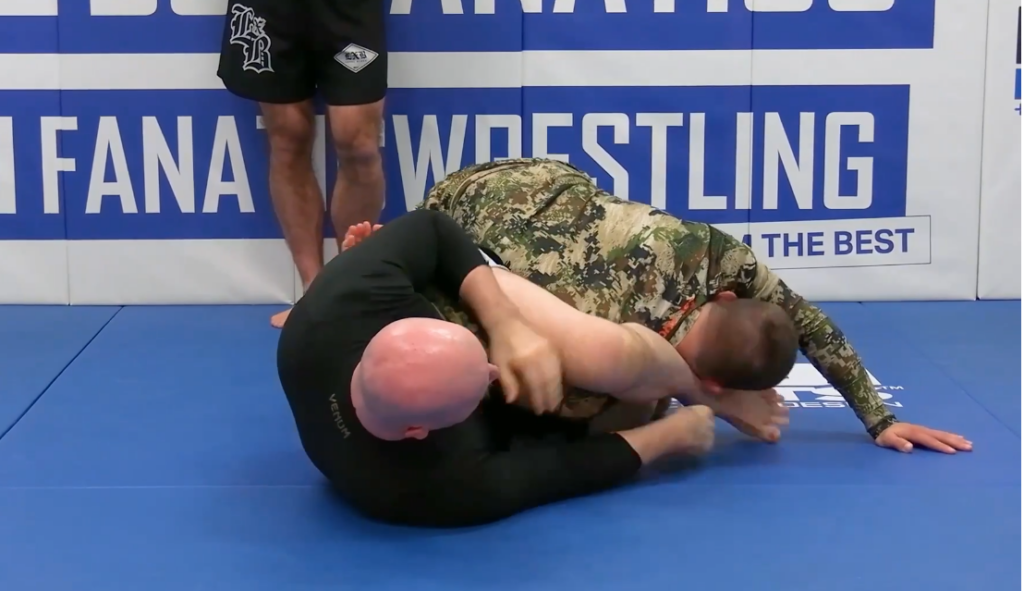
John Danaher has spent his coaching career turning positions that competitors write off into complete, repeatable systems — and the omoplata is a perfect candidate for the treatment. In Master The Move: Omoplata, he applies his signature analytical style to a submission that most practitioners treat as an occasional attack rather than a position worth building a game around.
The omoplata’s reputation problem is that it feels low-percentage: people throw it on, their opponent rolls or postures out, and they give up the sweep. Danaher’s argument, spread across six volumes, is that the omoplata was never a submission first — it is a controlling position with a submission attached. If you only chase the shoulder lock, you miss the sweeps, the ride time, and the transitions to strangles and arm bars that turn it into a genuine attacking system.
The “Mad Scientist” of BJJ
John Danaher is widely regarded as one of the most influential coaches in the history of the sport, despite never competing himself. Born in the United States and raised in New Zealand, he moved to New York to study philosophy at Columbia University, and began Brazilian Jiu-Jitsu at 28 under Renzo Gracie, earning his black belt in 2002.
His coaching career has three distinct phases. He first built a reputation teaching self-defence and then MMA, most notably working with Georges St-Pierre. When he turned to professional grappling, he attracted a group of unknown young athletes — Gordon Ryan, Garry Tonon, Eddie Cummings, and Nicky Ryan — and built them into the most feared submission team in the sport, the Danaher Death Squad.

Their leg lock and strangle systems reshaped modern No-Gi. After the squad split, he co-founded New Wave Jiu-Jitsu out of Austin, Texas, and promptly led a new, largely inexperienced team to the most success of any squad at the following ADCC World Championship.
For this subject specifically, Danaher’s credibility is unmatched. His defining skill is turning a single position into a named, teachable system — and the omoplata, a submission almost everyone uses but almost no one truly understands, is exactly the kind of material he excels at.
Master the Move: Omoplata John Danaher DVD Review
This is dense, verbose, and single-minded, which will put off some buyers, but for a guard player who wants the definitive treatment of the omoplata, there is nothing else close. Where a typical omoplata instructional shows an entry and a finish and calls it a day, Danaher works backward from the problem of “what actually happens when a good opponent defends”, then builds the answer into the position itself.

The result is the most complete omoplata resource currently on the market, and one of the strongest entries in the Master The Move series.
Volume 1: Entries
Danaher opens with the entries, and the framing matters. The Clamp and the Trap Triangle establish the two primary configurations, before he moves through a broader set of roads into the position: the Williams Guard, a half guard knee lever, a body lock counter, stepover entries, and even entering the omoplata from a single leg. The message is that the omoplata should not be a one-shot from closed guard — it should be reachable from everywhere your opponent’s arm becomes available.
Volume 2: Winning The Battle For Height
This volume is the conceptual core of the course. Danaher argues that your first goal is not the submission but establishing the outside hip and post position, and that almost everything in the omoplata reduces to winning the battles for height, posture and movement.
The standout here is the “Switching Knees Method”, his new approach to breaking mechanics — instead of yanking the shoulder, you switch the knees to load the joint through body position. It is a genuinely different way to finish the lock, and the “outside hip roll” alternative gives a second path to the same height battle.
Volume 3: Ride Time
If there is one chapter that justifies the entire purchase, it is this one. Danaher calls ride time the most important skill of omoplata — the ability to stay on the opponent as they roll in every direction. He covers following the inside shoulder roll, the outside shoulder roll, the cross body roll, and the cartwheel, then counters the outside leg post, inside leg post, and sit-out. This is where the omoplata stops being a submission and becomes a position you can hold and work from, and it is the section most practitioners are missing.
Volume 4: Sweeps
Once you can ride the position, Danaher gives you the payoff when the opponent defends: the bicep sweep, the outside inside sweep, and the far leg sweep, plus a far ankle hook as a leg attack option. He also flags the “double omoplata” as a specific danger to watch for while riding. The sweeps are the proof of the thesis — you no longer need the submission to succeed, because the position itself generates points and reversals.
Volume 5: The Cruciplata And Finishes
This volume moves into finishes, and it is where the course goes somewhere most omoplata instruction never reaches. The switching knees position leads into the cruciplata, and Danaher teaches the cruciplata strangle as a submission from the same control. The bicep pin and the outside scoop arm bar round out the finishing options. For anyone who has ever held an omoplata and not known how to convert it, this is the missing piece.
Volume 6: Alternative Approaches
The final volume widens the lens. Danaher covers the inverted knee approach, the relationship between the omoplata and the triangle, the omoplata into head scissor arm bar, and using the omoplata as a reversal. It closes the loop by showing the position not as an isolated attack but as a hub connected to the rest of your guard.
Actually Learning Something from a Danaher DVD
This course rewards drilling in a specific order: entries first, then the height battle and the Switching Knees Method, then ride time, then the sweeps. That makes it useful – go for what you need, instead of suffering through another ultra-long Danaher instructional and ending up more confused than when you started.
The realistic time investment is substantial — the ride time material alone takes weeks to make automatic — but the payoff is a position you can genuinely play rather than a move you occasionally attempt. Expect to rewatch the ride time and cruciplata volumes repeatedly as you run into live resistance.
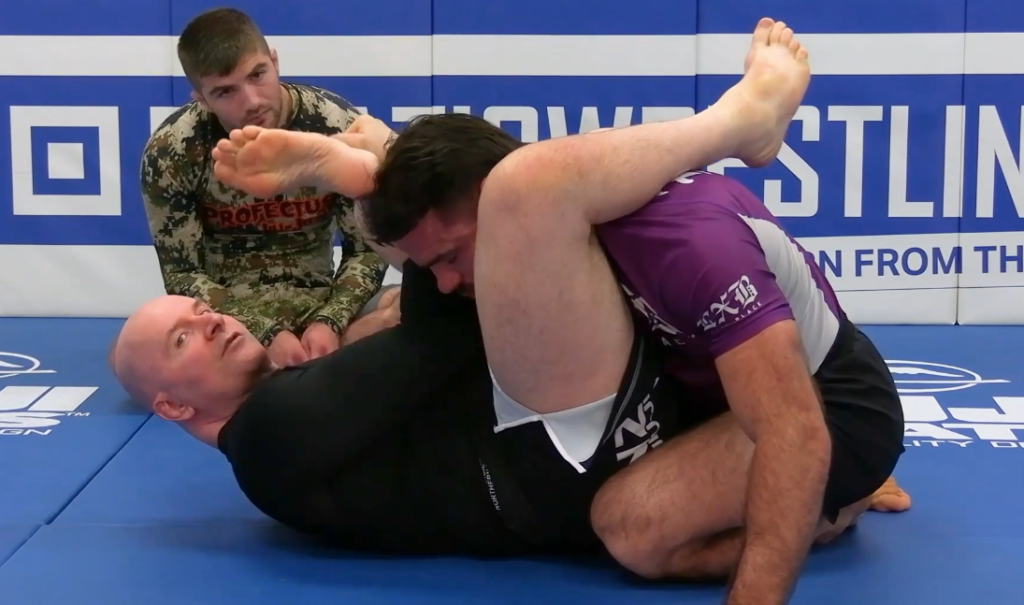
OUT NOW: Master the Move: Omoplata John Danaher DVD
Who Is This For?
This is a course for guard players, roughly blue belt and above, who want to turn the omoplata into a real part of their game. It translates well to both Gi and No-Gi, and to points and submission-only rulesets alike, because it does not depend on grips so much as on position.
Complete beginners will find it too dense, and passers or top-game players with no interest in developing a guard will get little from it. It is also a single-technique course — if the omoplata is not on your radar, this is not the instructional to start with.
Pros & Potential Drawbacks
Pros:
- The most complete omoplata resource available. Six volumes cover the position from entry to finish to transition with nothing meaningful left out.
- The ride time section alone is worth the price. Staying on the opponent through rolls is the skill almost no one else teaches, and it transforms the position.
- A genuinely new breaking mechanic. The Switching Knees Method is a real contribution, not a repackaged detail.
- The cruciplata strangle. A finish from the omoplata control that most practitioners have never seen, let alone trained.
- Danaher’s teaching clarity. Every technique is explained with the “why” attached, which is his trademark.
Potential Drawbacks:
- Single-technique scope. For the price, it is still one position — and $197 is a real outlay if the omoplata is not already part of your game.
- Danaher’s verbose style is not for everyone. The analytical depth is a feature for most, but viewers who want fast, punchy instruction may find it slow.
- No competition footage or live-roll validation. The material is taught in the controlled Danaher format, without rolling demonstration against resisting opponents.
Omoplatas On the Menu
Master The Move: Omoplata John Danaher DVD does exactly what Danaher does best: it takes a position everyone knows, and almost no one understands, and turns it into a complete, teachable system. The entries, the height battle, the ride time, and the sweeps build a case that the omoplata is a position to be played, not a move to be attempted — and the cruciplata strangle is a genuine bonus for anyone who gets deep into the material.