


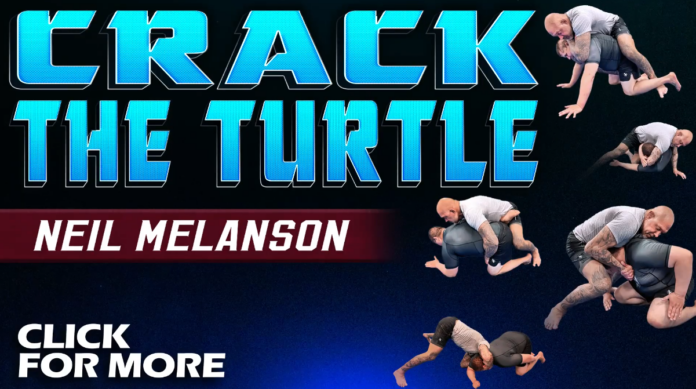

Key Takeaways
- A focused 4-volume system for attacking the turtle position from catch wrestling legend Neil “The Ground Marshal” Melanson
- Covers the full cycle: front headlock controls, submissions (Goose choke, gator choke, face-lock, Anaconda, Boa), back takes, and the crucifix
- Heavy on catch wrestling tools — butt drags, quarter nelson tilts, leg shelving, spiral wrist rides — that standard BJJ turtle attack instructionals rarely cover
- Practical counters to common turtle defenses like the inside single and the cover
- Rating: 9.5/10
DOWNLOAD HERE: CRACK THE TURTLE NEIL MELNASON DVD
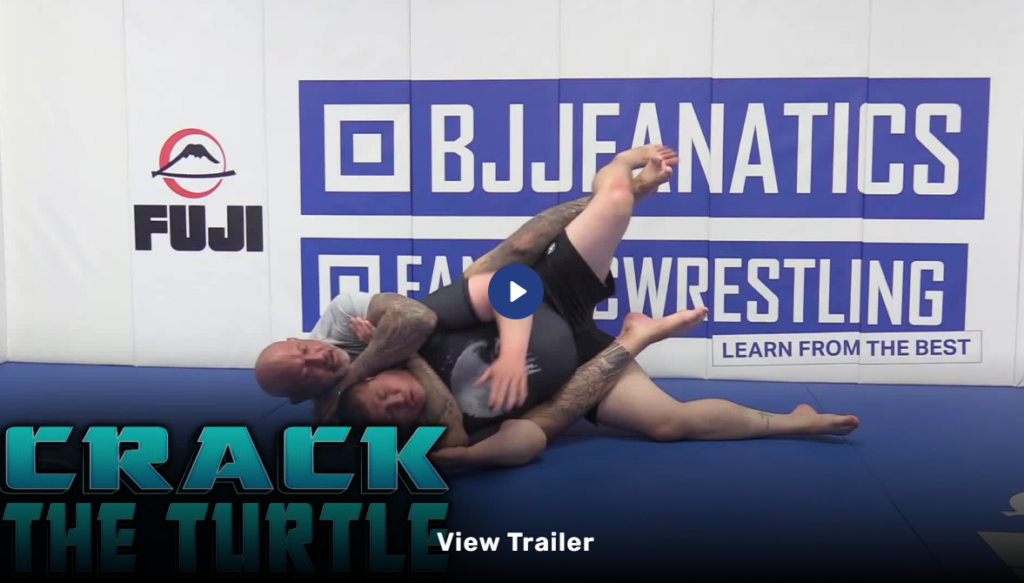
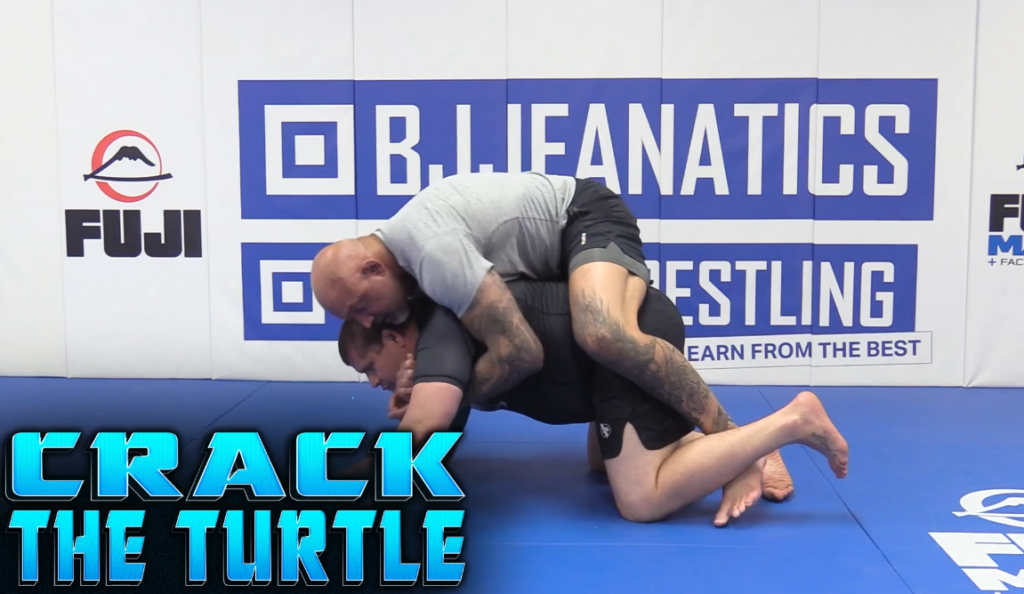
The turtle is one of the most frustrating positions in Jiu-Jitsu. It is structurally stable, easy to stall in, and difficult to attack without risking a sweep or a scramble. Most grapplers treat it as a pause position — a place to rest between guard retention and recovery. Neil Melanson’s Crack The Turtle Neil Melanson DVD treats it as a hunting ground. This Crack the Turtle Neil Melanson instructional — four volumes covering front headlock attacks, gator rolls, crucifix entries, and back takes — is built on catch wrestling principles designed to crack even the tightest turtled opponent.
Beating the Modern Defensive Turtle in BJJ
The turtle sits at the intersection of defense and offense. From the bottom, it offers safety — elbows in, knees tucked, back protected. From the top, it offers opportunity — the back is exposed, the neck is reachable, and the opponent is weighed down. The challenge is converting the turtle into a dominant position without getting swept or giving up the inside single.
Melanson’s approach to the turtle is distinct from the standard BJJ approach. In BJJ, the turtle is typically attacked through back takes — seatbelt grip, hooks, chase the back. Melanson adds a layer of catch wrestling tools that create dilemmas the opponent cannot solve with standard turtle defense. The butt drag, the quarter nelson tilt, the leg shelving, and the spiral wrist ride are not techniques you will find in a typical BJJ turtle attack curriculum. They are tools from wrestling and catch that break the turtle open through mechanical manipulation rather than speed.
The Crack The Turtle Neil Melanson DVD progresses logically: Volume 1 establishes front headlock control and submissions from the front. Volume 2 adds gator rolls, Anaconda, and the Boa choke — attacks that work when the opponent turns away from the front headlock. Volume 3 introduces the crucifix and leg control tools for when the opponent is flattened. This Crack the Turtle Neil Melanson DVD completes with Volume 4 and the cycle of hooks, back takes, and rear naked choke finishes.
Jaco Hybrid Training Center Coach Neil Melanson
Neil Melanson, known as “The Ground Marshal” and “The Godfather of Filth,” is one of the most respected grappling coaches in MMA history. He holds a black belt in Hayastan catch wrestling under Gokor Chivichyan and Gene LeBell, with his lineage tracing back through LeBell to Ed “Strangler” Lewis and Lou Thesz.
Before coaching, Melanson served seven years in the United States Navy and five years as a Special Agent for the Federal Air Marshals Service. He was born with Behcet’s disease, which caused blindness at age 28 — he later regained sight in one eye.
Melanson has coached at Xtreme Couture, the Blackzilians, and Alliance MMA, training elite fighters including Randy Couture, Vitor Belfort, Dominick Cruz, Michael Chandler, and Chael Sonnen. He is the author of “Mastering Triangle Chokes” and has released over a dozen instructional series on BJJ Fanatics, including the bestselling Modified Guillotine. He is currently the head grappling coach at Jaco Hybrid Training Center.
Full Crack The Turtle Neil Melanson DVD Review
The Neil Melanson turtle attack system provides a systematic approach to a position most instructionals ignore. This catch wrestling turtle system draws from techniques most BJJ players never encounter.
The legendary butt drag, quarter nelson, leg shelving, and gator choke are tools that belong in every grappler’s arsenal — the gator choke BJJ community needs to see. At 9/10, this is the definitive turtle attack instructional, complete with Boa choke instructional material, for anyone serious about finishing from the top.
Volume 1: Front Headlock Controls
Volume 1 establishes the entry point for the entire turtle attack system: the front headlock. Melanson begins with basic controls — how to lock up the front headlock, where to position your weight, and how to prevent the opponent from escaping back to their guard.
The Goose Front Choke is the first submission option, a catch wrestling strangle that uses a unique hand configuration to attack the neck from the front headlock. Guillotine combos with the Goose add a secondary layer — if the opponent defends the Goose by hiding their neck, Melanson traps the arm and attacks the guillotine.
The Front Face-Lock is a nasty alternative. Rather than attacking the neck directly, Melanson uses a face crank that forces the opponent to expose their neck to relieve the pressure. This volume closes with the Pinch Front Headlock Choke and the front headlock stretching technique, which fatigues the opponent’s turtle by extending them out of their defensive posture.
Volume 2: Gator Rolls and Boa Attacks
In the second part, Melanson shifts a bit from front headlock attacks to the gator roll — a catch wrestling staple that turns the opponent from turtle onto their back by rolling across your own shoulder. The Gator Choke is the finishing variation, attacking the neck as the opponent rolls.
The Anaconda choke makes an appearance — a natural fit from the turtle position when the opponent’s arm is trapped. The Head and Arm Boa is a less common but devastating alternative, wrapping the opponent’s head and one arm in a compression choke.
The Schultz Front Headlock Choke is a technical highlight. Named for the freestyle wrestling legend, this choke uses a unique grip and body angle to attack the throat from the front headlock.
Quarter Nelson attacks add a pure catch wrestling layer. By applying pressure to the opponent’s near shoulder while driving their far hip, Melanson tilts them onto their side, exposing the back for hooks. The volume ends with two options for countering the inside single — a common turtle escape where the bottom player reaches for the top player’s leg to sweep or stand.
Volume 3: Crucifix and Leg Controls
Volume 3 introduces the crucifix — one of the most dominant control positions from the turtle. Melanson shows how to enter the crucifix from the front headlock or during a scramble, then lock up the rear naked choke while the opponent’s arms are trapped.
The leg positioning drill is essential. Many grapplers struggle with the crucifix because their legs are in the wrong place. Melanson’s step-by-step approach to finding the correct leg position makes the crucifix accessible even for practitioners who have never used it.
The Cover — a defensive posture where the opponent covers their neck with both hands — receives detailed attention. Shelving the ankle, using the thigh pry, and the spiral wrist ride are all tools for breaking the cover and exposing the neck. These techniques are Melanson’s catch wrestling background at its best: mechanical, methodical, and based on controlling the opponent’s joints rather than muscling through them.
Volume 4: Back Takes and Finishes
The final part completes the system with back takes and rear naked choke finishes. Melanson covers getting hooks in — both hooks versus one deep and one shallow — and how to adjust based on the opponent’s defensive reactions.
The rear naked choke basics section covers grip fighting, hand positioning, and the body squeeze that makes the choke tight. The flattening section addresses the opponent who tries to curl up on their side to defend the RNC, while the Back Take Tilt shows how to use the opponent’s own defensive momentum to drive them flat.
The Power Half is a wrestling classic adapted for the turtle. By trapping the opponent’s near arm against their body and driving through your forearm, Melanson creates the space needed to flatten and finish. The Boa Choke Tilt closes the volume — a tilt followed by a Boa choke that catches the opponent as they try to escape the flattened position.
Cracking the Half Shell
The four-volume structure allows logical progression through the turtle attack cycle. Start with Volume 1 (front headlock) as your primary entry, then work through Volume 2 (gator/boa) for when the opponent turns, Volume 3 (crucifix) for when they stay flat, and Volume 4 (back takes) for finishes.
The instructional is particularly valuable for grapplers who struggle with the turtle. If you find yourself stalling when opponents turtle, Volume 1 alone will give you enough front headlock tools to maintain control. The butt drag and quarter nelson from Volumes 2-3 are worth the price of entry — they solve the problem of the opponent hiding their hands and protecting their neck.
Melanson’s system works in both gi and no-gi, though the front headlock grips are naturally stronger in No-Gi. Gi players will find the Anaconda and Boa chokes work well with the fabric, while No-Gi players will appreciate the mechanical control methods (butt drag, leg shelving, spiral wrist ride) that do not depend on friction.
CRACK THE TURTLE NEIL MELNASON DVD AVAILBLE HERE
Who Is This For?
This instructional is ideal for intermediate grapplers (blue belt and above) who have encountered the turtle as a defensive position and want systematic tools to break it open. It is particularly valuable for wrestlers transitioning to BJJ who already understand front headlock control but lack the finishing system.
Competition grapplers will find the system invaluable. The turtle is a common stalling position in both gi and no-gi competition, and having a complete attack system means opponents cannot rest in turtle without risking submissions or back takes.
Coaches will appreciate the logical progression from control to submission. The system can be taught as a curriculum for an upper-belt class focused on turtle attacks. Beginners may find some techniques — particularly the catch wrestling tools like the spiral wrist ride and thigh pry — too specialized for their current skill level.
Pros & Potential Drawbacks
Pros:
- Fills a genuine gap: Dedicated turtle attack instructionals are rare, and Melanson’s catch wrestling approach makes this one unique
- Catch wrestling tools are excellent: The butt drag, quarter nelson, leg shelving, and spiral wrist ride are techniques most grapplers never learn but should
- Logical progression: Front headlock → gator/boa → crucifix → back takes creates a natural learning path
- Volume 2 is packed with value: The gator roll, Anaconda, Boa choke, and Schultz choke alone justify the price
- Works gi and No-Gi: Core mechanics transfer without modification
Potential Drawbacks:
- Volume 4 is the thinnest: At 8 chapters including the demonstration, the back take and RNC volume covers familiar ground that advanced grapplers may already know
- Assumes front headlock familiarity: Beginners who cannot maintain the front headlock will struggle before they get to the advanced material
- Not for casual viewers: This is a system, not a highlights reel — it requires study and drilling
Neil’s Turtle Solutions
The Crack The Turtle Neil Melanson DVD solves a problem that most BJJ instructionals ignore. The turtle is one of the most common defensive positions in grappling, yet most grapplers have no systematic way to attack it. This Neil Melanson turtle attack system uses a catch wrestling turtle system built on the front headlock turtle breaks that make it distinct.