





Key Takeaways
- What it is: a three-volume, No-Gi front headlock instructional from Garry Tonon covering high-elbow mechanics, hip and leg control, hand fighting, takedown-related positions, back takes, recovery, and live drills — not a full system of the position.
- Runtime: roughly 1 hour 58 minutes across three volumes, with chapter endpoints of 47:59, 41:54, and 28:26 according to the product page’s chapter list.
- The flagship: a high-elbow (10-finger) guillotine that requires a fast entry, works best when the opponent’s hands are on the mat, and initially gives up some head control until drilled.
- The differentiator: the hand-fighting, control, and recovery chapters — plus the volume-three live drills — are what make it usable against resistance rather than a one-note highlight.
- Who it is for: No-Gi competitors who already reach front headlock positions and want sharper finishing and transitions, not beginners or buyers after a complete system.
- Rating: 9/10.
Front Headlock Highlights Garry Tonon DVD DOWNLOAD
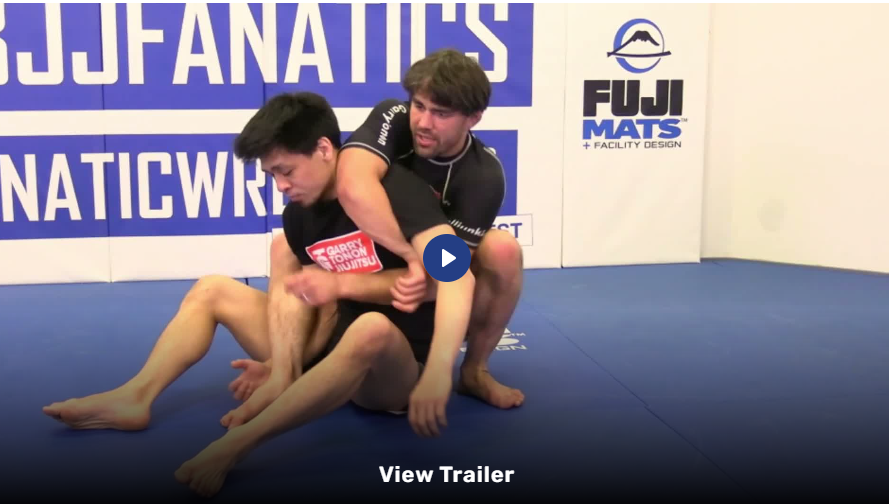
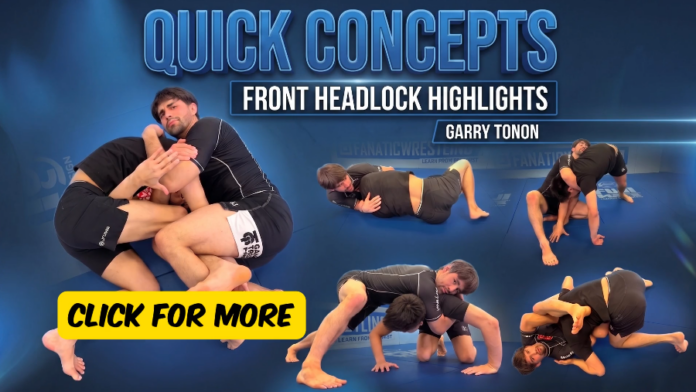
The Quick Concepts: Front Headlock Highlights Garry Tonon DVD is a deliberately small instructional, and that is the point. Garry Tonon’s three-volume front headlock series runs just under two hours and covers a single position — high-elbow finishing, hand fighting, control, recovery, and live drills.
It is not a front headlock encyclopedia, and it does not pretend to be. The useful question in this Garry Tonon front headlock review is not whether Tonon knows the position, because he plainly does, but whether a compact specialist package actually transfers to live grappling, or whether it reads like a highlights reel for people who already understand it.
The front headlock sits at the crossroads of wrestling and submission grappling. Every No-Gi round passes through it: a snapped-down head, a sprawl, a failed shot, a scramble. It is where hand fighting turns into guillotines, where takedown defense turns into back takes, and where matches are won or lost in the split second before posture is rebuilt.
A position that common deserves focused study, and a short, reaction-oriented course aimed at the middle of the exchange is a genuinely different product from a control-first, eight-volume deep dive.
Why Garry Tonon’s Front Headlock Game Is Worth Studying
Garry Tonon is one of the most credentialed No-Gi grapplers of his generation, and the front headlock has always been a live part of his game. A New Jersey native, Tonon started wrestling in grade school before finding Jiu-Jitsu at 14 and committing to it under Tom deBlass at Ocean County Jiu-Jitsu.

He later trained under Ricardo Almeida and, after watching Eddie Cummings’ success, relocated to New York to work under John Danaher at the Renzo Gracie Academy, where he became a defining name in the Danaher Death Squad. Tonon received his black belt in 2013 from deBlass and Almeida. His competitive record is built on finishing: the large majority of his wins have come by submission, and he collected multiple EBI titles across the 2015–2017 submission-only circuit.
That background matters for this product specifically. Tonon is not a control-first competitor who holds the front headlock and waits; he is a finisher who hunts guillotines and uses the position to force scrambles and transitions. A front headlock instructional from him is naturally weighted toward attack, movement, and recovery rather than prolonged pinning — which is exactly what Quick Concepts delivers.
What’s Inside The Three Volumes
Quick Concepts: Front Headlock Highlights Garry Tonon DVD is split into three volumes, and the structure says a lot about the intent. This is not an eight-part system built for completeness; it is a short, concentrated run of chapters, most in the five-to-ten-minute range, that move quickly from one idea to the next.

Volume 1 — The Finishing Layer
The first volume is where the selling point lives. After a short intro, Tonon opens with his “new high elbow” — the 10-finger guillotine grip that anchors the whole product — before moving into controlling hips and legs, the reverse Kata Gatame, over-shoulder control, the high crotch, and the head-inside single. The through-line is finishing and the entries that feed it: once the head is caught, the volume works backward through the takedown-related positions that get you there.
Volume 2 — The Control Layer
The second volume shifts to the middle of the exchange. Over-under control, the knee block, rolling, hand fighting, the quarter Nelson, and a chapter literally titled “recovery from failure” form the control layer of the system. This is the section that separates the product from a pure guillotine tutorial — it is about keeping the head-and-arm connection when the first attack fails and the opponent starts rebuilding posture.
Volume 3 — Live Drills
The third volume is billed as live drills and is the shortest of the three. Leg dexterity, snapping and movement, leg grabs, more hand fighting, a focus on getting to the back, recovery, rolling, and four-point work. The repeated emphasis on recovery and back takes is telling: even in a highlights package, Tonon keeps circling back to what happens when the submission does not land.
The High-Elbow Guillotine: The Main Selling Point
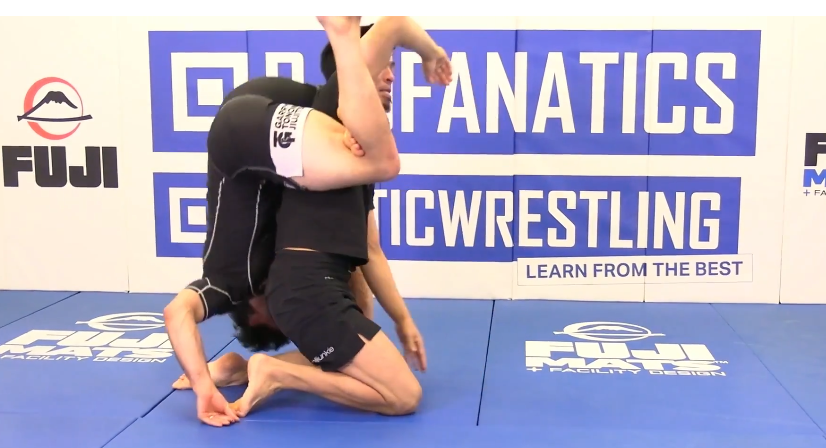
The high-elbow guillotine is the reason most people will click on this product, and it is also where the review earns its credibility. The version Tonon teaches uses a 10-finger grip with a staggered stance and a knee positioned near the opponent’s ear, plus a hamstring-over-the-shoulder detail that changes the finishing angle. When the conditions are right, it is a genuinely nasty finish.
The honesty comes from the conditions. Tonon is upfront that the high-elbow guillotine has a fast-entry requirement: it works best when the opponent’s hands are on the mat and you can snatch the neck before they build a defensive frame. The trade-off is that the finish initially sacrifices some head control — the head can pop out until the movement has been drilled to the point of being automatic.
That limitation is the right frame for the whole product. The high-elbow guillotine is not a no-escape finish, and Tonon does not pretend otherwise. Whether the Garry Tonon front headlock instructional earns its price depends on whether the surrounding control and recovery material — the over-under, the knee block, the hand fighting, the recovery-from-failure chapter — gives you enough to keep working when the first snatch fails.
The Control And Hand-Fighting Material
The best argument for this being more than a guillotine instructional is the middle of the product. The over-under control, knee block, snapping, leg-dexterity, and hand-fighting chapters all target the same problem: maintaining the head-and-arm connection long enough to finish or transition, and preventing the opponent from building posture.
This is where the material is most useful against resistance. A front headlock is not a static hold; it is a running argument about who controls the inside position. The hand-fighting chapters cover exactly that argument, and the recovery chapters — one in volume two, another inside the live drills — address the moment every grappler knows too well, when the first attack stalls and the opponent starts to come up. Tonon’s approach treats failure as a prompt to transition rather than a reset, whether that means reattacking, rolling, or taking the back.
The volume-three live drills are the practical payoff. Leg dexterity, snapping, leg grabs, and four-point work are drills you can actually put on the mat, and they encode the reaction-based decisions the earlier volumes explain. For a grappler who already reaches the front headlock but loses it in transition, this is the section that justifies the purchase — it is teaching the in-between moments, not just the finish.
GET IT HERE: Front Headlock Highlights Garry Tonon DVD
How It Compares With Other Front Headlock Instructionals
The cleanest way to understand this product is to place it next to the other front headlock instructionals already reviewed on the site. John Danaher’s front headlock work is the comprehensive option — a control-first, systematically sequenced system built for total coverage of the position.
Michael Pixley’s Complete Front Headlock System and Joel Bane’s No-Gi Grapplers Guide To Front Headlock are broader dedicated treatments that walk through standing, grounded, pinning, and submission applications across many more hours. Luke Harris’ Front Headlock Mastery is a newer four-volume set split into entries, submissions, transitions, and special finishes.
Quick Concepts is deliberately none of those things. It is shorter, narrower, and more reaction-oriented — closer to a specialist’s refined notes than a curriculum. That is not automatically a virtue. “Shorter” does not mean “better organized,” and a beginner will not find the foundational, step-by-step scaffolding that a full system provides. The value proposition is compression: the practitioner who might not sit through an eight-volume system will absorb a two-hour course, and for them the focus is a feature.
It also sits alongside Tonon’s own catalog rather than replacing it. Unifying The Systems places front headlock attacks inside a broader connection of leg locks, back attacks, and submission chains, while Shoot To Kill approaches the front headlock through wrestling entries and scrambles. This course is the reverse — it drills down into the front headlock itself. Existing owners of either will find it a useful refinement, not a replacement.
Using Real Grappling Weapons With Honest Limitations
Integrating this into training is realistic for the right grappler. The condensed chapter length means a single sitting covers a full volume, and the live drills are designed to be drilled, not just watched. The realistic time investment is a few focused sessions per volume — with the high-elbow guillotine specifically needing enough repetition to close the head-control gap Tonon flags. Expect the finish to feel loose at first; that is the documented cost of the entry, not a fault in the teaching.
The product is most effective when paired with live positional rounds. Watch a volume, drill the hand-fighting and recovery sequences, then force front headlock exchanges in rolling and run the reactions. Because the material is compact, it is easy to return to a single chapter — the knee block or the quarter Nelson, say — without re-watching hours of context.
Who Should Buy It — And Who Should Skip It?
Buy it if you are:
- A No-Gi practitioner who regularly reaches front headlock positions and wants sharper finishing and control.
- A competitor looking to improve hand fighting, high-elbow finishing, and recovery when the first attack fails.
- A Tonon fan who wants a concise specialist course rather than another broad instructional.
- An existing owner of Unifying The Systems or Danaher’s front headlock material who wants focused refinement.
Skip it if you are:
- A complete beginner who needs foundational positional instruction before a fast-entry guillotine.
- A Gi-first practitioner looking for collar-grip or Gi-specific applications — everything here is No-Gi.
- A buyer wanting a comprehensive front headlock encyclopedia covering every entry, bottom position, passing connection, and defensive scenario.
Pros & Potential Drawbacks
Pros:
- Tight, honest scope: one position treated deeply, without filler.
- A short, digestible format that a busy grappler can actually finish.
- Specialist credibility: high-elbow and control details from a competitor who actually uses them.
- Hand fighting, recovery, and live drills that address what happens when the first attack fails.
- A useful bridge between wrestling exchanges and submission attacks.
Potential drawbacks:
- Narrow scope: too thin for anyone expecting a complete front headlock system.
- Specific entry conditions on the flagship guillotine, which gives up initial head control until drilled.
- Limited defensive and bottom-position material compared with fuller systems.
- A premium ask: a $197 list price for roughly two hours of content.
Final Verdict And Rating
The Quick Concepts: Front Headlock Highlights Garry Tonon DVD is not trying to be the definitive front headlock system, and it should not be judged as one. Judged against its actual purpose — a focused, reaction-oriented specialist package for grapplers who already reach the position — it delivers. The high-elbow guillotine is a real weapon with honest limitations, and the surrounding control, hand-fighting, and recovery material is what makes it usable against resistance rather than a one-note highlight. We rate it 9/10.