




Key Takeaways
- A 5-volume guard retention system built around “The Clamp” — a conceptual framework for preventing, surviving, and reversing guard passes
- Covers seated, supine, and turtle foundational skills, plus specific retention methods for every major pass (knee cut, torreando, leg drag, headquarters, over under, double unders, long step)
- Includes Volume 5: Executive Summary — a condensed reference for the entire system
- From Brian Glick, a John Danaher black belt and top-selling BJJ Fanatics instructor with 20+ years under Danaher
- Designed for all levels but rewards systematic study over quick browsing
- Rating: 9/10
ELEVATE YOUR GUARD RETENTION BRIAN GLICK DVD DOWNLOAD
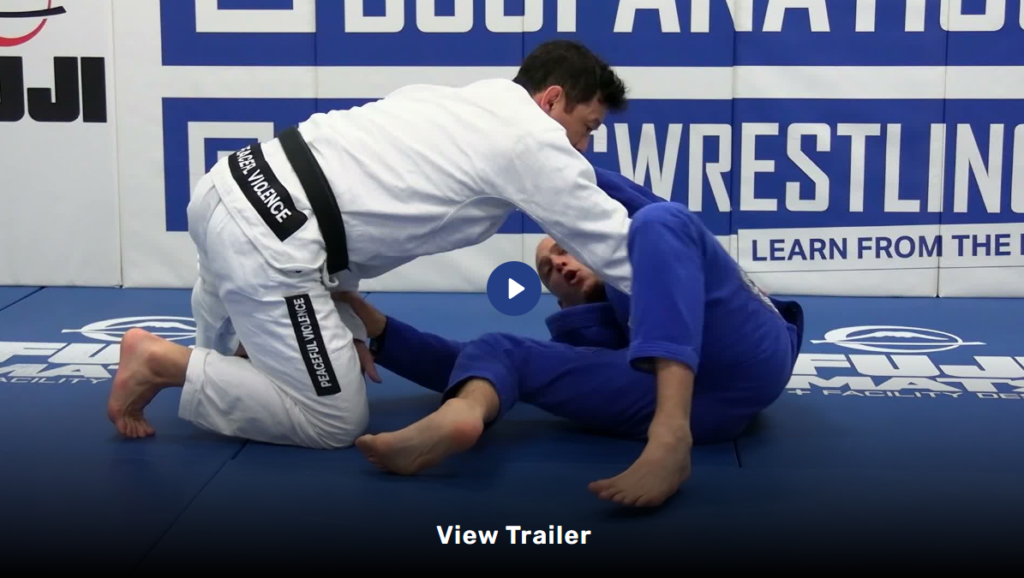
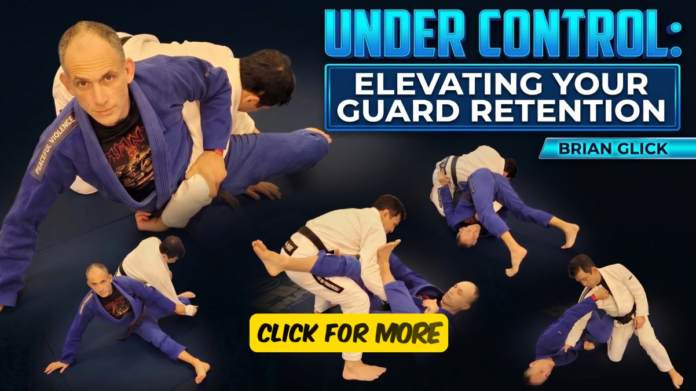
Most guard retention instructionals teach you what to do when you are about to get passed. The Brian Glick Under Control guard retention system takes a different approach — it teaches you how to control the fight before your opponent ever establishes control.
Built around the conceptual framework Glick calls “The Clamp,” the Brian Glick Under Control guard retention system covers everything from the fundamentals of why guard retention is difficult through specific counters to every major passing sequence in modern Jiu-Jitsu.
What Good is a Guard you can’t Keep Playing?
Guard retention is the most under-taught skillset in BJJ. Most academies spend hundreds of hours teaching guard passing — knee cuts, torreandos, leg drags, pressure passing — but very little time on how to prevent those passes in the first place. The standard advice is “frame and shrimp,” which works against a training partner who is going at 50% but falls apart against a determined passer who understands distance management and pressure.
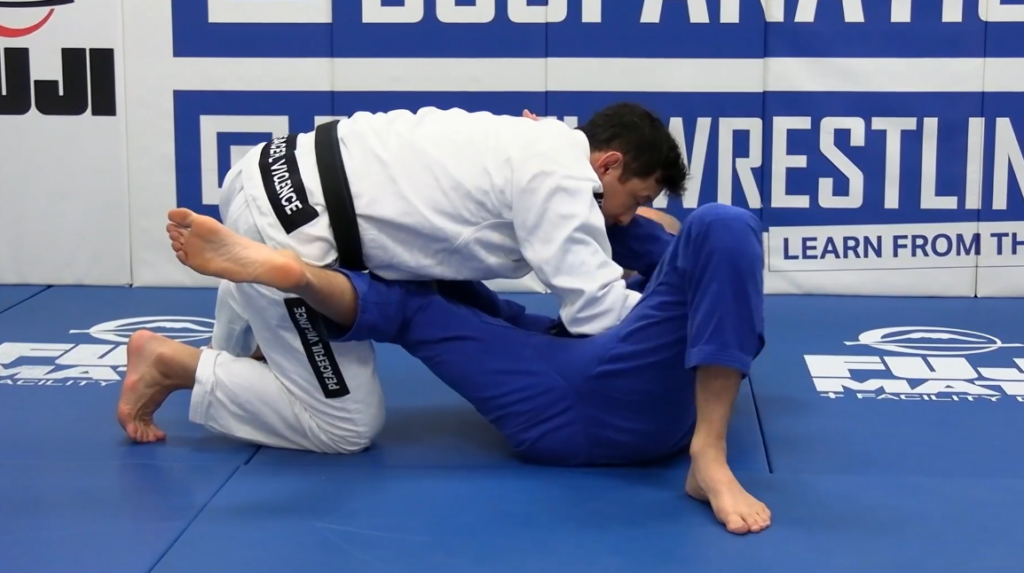
A well-constructed BJJ guard retention system like Brian Glick Under Control guard retention addresses this gap by treating guard retention as an active, offensive skill rather than a passive, defensive one. Brian Glick The Clamp is the central innovation — a framework that repositions retention as a position that can generate its own attacks: triangles, kimuras, armbars, omoplatas, reversals — rather than a desperate attempt to not get passed.
BJJ Braniac Brian Glick
Brian Glick is a John Danaher black belt who has trained under Danaher for over two decades. Brian Glick Under Control guard retention draws directly from that Danaher lineage — systematic, conceptual, and built for all levels. He owns and operates 555 Jiu-Jitsu in Brooklyn, New York, and is consistently one of the top-selling instructors on the BJJ Fanatics platform.

The Brian Glick guard retention system has been refined through 20 years of coaching and is one of the most comprehensive Under Control DVD resources available. Glick’s path in Jiu-Jitsu began with no athletic background — he walked into his first class nervous and unsure, to the point where his instructor suggested he might want to find another activity. Instead, he kept showing up, training in one of the roughest environments imaginable, surrounded by cops, criminals, bouncers, and professional fighters.
Over twenty years under Danaher, Glick developed a systematic approach that works for people who do not have natural advantages. Today, elite competitors and world champions seek him out as a coach and training partner. Shintaro Higashi, a Judo 6th dan and YouTube personality, has called Glick “an incredible instructor with an outstanding pedigree.”
Under Control: Elevating Your Guard Retention Brian Glick DVD Review
The Brian Glick Under Control guard retention instructional is not a collection of isolated survival techniques — it is a complete retention system designed to work in gi and no-gi, for grapplers of every size and athletic profile.

The guard retention drills, pass-specific methods, and emergency protocols combine into a system that works for grapplers of all sizes and styles. Brian Glick Under Control guard retention delivers on its promise — not just to help you survive on bottom, but to control the fight from a position you were previously just trying to escape.
Volume 1: Foundations
The opening volume establishes the conceptual bedrock of the entire system. Glick opens with a dedication and introduction before launching into a critical section: Why Guard Retention Is Difficult.
The Gi vs No-Gi Guard Retention section addresses the mechanical differences between the two rule sets — grip availability changes everything about retention strategy. Glick covers general guard retention goals next, exposing what the person passing the guard is looking for. Subsequent sections also focus on the opposing objectives that define the guard retention battle, establishing the framework Glick calls “Their Goals, Your Goals” that he uses throughout the series.
Volume 2: Core Competencies
Volume 2 moves from theory to the fundamental skills required for effective guard retention. The Seated Skills section covers the baseline positioning, hand fighting, and distance management for an upright guard.
The Supine Skills section addresses the same concepts from the supine position, which is where most guard retention battles actually play out. Glick’s inclusion of a dedicated turtle position section is notable — most guard retention instructionals treat the turtle as a separate position, but Glick integrates it as part of the retention system, recognizing that turtles often happen when guard retention fails.
Framing skills also feature as Glick breaks frames into four categories: Long Arm Frames, Forearm Frames, Backhand Frames, and Self Frames. Each type serves a different purpose — long arm frames maintain distance, self frames create structural integrity when your partner has collapsed your space — and Glick teaches when to use each one.
Volume 3: Guard Retention Drills & Pass-Specific Methods
Part 3 is the heart of the system, combining dedicated drill sequences with specific retention methods against the major passing styles. Seated, supine, and turtle drills provide solo and partner drill progressions that can be added to any warm-up routine. assing defense is organized using Glick’s “Their Goals, Your Goals” structure — he explains what the passer is trying to achieve before teaching the counter.
Volume 4: Advanced Passing Defense
In Volume 4, Brian covers the more physically demanding passing styles. Over Under passing addresses one of the most oppressive pressure passes in BJJ, with three methods: knee levers, shoulder drags, and more forearm frames.
The Double Unders Passing section covers what happens when your opponent has fully wrapped your legs, with pummeling, knee inversions, and post variations. Volume 4 closes with a section that every grappler will appreciate: Emergency Measures.
Glick’s 5 Crisis Rules and Managing Overwhelm teach what to do when everything has gone wrong — when you have been flattened, your frames are compromised, and you are seconds away from being passed. This is the “break glass in case of emergency” portion of the system.
Volume 5: Executive Summary
In the last volume, Glick delivers a condensed reference version of the entire system. It runs through the core competencies (seated, supine, turtle), all four framing skills, and every pass-specific retention method from Volumes 3 and 4 in abbreviated form. This volume is designed for quick review and as a study aid for revisiting specific techniques without watching the full content of each earlier volume.
Jiu-Jitsu Pass Prevention Made Easy
The recommended approach for Brian Glick Under Control guard retention is to start with Volume 1 to understand the conceptual framework, then spend dedicated time with each section of Volume 2’s core competencies until the framing skills feel automatic. Volume 3 should be studied systematically — one pass type per week — drilling the methods against a training partner who applies that pass.
The Brian Glick Under Control guard retention system rewards this kind of structured study because the concepts build on each other. The guard retention drills alone are worth integrating into regular training sessions as warm-ups. Volume 4’s advanced material and emergency measures should come after 3-4 weeks of drilling the foundational methods. The Volume 5 executive summary is ideal for weekly review to keep the full system fresh.
GRAB IT HERE: GUARD RETENTION BRIAN GLICK DVD
Who Is This For?
This instructional is for any grappler who gets passed more than they would like. Brian Glick Under Control guard retention is designed to work for all body types and athletic profiles because it is based on structural positioning rather than flexibility or speed. Blue belts through black belts will find value, with white belts benefiting most from the foundational volumes.
The material works equally well in gi and no-gi, with specific sections addressing the differences. Grapplers who prefer conceptual, principle-based instruction over technique accumulation will love Glick’s systematic approach. The ideal audience is the practitioner who has tried memorizing guard retention techniques and found that they do not hold up against determined passing — this system provides the underlying understanding that makes individual techniques work.
Pros & Potential Drawbacks
Pros:
- The “Their Goals, Your Goals” framework is one of the best analytical tools for understanding guard retention — it shifts the focus from reactive defense to proactive strategy
- The 5-volume structure with the executive summary shows a deep understanding of how students actually study instructionals — the Volume 5 reference alone makes this system worth considering
- The framing skills section is the most comprehensive breakdown of a critical skillset that most instructionals treat as a single chapter
- The emergency measures volume addresses the reality that even the best retention fails sometimes, and provides actionable protocols for those moments
- Brian Glick’s teaching background under John Danaher for 20+ years gives him the conceptual clarity and systematic approach that the topic demands
Potential Drawbacks:
- 5 volumes is a significant time investment — this is not a “quick fix” for guard retention problems, but a full system that requires dedicated study
- The conceptual approach may feel abstract to grapplers who prefer to learn by drilling specific techniques rather than understanding principles
- Some of the advanced methods (inversions, uki waza) require more athleticism, though the primary methods are accessible to everyone
Keep the Guard Under Control
The Brian Glick Under Control guard retention DVD is the most complete conceptual guard retention system currently available. With five volumes covering everything from why retention fails through advanced recovery methods and an executive summary for quick reference, Brian Glick Under Control guard retention instructional provides a framework that can transform how you approach the bottom position.