




Key Takeaways
- Power Ride 2.0 Craig Jones DVD review — a five-volume, roughly three-hour No-Gi top half guard pinning system built on the near side underhook, the “grey area” pin, and a short darce / head-and-arm finish chain.
- Who it’s for: No-Gi grapplers who would rather pin and submit from top half guard than rush the pass, and anyone who keeps getting tangled in the octopus guard.
- What’s genuinely new: the near side underhook series and the Quad Lemma are a deep-dive on one position, not a re-cut of the six-volume Power Ride.
- The catch: it is narrow — five volumes on a single position — and the Gi transfer the sales copy promises is thin.
- BJJ World Expert Rating: 9 out of 10.
Power Ride 2.0 Craig Jones DVD DOWNLOAD
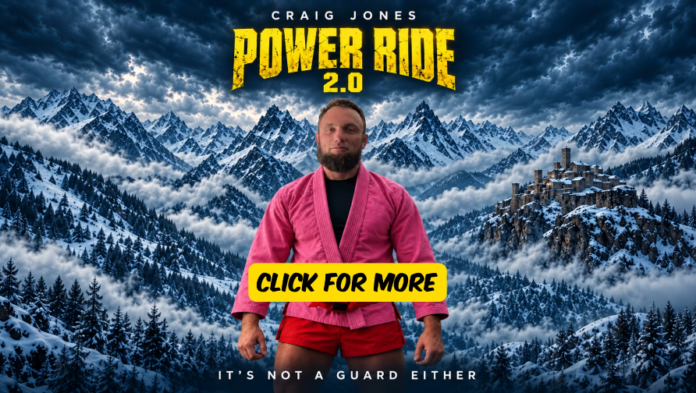
Craig Jones has built his reputation on the idea that the top position is somewhere you live, not somewhere you hurry through. Power Ride 2.0 is the sharpest version of that argument yet, and this time the camera barely leaves top half guard. Across five volumes and roughly three hours, Jones assembles a complete top half guard pinning system.
A Craig Jones Refresher
Top half guard is the most common resting place in modern No-Gi Jiu-Jitsu. Most grapplers treat it as a problem to solve — a guard to pass on the way to side control or mount. Jones treats it as a destination. His core claim is that if you stop rushing and start riding, top half guard becomes a pin you can hold, weigh down and finish from, and the bottom man spends the entire exchange fighting just to recover.
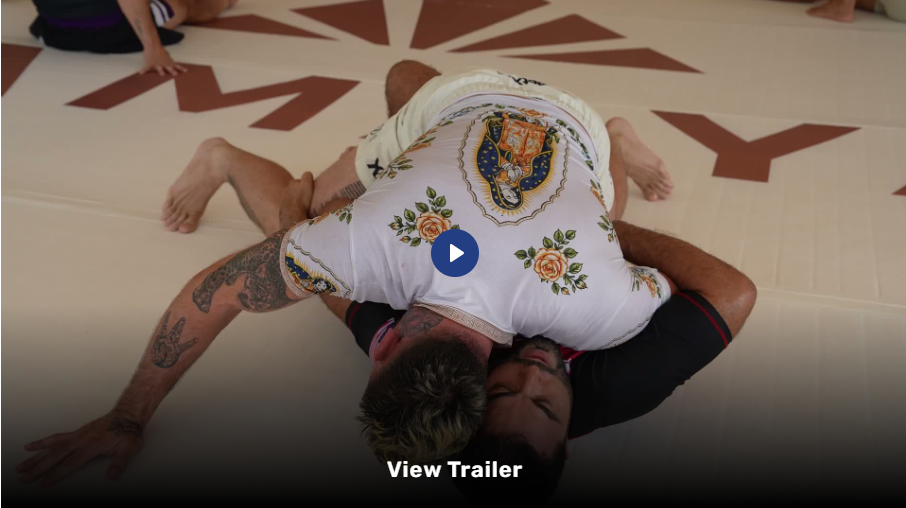
The near side underhook is the engine of that idea: instead of a far-side underhook that encourages the pass, the near side underhook lets the top player glue his hip to the mat, kill the bridge and deny the space the guard player needs to recompose. If you already own the six-volume Craig Jones Power Ride course — our review of which lays out the broader pinning philosophy — you already know the thinking; Power Ride 2.0 is that philosophy applied to a single position and pushed much further.
It also sits in direct conversation with the octopus guard Jones teaches from the bottom in his Octopus Guard 2.0 course — the new instructional is, in part, the counter to that very game.
Did You Know Craig’s Middle Name?
Craig Benjamin Jones is an Australian grappler, a black belt under Lachlan Giles, and one of the most influential No-Gi competitors of his generation. He took silver at ADCC in 2019 and again in 2022, and before that won the IBJJF No-Gi World Championship as a purple belt in 2015.

Jones worked extensively with John Danaher as a core member of the Danaher Death Squad, then co-founded the B-Team in Austin, Texas, alongside several former DDS training partners, and he holds Polaris titles at both 185 lbs and 205 lbs.
Power Ride 2.0 is built by a man who knows exactly what the bottom half guard player is trying to do, because he is a guard player first. For a full tour of his catalog, see the Craig Jones instructionals hub.
Power Ride 2.0 Craig Jones Review: The Detailed Breakdown
This is a narrower, deeper course than the original Power Ride, and that distinction is the entire buying decision. The near side underhook, a “grey area” pin the bottom man cannot recover from, and a short darce, kimura and head and arm choke chain that all finish from the same control are pure efectiveness.
Volume 1: Near Side Underhook
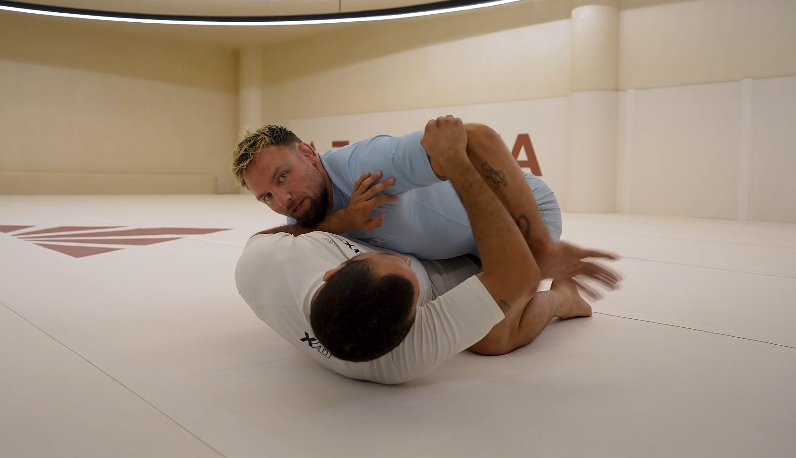
The foundation, and the longest single volume at just over 40 minutes. Jones builds the near side underhook from the ground up — how to secure it, how to ride the hips, and how to kill the bridge before the opponent can turn it into an escape.
The standout idea is the “grey area”: a pin where the bottom man can neither recover guard nor turn away, so he is forced to carry Jones’s weight while the finish is set up. The volume closes by connecting the pin directly to the head and arm choke, establishing the pattern — pin first, finish second — that runs through the whole course.
Volume 2: Octopus Killer and The Short Darce
The shortest volume, and the most specifically useful for a modern problem. The octopus guard has become a fashionable answer from bottom half guard, and Jones spends this section dismantling it from the top before explaining why half guard is the position you want anyway.
The second half introduces the short darce and its finishing mechanics — a compact, high-percentage choke that slots directly onto the near side underhook pin. It is a clean example of Jones’s teaching: a counter and a finish linked by a single control.
Volume 3: The Quad Lemma
The conceptual heart of the system. The Quad Lemma is Jones’s name for one pin that branches into multiple attacks — the kimura and the head and arm choke, with the threat of each feeding the other.
He borrows openly from Islam Makhachev’s half guard series to show how the same control shows up at the highest level of MMA grappling, which gives the material a pressure-tested feel. “Keeping Your Opponent in the Loop” is the key chapter: the goal is never to pick one finish and chase it, but to keep the opponent cycling between threats until one lands.
Volume 4: Top Half Darce
Here Jones covers what happens when the pin slips, the opponent gets greedy, or the position changes. The darce is the default answer from the top half pin, and the volume walks through controlling the pin, the head and arm triangle, and how to set up the darce without losing the ride. There is also a short chapter on handling mount when you do not have the underhook, which keeps the system honest — it is a pinning system, not a single-grip trick.
Volume 5: Top Half Live Rounds
The longest volume at roughly 50 minutes, and the best evidence that the system holds up. Three live rounds show Jones working the near side underhook, the grey area pin and the finish chain against real resistance, with the messiness that live grappling always brings. It is the section that separates a theory of pinning from a working top game.
Rides Are Great for Jiu-Jitsu
The system is designed to be drilled in sequence: secure the near side underhook, ride the hips and kill the bridge until the opponent is in the grey area, then start cycling the short darce, kimura and head and arm threats.
The learning curve is steepest in Volume 1, because the pin only works when the weight and hip placement are right; once the pin is solid, the finishes slot on naturally. Give it a few weeks of focused rounds before it shows up in live rolling, and expect the biggest payoff in No-Gi, where the grips are available, and the pin matters most.
Power Ride 2.0 Craig Jones DVD AVAILABLE HERE
Who Is This For?
This is a course for blue belts and up who already play a passing-heavy top game and want to learn how to pin and finish from top half guard instead of always pushing to side control. It is especially good for No-Gi competitors who keep ending up stuck in half guard, and for anyone who keeps getting caught by the octopus guard and wants the counter.
If you already own Power Ride and want the top half application specifically, this is the follow-up; if you do not yet own either, the original Power Ride is the broader foundation. White belts and Gi specialists should look elsewhere — the material assumes half guard fundamentals, and the grips are No-Gi grips regardless of what the sales copy promises.
Pros And Potential Drawbacks
Pros:
- A genuinely distinctive system. The near side underhook and the grey area pin are not standard half guard passing repackaged; it is a specific, coherent way to ride top half guard.
- Elite, pressure-tested teaching. Two ADCC silver medals and an MMA-grounded reference point in Islam Makhachev make the material credible, and the live rounds show it working under resistance.
- Clean sequencing. Pin first, finish second — every volume builds on the same control, so the course reads as one system rather than a grab bag.
- Directly answers a modern problem. The octopus killer is a specific counter to a guard that has become very common in the last few years.
- Clear, efficient instruction. Jones is a crisp explainer, and the shorter volumes waste very little time.
Potential Drawbacks:
- Narrow scope for the price. Five volumes and roughly three hours on a single position is a lot of depth, but $197 is a full-price ask next to the broader six-volume original. You’re basically paying for Craig.
- Not for beginners. The “What Is Half Guard” chapter is brief; the course assumes you already know the position and are ready to build on it.
Focused No-Gi Riding
Power Ride 2.0 is the rare sequel that earns its number: it is not a re-cut of the original Power Ride, but a focused, deeper look at one position, taught by one of the best top-half-grappling minds in the sport. The near side underhook system is genuinely new, the finish chain is high-percentage, and the live rounds prove the whole thing works.
Reviewed by: Ognen Dzabirski, BJJ black belt, full-time coach and gym owner. The views expressed by the author do not necessarily reflect the views of the publication