





Key Takeaways
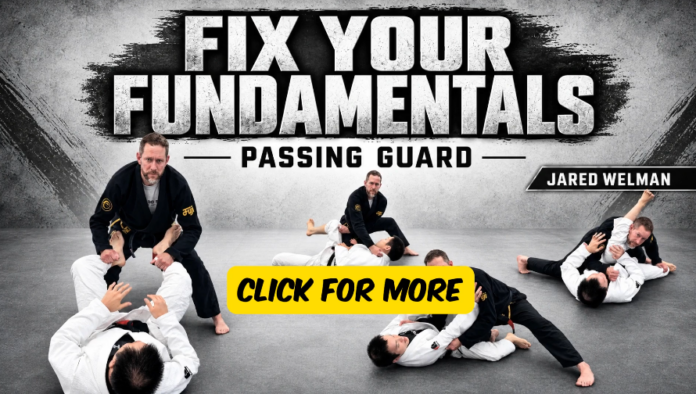
- Fix Your Fundamentals Passing Guard Jared Welman DVD — a four-part digital passing course that moves from stance and distance through open guard, half guard and kneeling pressure before chaining the passes together.
- The pass list is broad but conventional: knee slice, toreando, leg drag and folding/smash, plus tripod, long-step and shoulder-smash half guard passing, and weave, stack, over/under, double under and body lock from the knees.
- The stated differentiator is the final “connecting your passes” volume, but its outline reads like a recap of named passes rather than a decision tree with reactions and follow-ups.
- Best suited to newer grapplers building a top game and mid-level players who get stuck in the legs; not a fit for competitors chasing a modern, No-Gi-specific passing system.
- BJJ World Expert Rating: 8 out of 10.
Fix Your Fundamentals: Passing Guard Jared Welman DVD DOWNLOAD
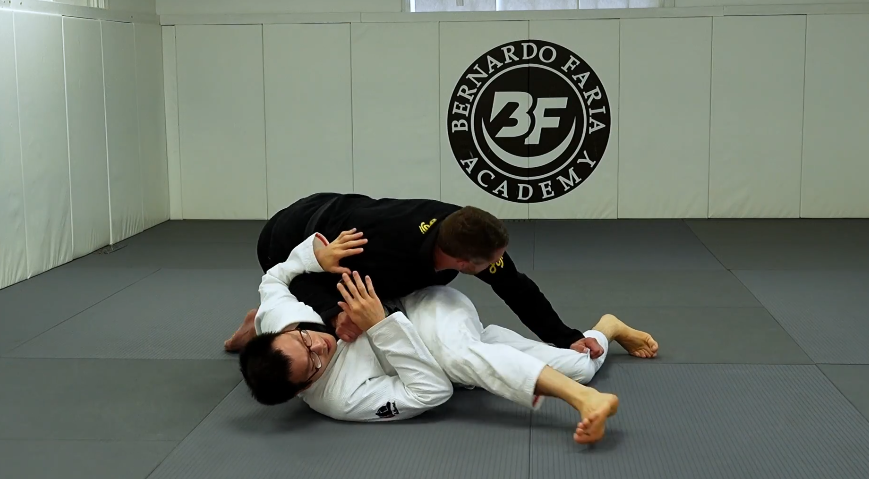
Passing guard is where most grapplers stall. They know a half-dozen passes, yet they cannot say which one to reach for when a seated opponent posts on the mat, when a butterfly hook digs into the hip, or when someone snaps closed half guard the instant a knee slide stalls.
Fix Your Fundamentals Passing Guard, the latest release in Jared Welman’s fundamentals series on BJJ Fanatics, is built to answer that problem not by adding more passes but by sequencing them into a single connected system. Welman, a Brazilian Jiu-Jitsu black belt and Bernardo Faria Academy instructor, has already released entries in the Fix Your Fundamentals line covering submissions, escapes and half guard.
Passing Guard Is A Decision Problem, Not A Move Problem
Most people who cannot pass do not lack passes. They lack a way to choose. The modern guard player chains seated and supine retention, butterfly hooks and half guard entries into a wall that a single, memorized pass cannot crack — which is why chaining matters more than any individual technique.
That is the right problem for a fundamentals series to tackle. The course’s sequence — stance and distance first, then open guards, then half guard, then kneeling pressure, then chaining — mirrors the order a coach would actually use to build a beginner’s top game.

It is also a sensible corrective to the current trend of instructionals that sprint toward leglocks and body-lock exchanges before the student can hold top position for thirty seconds. For readers who read last year’s review of the five-part Fix Your Fundamentals bundle, this dedicated passing title digs deeper into one slice of that curriculum rather than repackaging it.
The toreando and weave pass are grip-heavy entries most at home in the Gi, while the stack, over/under, double under, body lock and shoulder smash are pressure passes that carry into No-Gi with minimal adjustment. Those who specifically want a clean No-Gi passing system — or an explicit set of Gi passing fundamentals — should watch the sample before paying, rather than assume the title covers their ruleset.
Jared Welman, Black Belt And Fundamentals Coach
Jared Welman is a Brazilian Jiu-Jitsu black belt under Bernardo Faria and Marcos Tinoco, and an instructor at the Bernardo Faria Academy, which the academy’s own site describes as led by world champions Faria and Tinoco. His background is unusually broad for a passing specialist: a second-degree black belt in Taekwondo, a self-described mobility specialist, and more than two decades of martial arts training, with a teaching career that began in law enforcement at the New Hampshire Police Academy.
That résumé matters here in a specific way. It lists no competitive grappling record, and Welman is better understood as a teacher than a tournament pass-player. His value proposition is the clarity of his instruction and the mobility-first lens he brings to mechanics — the same lens the site’s earlier review of his submissions course found running through that material. For a fundamentals passing course aimed at students who struggle to make basic passes work, that teaching profile is arguably more relevant than a medal shelf.
Detailed Fix Your Fundamentals Passing Guard Jared Welman DVD Review
The course breaks into four parts. Each one is worth measuring against the promise that the passes connect rather than sit in a list. Passing Guard is his dedicated treatment of the top game, arranged across four parts: passing concepts and open guard passing, half guard passing, passing from kneeling, and a final section on connecting your passes.
Volume 1: Passing Concepts And Open Guard Passing
The opening volume is the strongest on paper because it is where a fundamentals-first course proves itself. It begins with passing concepts and stances before moving into seated, butterfly and supine guards, then drills specific entries: the circle-style pass, knee slice and toreando passing, the leg drag, and a folding/smash pass, plus a butterfly-to-mount route.
The inclusion of stance work up front is a good sign — distance management is the step most passing instructionals skip — but the named techniques are the standard curriculum of every fundamentals passing course on the platform. The value will live or die on whether the concepts section actually teaches a student how to close distance and read an opponent, rather than simply introducing the passes in sequence.
Volume 2: Half Guard Passing
Half guard gets its own volume, built around the tripod pass, the back-step and long-step, and the shoulder smash. That is a sensible, compact half guard passing toolkit: the tripod addresses the distance half guard, the long-step answers the knee shield, and the shoulder smash punishes the opponent who keeps their frames shallow.
Volume 3: Passing From Kneeling
The kneeling volume covers the weave pass, stack pass, over/under, double under and body lock. This is the pressure-passing core of the course, and again the selection is orthodox. The over/under and double under are foundational; the body lock is the one genuinely modern inclusion, and the weave and stack are grip-heavy staples.
For a beginner or a mid-level player rebuilding their top game from the knees, this is a complete enough menu; for someone already competent at pressure passing, there is little here they have not seen.
Volume 4: Connecting Your Passes
The final volume is the product’s stated differentiator, and it is the one this review treats with the most caution. It reintroduces the circle pass, weave pass, toreando pass, knee cut pass and stack pass — the same passes already covered, just re-listed under a “connecting” banner.
That is not, on its face, a decision tree. A real connection section tells you what to do when a toreando opponent posts, when a knee cut opponent frames on your shoulder, and how each reaction feeds the next pass. Connecting guard passes means showing reactions, not re-listing entries. The outline does not prove that level of detail either way, which makes this the single most important thing for a grappler to verify against the sample.
Putting The Passing System To Work On The Mats
The structure is drill-friendly. Four parts, each with a clear theme, means a student can work through the course as a top-game curriculum rather than cherry-picking techniques. The realistic expectation is a few weeks of focused drilling to internalize the stance and distance concepts, then a month or two of live rounds to make the pass chains reflexive.
Because the material is foundations-oriented, the payoff is cumulative: the posture and distance habits carry over to every other pass a student learns later. The limitation is that nothing in the outline suggests live troubleshooting — defending reactions are implied rather than shown, which is the gap most beginners will feel first.
AVAILABLE HERE: Passing Guard Jared Welman DVD
Who Is This For?
This course fits the grappler who has a few passes but no plan. White and blue belts building a top game from scratch will get the most from the progression, and purple belts whose passing stalls the moment a guard player starts chaining retention will find the reset useful. It is also a reasonable purchase for coaches looking for a clean, sequentially organized passing curriculum to borrow structure from.
Who should skip it: advanced competitors and anyone whose problem is modern No-Gi passing. The pass selection skews orthodox and, as noted, never commits to a ruleset — so a No-Gi competitor chasing body-lock entries, float passing and countering modern leg-entanglement guards will find a course built on older, grip-heavy staples instead. The same goes for anyone who already owns a fundamentals passing instructional; this covers familiar ground.
Pros And Potential Drawbacks
Pros:
- Clean, logical structure — distance and stance first, then guards, then pressure, then chaining — that a student can actually follow from start to finish.
- A compact half guard passing toolkit (tripod, long-step, shoulder smash) that covers the three most common half guard situations.
- Broad pass coverage means a beginner exits with a working menu across open guard, half guard and kneeling pressure.
- The mobility-focused instructor behind it has a track record of clear, mechanics-first teaching across the Fix Your Fundamentals series.
- Transparent pricing at $79.00 with a 30-day refund, provided the material has not been downloaded.
Potential Drawbacks:
- The pass selection is orthodox, so there is little a competent passer has not seen before and novelty is low.
- The ruleset is unlabeled, and the grip-heavy passes (toreando, weave) lean Gi.
The Verdict: Is Fix Your Fundamentals Passing Guard Worth It?
What this Fix Your Fundamentals Passing Guard Jared Welman DVD review finds is a well-organized, fundamentals-first passing course that earns its $79.00 tag on structure and clarity, not on novelty. The progression is sensible, the half guard and kneeling volumes are compact and coherent, and the intended buyer — a grappler stuck in the legs despite knowing several passes — is served honestly by the approach.