Barry Bonds’ Dual Mastery: Baseball Records and Brazilian Jiu-Jitsu Skills

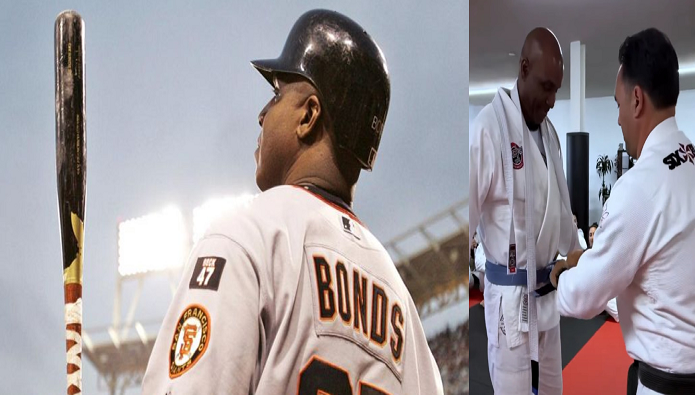
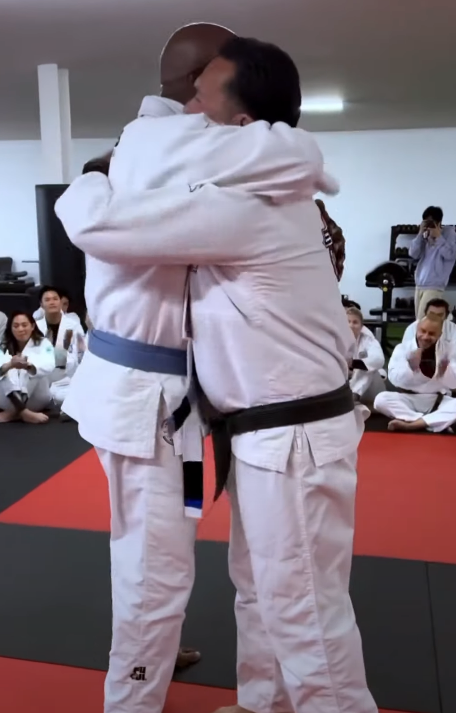
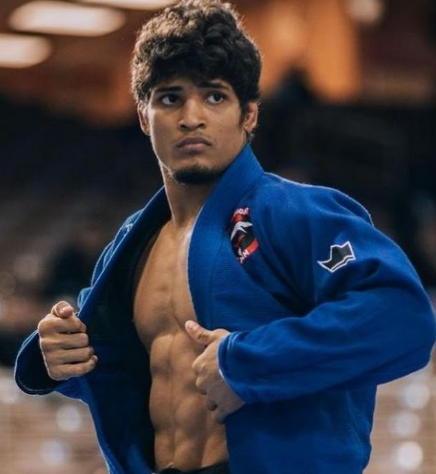
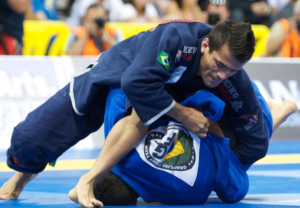
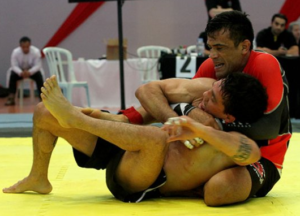
Barry Bonds received his blue belt in BJJ.

Barry Bonds, a highly acclaimed Major League Baseball player, has left an indelible mark on the history of baseball. He is renowned for his extraordinary achievements as an outfielder with the Pittsburgh Pirates and the San Francisco Giants. Barry Bonds has now ventured into a new realm. He started training in Brazilian jiu-jitsu at the Evolve Training Center in San Francisco, USA.

Barry Bonds received his blue belt in BJJ.

This week, the baseball icon accomplished a significant milestone in his jiu-jitsu journey. He achieved his blue belt by his instructor, Jay Janero.

There he alluded to Bonds’ expertise in both baseball and jiu-jitsu. Another fan acknowledged the prevalence of PEDs in both sports, stating, “He used PEDs in both baseball and Brazilian jiu-jitsu.”

Barry Bonds holds a revered status as one of the greatest baseball players in the world. He boasted a career home run record of 762 and a remarkable single-season record of 73 home runs in 2001. However, his journey has not been without controversy.

Despite his astonishing accomplishments, Bonds has faced significant obstacles in his pursuit of recognition from the MLB Hall of Fame due to allegations of PED usage. These allegations have cast a shadow over his otherwise illustrious career. However, the PED allegations should not devalue his achievements.

In 2003, Bonds became entangled in legal issues involving the infamous Balco labs, which gained notoriety for distributing undetectable PEDs. As the investigation delved into the distribution of these steroids, Bonds found himself charged with perjury, obstruction of justice, and lying under oath.

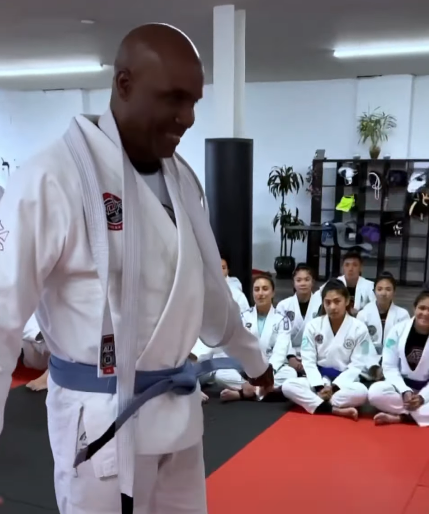
Barry Bonds was promoted to the rank of blue belt by his coach.

While Bonds’ achievements on the baseball field have solidified his legacy, his foray into Brazilian Jiu-Jitsu demonstrates his unyielding dedication to personal growth and new challenges. As he embraces this martial art discipline, Bonds continues to captivate fans with his tenacity and ability to adapt, despite the controversies that have accompanied his name throughout his career.

Nick Rodriguez Claims Victory at UFC FP Invitational 4, Issues Challenge to Gordon Ryan With USADA Involvement

Nicky VS Gordon

At last night’s UFC FP Invitational 4, Nick Rodriguez won the eight-man tournament to claim the title. Rodriguez prevailed in overtime against Dan Manasoiu form New Wave Gym after advancing through the tournament.

Nick's victory at the UFC FP Invitational 4.

Nick used the occasion that followed his victory to respond to Gordon Ryan’s allegations of steroid use. Rodriguez proposed an EBI (Eddie Bravo Invitational) ten-minute overtime match, but only if both athletes consented to USADA drug testing both before and after the match. Rodriguez stressed the fairness of this idea and his readiness to participate in the competition.

During the post-tournament press conference, Ryan responded to Rodriguez’s shout out. He gave the impression that Rodriguez was more driven by money than by genuine competition. Ryan scoffed at the notion of competing against Nick. He claims that a third victory against him would not result in more acclaim or money. Afterwards, he went on to disparage Rodriguez’s abilities. He pointed out his prior problems versus weaker opponents and downplaying his capacity to make choices or generate income using Ryan’s name.

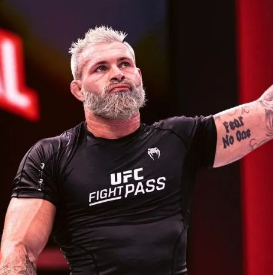
Gordon Ryan, one of the best NO-GI fighters of all time.

Ryan said that Rodriguez and he may face off again. Although, he made it clear that any future matches would only take place in prominent competitions like the ADCC (Abu Dhabi Combat Club) tournaments. Ryan boasted of his ability to humiliate Rodriguez once more. All That while keeping him from earning any money or notoriety from fighting against him.

Craig Jones, another contestant, made the jokey claim that he was the pound for pound greatest of all time (G.O.A.T). Both fans and experts make assumptions about the Jones, a well-known expert in the art of grappling. He jokingly questioned what else he had to accomplish after defeating Felipe. He also cracked a joke about how difficult it would be to find opponents if he become the best grappler in the world.

While the grappling community anxiously awaits the resolution of the issues and rivalries spawned at UFC FP Invitational 4, fans and experts alike speculate on the forthcoming fights and opportunities that lie ahead for these great athletes.

Craig Jones Defeats Felipe Pena, UFC Fight Pass Invitational 4 Results

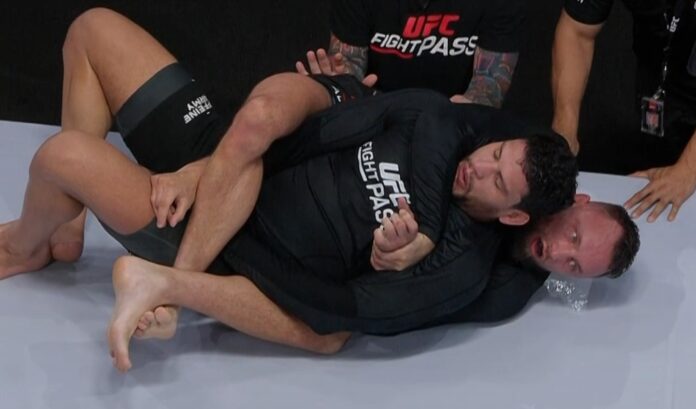
Craig Jones defeats Felipe Pena on UFC Fight Pass Invitational 4

On Thursday night, the spotlight was on Craig Jones and Felipe Pena as they took center stage in the highly anticipated main event of the UFC Fight Pass Invitational 4 event in Las Vegas. The crowd eagerly awaited this thrilling clash between two grappling titans.

Throughout the 12 minutes of the regular part of the match, Jones and Pena showcased their incredible skills, but neither fighter could fully assert dominance over the other. The contest remained evenly matched, intensifying the anticipation for the outcome. As the fight entered the extra time (EBI), the stakes were raised even higher.

In the end, it was Craig Jones, the esteemed Brazilian Jiu-Jitsu coach of Alexander Volkanovski, who emerged victorious. Jones, a two-time ADCC silver medalist, faced off against the former ADCC absolute champion, Felipe Pena. With a display of speed and technical prowess, Jones secured the win based on a faster escape time, leaving a lasting impression on the audience.

Craig Jones Defeats Felipe Pena at UFC Fight Pass invitational 4


Teixeira once again emerged as the victor in their fight, securing a unanimous decision from the judges after three intense rounds. Throughout the majority of the three four-minute rounds, the seasoned Brazilian showcased superior control over the ground game, skillfully advancing his position. Although Anthony Smith made a notable “submission” attempt with a triangle, Teixeira managed to escape smoothly without encountering significant obstacles. Based on the overall performance witnessed, Teixeira’s victory was well-deserved and celebrated.


The tournament itself was filled with action-packed fights, featuring eight talented fighters, including Nick Rodriguez, Dan Manasaoiu, Felipe Andrew, Vagner Rocha, Gabriel Arges, Fedor Nikolov, Haisam Rida, and Roberto Jimenez. In the end, it was Nick Rodriguez who emerged as the tournament champion, claiming the $30,000 prize. Rodriguez showcased his skills by defeating Manasaoiu in the finals, utilizing a rear naked choke in overtime after narrowly escaping an armbar attempt earlier in the match. Along his path to victory, Rodriguez conquered formidable opponents in Jimenez and Rocha, further cementing his reputation as a rising star in the world of grappling.

RESULTS:

Tournament Finals:

In the tournament finals, Nick Rodriguez defeated Dan Manasoiu with a rear naked choke in overtime, securing the championship title.

Glover Teixeira vs. Anthony Smith:

Glover Teixeira claimed a unanimous decision victory over Anthony Smith in an intense matchup.

Other Match Results:

  • Nicholas Meregali secured an armbar win in overtime against Roberto Abreu.
  • In the tournament semifinals, Nick Rodriguez advanced by securing a rear naked choke victory in overtime against Vagner Rocha. Dan Manasoiu defeated Fedor Nikolov with an inverted kneebar in just 38 seconds.
  • Roman Bravo-Young and Alex Perez fought to a time-limit draw in a closely contested bout.
  • Helena Crevar emerged victorious over Emily Fernandez with a rear naked choke submission at 7 minutes and 26 seconds.
  • In the tournament quarterfinals, Nick Rodriguez advanced by winning on escape time against Roberto Jimenez. Vagner Rocha defeated Fellipe Andrew via an inside heel hook at 6 minutes and 18 seconds. Fedor Nikolov secured a win on escape time against Haisam Rida. Dan Manasoiu defeated Gabriel Arges with an outside heel hook at 3 minutes and 20 seconds.

The event showcased remarkable skills and competitive matchups, leaving fans excited for more high-level grappling action in the future on UFC Fight Pass.

How Good and How Dangerous Is a Jiu-Jitsu Blue Belt?

How good and How dangerous is a Jiu-jitsu Blue Belt

In this article, we will delve into the question of how good a Jiu-Jitsu blue belt really is and explore several aspects related to their proficiency and abilities. We’ll also talk about how dangerous is Jiu-jitsu Blue Belt. We’ll take into consideration their level in Jiu-Jitsu, how they would square against higher belts and average people, and we’ll try to explain what actually makes Jiu-Jitsu blue belts good and dangerous.

Understanding the Blue Belt

Before we proceed with how good and how dangerous is Jiu-jitsu blue belt, let’s first try to understand a Jiu-Jitsu blue belt. A blue belt in Jiu-Jitsu represents an intermediate level of proficiency. It signifies that the practitioner has moved beyond the beginner stage and has acquired a solid foundation of techniques and strategies. But what makes a blue belt good?

  1. Technical Knowledge: Blue belts possess a wide range of fundamental techniques and understand the underlying principles of Jiu-Jitsu. They can effectively apply these techniques during training and sparring sessions.
  2. Experience: Blue belts have spent a considerable amount of time on the mat, accumulating experience through regular practice, drilling, and rolling with training partners. This experience allows them to adapt to different situations and opponents.
  3. Consistency and Dedication: To attain a blue belt, dedication and commitment are necessary. Blue belts who consistently train, both in classes and outside of them, tend to progress at a faster rate, honing their skills and improving their overall ability.
  4. Competitiveness: Many blue belts actively participate in tournaments, which exposes them to different styles and levels of competition. This experience helps them gauge their skills and provides an opportunity for growth.

What Makes a Blue Belt Good?

A blue belt in Jiu-Jitsu is typically seen as an intermediate-level practitioner. They have progressed beyond the beginner stage and acquired a solid foundation of techniques and strategies. To be considered good as a blue belt, certain factors come into play. These include:

  1. Technical Knowledge: Blue belts possess a wide range of fundamental techniques and understand the underlying principles of Jiu-Jitsu. They can effectively apply these techniques during training and sparring sessions.
  2. Experience: Blue belts have spent a considerable amount of time on the mat, accumulating experience through regular practice, drilling, and rolling with training partners. This experience allows them to adapt to different situations and opponents.
  3. Consistency and Dedication: Attaining a blue belt requires dedication and commitment. Blue belts who consistently train, both in classes and outside of them, tend to progress at a faster rate, honing their skills and improving their overall ability.
  4. Competitiveness: Many blue belts actively participate in tournaments, which exposes them to different styles and levels of competition. This experience helps them gauge their skills and provides an opportunity for growth.

How High Is a Blue Belt in Jiu-Jitsu?

In the hierarchy of Jiu-Jitsu belts, the blue belt is situated above the white belt and below the purple belt. The blue belt represents a significant step forward in a practitioner’s journey, as it signifies a level of competence and proficiency. While the exact standards may vary between academies and organizations, a blue belt is generally considered to be an intermediate rank.

At this stage, blue belts have developed a solid understanding of the core concepts, positions, and submissions in Jiu-Jitsu. They are capable of executing techniques with a higher level of precision and timing compared to beginners. However, they are still learning and refining their skills, with plenty of room for growth and improvement.

Can Blue Belt’s Tournament Experience Improve How Good They Are?

Participating in tournaments can have a significant impact on a blue belt’s growth and development. Tournaments provide blue belts with a platform to test their skills against practitioners from different academies and styles. Here are some ways in which tournament experience can enhance their abilities:

  1. Pressure and Adaptability: Tournaments create a high-pressure environment that simulates real-life combat scenarios. Blue belts who compete regularly learn to perform under pressure, adapt to unfamiliar opponents, and make quick decisions.
  2. Exposure to Different Styles: Competing against practitioners from other academies exposes blue belts to a variety of techniques and strategies. This exposure broadens their understanding of Jiu-Jitsu and encourages them to expand their skill set.
  3. Identifying Weaknesses: Competing in tournaments often highlights areas of weakness in a blue belt’s game. This feedback helps them identify specific techniques or positions they need to work on, enabling them to target their training more effectively.
  4. Building Confidence: Success in tournaments, such as winning matches or earning podium finishes, boosts a blue belt’s confidence. This increased confidence translates into improved performance and a willingness to take on new challenges.

While tournament experience can undoubtedly contribute to a blue belt’s development, it is important to remember that competitions are just one aspect of Jiu-Jitsu. Training consistently, focusing on technique, and maintaining a well-rounded approach to learning are equally vital.

How Many BJJ Blue Belts Are There?

The number of blue belts in Jiu-Jitsu can vary depending on several factors, including the size of the Jiu-Jitsu community in a particular region and the individual academies’ promotion criteria. While it is challenging to provide an exact figure, it is safe to say that blue belts make up a significant portion of the Jiu-Jitsu practitioner population.

Considering that the journey from white belt to blue belt often takes a considerable amount of time and dedication, the number of blue belts tends to be smaller than the number of white belts. However, as Jiu-Jitsu continues to gain popularity worldwide, the blue belt ranks continue to grow.

Jiu-Jitsu Blue Belt vs. Average Person

Comparing the skills and abilities of a Jiu-Jitsu blue belt to an average person who has little or no training in martial arts would undoubtedly show a stark contrast. Here are some key differences between a blue belt and an average person:

  1. Technical Proficiency: A blue belt possesses a solid foundation of Jiu-Jitsu techniques and understands the mechanics behind them. They can efficiently apply submissions, escapes, and transitions, giving them a distinct advantage in a grappling situation.
  2. Physical Fitness: Regular training in Jiu-Jitsu enhances an individual’s overall physical fitness. Blue belts typically have better cardiovascular endurance, strength, flexibility, and body awareness compared to the average person.
  3. Problem-Solving Skills: Jiu-Jitsu training develops critical thinking and problem-solving skills. Blue belts have learned to analyze positions, anticipate their opponent’s moves, and strategize their own attacks, giving them an edge in a confrontational scenario.
  4. Confidence and Mental Toughness: Through their training and progression, blue belts develop confidence in their abilities. This mental toughness can provide an advantage when dealing with stressful situations, both on and off the mat.

It is important to note that the purpose of Jiu-Jitsu is self-defense and not to encourage physical confrontations. The skills possessed by a blue belt should be used responsibly and in accordance with the principles of respect, control, and safety.

Will Blue Belts End Up Becoming Black Belts?

The goal of every Jiu-Jitsu practitioner is to progress through the ranks and eventually achieve the highly coveted black belt. While not every blue belt will reach the level of black belt, it is a significant milestone on the journey.

The path from blue belt to black belt requires years of consistent training, dedication, and overcoming numerous challenges. Many factors come into play, including the individual’s commitment, the quality of instruction, and the frequency of training. It is crucial for blue belts to focus on continual improvement and enjoy the journey rather than fixate solely on the end goal.

Every practitioner progresses at their own pace, and the time it takes to achieve a black belt can vary greatly. It is essential to embrace the learning process, set realistic goals, and maintain a long-term perspective when aiming for the black belt.

Jiu-Jitsu Blue Belts vs. Bigger Guys

One of the fascinating aspects of Jiu-Jitsu is its effectiveness in allowing smaller individuals to overcome larger opponents using leverage and technique. As blue belts, practitioners have learned and practiced techniques that enable them to neutralize the physical advantages of larger opponents. Here are some key factors to consider:

  1. Leverage and Technique: Jiu-Jitsu emphasizes the use of leverage and proper technique to control and submit opponents. Blue belts have acquired knowledge and skills that allow them to apply techniques effectively, regardless of their size or their opponent’s size.
  2. Timing and Speed: Blue belts often develop a sense of timing and speed through consistent training. They learn to capitalize on openings and exploit their opponent’s mistakes, compensating for any physical disadvantages they may have.
  3. Positional Control: Blue belts understand the importance of controlling an opponent’s position. Through the use of grips, angles, and leverage, they can neutralize the strength and size advantage of a bigger opponent.

While Jiu-Jitsu provides effective tools for dealing with larger opponents, it is essential to note that physical attributes still play a role in combat sports. Size and strength can be advantageous, but a skilled blue belt can effectively navigate and overcome these challenges through technique and strategy.

How to Become a Blue Belt in Jiu-Jitsu?

To earn a blue belt in Jiu-Jitsu, a practitioner must meet certain requirements and demonstrate proficiency in fundamental techniques. While the specific criteria may differ between academies, the following steps are generally involved in the journey toward a blue belt:

  1. White Belt Foundations: Begin by training as a white belt, focusing on learning and mastering the fundamental techniques of Jiu-Jitsu. This includes understanding basic positions, submissions, escapes, and transitions.
  2. Consistent Training: Regularly attend Jiu-Jitsu classes and practice with training partners. Consistency is key to progress and improvement. Aim to train several times per week to reinforce techniques and build muscle memory.
  3. Knowledge and Understanding: Develop a solid understanding of Jiu-Jitsu concepts and principles. This involves studying positions, learning the theory behind techniques, and understanding the application of leverage and weight distribution.
  4. Mat Time and Experience: Accumulate mat time by participating in live training sessions, also known as rolling or sparring. This practical experience allows for the application and refinement of techniques under realistic conditions.
  5. Passing Grading Requirements: Each academy has its own grading system and requirements for belt promotion. Typically, blue belt promotions involve a demonstration of proficiency in fundamental techniques, positional control, and the ability to apply submissions and escapes.
  6. Promotion by Instructor: Ultimately, it is the instructor’s discretion to award a blue belt. Instructors evaluate a student’s progress, consistency, attitude, and overall skill level before deciding on a promotion.

It is important to approach the journey toward a blue belt with patience, humility, and a growth mindset. Embrace the learning process, seek guidance from experienced practitioners, and enjoy the challenges and rewards that come with the pursuit of a blue belt.

How Technical Are Jiu-Jitsu Blue Belts?

Blue belts in Jiu-Jitsu have developed a solid technical foundation and are capable of executing a wide range of techniques. They have progressed beyond the initial stages of learning and can apply techniques with a higher level of proficiency. Here are some key aspects of their technical abilities:

  1. Technique Repertoire: Blue belts have a diverse set of techniques at their disposal. They have developed proficiency in fundamental positions, submissions, sweeps, and escapes. They understand the intricacies of these techniques and can adapt them to different situations.
  2. Problem-Solving: Blue belts possess problem-solving skills, enabling them to analyze and strategize during training or sparring sessions. They can identify weaknesses in their opponent’s defense and capitalize on opportunities to gain advantageous positions or execute submissions.
  3. Transitions and Flow: Blue belts have a better understanding of transitions and the flow of techniques. They can seamlessly move from one position to another, anticipating their opponent’s reactions and adjusting their game plan accordingly.
  4. Advanced Concepts: Blue belts start to delve into more advanced concepts, such as timing, weight distribution, and leverage.These concepts allow them to refine their techniques and make them more effective.However, it is important to note that the level of technical proficiency can vary among blue belts. Factors such as training frequency, natural aptitude, and individual learning styles can influence a blue belt’s technical abilities. Some blue belts may display a higher level of technical skill and understanding, while others may still be working on mastering certain techniques.

So, how good is a Jiu-Jitsu Blue Belt?

A Jiu-Jitsu blue belt signifies an intermediate level of skill and knowledge in the martial art. It represents a significant milestone in a practitioner’s journey, indicating progress and competence. A good Jiu-Jitsu blue belt possesses several qualities that contribute to their overall proficiency. They have a solid technical foundation, an understanding of fundamental techniques and principles. With accumulated experience and consistent training, they can adapt to different situations and opponents. Many blue belts actively participate in tournaments, further enhancing their skills and competitiveness. While not yet at the level of higher belts, blue belts demonstrate a commendable level of proficiency and are capable of executing techniques with precision and timing. They continue to learn, grow, and work towards achieving higher ranks. Ultimately, a Jiu-Jitsu blue belt showcases dedication, progress, and a solid understanding of the art, making them valuable and respected member of the Jiu-Jitsu community.

Are Blue Belt Competitors Better Than Blue Belt Non-Competitors?

Participating in competitions can have a profound impact on a practitioner’s development in Jiu-Jitsu. It provides a unique opportunity to test one’s skills against opponents from different academies and styles, fostering growth and improvement. So, are blue belt competitors better than blue belt non-competitors?

While competition experience can certainly enhance a blue belt’s abilities, it does not necessarily mean that competitors are inherently better than non-competitors. Competing requires a specific mindset, additional training preparation, and exposure to different scenarios. This can lead to accelerated growth and a deeper understanding of the art.

However, non-competitors can still excel in their technical proficiency and overall understanding of Jiu-Jitsu. Their focus may be more centered on self-improvement, training for self-defense, or simply enjoying the art without the added pressures of competition. Each practitioner’s goals and preferences may differ, and both paths can lead to significant progress in Jiu-Jitsu.

It is important to recognize that the ultimate measure of a blue belt’s skill lies in their technical proficiency, application of techniques, and ability to adapt to various situations, regardless of their competitive background. Whether a blue belt chooses to compete or not, their dedication, consistency in training, and commitment to learning will determine their growth and progress in Jiu-Jitsu.

  1. What Are the Physical Benefits of Becoming a Blue Belt?

    Embarking on the journey to becoming a blue belt in Jiu-Jitsu offers numerous physical benefits for practitioners. The rigorous training involved in attaining this rank leads to improvements in strength, flexibility, endurance, and overall physical fitness.

    1. Strength: Jiu-Jitsu requires practitioners to engage their entire body, utilizing various muscle groups for movements such as takedowns, sweeps, and submissions. As blue belts progress in their training, they naturally develop greater strength, particularly in the core, arms, legs, and back. This enhanced strength allows them to execute techniques with more power and control.
    2. Flexibility: Jiu-Jitsu emphasizes fluid movements and the ability to transition smoothly between positions. Regular training helps improve flexibility, as practitioners constantly stretch and extend their limbs during warm-ups, drills, and sparring sessions. Increased flexibility not only enhances technique execution but also reduces the risk of injury.
    3. Endurance: Jiu-Jitsu matches can be physically demanding, requiring practitioners to exert themselves over extended periods. As blue belts engage in regular training sessions, their cardiovascular fitness improves, enabling them to sustain a higher level of activity for longer durations. Improved endurance allows blue belts to maintain a high pace throughout a match and recover more quickly between rounds.
    4. Body Composition and Weight Management: The physical demands of Jiu-Jitsu training, combined with a healthy diet, can contribute to improved body composition. Regular training sessions help burn calories and build lean muscle mass, resulting in a more toned and defined physique. Additionally, Jiu-Jitsu training can aid in weight management by promoting calorie expenditure and fostering a healthier lifestyle.
    5. Coordination and Balance: Jiu-Jitsu requires precise movements and the coordination of various body parts. Blue belts develop enhanced coordination and balance through consistent practice of techniques, transitions, and positional control. This improvement in coordination translates to better body awareness and control in everyday activities.
    6. Mental Well-being: Physical exercise, such as Jiu-Jitsu training, has well-documented mental health benefits. The release of endorphins during exercise can boost mood, reduce stress and anxiety, and improve overall mental well-being. The focus and discipline required in Jiu-Jitsu training also contribute to increased mental resilience and a sense of accomplishment.

    It is important to note that the physical benefits of becoming a blue belt are the result of consistent training and dedication. Each individual’s progress may vary, and it is essential to listen to one’s body, train safely, and seek guidance from experienced instructors to optimize physical development while minimizing the risk of injury.

How Dangerous is Jiu-Jisu Blue Belt?

While Jiu-Jitsu blue belts are skilled and proficient, it is important to understand that their level of danger lies in their ability to apply techniques, rather than a deliberate intent to cause harm.

A Jiu-Jitsu blue belt has gained a solid foundation of techniques and possesses a deeper understanding of positions, submissions, and transitions. They have accumulated experience through consistent training, sparring, and participating in tournaments. Their proficiency allows them to effectively control opponents and apply submissions with precision.

However, it is crucial to note that the purpose of Jiu-Jitsu is not to inflict harm but rather to neutralize and control a potential threat. Blue belts are trained to prioritize the safety and well-being of themselves and their training partners. They understand the importance of applying techniques responsibly and with control.

Additionally, Jiu-Jitsu promotes respect, discipline, and humility. Blue belts are taught to exercise restraint and avoid using excessive force. The emphasis is on technique, leverage, and timing rather than brute strength or aggression.

While a Jiu-Jitsu blue belt can be formidable in a self-defense scenario, their training and mindset revolve around self-control, discipline, and the preservation of safety. It is through this approach that they can effectively protect themselves and others without causing unnecessary harm.

In conclusion, the danger associated with a Jiu-Jitsu blue belt lies in their ability to apply techniques effectively, but their training and principles prioritize control, safety, and responsible use of their skills. Jiu-Jitsu promotes self-defense and personal growth, emphasizing the importance of discipline, respect, and humility on and off the mat.

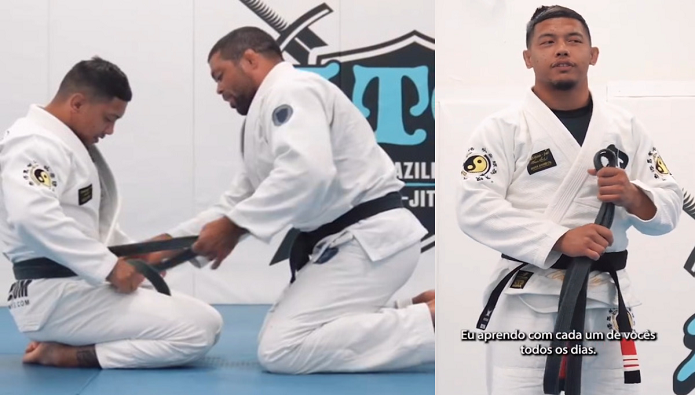
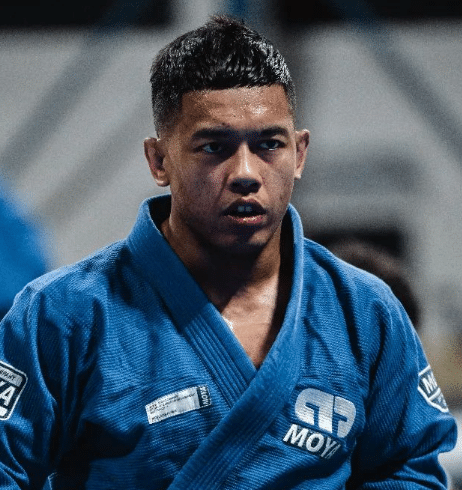
Rolando Samson Promoted to 2nd Degree Black Belt

Rolando Samson, a committed student of Brazilian Jiu-Jitsu (BJJ), recently received a promotion to the esteemed level of black belt second degree. His coach, André Galvão, is proud of his student who has earned the promotion.

Rolando Samson, the new 2nd-degree black belt in ATOS Jiu-Jitsu.

Samson started his BJJ career in 2005 when he was just 9 years old. He has consistently demonstrated steadfast dedication while improving his abilities and showcasing extraordinary brilliance throughout the years. He has won the title of world champion in every colored belt level, which is a testimonial to his skills.

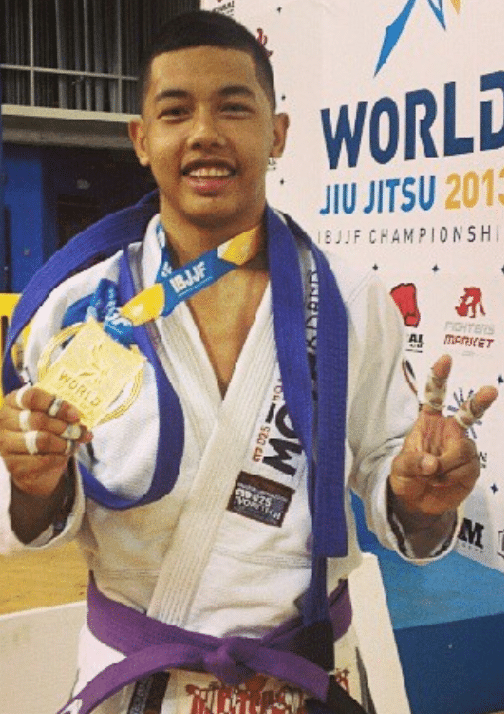
Rolando Samson won the IBJJF Worlds 2013 in the blue belt division and was promoted to the purple belt.

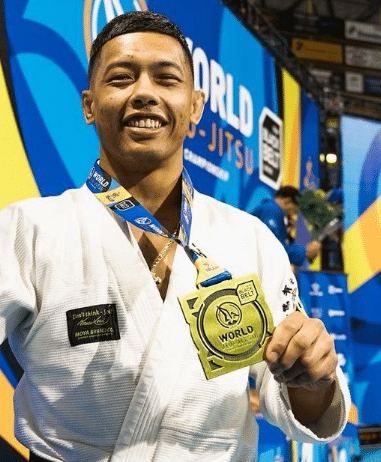
Samson made a victorious comeback to the spotlight at the IBJJF Worlds 2023, taking home the bronze medal, following a protracted layoff from professional competition. This outstanding accomplishment displays his perseverance while also demonstrating his steadfast commitment and relentless pursuit of perfection.

Roland Samson with the bronze medal at the IBJJF Worlds 2023.

Samson’s BJJ game is a stunning fusion of elegance, accuracy, and technical brilliance that is impossible not to admire. Every move he makes is completed beautifully, and his execution is distinguished by an amazing speed and accuracy. Samson’s teaching abilities are equally amazing as his professional accomplishments, inspiring and helping many people on their martial arts adventures.

Samson’s trainer is really proud of his development and successes, both on and off the mats. His ascension to black belt represents bot his mastery of the craft and his personification as a great champion. Samson’s accomplishments are evidence of his unwavering spirit, commitment, and quest for excellence.

Samson has the heart of a champion and is eager to inspire younger generations and make a huge impact on the BJJ community. It becomes evident as his adventure progresses that this is simply the beginning of a fantastic career.

Finally, Rolando Samson’s elevation to second degree black belt is a momentous occasion that recognizes his extraordinary skills, ardor, and unwavering commitment to the practice of Brazilian Jiu-Jitsu. Samson’s recent victory at the 2023 IBJJF Worlds and his outstanding technique have solidified him as a true champion. His journey will undoubtedly motivate numerous others on their own journeys to greatness.


View this post on Instagram


A post shared by Andre Galvao Official (@galvaobjj)


Rafael Mendes Set to Reignite the BJJ WORLD in 2024!

Rafael Mendes one of the best BJJ fighters of all time.

“Rafael is always full of surprises. If he decides to come back, it will be an extraordinary moment for the sport. We’re excited to see what the future holds.”

Rafael Mendes celebrates his victory after the fight!

The anticipation surrounding Mendes’ comeback is palpable, with fans and fellow athletes eagerly awaiting further updates. The Mendes brothers’ comment has sparked a wave of speculation and discussion within the Brazilian Jiu-Jitsu community. It left many wondering about the potential impact Mendes’ return could have on the current landscape of the sport.

Known for his exceptional technique, agility, and strategic prowess. Obviously, Mendes has left an indelible mark on the world of Brazilian Jiu-Jitsu. His innovative approach to the sport, characterized by fluid transitions and lightning-fast submissions, has revolutionized the featherweight division. Throughout his career, he has consistently showcased his mastery of the art. He is known for leaving opponents in awe and spectators in awe-inspired amazement.

Rafael Mendes performs some of his drills during training.

However, Mendes’ retirement in 2016 left a void in the competitive scene. It left fans yearning for more of his awe-inspiring performances. With the recent hints of a potential comeback, excitement and anticipation have reached new heights. The possibility of witnessing Mendes once again grace the mats, displaying his technical brilliance, has ignited a sense of anticipation that reverberates throughout the global Brazilian Jiu-Jitsu community.

As the buzz grows, potential matchups against other elite competitors have become a topic of conversation. Fabricio Andrey, known for his unyielding tenacity and dynamic style, presents a formidable challenge that could test Mendes’ skills to their limits. Isaac Doederlein, recognized for his versatility and strategic awareness, offers an intriguing clash of contrasting styles. Additionally, Diogo Reis, an emerging talent known for his explosive athleticism, could provide an exciting opportunity for Mendes to showcase his experience and adaptability against a rising star.

One of the potential opponents for Rafael Mendes in 2024. - Fabricio Andrey

One of the potential opponents for Rafael Mendes in 2024. - Diogo Reis

While the exact details of Mendes’ potential comeback remain shrouded in mystery, one thing is certain: if he decides to return, the Brazilian Jiu-Jitsu world will be captivated by the prospect of witnessing this extraordinary athlete grace the competitive arena once again. The impact of his return would reverberate throughout the sport. Surely it will inspire a new generation of practitioners and reigniting the passion of long-time fans.


View this post on Instagram


A post shared by Tainan Dalpra (@tainandalpra)

After Being Submitted 33 Times in 6 Minutes Pro Boxer Claims BJJ is Useless?

Is Jiu-Jitsu effective in a street fight? Well, it is obvious that if you rely solely on Jiu-Jitsu it will not be the most advantageous situation. Tony Jeffries is an Olympic Bronze medalist. He is a former undefeated pro boxer and he has been training in BJJ for over a year. He has highlighted four reasons why using BJJ in a street fight may not be the best choice.

An Olympic boxer wins the fight.

The first reason is quite apparent: punches. In Jiu-Jitsu, you don’t learn how to defend against punches. In a street fight, the initial instinct of your opponent will likely be to throw punches. You should not expect to naturally be able to defend yourself in a street fight against punches if you never had experience in a sport that includes striking.

It is common sense that if you do not spar often you will not be able to properly apply the skills that you learn in training. That is why you should always improve your skillset. You should strive away from limiting yourself only to a certain style or technique. You need to get used to the flow of battle and be able to use it to your advantage.

Secondly, Tony points out that while Jiu-Jitsu excels in ground fighting, this focus can also be a significant disadvantage. When you try pinning someone to the ground in a street fight you risk getting hit by a knee, elbow, and various other powerful blows. Those could easily end the fight in a way that you would certainly not want it to.

Another critical factor highlighting why BJJ may not be ideal for self-defense is the possibility of multiple attackers. There is always a possibility that your opponent has friends nearby. If this happens then you should obviously flee (which you SHOULD do even if there is one attacker). Hence, it doesn’t make a difference whether you know BJJ, MMA, or any other martial art. It is unlikely that you walk away without any injuries, and even more unlikely that you end up winning.

The boxer won an Olympic bronze medal

Lastly, he emphasizes that BJJ’s reliance on the gi can be problematic in a street fight where you won’t be wearing one. If you focus too much on controlling your opponent’s gi, you may find yourself at a disadvantage in a real-life scenario without a gi to grab onto.

Ultimately, the effectiveness of Jiu-Jitsu in a street fight depends on various factors. While it offers valuable skills, it’s essential to consider its limitations and the specific circumstances of the situation you may encounter.

However, Roberto ‘Cyborg’ Abreu submitted Tony 33 times, which does question the validity of his knowledge.


Third Weight Class Officially Added for Women’s Divisions on ADCC

ADCC has officially added a 3rd women’s division to the trials and ADCC world championship

In a groundbreaking move, the world of grappling and Brazilian Jiu-Jitsu has witnessed a significant addition to its landscape. The prestigious Abu Dhabi Combat Club (ADCC) has officially announced the introduction of a Third Weight Class for women’s divisions.

This decision comes as a direct response to the growing progress and popularity of women’s grappling on a global scale. The art of grappling demands exceptional strength, technique, and strategic prowess. More and more women have been embracing this sport, achieving remarkable feats and gaining recognition.

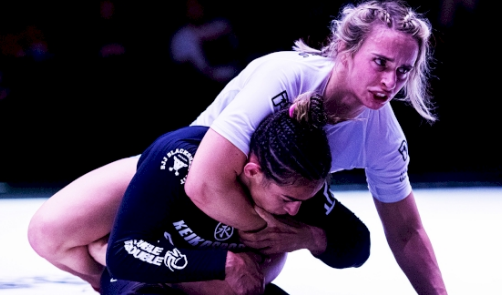
The fighter in the picture Ffion Davies is attempting to maintain back control and transition to a Rear-Naked Choke (RNC) submission.

The inclusion of a third weight class ensures that women may compete on an equal footing with opponents of similar body shapes. This is a significant development since physical qualities differ significantly across different weight categories. That can significantly affect match dynamics and competitive balance.

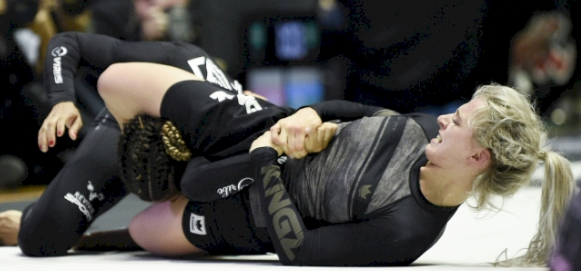
The fighter successfully transitions to an Arm Lock from the Triangle position.

The introduction of the Third Weight Class also provides an opportunity for further development of women’s grappling. It helps create inspiration for new generations of women who aspire to be involved in this sport. Moreover, it demonstrates that more organizations, such as ADCC, are dedicated to the growth of women’s grappling and support its equality.

This historic choice should be hailed as another important step toward the inclusion of women’s grappling. Additionaly, itdemonstrates the emphasis put on their involvement in this activity. It is hoped that this action will spur more efforts to advance women’s grappling in the future, assuring fairness and equitable opportunity for all participants at all levels of competition.

As the world of grappling evolves, it is important to embrace diversity, inclusivity, and equal representation. The establishment of the Third Weight Class by Abu Dhabi Combat Club (ADCC) is a significant turning point and a move in the right direction for women’s grappling, paving the way a more dynamic and equal future in this sport.


View this post on Instagram


A post shared by ADCC (@adcc_official)

BJJ Legend Rubens “Cobrinha” Charles Announces Spectacular Comeback in 2024

Rubens "Cobrinha" Charles

Rubens ‘Cobrinha’ Charles, a revered figure in Brazilian Jiu Jitsu (BJJ), has announced his plan to make a comeback to the professional scene in 2024, much to the delight of fans. Despite a significant gap since his last performance, ‘Cobrinha’ has maintained his dedication to training, surpassing the commitment of most individuals worldwide.

At 43 years old, he remains incredibly fit and intends to spend six months preparing for his return. ‘Cobrinha’ has expressed his confidence in his athletic abilities by advocating for battles with no time limits, deviating from the standard round durations of 5 or 10 minutes.

'Cobrinha' attempts to maintain control with the 'Omoplata' submission.

Promoters would definitely jump at the chance to stage a huge event to celebrate Cobrinha’s return to competition. It seems doubtful that anyone in his weight class would turn down the chance to compete against him despite the fact that he is not directly competing against black belts in Brazilian Jiu-Jitsu.

'Cobrinha' takes the back and attempts to secure the Rear-Naked Choke (RNC) submission.

Cobrinha’s last competitive appearance was in ADCC 2017, where he secured his third consecutive gold medal in the 66kg category. Despite his impressive four-year reign over the weight class, two new champions have emerged since then.

Diogo Reis currently holds the championship title after a triumphant campaign at ADCC 2022, while Augusto ‘Tanquinho’ Mendes claimed the division title in 2019 before retiring from competition. Although a matchup against Tanquinho would be intriguing, Cobrinha already holds a 4-3 advantage in their head-to-head matches.

Undoubtedly, the most exhilarating showdown would be against the current champion, Reis, who made a resounding statement with his outstanding performance in ADCC 2022. In his career, Cobrinha has been a remarkable 5-time World International BJJ Federation (IBJJF) Champion, 4-time World IBJJF NO-GI Champion, and 3-time ADCC World Champion.

As Cobrinha prepares to make his highly anticipated return, the Brazilian Jiu Jitsu community eagerly awaits the upcoming season.


Man Gets Humiliated by a Female BJJ Fighter [VIDEO]

A BJJ practitioner finishes a person with a Rear Naked Choke (RNC) submission.

Recently, an intriguing video featuring an untrained individual daringly challenging an accomplished BJJ practitioner. This incident sheds light on the tendency of inexperienced individuals to underestimate the technical expertise and skill required in grappling. Despite a considerable weight disadvantage and the practitioner being a woman, she fearlessly wagers that she can take down or submit the man within a minute.

In this video, you can notice their levels of skill differ by a mile. Knowing that he is well above her weight class while also being physically stronger, the man tries to grab her, possibly to force his way to victory. However, as previously menitioned, the woman’s skillset is far beyond the man’s.

They entered the clinch, but the girl managed to break free and reach a dominant position.

They get into a clinch position and the man tries to get a hold of her. She evades and slides around his grip giving her a dominant position. She proceeds to trip him onto the ground and successfully takes his back, which was a big mistake on his hand. The man leaves his neck unprotected which enables the woman to easily set up a choke. She then gets the rear naked choke, and it is unclear what happens next since the video ends there.

A BJJ practitioner finishes a person with a Rear Naked Choke (RNC) submission.

The video itself is less than 25 seconds long. This means that the woman fulfilled her promise of beating him in less than a minute. In this fight she was the winner, leaving the man most definitely humiliated.

It is fascinating to witness her winning this unfair matchup. This encounter serves as an example of how in Mixed Martial Arts and Brazilian Jiu-Jitsu physical strength and size while being a great advantage, does not guarantee victory on its own. Bear in mind that the female individual showcased in the footage possesses exceptional combat expertise. It is imperative not to imitate the deeds depicted in this video.