









Key Takeaways
- A defense-first No-Gi course built around the situations grapplers actually get stuck in: late-stage submissions, bad pins, and “get-up” battles.
- The structure is clean and progressive: submission escapes → positional escapes → wrestle-ups → takedown defense, so the pieces connect instead of feeling like random escape clips.
- Best value comes from the habits Rory repeats—hand fighting, posture, frames, and staying calm—more than any single “secret” move.
- The material is extremely practical for MMA-minded grapplers and anyone tired of burning energy in bad spots.
- Rating: 8/10
NO-GI JIU-JITSU DEFENSE RORY MACDONALD DVD DOWNLOAD
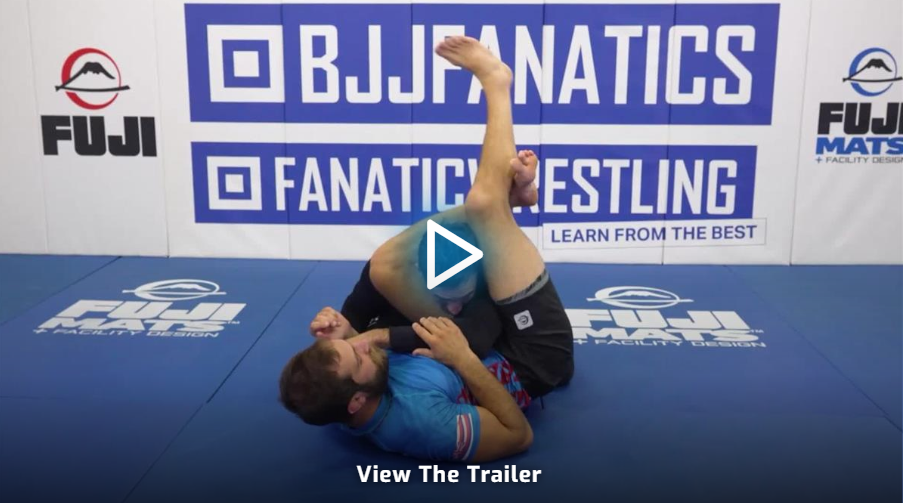
Defense doesn’t feel “fun” until it starts winning you rounds. The big promise of Foundation No-Gi Jiu-Jitsu Defense Rory Macdonald DVD is that it turns the most miserable parts of training—being pinned, being strangled, being armbarred, being leg locked—into predictable problems with repeatable answers.
Rory MacDonald is the right kind of instructor for this topic: he’s known for composure under pressure, and that theme runs through the whole course. The goal here isn’t to teach you a flashy escape you’ll forget by next week. It’s to build a baseline where you’re hard to finish, harder to hold down, and increasingly confident about standing back up or recovering guard without panic.
If your No-Gi rounds often feel like a cycle of “defend, defend, defend… tap,” this instructional is aimed straight at you—and it’s organized in a way that makes it easy to actually apply.
Defending When Things get Slippery
Good No-Gi defense is less about memorizing fifty escapes and more about consistently winning small battles: head position, inside space, grip/hand fighting, and hip alignment. Most submissions don’t appear out of nowhere—they arrive after a sequence of smaller losses. That’s why “defense” isn’t just the last-second escape; it’s also the ability to recognize danger early and interrupt the chain before it becomes a finish.
Another big piece that gets overlooked is what you escape into. Plenty of people can technically “get out,” but they pop out with no structure—hands floating, base compromised, neck exposed—and they get re-attacked immediately. The best defensive systems connect the dots: survive → escape → recover guard or get to a standup → re-engage on your terms. That throughline is exactly what the No-Gi Jiu-Jitsu Defense Rory Macdonald DVD is aiming to build.

Finally, the most underrated skill in defense is emotional control. Panic makes you extend your arms, turn the wrong way, or bench-press your way into fatigue. A defense-focused instructional should, ideally, reduce decision-making under stress—give you a small set of reliable cues you can access even when the round is going badly.
Rory MacDonald – The GSP Deciple Who Disappeared
Rory MacDonald is best known to most fans as an elite MMA welterweight with a long career at the highest levels, associated with TriStar Gym and widely recognized by the nickname “The Red King.” He’s listed at 6’0″ and has competed for years against world-class opposition, building a reputation for composure and durability under pressure.
On his own official site, MacDonald describes starting combat sports as a teenager, competing in amateur formats (including No-Gi Jiu-Jitsu), and turning professional at 16. He also outlines a career path that included signing with the UFC at 20, later becoming a Bellator world champion, and competing in two seasons with the PFL before retiring from professional fighting.

For an instructional centered on defense, that background matters. The athlete who has spent years dealing with elite-level finishing ability—and still had to keep solving the “how do I survive this position right now?” problem—tends to value fundamentals that hold up under chaos. That’s the lane this course sits in.
The Complete No-Gi Jiu-Jitsu Defense Rory Macdonald DVD Review
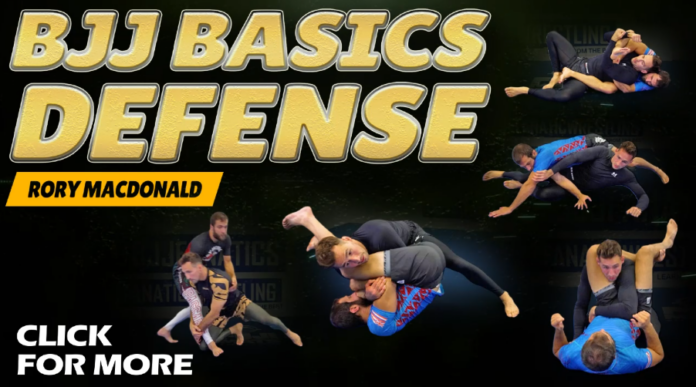
The No-Gi Jiu-Jitsu Defense Rory Macdonald DVD is divided into four volumes with a total runtime of a little over two hours, and the organization is practical: start with submission escapes, then escape pins, then rebuild with standups/wrestle-ups, and finally cover takedown/clinch defense themes that often lead into the bad spots in the first place.
Volume 1: Submission Escapes
Volume 1 is a greatest-hits survival toolkit for the submissions that end the most rounds. The chapters move through kimura defense and escapes, grip-breaking in armlock situations, triangle responses, armbar escapes, guillotine defense, head-and-arm choke counters, rear naked choke defense, leg lock defense, and even Americana and Ezekiel choke responses.
The value here is less about secret techniques and more about building automatic priorities. When someone attacks your arm, are you immediately addressing the lever and clearing the angle? When someone threatens your neck, are you solving head position and hand placement before you start rolling?
This volume is best viewed as your “don’t die to the obvious stuff” layer—especially if you’re newer to No-Gi and keep getting clipped by the same three attacks.
Volume 2: Positional Escapes
If Volume 1 is “escape the submission,” the next part is all about stopping you from losing rounds on the bottom. It covers half guard underhook escape work, reguarding to butterfly, side control underhook escape options, and ways out of mount. A couple of effective two north-south escapes also feature (including one that rolls to the back).
The positions listed are exactly where people burn energy, accept bad frames, and get stuck. The inclusion of multiple back escape ideas is especially useful because back control is the position where many grapplers mentally tap before they physically tap. If you’re the type who can survive but can’t reliably exit pins, this volume will likely be the most replayed.
Volume 3: Standups and Wrestle-Ups
Volume 3 is short, but strategically important: it addresses how to stand up and re-enter the fight instead of staying pinned and hoping for a miracle. The material includes a push-away full guard standup, the technical lift, and standup themes tied to open guard and butterfly guard contexts.
This is where defensive Jiu-Jitsu starts becoming offensive again. Even if you’re not trying to wrestle, the ability to stand safely forces the top player to change priorities—and that alone creates space. For many grapplers, wrestle-up is a scary word, but the practical reality is simple: if you can get your feet under you with posture, you stop being a stationary target.
Volume 4: Takedowns and Defensive Overviews
The final volume shifts to the exchanges that often cause the worst downstream problems: takedown entries and clinch control. It includes overviews and key considerations for double leg defense, single leg defense, over-under defense, double underhooks defense, and back control defense concepts.
This isn’t framed as a giant wrestling encyclopedia. It’s more like a defensive checklist—what you need to understand to avoid getting folded into bad positions off the initial engagement. For pure sport grapplers, this volume can help reduce the number of times you get driven into a pin right off the standing exchange. For MMA-minded athletes, it connects nicely with the broader “stay safe, then reset” philosophy.
Figuring Out No-Gi Defense
The fastest way to get value from this kind of defensive material is to turn it into a weekly loop, not a binge-watch. A simple approach would have you pick one “problem family” per week (e.g., guillotines, side control, back control).
Watch that section once for the big ideas, then again while taking a few quick notes (what triggers the escape, what is the key hand/hip position, what is the exit position). Drill the entry into the bad spot first. Defense falls apart when you only practice the escape from a static position; you never arrive at it cleanly in live rounds.
Don’t forget to try everything live – finish with short, constrained positional rounds: start in the exact danger spot, bottom player’s goal is to escape to guard or stand, top player’s goal is to finish or hold.
That’s where the No-Gi Jiu-Jitsu Defense Rory Macdonald DVD fits well: it gives you “repeatable answers” you can pressure-test quickly. And because the topics are core positions and core submissions, you’ll get reps constantly—meaning progress is measurable within a few weeks, not a few months.
GET HERE: NO-GI JIU-JITSU DEFENSE RORY MACDONALD DVD
Who Is This For?
This is a strong fit for white through blue belts, especially those who keep getting finished by the same high-percentage attacks and need a clean defensive foundation. It’s worth a watch for hobbyist No-Gi grapplers who want to roll longer rounds without feeling like they’re constantly one mistake away from tapping and MMA fighters or MMA-curious grapplers who value survival, composure, and getting back to the feet.
It may be less ideal for advanced specialists looking for deep, niche problem-solving in modern leg entanglement ecosystems (the course covers leg lock defense, but it’s not positioned as an encyclopedic leg-lock meta).
Pros & Potential Drawbacks
Pros
- High-percentage focus: the chapters target the submissions and pins that actually decide most rounds, making the learning immediately relevant.
- Clear progression from crisis to reset: No-Gi submission escapes → positional escapes → standups → takedown/clinch defense is a logical pipeline for real training.
- Multiple answers for common traps: back control and north-south aren’t treated as dead ends; there are several exit routes to explore.
- Broad applicability: the material fits sport No-Gi and MMA-style grappling because the problems are universal—neck safety, pin escapes, and getting your base back.
- Good “plug-and-play” structure for drilling: the chapter list makes it easy to build weekly themes without guessing what to train.
Potential Drawbacks
- Breadth over deep specialization: by covering a wide defensive landscape, it may not go as deep as some advanced, position-specific instructionals.
- Some athletes will want more chaining to offense: the course emphasizes defense and recovery; if you want heavy counter-submission and attack layering, you may need to add that with your own game planning.
Never Fear Bottom!
Defense isn’t glamorous, but it’s the thing that makes everything else work. If you can’t survive the first wave, your guard, passing, and submissions never get a chance to show up. The No-Gi Jiu-Jitsu Defense Rory Macdonald DVD succeeds because it treats defense like a system: handle the most common submissions, escape the worst pins, rebuild your base with standups, and reduce the number of times you end up in trouble off the initial contact.
For newer grapplers and practical-minded intermediates, this is a smart buy because the problems it addresses will show up in your very next training session. For advanced players, it’s still a useful reference—especially if you want to tighten up fundamentals or teach a coherent defense block at your academy. The broad scope keeps it from being a hyper-specialist masterpiece, but it delivers on what it promises.