

Key Takeaways
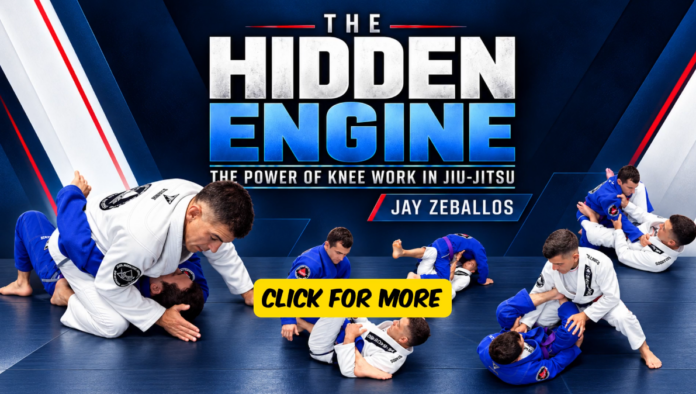
- Knee Work in Jiu-Jitsu Jay Zeballos DVD review — a six-part, roughly 2h10m Gi instructional that treats the knees as a cross-positional “second engine” rather than a single-guard system.
- Core theme: small, deliberate knee mechanics applied to side control escapes, knee on stomach, mount, closed guard, half guard, and guard-breaking.
- Zeballos is a Jean Jacques Machado black belt (2007) and 5th-degree black belt who has competed in the master divisions for more than a decade.
- Standout named material: “The Armstrong” triangle counter, the “Single X” mount escape, and “Knees Over Hips” mount-transition defense.
- Limits: Gi-bound grips throughout, no live rolling footage, and no leg-lock or heel-hook coverage.
- BJJ World Expert Rating: 8 out of 10.
DOWNLOAD: Power of Knee Work in Jiu-Jitsu Jay Zeballos DVD
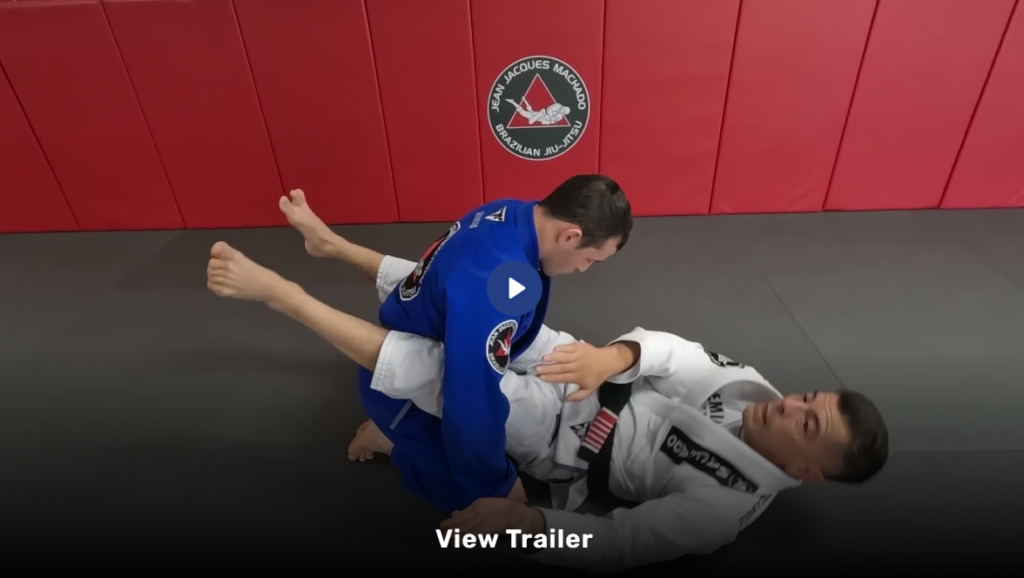
The Knee Work in Jiu-Jitsu Jay Zeballos DVD is Jay’s case for treating the knees as Jiu-Jitsu’s second engine. A Jean Jacques Machado black belt who started with the instructor in 1996, Zeballos built this six-part course around one idea: small, deliberate knee mechanics that carry across escapes, closed guard, half guard, and guard-breaking, instead of a single position studied in isolation. BJJ Fanatics lists it at $99 for roughly 2h10m of on-demand Gi footage.
That framing is the product’s real differentiator — and the thing this review has to test. Does a cross-positional theme actually hold up across six parts, or does it read as a grab bag of knee-adjacent techniques under one marketing headline? And at that price, who genuinely needs a single-mechanic course rather than a dedicated title on any one of its positions?
The Knees as a Second Engine
The knees sit in a strange blind spot in most Jiu-Jitsu teaching. The hips get the credit — hip escapes, hip movement, hip control — while the knees are treated as a passive hinge you protect rather than a lever you drive with. Zeballos flips that around: the knee is the connector between hip movement and leverage, and a grappler who learns to load, frame, and redirect with the knees gets tighter defense and cheaper transitions.
It is a useful frame because knee mechanics are cross-positional in a way a single-guard system is not. The same knee shield that halts a knee cut in half guard is the knee shield you sweep with from knee on stomach. The closed guard posture fight — using the knees to break your opponent’s posture — feeds directly into the far side elbow control that makes closed guard attacks work.
The theme has real company on this site; Adam Wardzinski’s knee lever work covers similar ground from the butterfly half side, and it is telling that the two instructors reach the knee from opposite directions — Wardzinski as a guard player, Zeballos as someone who teaches escapes first.
Jay Zeballos: A Longevity Story That Backs the Pitch
Jay Zeballos has been a student under Jean Jacques Machado for more than 28 years, receiving his black belt in 2007. He has taught full-time at the Machado headquarters in Woodland Hills, California since 2010, and holds the rank of 5th-degree black belt. He is the executive director of the Machado affiliate program, co-authored The Grappler’s Handbook Vols. 1 & 2, and co-hosts Jean Jacques Machado’s “No Gi Required” podcast.
The competitive record backs the longevity angle. Zeballos is a 7x IBJJF American National medalist, a 5x IBJJF No-Gi Worlds medalist, and a 5x IBJJF Pan medalist, with master-division titles that include 4x American National Champion and 2x World No-Gi Champion. Knee work is a big reason he is still training and competing today — which makes him a credible messenger for a course aimed at grapplers who want to stay on the mats longer, not just at athletes in their primes.
Knee Work in Jiu-Jitsu Jay Zeballos DVD Review: The Six Parts
The course is sequenced as a progression, and it opens on defense for a reason. Zeballos’s through-line is that good knee work keeps you out of trouble before it ever turns into offense, and each part reuses a skill the previous one introduced.
Part 1: Defensive Concepts & Side Control Escapes (15:52)
The opener sets the decision tree that runs through the whole course: framing versus engaging. Two knees are better than one is the headline concept here, and it is the cleanest statement of the instructional’s thesis — pairing both knees to frame and create space, rather than firing one at a time.
From there Zeballos moves through guard retention, the inside-leg-control-to-knee-sweep path, and defending the transition to kesa gatame. It is a side control escape foundation built on the knees rather than the standard hip-escape-only blueprint, and it is the part a white or blue belt will feel fastest in live training.
Part 2: Knee on Stomach, Mount & Knee Slice Defense (31:33)
The longest part is the meat of the course. The knee on belly escape work runs through the leg drag and the knee shield sweep, while knees over hips handles the transition defense that stops an escape from turning into mount.
The Single X mount escape is one of the more distinctive pieces, and the technical-mount material — exploiting the lead leg, then the rear leg — is where the detail level gets noticeably finer. The knee slice section closes the loop with the same framing-versus-redirecting logic from Part 1, now applied to a pass.
Part 3: Closed Guard (30:21)
Closed guard is where the concept finally points forward instead of merely surviving. The debate over whether to cross or not to cross the ankles is the defensive spine, but the payoff is the closed guard posture work — using the knees to break posture — and the far side elbow control it sets up.
“The Armstrong” is the standout: a knee counter to the basic triangle defense that reframes the arm bar versus triangle dilemma from the attacker’s side. The section on gaurd recovery closes the part by circling back to the survival theme, which keeps the progression coherent.
Grapplers who already have a closed guard will recognize the territory; Ramon Estevao’s closed guard material goes deeper on offense if that is what you actually want.
Part 4: Half Guard (22:43)
This is the most transferable section for the broadest audience, because half guard is where the knee is genuinely load-bearing. Engaging the inside knee, knee cut defense, and the 3/4-mount redirection all run on the same inside-knee connection.
The butterfly half hook sweep and the X-guard stand ups the part by showing the knee turning from shield into lever. It pairs naturally with the dedicated half guard work already covered on this site, like Jared Welman’s half guard course.
Part 5: Defending & Opening the Guard (21:33)
Zeballos switches sides here, and it is the clearest proof the concept is genuinely cross-positional rather than a bottom-player’s trick. Defending arm bars, the 2-on-1, and triangles from inside closed guard all lean on elbow-and-knee connection, which then becomes the setup for two passing options.
The lasso and De La Riva sections — killing the grip and figuring out the elbow-knee connection — are squarely Gi material and will be the parts a No-Gi player skips.
Part 6: Attacking Principles (08:12)
The final part is a coda rather than a full curriculum: securing the overhook from the bottom and from the top. At just over eight minutes, it does not deliver a complete attack system, and it is better read as a pointer to how the same mechanical theme extends into offense. That honesty is welcome, but it also means the course stops short of a full offensive thesis.
The Role of the Knees in BJJ
Because this is a mechanical layer rather than a closed system, the practical path is to treat it as a checklist bolted onto what you already do. A hobbyist can absorb the escape and knee shield material in a few focused weeks, then return to the closed guard and guard-breaking sections when those positions come up in their own game.
The course is short enough to watch in one sitting, but it rewards revisiting — the concepts only pay off when you start noticing them mid-roll, and that takes reps, not viewing time.
The older-grappler pitch is about efficiency: training smarter so defense gets tighter and transitions cost less energy. That lands better than most longevity marketing because Zeballos is living it rather than selling it, and his master-division record is the evidence. It is also where the course overlaps most with the site’s “Jiu-Jitsu For Old Guys” reviews, which attack the same problem from the submission-escape angle.
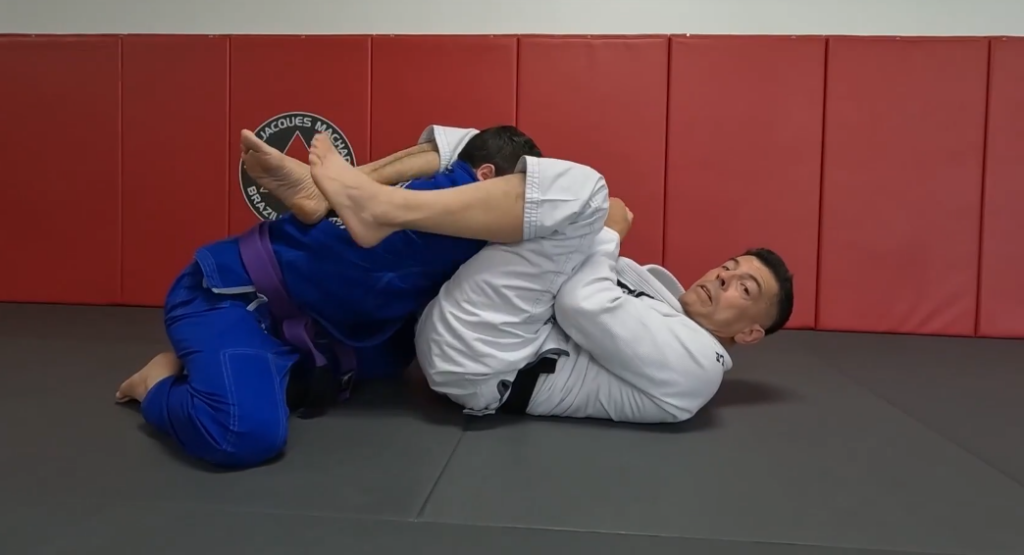
Power of Knee Work in Jiu-Jitsu Jay Zeballos DVD – GET IT HERE
Who Is This For?
The course is aimed squarely at Gi grapplers from late white belt through black belt. White and blue belts get the most direct payoff, because the defensive framing and the side control escape material fix bad habits early. Purple belts and up will find the far side elbow control, the knee cut defense, and the guard-breaking details worth a revisit even if they already know the positions cold.
It is a poor fit for No-Gi specialists, because the grips are Gi-bound: the lasso, De La Riva, collar posture, and the ankle-crossing discussion all assume the Gi. Leg-lock and heel-hook players will find nothing here for their game, and there is no live rolling footage to show the concepts under real pressure — the teaching is demonstrated and drilled rather than stress-tested. If you want a dedicated system for any single position, buy that system; this is for the grappler who wants one idea running through everything.
Pros And Potential Drawbacks
Pros:
- Genuinely cross-positional theme that earns its framing — the knee is treated as a real mechanical link, not a buzzword.
- Strong defensive spine that opens on escapes, which suits the master-division longevity audience the product is aimed at.
- Named, distinctive details like “The Armstrong,” “Single X,” and “Knees Over Hips” that you will not find in a generic fundamentals title.
- Clear sequencing, with each part building a skill the next part reuses.
- A credible messenger in a 5th-degree black belt with a real master-division record, not a retired athlete coasting on a name.
Potential Drawbacks:
- Gi-bound throughout — the lasso, De La Riva, collar posture, and ankle-crossing material are dead weight for No-Gi players.
- No leg-lock or heel-hook coverage, and no live rolling to show the mechanics under pressure.
Different Way to Use Your Knees
The Knee Work in Jiu-Jitsu Jay Zeballos DVD review verdict: this is a well-organized, genuinely useful course that does what it claims. It turns the knees from a passive hinge into a load-bearing engine across escapes, guard, and guard-breaking, and the six parts hold together because they are arranged as a progression rather than a grab bag.
Reviewed by: Ognen Dzabirski, BJJ black belt, full-time coach and gym owner. The views expressed by the author do not necessarily reflect the views of the publication