






Key Takeaways
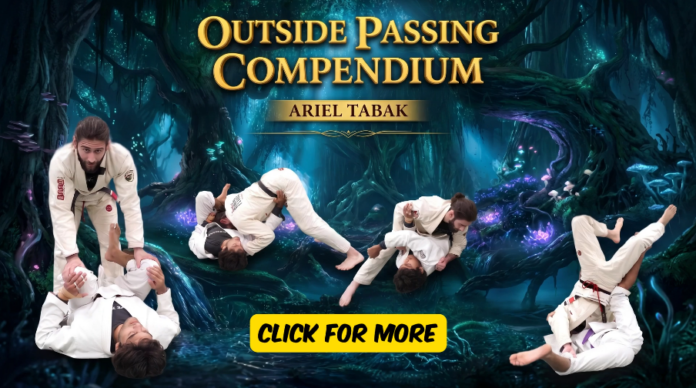
- Outside Passing Compendium Ariel Tabak DVD review — a four-volume, 53-technique digital instructional that builds an outside-passing game around entries, leg control, and finishing mechanics.
- A deliberate progression: win the outside line, solve the lasso and RDLR reactions that follow, then turn the leg trap or cross grip pass into a finish.
- Heavily Gi- and grip-dependent — a strong fit for IBJJF-style competitors and Gi grapplers, noticeably thinner value for No-Gi-only grapplers.
- $97 for 53 techniques is fair value, but the compendium format rewards athletes willing to impose their own structure.
- Rating: 8.5 out of 10.
AVAILABLE HERE: Outside Passing Compendium Ariel Tabak DVD
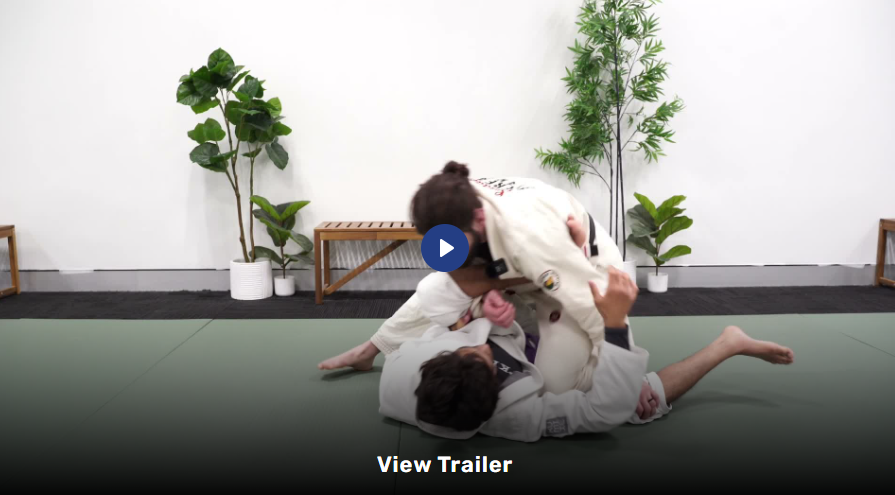
Outside Passing Compendium by Ariel Tabak lands at a moment when passing has split into two schools. Inside passers commit to driving through the guard and winning the scramble; outside passers win the angle first and never let the guard player square back up. Tabak’s new four-volume instructional sits firmly in the second camp, and the question it poses is the one every buyer should answer before spending: is this a coherent system, or 53 techniques in search of a theme?
The answer sits closer to the former than the latter. Tabak builds the material in a deliberate arc — win the outside line, solve the reactions that follow, then convert leg control into a finish — and that sequencing is what separates this compendium from a grab-bag of individual passes. Whether it earns a permanent place in a grappler’s game depends heavily on how much of that game lives in the Gi.
Where Outside Passing Sits In The Modern Game
Outside passing is not a new idea, but it has become newly essential. Modern guards are engineered to make inside entries miserable: butterfly hooks, knee shields, and lasso guard and RDLR frames all punish a passer who commits to driving straight through. Winning the outside line sidesteps all of that — the passer works around the frames and leg-entanglement threats rather than into them.
The trade-off is that outside passing swaps immediate pressure for a positional race. The moment a passer clears the legs, the guard player’s entire job becomes recovering an angle, rebuilding a frame, or snatching a leg back. A system that only gets outside the legs is half a system.
What makes Tabak’s instructional worth close attention is that he treats the entry as the easy part and spends most of the runtime on what happens after — the reactions, the leg control, and the finishing mechanics that stop a hard-won angle from being handed back. That emphasis on holding the advantage puts this course in the same modern conversation as the tripod-based outside passing of Jozef Chen and the methodical outside-passing breakdown of Jason Rau, both reviewed on this site.

A Guard Specialist Explaining Passing
Ariel Tabak is a South African-Australian black belt under Cicero Costha, promoted in June 2019, and one of Australia’s most decorated active competitors. His resume includes IBJJF Pan-Pacific Championship titles in 2019 and 2022, a 2022 Houston Open gold, and a third-place finish at the ADCC Asia and Oceania Trials in 2022. He represents the Cicero Costha Association and competes at lightweight.
The wrinkle worth noting is that Tabak is best known as a guard player — BJJ Heroes lists modern guard as his signature position, and his earlier instructionals, from his Hybrid Guard compendium to his wrestle-up system, all live on the bottom. That is not the handicap it first sounds like.
A competitor who has spent a career building difficult-to-pass guards knows exactly which frames, hooks and grips stop a passer. The Outside Passing Compendium reads like that knowledge pointed in the other direction: here is what the guard player fears most when their legs get cleared.
Outside Passing Compendium Ariel Tabak Review: The Four Volumes
The compendium splits 53 techniques across four parts, and the sequencing is where the system reveals itself. The connective tissue is a handful of recurring ideas — keep progressing, keep the head out of line, and never let a won angle go to waste.
Part 1 – Getting Outside The Legs
Part 1, with 13 techniques, does the foundational work of actually clearing the legs. Tabak opens with the mechanics of getting outside and the different routes available depending on how the guard player is postured, then locks onto the idea that once a passer is outside, the priority is progressing before the guard resets.
The head-to-chest CLA game and the concept of pointing the feet away both echo through the rest of the set and establish the cross-volume language. The closing chapters — the hip-and-knee post pass and the shoulder-lift finishes — are the payoff, teaching passers to convert the outside angle into a completed pass rather than stalling in headquarters.
Part 2 – Solving Lasso And RDLR Reactions
The second volume, the longest at 17 techniques, is where the instructional earns its “modern” framing. Tabak works through the reactions a guard player uses to stop an outside pass: the lasso, the reverse De La Riva hook, the high tripod, and the knee shield.
The lasso material — flanking to the lasso side, the tyre flip to stack, and running back to the head — amounts to one of the more detailed answers to that guard in a dedicated passing course. A North-South passing block closes the volume, wrapped around a repeated emphasis on keeping the opponent’s head out of line, a concept that quietly governs most of the finishing mechanics in the two parts that follow.
Part 3 – The Leg Trap And Its Finishes
Part 3 introduces the leg trap, the clearest signature concept of the set. The logic is direct: after winning the outside angle, trap the opponent’s lower body so they cannot recover their legs or turn back into guard.
Tabak shows the trap from collar-and-pant and hip-and-pant grips, then layers a genuinely useful finishing menu on top — leg drags, a knee-on-belly finish, long stepping, and a false single under that funnels into the over-under. The chapter on binding the knees ties Part 3 straight back to the outside angle from Part 1, exactly the kind of callback that argues for system over collection.
Part 4 – The Cross Grip Pass System
The final part shifts gears and presents the cross grip pass as a self-contained second entry. Where the leg trap secures the lower body first, the cross grip pass wins upper-body control first — a collar-and-sleeve structure that feeds the prince pass and a bullfighter finish. It is a different flavor of outside passing, one that will feel more familiar to grip-fighting Gi players. The closing overview of getting outside the legs loops the instructional back to its opening chapter, a small but telling structural choice: Tabak is presenting a loop, not a list.
Making It Work On The Mats
An athlete trying to internalize this should not attempt to absorb 53 techniques at once. The realistic path is to pick a lane — either the leg-trap route through Parts 1 and 3, or the cross-grip route through Parts 1 and 4 — and drill it against a resisting partner until the reactions from Part 2 start appearing. The head-positioning and “keep progressing” concepts are the parts that transfer most broadly, because they apply whether the finish is a bullfighter, a long step, or a leg drag.
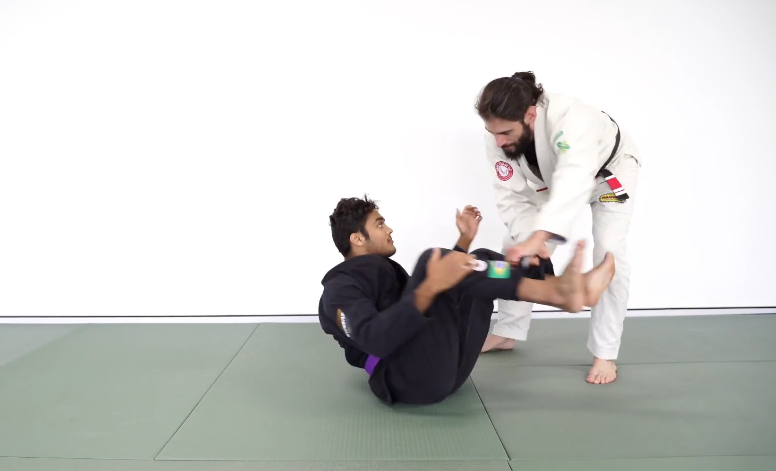
Expect a real-time investment. This is not a concept course that can be watched once and mined for a single principle; it is a compendium, and its value compounds as a grappler returns to individual chapters to fix specific failures. The Gi requirement is the biggest practical caveat. The leg trap’s collar-and-pant grips, the lasso responses and the cross grip pass all assume there are sleeves and a collar to hold, which sets a hard ceiling on how much of this a No-Gi athlete can carry across.
DOWNLOAD: Outside Passing Compendium Ariel Tabak DVD
Who Should Buy This Instructional?
Who benefits: Gi competitors from blue to black belt who want a structured passing game instead of a scattered one; athletes who already win the outside angle but stall in headquarters or get stopped by lasso and RDLR; and anyone who prefers a step-by-step route over a loose concept course. For a Gi player who struggles with the lasso, the Part 2 material alone nearly justifies the price.
Who will not: No-Gi-only grapplers get far less, because the system is built on Gi grips — a movement-based tripod set such as the Jozef Chen outside passing instructional will serve that audience far better. Complete beginners may also drown in 53 techniques without a coach to sequence them. And pressure passers who refuse to ever work from the outside will find this course is solving a problem they have chosen not to have.
Pros And Potential Drawbacks
Pros:
- A genuine system rather than a grab-bag — entries, reactions, control and finishes are sequenced with deliberate cross-volume callbacks.
- Outstanding, detailed answers to the lasso and RDLR, two of the most common modern guard problems in the Gi.
- The leg trap is a well-explained signature concept that turns a hard-won angle into lasting control.
- Strong value — 53 techniques for $97 works out to well under two dollars per technique.
- Clean, no-frills teaching from a decorated competitor who understands the guard side of the exchange.
Potential Drawbacks:
- Heavily Gi- and grip-dependent, which sharply limits the No-Gi carryover.
- Compendium breadth over depth — 53 techniques can overwhelm without self-imposed structure.
A System That Earns Its “Compendium” Label
At the end of this Outside Passing Compendium Ariel Tabak review, the verdict on the central question is clear: this is a system with a spine, not a pile of passes. The four volumes move from entry to reaction to leg control to finish, and the recurring concepts — keep progressing, keep the head out of line, win the angle and never give it back — are what hold the 53 techniques together.
Reviewed by: Ognen Dzabirski, BJJ black belt, full-time coach and gym owner. The views expressed by the author do not necessarily reflect the views of the publication