






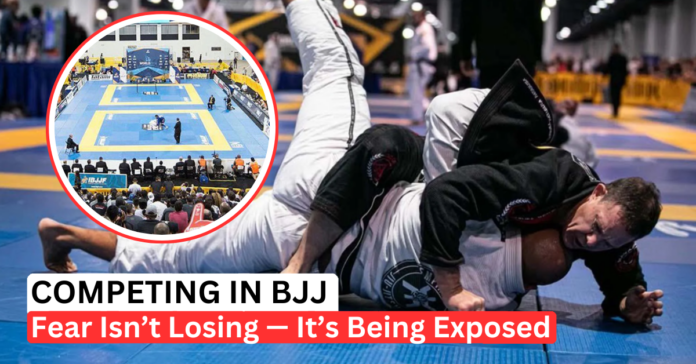

- Do you have to compete in BJJ? No — but Jocko Willink argues competition is the fastest way to get an “honest” read on your Jiu-Jitsu and your ego.
- Willink says tournaments expose holes your regular training partners may never find, especially when nerves and pressure hit.
- The pushback is real: injury risk, work/family schedules, and the feeling that competing is “optional” for hobbyists.
- The real debate isn’t medals — it’s whether you want your Jiu-Jitsu tested against strangers under stress.
Jocko Willink Thinks Training Can Lie To You
Most academies have the same quiet social contract: train hard, don’t be a jerk, and try not to get hurt on a Tuesday. That’s a good thing — it’s why normal people can train Jiu-Jitsu for years without needing an ice bath and a chiropractor on retainer.
But it also creates a trap.
If you only roll with familiar bodies, familiar grips, and familiar rhythms, you can build a version of your game that “works”… in your room. Jocko Willink’s whole argument is that competition snaps you out of that comfort bubble — not because your teammates are soft, but because familiarity is a powerful cheat code.
In a recent podcast appearance with Jack Osbourne, Willink framed Jiu-Jitsu as a rare martial art where you can go hard regularly, learn under real resistance, and still walk into work the next day.
The problem, he says, is that even in a tough room, training partners can become predictable — and your brain starts protecting your identity as “the guy with the good guard” or “the girl with the nasty armbar.”

Competition doesn’t care who you are at your academy.
<h5 class=”custom-quote”>Competition is really good because you’re going against someone that you haven’t ever gone against before… So they’re going to possibly find some holes in your game.<br>– Jocko Willink –</h5>
That’s the click-worthy core of it: tournaments aren’t just about proving you’re good. They’re about proving you’re not as good as you think — and then deciding what to do with that information.

The Question Everyone Dodges: Do you Have to Compete in BJJ?
Here’s why this question hits a nerve: it sounds like a simple yes/no, but it’s really three questions disguised as one.
Do you have to compete to get good?
Do you have to compete to get promoted?
Do you have to compete to know if your Jiu-Jitsu “works”?
Willink’s answer isn’t “yes, everyone must compete.” It’s harsher than that. It’s more like: If you want real growth, you need real testing — and competition is the cleanest form of it.
He’s not talking about becoming a full-time competitor or chasing a podium like it’s rent money.
He’s talking about the specific kind of pressure that forces truth out of you: the walk to the mat, the unfamiliar grips, the crowd, the referee, the adrenaline dump that makes your “A-game” feel like it got unplugged.
You’re also going to be in front of a bunch of people, so you’re going to be vulnerable, exposed, and you might get tapped out.
– Jocko Willink
That “exposed” word is doing a lot of work. Because the fear isn’t always losing. It’s losing publicly — and having to live with the idea that your Jiu-Jitsu wasn’t as bulletproof as you felt on a random Thursday night.
Injury Risk in BJJ, Adult Life, And The Price Of “Optional”
The loudest counterpoint is also the most reasonable: competing can get you hurt.
Not everyone can risk a jacked shoulder, a tweaked knee, or a blown elbow because a stranger decided the gold medal was worth ripping a submission through a late tap.
And the older you get — or the more your job depends on your body — the more “just do it” starts sounding like advice from someone who doesn’t have to pay your bills.
That’s why the hobbyist debate never dies. One side says competition is the ultimate growth accelerator. The other side says: I train to feel better, not to limp.
Not worth the risk of injury, at all, especially if you are past your mid thirties.
– robotkutya87 –
Still, even the anti-competition crowd tends to accidentally admit something: tournaments are a different animal. The people warning you off comps aren’t usually saying “competition teaches nothing.” They’re saying the cost/benefit calculation changes when you’ve got kids, a physical job, or zero interest in building your personality around medals.
So the real question becomes: Is “optional” a reason, or an excuse? Because “you don’t have to” is true — but it can also be a very comfortable place to hide if what you’re actually avoiding is pressure.
What A Stranger Will Expose That Your Teammates Won’t
A lot of athletes who compete will tell you the same thing in different words: tournaments don’t magically give you new techniques. They reveal whether your existing techniques survive stress.
That’s the part that hits hardest for first-timers. Your cardio feels worse. Your timing disappears. Your hands turn into frozen claws. Your breathing gets weird. You do something objectively stupid — like yanking a guillotine from bottom side control — and then you wonder why you did it like you were possessed.
This is where Willink’s point connects to the everyday grappler: competition forces you into unfamiliar resistance with consequences. Even if the consequences are just embarrassment, it’s still a consequence — and your nervous system reacts like it matters.
And once you’re signed up, you train differently. Not necessarily better, but more honestly. You notice which positions you’re avoiding. You start asking: “If this guy stuffs my takedown, what’s my plan?” or “If my guard gets passed, how am I getting out without panicking?”
That’s why so many coaches nudge students toward at least one BJJ tournament: not because everyone should be a competitor, but because a deadline forces clarity.
The One-Tournament Test: Do you Have to Compete in BJJ?
So let’s land this without the cheesy “everyone should compete” sermon.
Do you have to compete in BJJ? No.
You can train for fitness, community, self-defense confidence, or pure obsession with technique and still build a dangerous, effective game. Plenty of killers never compete. Plenty of competitors are mid. Medals don’t equal mastery.
But Willink’s argument is hard to shrug off because it isn’t about medals — it’s about data.
Competition gives you a brutally clean signal:
What breaks first under pressure?
What habits show up when you’re tired and nervous?
What positions do you actually understand — and which ones only work when your partner “plays Jiu-Jitsu” with you?
And the best part is: the results aren’t even the point. Willink’s whole vibe is to treat getting tapped as information, not identity — even when it’s embarrassing.
I was like, dude, awesome job. High five… I look at it like, dude, yes, jiu-jitsu works.
– Jocko Willink –
That’s the challenge he’s really throwing at hobbyists: can you handle being exposed without making it a crisis?
If you do one tournament and decide it’s not for you, fine — you still learned something you can’t easily learn in class. If you do one tournament and it lights a fire under you, also fine — now you’ve got a new lane.
Either way, the decision stops being theoretical.