




Key Takeaways
- A four-volume escape-focused instructional built around “hidden” mechanics: denying connection, winning underhooks, and rebuilding posture instead of panic-bridging.
- Best for grapplers who hate being stuck under pressure—especially smaller athletes, older practitioners, and anyone who wants calmer bottom survival.
- The strongest value is conceptual: Akins keeps returning to why common escapes fail and what to prioritize before trying to move.
- Volume 4’s live Q&A helps connect the dots and troubleshoot common “yeah-but-what-if” scenarios.
- Rating: 9/10
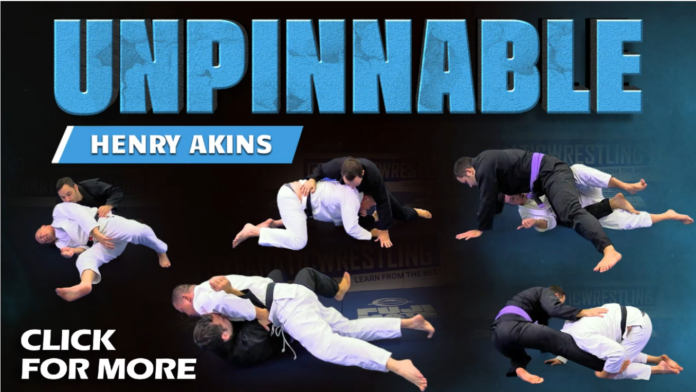
UNPINABLE HENRY AKINS DVD DOWNLOAD HERE
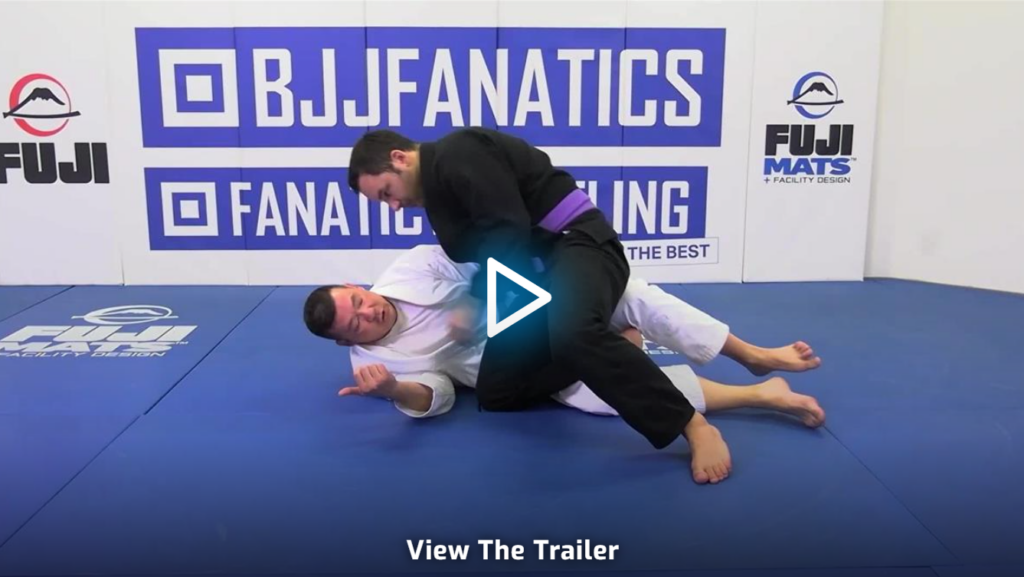
Getting pinned in Jiu-Jitsu isn’t just uncomfortable—it’s where rounds go to die. Even good athletes can look helpless once a crossface settles in, the near-side arm gets stapled, and their “frames” turn into a slow-motion surrender. The promise of the Unpinable Henry Akins DVD is basically the antidote to that feeling: not a highlight-reel escape, but a method for making bottom position manageable again.
Henry Akins’ angle is familiar to anyone who’s followed his “Hidden Jiu-Jitsu” philosophy: stop trying to out-muscle the pin and start removing the mechanical reasons the top player can hold you in the first place. If you’re the person who “knows the escape” but still can’t get out once the pressure is real, this is the kind of instructional that can finally explain what you’re missing.
The Part Nobody Wants to Train
Most BJJ pin escapes get taught like a recipe: frame here, shrimp there, recover guard, done. The issue is that pins aren’t static. A good top player is constantly re-pinching space closed—walking hips, re-crossfacing, pummeling for the underhook, and reattaching chest-to-chest connection the moment you create a gap.
That’s why people feel like they’re working twice as hard just to stay exactly where they started. Akins’ big reframing (and the tone of the Unpinable Henry Akins DVD) is that the first battle isn’t “moving away.” It’s breaking the pin’s attachment points so movement becomes possible. If the top player owns your near-side shoulder line, your hips can slide all day, and nothing changes.
If they own your head position via crossface, your spine is twisted, and your power disappears. If they can freely pummel for inside control, every escape attempt becomes a trap that feeds them a better pin. There’s also a psychological element that matters: when people feel crushed, they default to explosive bridging and frantic framing.

Sometimes that works for beginners. Against experienced pressure, it often just gives up better angles, exposes the back, or burns your gas tank. The “calm under pressure” theme isn’t motivational fluff—it’s a practical requirement if the system is built around micro-adjustments and timing instead of scrambles.
The Hidden Jiu-Jitsu Genius: Henry Akins
Henry Akins is a long-time Rickson Gracie black belt whose teaching reputation is strongly tied to fundamentals, pressure management, and details that don’t always show up clearly on video—weight distribution, alignment, and the feel of connection. In his broader body of work and branding, he’s consistently pushed the idea that the most valuable Jiu-Jitsu isn’t necessarily the flashiest, but the stuff that holds up when someone is bigger, stronger, or determined to smash.
A key point for this instructional is that Akins isn’t presenting pin escapes as a competition-specific “get out and wrestle up” series. His perspective is closer to classic, survival-first Jiu-Jitsu: preserve your structure, deny the top player the grips/angles that make pressure work, and then rebuild to a position where you can stand, recover guard, or re-engage on your terms.
He’s also well known for coaching and teaching at a high level for years, and for leaning hard into conceptual explanations—what to prioritize, what mistakes to avoid, and how to troubleshoot when the opponent reacts correctly. That teaching style fits the subject perfectly. Pin escapes are one of those areas where a small detail can change everything, but only if someone actually explains what “right” feels like.
The Full Unpinable Henry Akins DVD Review
Across four volumes (three technique volumes plus a live Q&A), Akins targets the specific problems that make pins feel inevitable—connection to the shoulder line, crossface control, knee-on-belly staging, and even the head-and-arm threats that punish sloppy turning.
Volume 1 – The End od Framing
Volume 1 of the Unpinable Henry Akins DVD sets the foundation with a theme that’s going to surprise a lot of people: Akins argues that the typical “framing” approach can be the wrong instinct when someone is passing and settling pressure. Instead of treating your arms like rigid bars you push with, he’s steering you toward hand and elbow placement that guarantees meaningful inside position—especially the underhook battle that decides whether bottom person can build up or just gets flattened.
This volume is also where the “hidden mechanics” framing starts to make sense: he talks about killing connection to the shoulder line, stopping the opponent from pummeling back in, and dealing with common counters like the elbow pluck. In practice, it feels like he’s building a checklist: if you don’t solve these specific problems first, your escape won’t work—because you’ll never be allowed to reassemble posture and hips at the same time.
Volume 2 – Cross Face and Knee On Belly Solutions
The next portion shifts into one of the main pin-killers in modern Jiu-Jitsu: the crossface. Akins doesn’t treat it like an annoying detail; he treats it like the steering wheel of the entire pin. If your head is turned and your shoulders are pinned, you’re basically trying to escape with half a spine.
In the Unpinable Henry Akins DVD, this section is structured around shutting down the crossface, clearing it when it’s already in, and then using that win to get back to your knees—because knees under you changes the whole game. He also splits knee-on-belly into stages: a “preliminary” phase and a later phase where the top player has stabilized. That’s a smart inclusion, because most people only train for the moment the knee lands, not the moment the attacker has already built posture and started hunting transitions.
The final chapters here deal with reactions you’ll recognize immediately in rolling: the top player grabbing legs to prevent your build-up, or staying low to keep you stuck. This is exactly where a lot of escape instruction becomes unrealistic, and it’s good to see those problems addressed directly.
Volume 3 – Underhook & Back Door Escapes
Part 3 is where the material starts acknowledging the price of escaping wrong: head-and-arm control and front headlock-style threats that catch people the moment they turn. Akins opens with shutting down and reversing the Darce, which is a very “real round” problem—especially for anyone who tries a turning side control escape and gets instantly punished.
From there, the Unpinable Henry Akins DVD goes deeper into underhook-based escapes from head-and-arm situations and cross side pressure, plus “back door” style escapes for when the normal route is blocked. Importantly, he also includes a scenario where your elbow is trapped underneath your body—one of the worst feelings in grappling—and a “flattened out” situation where the opponent is holding with both arms near side.
Those are the spots where people usually accept defeat and wait for the round to end, so having dedicated coverage is a big practical win. This volume reads like the “okay, but what if they’re actually good?” answer to the first two volumes.
Volume 4 – Live Q&A
Volume 4 is a live Q&A with Mike Zenga, and it functions like a glue layer. If the first three volumes give you the mechanics, this gives you context: when to choose which solution, what details matter most when the opponent is adapting, and how to troubleshoot when your escape keeps stalling in the same place.
For many instructionals, Q&A is filler. Here, it’s a strong closer because this Unpinable Henry Akins DVD is heavily principle-driven. The questions help reinforce the hierarchy: what to solve first (connection, head control, inside position), what not to do when pressure is mounting, and how to keep the whole system coherent instead of collecting “random escapes” you can’t apply under stress.
Learning How to Actually Escape
If you opt for the Unpinable Henry Akins DVD and try to “remember everything,” you’ll probably stall out. The better approach is to treat it like a pressure-testing project for a few weeks.
Win one battle consistently first. Pick a single priority—like hand placement to secure the underhook, or clearing the crossface—and make the round about that, even if you don’t fully escape. If you can reliably deny the opponent their best attachment point, the rest improves fast.
Add positional sparring with constraints next. Start bottom side control with the top player’s goal being “keep the crossface for 30 seconds” while your goal is “clear it and get to knees.” Then swap. This turns concepts into timing, which is what escapes actually require.
A good idea is to record one common failure and fix it. Maybe you keep getting elbow-plucked. Maybe you get stuck when they grab the legs. Maybe you expose your neck turning in. Use the structure of the instructional to isolate that failure and solve it instead of “trying harder.”
Integrate into full rolling with a clear trigger. For example: the moment you feel the crossface settle, you don’t flail—you go straight to the crossface solution you’ve drilled. The point of this system is that it gives you a calmer default response when you’re under load.
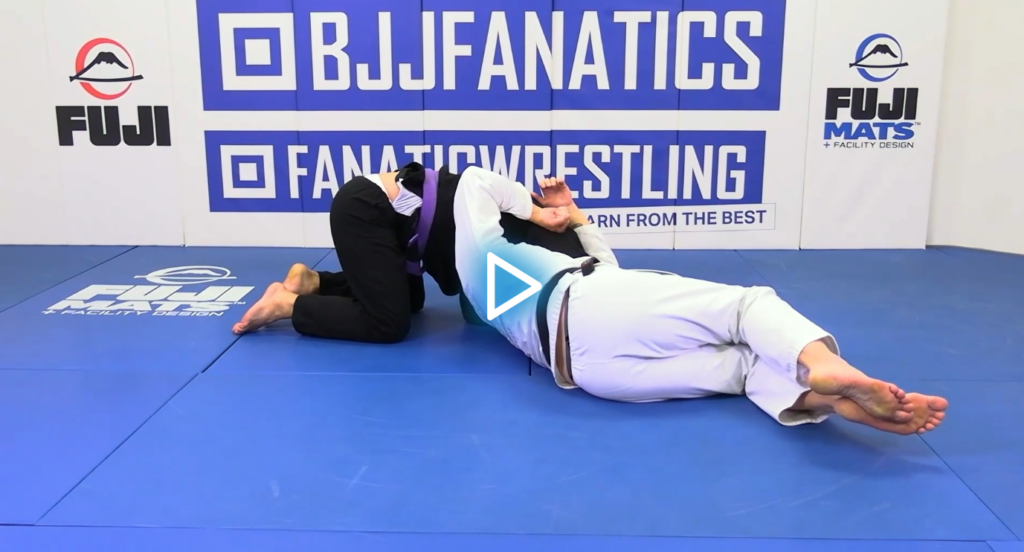
OUT NOW: UNPINABLE HENRY AKINS DVD
Who Is This For?
The Unpinable Henry Akins DVD is a strong fit for grapplers who regularly get stuck under side control pressure, crossfaces, and long pin chains, and who are tired of doing the “right” escape steps only to get stapled back down.
It’s also ideal if you want an approach that prioritizes efficiency, posture, and those “invisible” mechanics that make pressure work—rather than relying on athletic explosions that don’t always show up when you’re tired or undersized. And whether you train Gi, No-Gi, or both, the concepts carry over cleanly because they revolve around universal problems like connection, head control, and inside position.
In terms of level, solid white belts through blue belts tend to get immediate value if they already understand basic positions and simply need their escapes to stop collapsing once the top player applies real pressure. Purple belts and up will likely appreciate it for a different reason: the “why” behind details you’ve felt for years but couldn’t fully articulate, plus troubleshooting for common counters that experienced opponents use to shut down standard escape sequences.
That said, a couple groups might not squeeze out maximum value right away. Brand-new white belts who still don’t understand what the crossface and shoulder connection are actually doing may need a few months of positional vocabulary before the details click. And pure competition scramblers who prefer to wrestle up and live in chaos might find the pacing more methodical than their style—although the mechanics will still help them survive longer, waste less energy, and choose better moments to explode.
Pros & Potential Drawbacks
Pros:
- Clear emphasis on mechanics before movement: you learn what actually makes pins work, not just a scripted escape.
- Strong coverage of high-percentage problems (crossface control, knee-on-belly staging, pummeling battles) that decide real rounds.
- Underhook-focused approach provides a coherent “spine” to the system, so the material feels connected rather than random.
- Includes ugly, common realities—like elbow-plucks, leg grabs, getting flattened out—where many instructionals get vague.
- The Q&A volume adds practical troubleshooting that helps convert concepts into decisions under pressure.
Potential Drawbacks:
- If you want a big menu of flashy escapes from every pin variation, the Unpinable Henry Akins DVD is more selective and principle-driven than encyclopedic.
- The “micro-adjustment” style may require patience; people who only trust explosive movement might need time to buy into the method.
- Some chapters are framed as “what not to do” (like the framing discussion), which can challenge what many academies teach—useful, but it may cause friction if you try to apply it without understanding the underlying goal.
Unpinnable is not a Myth
There are a lot of “pin escape” instructionals that teach you how to move. Unpinable Henry Akins DVD is one of the better ones for teaching you how to stop being controlled, which is the actual problem. The structure makes sense, the chapter selection is realistic, and the system repeatedly points you back to the same handful of priorities that decide whether escapes work: deny connection, neutralize head control, win inside position, and rebuild to your knees with calm intent.