



Key Takeaways
- Best for: grapplers who feel tight in rounds—whether from nerves, bad breathing, or forcing positions with muscle.
- Core value: turns relax from vague advice into repeatable habits (breathing, timing, pressure, and posture) you can test immediately.
- Where it shines: calm control from top (cross side, mount, half guard passing) and staying functional in bad spots without panic.
- Big caveat: This Henry Akins instructional is a short, concept-heavy course—more blueprint and checkpoints than a sprawling encyclopedia.
- Rating: 9.5/10
DOWNLOAD HOW TO RELAX IN JIU-JITSU HENRY AKINS DVD
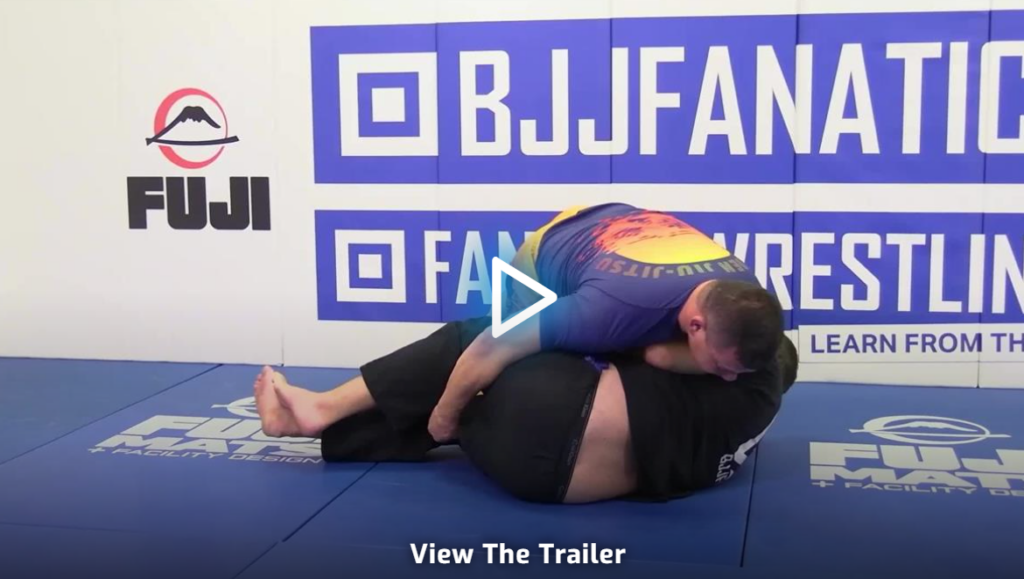
Most people think they know what relaxing means in grappling. They interpret it as use less energy, stop squeezing, or don’t gas out. The problem is that those ideas usually collapse the moment someone puts real pressure on you. Your jaw clenches, your shoulders crawl up to your ears, your hips get stiff, and suddenly you’re burning fuel while accomplishing nothing.
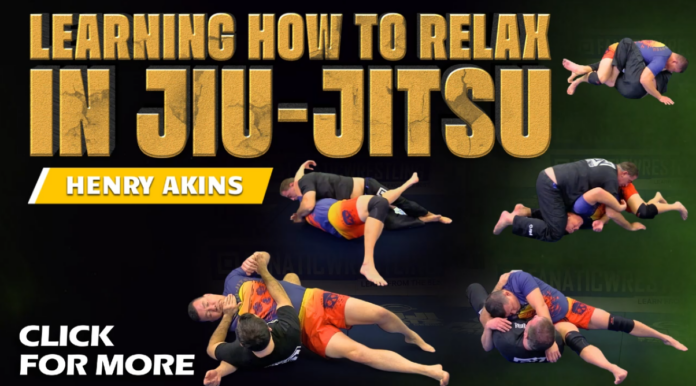
That’s exactly why How to Relax in Jiu-Jitsu Henry Akins DVD is such a useful instructional for the average training room. Henry Akins doesn’t pitch relaxation as a personality trait or a Zen vibe. He treats it like a skill—something you can measure, build, and apply to concrete positions.
And the best part is that he chooses positions where relaxation is either brutally obvious… or brutally missing. If you can’t relax while holding cross side, passing half guard, or surviving bottom cross side, you’ll pay for it in every round—Gi or No-Gi. This course gives you the missing mechanics that make calm translate into control.
Relaxed Means Heavy in Jiu-Jitsu
Relaxation in Jiu-Jitsu gets misunderstood because the sport rewards intensity. People clap for scramble speed, explosive bridges, and cardio wars. But at a technical level, Jiu-Jitsu is full of moments where tension actively makes you worse.
Here’s what usually happens:

- Tension kills sensitivity. When you’re rigid, you stop feeling micro-shifts in your partner’s hips, frames, and grips. You react late.
- Tension ruins structure. A tense posture often collapses your base. You push when you should settle. You squeeze when you should align.
- Tension wastes force in the wrong direction. You can be strong and still ineffective if your pressure isn’t going through the right lines.
Real relaxation in Jiu-Jitsu looks more like quiet readiness. Think: stable base, clear weight placement, and breathing that doesn’t spike into panic. You’re not floppy—you’re efficient. You’re not passive—you’re available to apply pressure at the right time.
That’s why the promise of How to Relax in Jiu-Jitsu Henry Akins DVD matters. It’s not about turning you into a chill hobbyist who never tries. It’s about removing the hidden leaks in your game—the wasted contractions, the bad habits under stress, and the mental urgency that makes you force moves that don’t need forcing.
BJJ Magician Henry Akins
Henry Akins is widely known as a Rickson Gracie black belt, and his public reputation leans heavily toward fundamentals, pressure, and the “invisible” details that make simple positions feel suffocating. Rather than building a brand around flashy competitive trends, he’s associated with a more traditional, control-first view of Jiu-Jitsu—where timing, leverage, and posture come before pace.
He also has a background as an instructor within Rickson’s orbit and later as a coach connected to an MMA gym environment (which tends to reward efficiency and positional safety over stylistic points-chasing). That context matters.
The Reddit conversations around him are predictably mixed—some people love the detail-oriented approach and crushing pressure; others are skeptical of any instructor whose ideas feel too conceptual or whose demos look overly controlled. The truth is: if you’re buying this, you’re buying a teaching style. And Akins’ style is about fundamentals done at a black belt level—small adjustments that change everything.
Full How to Relax in Jiu-Jitsu Henry Akins DVD Review
A quick note on structure: How to Relax in Jiu-Jitsu Henry Akins DVD is divided into four volumes, each anchored to real positions where relaxation (or the lack of it) shows up immediately. It’s not long, and that’s intentional—the course plays more like a focused clinic than a giant library.
True relaxation in Jiu-Jitsu has nothing to do with being passive — and everything to do with control.
– Henry Akins (course description) –
Volume 1 – Learning How To Relax
Volume 1 sets the frame: what relaxation actually means, why it’s commonly misread, and how to track whether you’re improving. This matters because relax more is useless if you can’t tell when you’re doing it wrong.
The standout idea here is measurement. If you’ve ever left training thinking, “I tried to be calm but it didn’t work,” you’re missing a feedback loop. Akins pushes you toward noticing when tension spikes (breath holding, rigid hips, over-gripping) and how those spikes connect to technical errors.
This is also where How to Relax in Jiu-Jitsu Henry Akins DVD differentiates itself from generic breathing advice. It’s not meditation content—it’s performance content. The underlying message is: if your body is tense, your technique will be late, your base will be unstable, and your decisions will get worse as the round goes on.
Volume 2 – Side Control
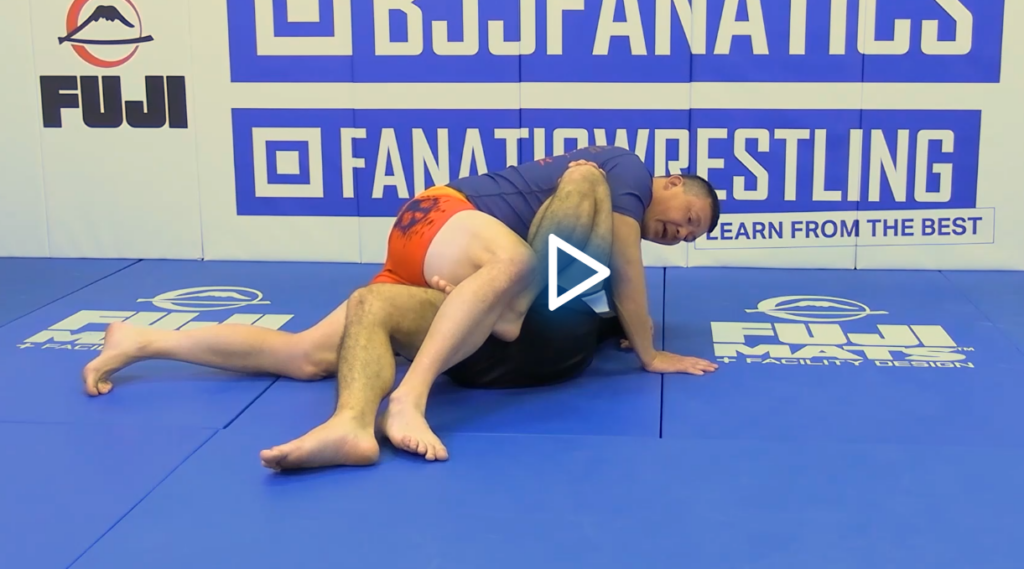
This poertion of the DVD gets practical fast: cross side control, hip relaxation to prevent reversals, using the underhook without over-muscling, and even a scarf hold segment that addresses what happens when your partner bridges hard.
This is the first place you really see the relaxation equals control formula. Cross side is a position where many people either hold too loose and get recovered on, or clamp too hard, burn their arms, and still get reversed because their hips are wrong.
Akins’ approach is about weight and timing rather than squeezing. If you’ve ever felt someone who is heavy without seeming to try, this is the kind of thinking that creates it. And because he ties it to specific scenarios—like preventing reversals—it doesn’t float off into philosophy.
For the average grappler, this volume alone can change how you hold top pins, especially if you’re the type who wins positions but loses them because you’re tense and reactive. It’s a strong argument for why How to Relax in Jiu-Jitsu Henry Akins DVD isn’t just about surviving—it’s about dominating with less noise.
Volume 3 – Mount Pressure & Half Guard
Part 3 moves to mount and adds a couple of interesting angles: staying heavy in mount, staying relaxed while mounted, and even a hook sweep from half guard.
I like this section because mount is where people’s ego shows up. They get mount and immediately try to finish, so they tense up, climb too high, lose base, and give up an escape. Akins treats mount as a pressure lab—if you can stay calm here, your entire top game improves.
The hook sweep inclusion is also telling. It highlights that relaxation isn’t only a top-player concept. A tense bottom player often tries to explode through frames and bridges without timing. A relaxed bottom player feels weight shifts and picks moments. In other words, relaxation becomes a timing amplifier.
If you’re a newer grappler, this volume can fix the most common mount problem: burning energy trying to hold someone down instead of placing weight correctly. If you’re more advanced, it’s a reminder that simple doesn’t mean easy—and that the simplest positions usually have the deepest details.
Volume 4 – Relaxed In Bad Positions
The final volume covers relaxed half guard passing, staying calm in bad positions, and specifically working from bottom cross side.
This is where the course becomes extremely practical for everyday training. Everyone ends up in half guard passing exchanges, and everyone ends up under side control. The question is whether you survive those moments like a frantic swimmer… or like someone who understands posture, breathing, and timing.
I also appreciate that he doesn’t pretend relaxation means you’ll never be uncomfortable. Bottom cross side is uncomfortable by design. The win condition isn’t feel fine. It’s stay functional. If you can keep your breathing and structure while you’re being smashed, you gain the one thing most people lose: decision-making.
That’s the core takeaway of How to Relax in Jiu-Jitsu Henry Akins DVD—relaxation is what allows technique to exist under pressure. Without it, you’re just reacting.
Relaxing Under Pressure
A smart way to use How to Relax in Jiu-Jitsu Henry Akins DVD is to treat it like a 2–3 week training focus rather than a one-time watch.
Here’s a simple integration plan:
- Week 1: Cross side and mount focus. Start every round with a positional reset: top cross side → partner bridges and frames → your goal is to stay heavy without squeezing. Then repeat from mount.
- Week 2: Half guard passing and bad spot calm. Begin rounds in half guard top. Your only rule: if your breath spikes, you pause and rebuild posture instead of forcing.
- Week 3: Bottom cross side survival rounds. Start underneath, and measure progress by how quickly you can return to steady breathing and structured frames.
Because Akins includes ways to think about measuring improvement, this course is unusually easy to apply. You don’t need a perfect drilling partner. You need rounds where you’re honest about when you panic.
HOW TO RELAX IN JIU-JITSU HENRY AKINS DVD – GET IT HERE
Who Is This For?
How to Relax in Jiu-Jitsu Henry Akins DVD is broadly useful, but it fits certain grapplers especially well. White belts who gas out from tension are first: you’ll get immediate return if you’re the type who tries hard but loses positions anyway.
Blue and purple belts with decent technique but inconsistent performance will find that this course helps bridge the gap between “I know what to do” and “I can do it while tired.” Pressure players (Gi or No-Gi) who thrive in cross side, mount, and half guard passing are probably the ones that will benefit the most.
Who might get less value? People looking for a big competitive system, since this is not a tournament meta map. It’s a performance upgrade for fundamentals. Grapplers who only want open guard/leg lock content will probably find the positional focus is mostly pin-and-pass and survival.
Pros & Potential Drawbacks
Pros:
- Turns relax into mechanics. Breathing, pressure, posture, and timing are addressed in a way you can test immediately.
- Position choices are high-value. Cross side, mount, half guard passing, and bottom cross side show up constantly in real rolling.
- Great for strong but inefficient athletes. If you win scrambles but burn out, this course helps close the leak.
- Concepts translate to both Gi and No-Gi. Even without Gi-specific grips, the ideas map cleanly onto most training.
- Easy to build a training plan around. The material is structured enough that you can turn it into positional rounds without guesswork.
Potential Drawbacks:
- Short runtime / narrow scope. You’re getting focused lessons, not a massive encyclopedia of positions.
- If you want lots of live sparring footage, you may feel underfed. This is instructional-first, concept-first.
- “Relaxation” can be misapplied without pressure-testing. You still need to roll hard enough to see if your calm is functional, not passive.
Just Relax Already!
There are instructionals that give you new moves, and there are instructionals that change how your whole game feels. How to Relax in Jiu-Jitsu Henry Akins DVD sits firmly in the second category.
If you’re the kind of grappler who knows technique but loses it the moment the round gets intense, this course can be a genuine breakthrough. The focus on breathing, timing, and intelligent pressure doesn’t just help you last longer—it helps you make better decisions while you’re tired. And that’s where real skill lives.