










Key Takeaways
- Collar Sleeve Guard Masterclass Brian Glick DVD Review — a four-volume Gi guard instructional from Brooklyn’s Brian Glick, sequenced as a single pathway from guard pulling into De La Riva, Ashi Garami, and triangle attacks.
- The set is organized around one recurring decision — which of the opponent’s legs is weighted — then routes the answer into mounts, sweeps, leg entanglements, or triangles.
- Glick’s strongest asset is his systematic, Danaher-influenced teaching style, which turns the material into a connected game rather than a pile of isolated collar-sleeve attacks.
- This is a Gi-only system: the collar-and-sleeve grips that define the position do not transfer to No-Gi.
- BJJ World Expert Rating: 9 out of 10.
Collar Sleeve Guard Masterclass Brian Glick DVD DOWNLOAD
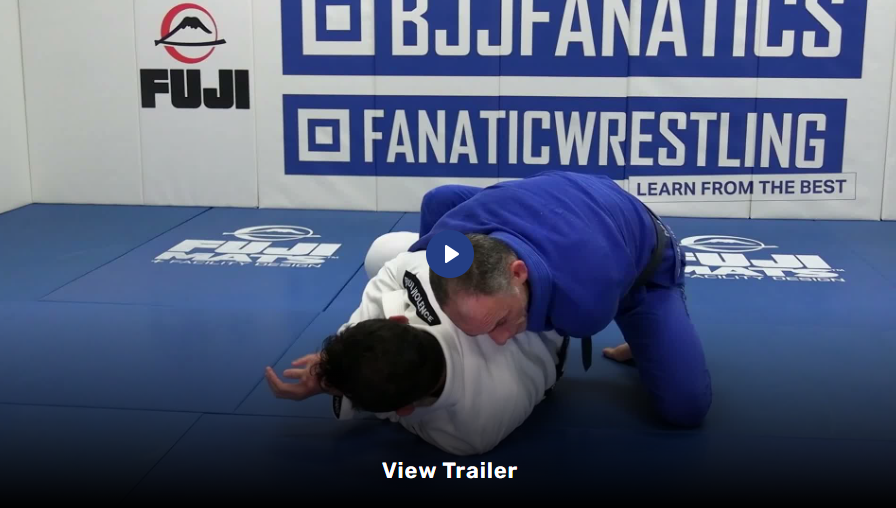
Collar Sleeve Guard Masterclass by Brian Glick is one of the more quietly ambitious Gi guard releases to land on BJJ Fanatics this year. Priced at $197 for four volumes, it promises a complete pathway — guard pulling, grip establishment, closed-guard transitions, De La Riva entries, leg attacks, and triangle chains — rather than the quick triangle-and-sweep package the collar-sleeve label usually implies.
The Most Common Guard Grips: Collar and Sleeve
Collar sleeve guard sits at the center of modern Gi open guard play because it does two jobs at once. The collar grip breaks posture and sets the opponent’s head, while the sleeve grip denies the near-side hand and creates the angle for attacks. From there the bottom player can open routes into sweeps, back exposure, or submissions before the passer’s pressure ever settles.
It is a position that is easy to recognize from the outside and genuinely hard to make reliable against resistance, which is why it has its own shelf of instruction — from Mikey Musumeci’s collar-sleeve study on the attacking side to Lucas Lepri’s precision passing work on the other end of the exchange.
Glick’s contribution is not to invent the position but to impose a decision tree on it. The collar sleeve guard in this course is treated as the hub, and closed guard, De La Riva guard, and Ashi Garami are presented as the routes that open up depending on how the opponent reacts. That connective framing is what a buyer should be evaluating here, because it is the difference between a true system and a collection of attacks that merely happen to start from the same two grips.
Mastermind Brian Glick
Brian Glick is a BJJ black belt and the founder of 555 Jiu-Jitsu in Brooklyn, and his coaching pedigree is the single strongest reason to take this course seriously. He spent over two decades training under John Danaher, and the systematic, problem-solving approach that defines Danaher’s teaching is visible in Glick’s own reputation as an instructor. BJJ Fanatics founder Michael Zenga puts it directly:

Brian is one of the best-selling instructors on the BJJ Fanatics platform. Like his teacher John Danaher, he has a systematic teaching style that makes world-class Jiu-Jitsu accessible to everyone.
– Michael Zenga, Founder, BJJ Fanatics –
Glick is also sought out by elite competitors and world champions as a coach and training partner, and he has built a substantial BJJ Fanatics catalog around guard play — from his guard-retention course to his retention-and-attacking series. That matters here because most of Glick’s prior output has leaned defensive. This collar sleeve guard release is his most direct statement on the offensive side of the same position family.
Collar Sleeve Guard Masterclass Brian Glick DVD Review: Four Volumes, One Pathway
Glick organizes nearly everything around a single recurring decision — which of the opponent’s legs is weighted — and then routes the response into a mount, a sweep, a leg entanglement, or a triangle. That is a system, not a highlight reel.
Volume 1: Grips And The Guard Pull
The opening volume does the thing most guard instructionals skip: it starts before the guard exists. Glick covers pulling guard from both the collar-side and sleeve-side grips, works a Yoko Tomoe Nage as the throw threat that forces the opponent to accept the pull, and spends dedicated time on gripping itself. That sequencing is deliberate. Collar sleeve guard is won or lost in the first grip exchange, and a grappler who enters without meaningful collar-and-sleeve control is already behind.

Volume 2: Closed Guard To De La Riva
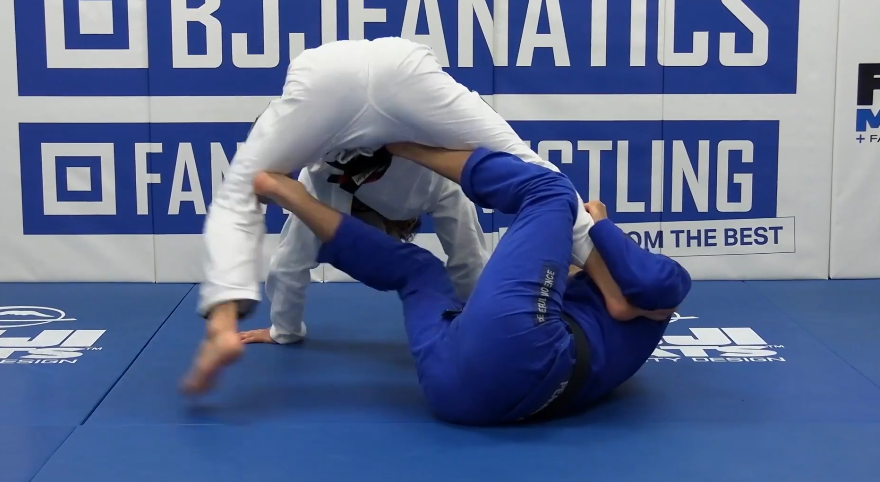
The second volume bridges closed guard into the open game. Glick starts with kuzushi and transitions from the closed guard, moves through a scissor guard entry into De La Riva, and then builds the core attacking framework: weighting the near leg. Once the near leg is weighted, the responses are concrete — putting the opponent on a hip to mount, to knee-on-belly, or to the leg drag. A drilling block from the closed guard closes the volume, which is a welcome touch for retention.
Volume 3: The Far Leg And The Ashi Garami Pivot
Volume three flips the decision to weighting the far leg, opening the Juji Gatame (armbar) and a single-leg option before shifting into Ashi Garami. This is where the course makes its sharpest turn. From the same leg-weighting problem, Glick routes into heisting, a straight ankle lock, and a heist to reversal, with a De La Riva drilling block to tie it together.
The material is clearly in his Danaher wheelhouse, but it is also the section that will divide buyers — it reads as a leg-lock side route bolted onto an upper-body Gi guard, which is either a feature or a detour depending on what a student came for.
Volume 4: Triangle Attacks
The final volume returns to the upper body and closes the loop on the strongest triangle from collar sleeve routes in the set. Glick chains a De La Riva to triangle entry and a butterfly Ashi to triangle, then shows how to convert the triangle position into an Americana, a Kimura, or an Ude Gatame when the finish stalls. The reverse-triangle transitions are the most distinctive material here, and they give the set a submission layer that rewards the positional work of the earlier volumes.
A Resource That Doesn’t Just Present – It Teaches
This is a course built to be trained, not just watched. The recurring drilling blocks across Volumes 2, 3, and 4 are the practical backbone, and the leg-weighting decision tree gives a student something to fall back on when the first move fails. The realistic time investment is significant — four volumes of Gi material will take weeks to absorb, not an afternoon — but the payoff is a guard game that holds together under pressure because every attack leads back to the same structural question rather than to a dead end.
AVAILABLE HERE: Collar Sleeve Guard Masterclass Brian Glick DVD
Who Is This For?
The core audience is blue-to-purple-belt Gi grapplers who want to build a coherent open guard around collar-and-sleeve grips, and brown and black belts who want a tighter decision framework for a position they already play. It is a Gi-only system by definition, so No-Gi grapplers get little from the core position.
Beginners can follow the grip and guard-pull material, but the leg-entanglement and reverse-triangle layers will outrun them. Students who already own a complete collar-sleeve instructional and only want the omoplata side of the position should look elsewhere, because that is exactly what this course does not cover.
Pros And Potential Drawbacks
Pros:
- A genuinely connected progression. Guard pull, grips, closed guard, De La Riva, leg attacks, and triangles are sequenced as one pathway rather than stacked as separate chapters.
- A clear decision framework. The “which leg is weighted” question gives a student a reason to choose a mount over a sweep or a triangle over a heist, which is what separates a system from a technique list.
- It starts at the beginning. Dedicating an entire volume to grips and the guard pull fixes the step most instructionals assume you already know.
- Elite teaching pedigree. Two decades under John Danaher and a systematic teaching style that genuinely lowers the barrier on high-level material.
- Drilling is built in. Nearly every volume includes a dedicated drilling section, which supports retention far better than a pure technique dump.
- Rare breadth. Few collar-sleeve courses bridge closed guard, De La Riva, Ashi Garami, and triangle attacks under one connective umbrella.
Potential Drawbacks:
- No omoplata section. The omoplata is a signature collar-sleeve attack, and its absence is the most conspicuous gap in a course that calls itself a masterclass.
- Gi-only by design. Collar-and-sleeve grips do not transfer to No-Gi, so the core of the system has zero carryover for the No-Gi game. But you already knew that, right?
A True Masterclass
Collar Sleeve Guard Masterclass Brian Glick DVD Review lands as a genuine system rather than a rebranded collection of attacks. The guard pull, the grip work, the closed-guard bridge, and the leg-weighting decision tree all pull in the same direction, and Glick’s teaching makes the pathway feel accessible without flattening it. The $197 price is fair for a four-volume study with this much connective tissue — provided the buyer wants the whole route.
Reviewed by: Ognen Dzabirski, BJJ black belt, full-time coach and gym owner. The views expressed by the author do not necessarily reflect the views of the publication