





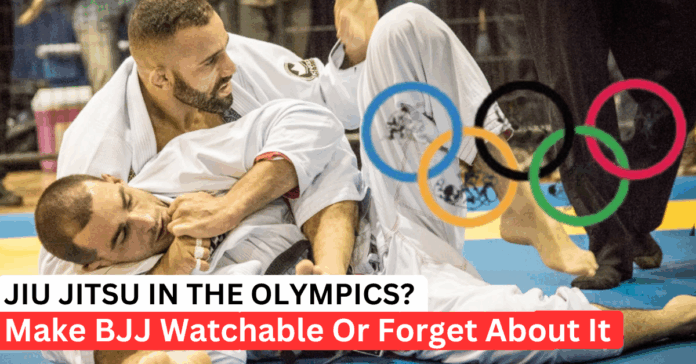

- The road to BJJ Olympic sport status is blocked by governance fragmentation, inconsistent rules, and broadcast-unfriendly pacing.
- IOC entry demands a recognized international federation, global youth pipeline, standardized divisions, and anti-doping compliance.
- Stalling, unclear scoring, and slow bouts are TV poison without format fixes.
- A realistic roadmap exists: unify under one ruleset, lock weight classes, prove broadcastability via World Games-style trials.
- Hope isn’t a plan—standardize it, sell it, or stop promising timelines.
What’s Actually Blocking BJJ Olympic Sport Status Right Now
Fans love to say BJJ is “next,” but the structural hurdles are not vibes—they’re paperwork and product. The first brick wall is governance: multiple powerful organizations, each with its own incentives and rules, dilute the case for a single, IOC-ready authority.
The second is rules fragmentation: different scoring systems, penalty philosophies, legal/illegal technique lists, and bout lengths. Add inconsistent weight classes and you get a sport that looks different event to event.
Then there’s participation and pathways. The IOC wants a true global footprint—national federations, junior development, and consistent continental championships.
BJJ has depth in hotspots, but uneven federation infrastructure elsewhere. Finally, the product problem: slow tempo, stalled positions, and opaque ref calls make casual viewers change the channel.
Put simply, BJJ Olympic sport applications fail when the sport can’t present one face, one book, one show.

Why Isn’t BJJ In The Olympics? The Non-Negotiables The IOC Demands
To even knock on the door, you need an IOC-recognized international federation with national members, elections, statutes, anti-doping enforcement (WADA code), and junior pathways.
That federation has to present standardized weight classes and a ruleset the whole ecosystem honors—not just one tour. Venues and logistics must scale: mats per session, medical, officiating crews, and live data feeds for scoring and TV.
Anti-doping isn’t optional or “community policed.” It’s funded testing, whereabouts compliance for targeted athletes, independent adjudication, and real sanctions. For BJJ Olympic sport consideration, that box must be checked before anyone talks formats or highlight reels.

Spectator Problem: Pace, Stalling Calls, And TV Windows
The modern Olympic program privileges sports that can deliver crisp outcomes inside tight broadcast windows.
BJJ’s biggest TV liabilities are long static phases, slow resets, and scoring that requires insider literacy. When neutral viewers can’t tell who’s winning—or why a ref has stopped a sequence—the product loses them.
That’s fixable. Shot-clock style passivity rules, mandatory stand-ups after prolonged inactivity, clear advantage/score graphics, and set bout lengths (e.g., 6–8 minutes) keep the action moving.
Referee mic’d explanations—short and standardized—teach viewers in real time. If BJJ Olympic sport advocates want a seat at the table, they must package the action so a new audience “gets it” by the second exchange.
From World Games Traction To Unified Rules
Here’s the path that could actually work within a few cycles:
- Unify the book. Convene leading bodies to codify a single, Brazilian Jiu-Jitsu Olympics-bid ruleset: scoring, penalties, legal technique matrix, bout length, overtime. Publish once; honor everywhere.
- Lock divisions. Standard male/female weight classes that mirror existing Olympic combat weights where possible, plus a streamlined bracket size.
- Governance first. Stand up (or empower) a truly international federation with national members, elections, and WADA compliance.
- Prove it live. Pilot the ruleset at major multi-sport showcases (World Games, Continental Games) with full broadcast treatment and independent officiating.
- Junior pipeline. Require national federations to run age-group championships under the same rules—feed the Olympic-style ladder.
None of this is romantic, but all of it is doable—and it beats another decade of “maybe next Games” threads. If the community wants BJJ Olympic sport status, it must behave like an Olympic sport before it becomes one.
From Concept To Mat-Time
Stop debating and show it. Run a two-day test event that a TV director can love: eight-minute bouts, visible shot-clock for passivity, instant advantage/score overlays, and mandatory restarts after defined inactivity.
Keep brackets tight, rotate mats on a schedule, and mic refs for one-sentence calls. Deliver clean storylines—contenders, national jerseys, medal table—and publish a transparent anti-doping summary post-event.
That’s how BJJ Olympic sport moves from message-board prophecy to application paper.
Make the sport legible at a glance, make the governance unimpeachable on paper, and make the product sing on television. Until then, the IOC isn’t the obstacle—our lack of one playbook is.