








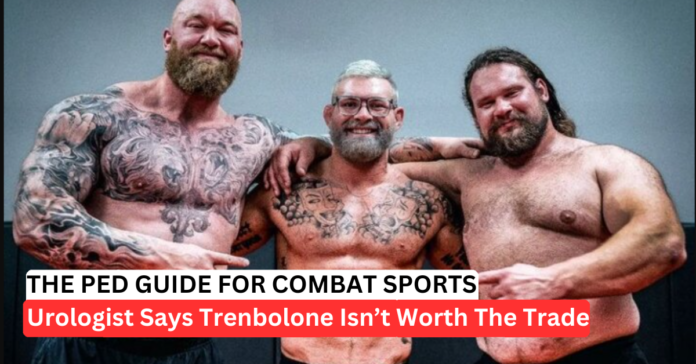

- A men’s-health urologist released a tier list ranking PEDs by risk vs reward, not just “how jacked you look.”
- The spicy take: trenbolone lands in F-tier despite its reputation as the ultimate “monster” compound.
- His best and worst PED compounds breakdown leans on fundamentals — testosterone as the base, plus a few compounds he believes deliver results with less chaos.
- He ends with the part everyone ignores: no medal or physique is worth trading for long-term damage.
In Jiu-Jitsu, PED talk usually lives in half-jokes and side-eyes. Someone comes back from a layoff looking like a different species, and the room suddenly discovers sarcasm.
But a recent tier list from Dr. Alex Tatem — a fellowship-trained urologist focused on men’s health — is forcing the conversation into the open with a blunt, doctor-approved framing: which drugs give the best return, and which ones can wreck you.
That’s why this best and worst PED compounds ranking is getting shared far beyond bodybuilding. The list isn’t a “how to.” It’s a warning label — and it has one verdict that’s guaranteed to start arguments at open mat.
The Best And Worst PED Compounds Tier List
Most PED rankings are basically power fantasies: “strongest,” “dryest,” “most savage.” Dr. Tatem’s list goes the other direction.
He grades compounds on effectiveness, safety profile, and practical application — meaning the stuff that shows up in bloodwork, sleep, mood, and whether your body still functions when the training block ends.

That’s exactly why it resonates with grappling. Strength matters, sure, but so does cardio, recovery, joint durability, and staying healthy enough to train year-round.
A compound that makes you look dangerous but turns your life into a side-effect management project isn’t “elite.” It’s just expensive chaos.
And with that lens, the gap between the best and worst PED compounds gets a lot clearer.

Dr. Alex Tatem PED Tier List
At the top of Dr. Tatem’s best and worst PED compounds list are five names that have been around strength sports forever: MK-677, testosterone cypionate, nandrolone decanoate (Deca), Anavar (oxandrolone), and Primobolan.
His MK-677 pick is aimed at a specific problem — the hard gainer who can’t eat enough to grow.
“If you’re someone who really struggles to put on size, MK-677 is S-tier.”
– Dr. Alex Tatem
Testosterone is treated like the foundation, not the flashy headline. In his view, it’s the base layer everything else is built on.
Testosterone is the “building block off of everything else.”
– Dr. Alex Tatem
Deca also earns S-tier status, with Dr. Tatem highlighting its reputation for helping some athletes tolerate training — a big deal in a sport where people grind through sore knees and battered shoulders like it’s a personality trait.
The two oral entries are notable, too: Anavar is praised for being comparatively mild on the liver versus other orals, while Primobolan gets the nod as a “cutting” option that’s less likely to drag a bunch of water weight along for the ride.
A-tier is simpler: Turinabol (T-Bol) sits there as a “lean gains” classic with liver stress still part of the price tag.
Trenbolone In F-Tier: The Risk-Vs-Reward Line In The Sand
Now for the headline grabber: trenbolone gets tossed straight into F-tier. Dr. Tatem doesn’t deny it’s potent — he argues the toxicity isn’t worth the trade.
“If you can think of a way that Tren can poison you, Tren can poison you.”
– Dr. Alex Tatem –
His warning is wide-angle: kidney damage, liver toxicity, and even brain-health concerns that go beyond the usual “I feel edgy” gym lore. In the best and worst PED compounds debate, it’s a direct shot at the idea that “hardcore” automatically means “best.”
The bottom tier isn’t just tren, either. Proviron also lands in F-tier, described as more of a “supporting character” with limited anabolic upside.
And the C-tier reads like a cautionary tale. Halotestin is downgraded for being narrow in application — aggression and hardness without meaningful size.
Anadrol is flagged with a grim note about case reports linking it to liver cancer. Superdrol, once sold in mainstream supplement channels, is treated as an extreme liver-toxicity risk.
If the S-tier is “results with fewer landmines,” the bottom is “results that come with a lawyer-level disclaimer.”
Still Want to Get on PEDs in Jiu-Jitsu?
Here’s why this story sticks for grapplers: it reframes PED debate from morality plays into risk management. People argue about testing and “everyone’s on something,” but they often skip the hard part — what these drugs can do to the heart, liver, kidneys, lipids, fertility, mood, and long-term quality of life.
That’s also where the best and worst PED compounds framing hits hardest. It’s not a flex contest. It’s a reminder that performance enhancement has a cost — and some compounds demand a lot more than a sore injection site and an edgy Instagram caption.
Dr. Tatem’s closer is basically the point of the whole list: no aesthetic goal or athletic achievement justifies gambling with long-term health.
In a sport where people already accept injuries as “part of the game,” that’s a line worth repeating — especially when the most mythologized compound in gym culture is the one he ranks dead last.