





Key Takeaways
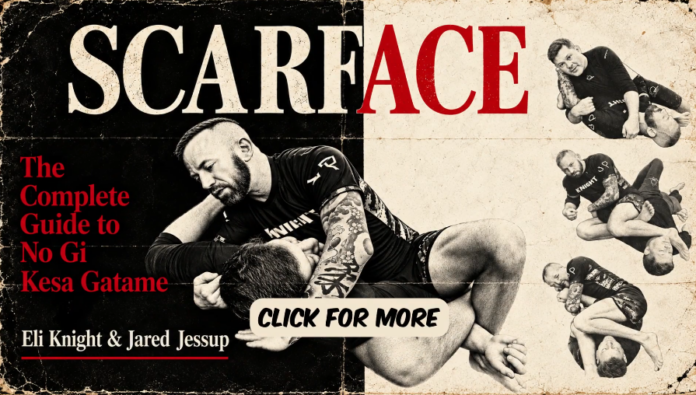
- Scarf-Ace No-Gi Kesa Gatame DVD review — Eli Knight and Jared Jessup’s four-part, 21-chapter digital instructional builds a complete pin, submit, transition and escape system around three No-Gi scarf-hold variations.
- Who it’s for — self-defense-first grapplers, MMA students and pin-heavy top players who want to attack from kesa gatame; not for sport No-Gi competitors chasing only the highest-percentage finishes.
- Biggest strength — a genuinely connected system across hon, kuzure and ushiro kesa gatame with an offensive and a defensive half, taught by two experienced Royce Gracie black belts.
- Biggest caveat — No-Gi head-and-arm control stays vulnerable to the bridge-and-roll and the back take, and a few finishes (do jime, legs americana) read as novelty or are contested by ruleset.
- BJJ World Expert Rating: 7.5 out of 10.
Eli Knight & Jared Jessup Scarf-Ace No-Gi Kesa Gatame DVD DOWNLOAD
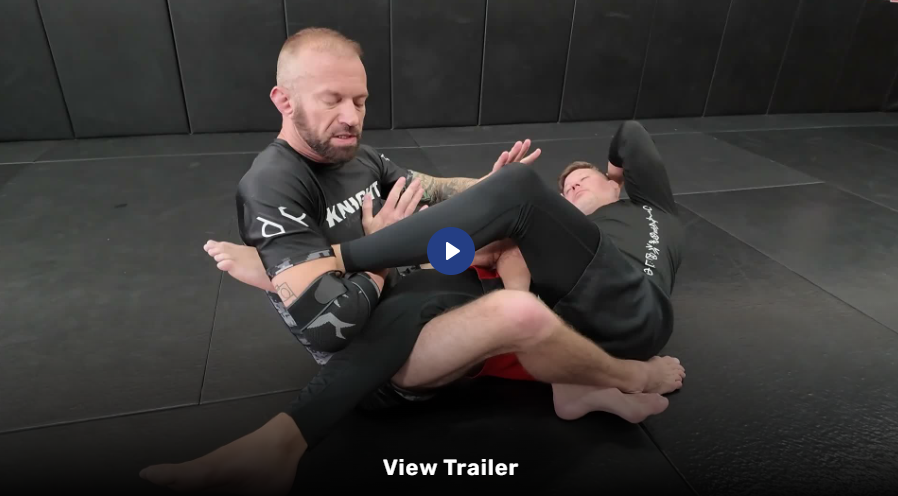
Eli Knight and Jared Jessup have built their teaching careers around a self-defense-first reading of Jiu-Jitsu, and their latest collaboration asks a sharper question than most instructionals bother with. Can kesa gatame — a Judo pin designed around jacket grips — actually hold up as a pinning and submission system once the Gi comes off? Scarf-Ace is their four-part attempt to answer it, and the answer is more complete than the release copy suggests.
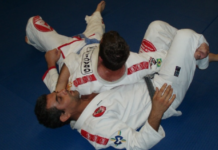
The course is organized around three variations of the scarf hold: hon kesa gatame, kuzure kesa gatame and ushiro kesa gatame. From each, Knight and Jessup layer arm locks, chokes, leg attacks, mount and back transitions, and finally escapes, so a student learns the position from both the attacking and the defending side.
The Original 100 KG Side Control
Kesa gatame occupies an odd place in modern grappling. In Judo it is a scoring pin and a launching pad for a deep catalogue of jacket-grip attacks, but in No-Gi it tends to be treated as a moment you pass through rather than a place to settle. The reason is structural: the scarf hold controls the head and the near arm, and without jacket grips to anchor the position, a determined bottom player can bridge, turn in and chase the back. The entire premise of a No-Gi scarf-hold system has to answer that pressure.
That is what makes a dedicated course worth looking at rather than redundant. Knight and Jessup build everything on the idea that head-and-arm control — not the grips — is the load-bearing structure of the pin, and that the same control that holds the position also opens the submission. This is not the first scarf-hold instructional to hit the market, and kesa gatame has been covered at the technique level before, but Scarf-Ace’s claim is narrower and more specific: a full No-Gi system built around three related holds.
A Couple of Innovative Grapplers
Both instructors came up under Royce Gracie, and both received their black belts from him in 2011. Eli Knight is a fourth-degree black belt and the founder of Knight Jiu-Jitsu, with more than three decades in the martial arts; he has taught civilians, law enforcement and military groups, and built a wide following through close to 700 technique videos online.

Jared Jessup is a Royce Gracie black belt and the founder of iQ Jiu-Jitsu in Benton, Illinois, whose self-defence-first background includes Gracie Survival Tactics certification and years of teaching defensive tactics to agencies. The pair have collaborated before — notably on the Cross Examination deep-dive — so this is an established teaching partnership rather than a one-off.
Eli Knight & Jared Jessup: Scarf-Ace No-Gi Kesa Gatame DVD Review
The four parts are sequenced to take a grappler from the standard hold outward into increasingly unusual territory, then back to the escapes that make the whole thing trainable against resistance.
Part 1: Hon Kesa Gatame
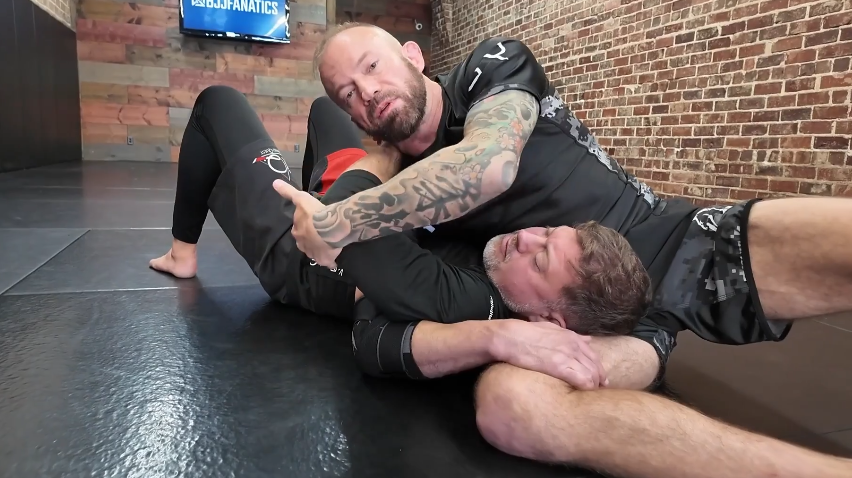
The course opens with classic kesa gatame, a standard scarf hold, and spends real time on its positional variations before any submission. From there it works the near-side attacks — with straight arm locks, bent and straight, followed by a sleek mount transition. Knight and Jessup put the weight, hip and head control first, which is the correct order for a system built around a pin rather than a single finish.
Part 2: Kuzure Kesa Gatame
The modified scarf hold is where the material gets more inventive. The “shotgun” arm bar, legs americana, and a mounted sankaku all build the attacking side from kuzure kesa gatame. Several of these are finishes a grappler will rarely see taught from a scarf hold, which is the section’s appeal — and its risk, since the less common a finish is, the more it needs live pressure to earn its place.
Part 3: Darce, Reverse Scarf and Ushiro Kesa Gatame Attacks
This part widens the scope beyond the near-side arm. It connects the hold to darce opportunities, reverse pillow scarf submissions (personal favourite), and the mounts and back takes available from ushiro (reverse) kesa gatame, plus an irimi ashi garami leg entry that gives the system a lower-body option. The back-take and mount material matters because it answers the standard criticism of the scarf hold — that holding it too long invites the bridge-and-roll — by giving the top player somewhere to go when the pin starts to slip.
Part 4: Apathy Entry and Kesa Gatame Escapes
The closing part is the most practical for a room full of resisting partners. Knight and Jessup cover the “apathy” entry and its submissions from ushiro kesa gatame, then three escapes for hon kesa gatame and the escapes from kuzure and ushiro kesa gatame. Teaching kesa gatame escapes from both sides is the quiet strength of the whole product: it means a student can drill the position live, learn where it fails, and understand why the top-side details matter.
Pinning Like a Judoka
This is not a grab-bag of scarf hold submissions to cherry-pick for a highlight reel. The material is best absorbed as a system: learn the pin and its head-and-arm control in Part 1, then add the kuzure and ushiro options as the position gets familiar. A hobbyist could drill the first part into a usable top-game option within a few weeks, while the full four-part sweep — including the escapes — is a several-month project that pays off most for someone who already plays a heavy, smothering top game.
One honest caveat: the finishing rate will depend on the room. Do jime is a Judo-derived chest-compression finish that some No-Gi rulesets treat cautiously, so competitors should check their rulebook before building a game around it, and the legs americana needs a specific leg configuration that a skilled partner will not hand over easily. These are real techniques, but they are not the bread-and-butter finishes a competitor leans on under fatigue.
Eli Knight & Jared Jessup Scarf-Ace No-Gi Kesa Gatame DVD DOWNLOAD
Who Is This For?
Scarf-Ace is aimed squarely at the self-defense-minded grappler and the MMA student who wants a pin that controls posture and opens strikes or submissions, as well as the hobbyist with a heavy top game who already likes head-and-arm control. It is less suited to the sport No-Gi competitor whose game is built around speed passes, leg locks and back chases — the position’s structural vulnerability to the back take is real, and the course does not pretend otherwise.
White and blue belts will find the clearest value in the foundational pin and the escapes; upper belts will get the most out of the kuzure and ushiro sections and the less-common submissions. Anyone who already owns a scarf-hold instructional, or who has no interest in pinning as a strategy, can safely pass.
Pros And Potential Drawbacks
Pros:
- A real system, not a technique dump. The three holds are connected, and every attack links back to the same head-and-arm control, so the material coheres in a way single-position courses often do not.
- Both sides of the pin. Including escapes for hon, kuzure and ushiro kesa gatame makes the system trainable live and teaches why the top-side details matter.
- Credible, experienced instructors. Two Royce Gracie black belts with decades of self-defense teaching, not a recycled competition set.
- Genuinely under-covered material. No-Gi kesa gatame gets little dedicated instruction, and the legs americana, mounted sankaku and irimi ashi garami entries are not standard fare.
- Reasonable price-to-scope. $79 for four parts and roughly two hours, with a 30-day refund window on un-downloaded content.
Potential Drawbacks:
- No-Gi head-and-arm control is inherently leaky. The bridge-and-roll and the back take are the position’s kryptonite, and the course mitigates rather than eliminates them.
- Some finishes are novelty-adjacent. Do jime and the legs americana are interesting, but they are not high-percentage competition finishes, and do jime’s legality varies by ruleset.
- Self-defense lineage, not No-Gi competition pedigree. Neither instructor is a top-level No-Gi competitor, so the system is not pressure-tested at the elite sport level.
Adding Pressure to Your Game
This Scarf-Ace DVD is not the answer for a No-Gi competitor looking for a new A-game, and it never claims to be. What it is, is a coherent, honestly framed answer to a question most instructionals skip: whether the scarf hold can survive without the Gi. Knight and Jessup make a credible case that it can — as a pin-and-control game with real submissions attached — provided a grappler respects the position’s limits and drills the escapes.
Reviewed by: Ognen Dzabirski, BJJ black belt, full-time coach and gym owner. The views expressed by the author do not necessarily reflect the views of the publication