





Key Takeaways
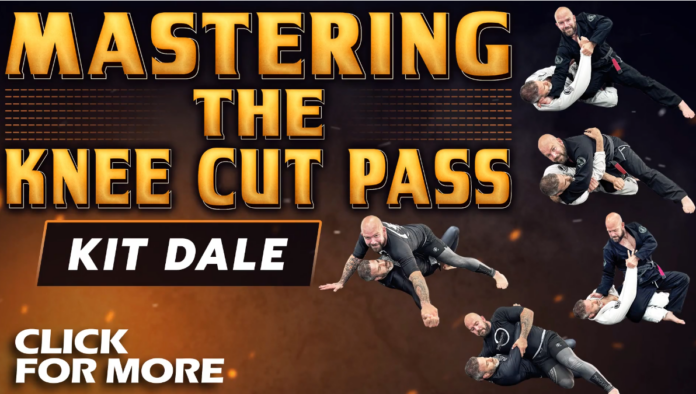
- A four-part passing instructional built around a conceptual opening section, then separate No-Gi and Gi knee-cut material, before a short section on secondary follow-ups.
- The strongest selling point is structure: Kit Dale does not jump straight into random finishes, but first frames the pass through gripping, body positioning, frame-breaking, and entry mechanics.
- The material looks most useful for grapplers who already use knee cuts sometimes and want a cleaner system, rather than for people hunting for a giant encyclopedia of every passing scenario.
- A nice bonus is that the set covers both Gi and No-Gi, which makes it easier to translate ideas across training formats.
- Rating: 8.5 /10
GET IT HERE: MASTERING THE KNEE CUT PASS KIT DALE DVD
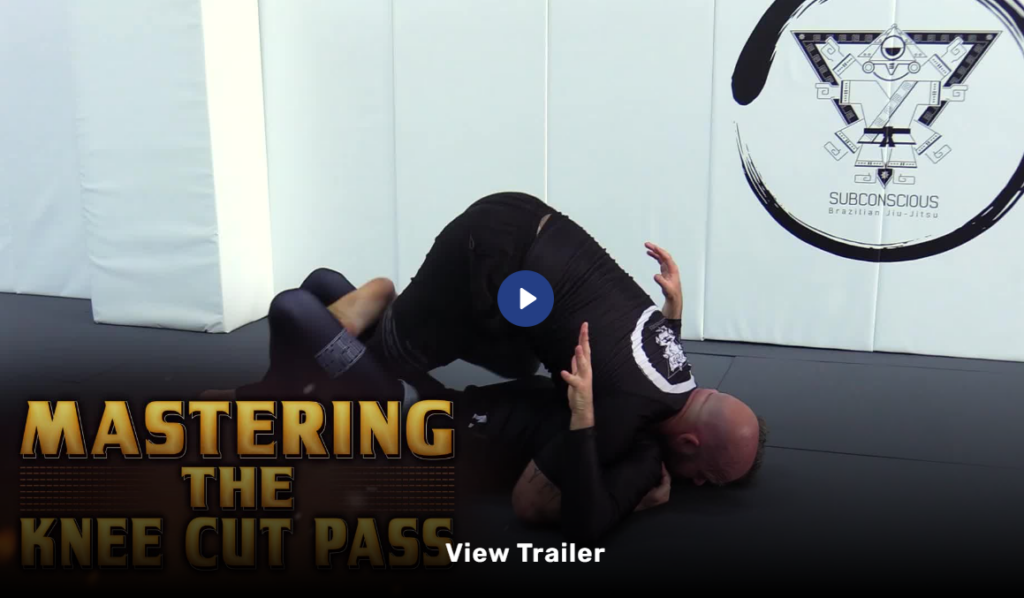
The Knee Cut Pass Kit Dale DVD is the kind of instructional that immediately makes sense on paper. The knee cut is one of those passes that never really goes out of style, because it works at every level, and connects naturally to pressure. This series is a four-part system focused on conceptual passing, Gi and No-Gi application, and secondary follow-up attacks, which is exactly the kind of scope you want from a niche passing instructional.
What I like right away is that this is not being sold as a flashy novelty pass. It is a study of a classic. Too many passing instructionals try to win you over with unusual entries or trendy movement patterns, but most people still build their top game around a handful of reliable, repeatable passes.
Knee Cutting 101
The knee cut sits in that sweet spot between pressure passing and mobility. You do not need to be the heaviest person in the room to make it work, but you also do not need to turn the match into a speed-based scramble every time you pass. That balance is why the pass stays relevant whether you train Gi, No-Gi, hobbyist rounds, or competition rounds.
What makes the Knee Cut Pass Kit Dale DVD interesting is not simply that it covers the pass, but that it tries to systematize it. That is important because the knee cut often gets taught as a single snapshot: underhook, shin across, slice through, settle.
In live rolling, though, it is never that clean. People frame, hip out, knee shield, sit up, and re-guard. A useful knee cut instructional has to help you deal with those layers, not just show the ideal finish.

That is also why I think the knee cut remains one of the best passing subjects for instructionals. It forces you to understand distance, angle, upper-body control, and the relationship between your cutting leg and your posting structure. If you learn it properly, you do not just get one pass. You get a better sense of passing in general.
About Kit Dale
The reason the Knee Cut Pass Kit Dale DVD carries some weight is obvious enough: Kit Dale has long had credibility as both a competitor and a teacher. He’s an ADCC veteran who reached black belt in four years under Yuri Simões. He won the 2017 ADCC Japan Trials, has multiple IBJJF Sydney titles, and has a knack fort he knee cut/slice pass.
That background matters for two reasons. First, Dale has long been associated with conceptual teaching rather than brute-force accumulation of techniques. Second, he is not teaching some random area disconnected from his own game. If anything, the knee cut is exactly the sort of position you would expect him to build a course around.
I would not call him the most detail-obsessed instructor in the classic, hyper-granular sense. His appeal is different. He is usually strongest when he explains why something works and how to make it fit into a broader game. For a passing instructional, that can be a very good thing.
Play-by-Play Knee Cut Pass Kit Dale DVD Review
The Knee Cut Pass Kit Dale instructional is organized into four parts: a conceptual first volume, a No-Gi section, a Gi section, and a final section on secondary attacks:
Volume 1 – Conceptual Framework For Passing
In practice, the Knee Cut Pass Kit Dale DVD starts in the right place. Before you get any how-to, you get the foundation: conceptual passing, gripping, access to the position, and frame management.
That is a smart decision. The biggest reason most people fail at knee cuts is not that they do not know the final motion. It is that they arrive there badly. Their posture is off, their grips are weak, their angle is late, or the bottom player’s frames are already doing the real work. A pass like this lives and dies in the setup.
The five limbs idea is the sort of thing that fits Dale’s style well. Even without overcomplicating it, it pushes the viewer to think in terms of control and resource management rather than memorized choreography. For me, this is one of the stronger parts of the whole set, because it gives the rest of the material a spine.
Volume 2 – No-Gi Applications
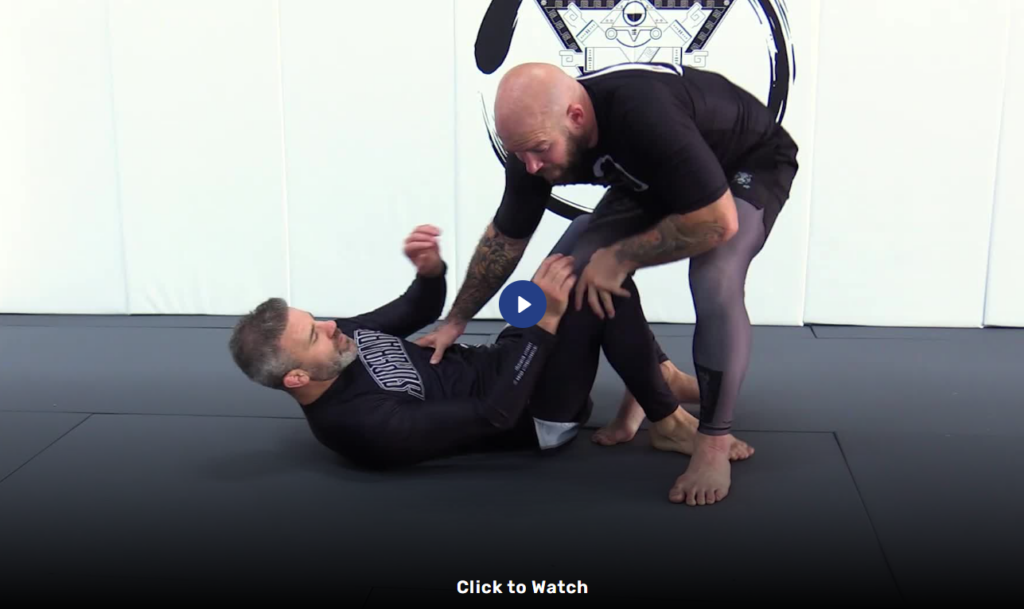
This is where the Knee Cut Pass Kit Dale DVD becomes more directly useful to modern grapplers. The No-Gi section covers low underhook and high underhook knee cuts, arm-smothering variations, an arm-lace option, seated-guard entries, and a double-underhook route to mount.
It is not trying to be absurdly exhaustive, but it does cover the core problem most people face in No-Gi: how do I keep my opponent pinned enough to slice through when cloth grips are gone and movement speeds up? The answer seems to be variation through upper-body control rather than abandoning the pass altogether.
I especially like the inclusion of both low and high underhook approaches. That suggests Dale is treating the knee cut as an adaptable family of passes, not a single frozen technique. That alone makes the material more realistic.
Volume 3 – Gi Variations
The Gi material is one of the better reasons to consider the Knee Cut Pass Kit Dale DVD, especially if you train both formats and want one passing language instead of two separate games. This section includes bottom-leg and collar-sleeve versions, lapel-based seated-guard entries, a lapel-wrap variation from the back, a hip-hole route, arm-lace with cross-face, and a high knee cut.
The Gi gives you more control, but it also gives your opponent more ways to slow you down. A knee cut that works in the Gi has to deal with friction, collars, sleeve frames, and layered guard retention.
From a buyer’s perspective, this is probably the section that raises the value ceiling. Plenty of instructionals do a decent job with No-Gi knee cuts. Fewer do a neat job of connecting Gi and No-Gi without making them feel like unrelated systems.
Volume 4 – Secondary Attacks
The last section is brief, but it is a good closer. Dale uses it for bottom-arm pin to mount, gift wrap to the back, and a hip-switch answer to the knee shield.
That matters because a passing system should not end the moment the opponent stops giving you a clean lane. Good passers do not just finish passes. They threaten adjacent control positions until the defender runs out of good choices. This section seems to acknowledge that.
I would not say Volume 4 turns the course into a full top-game encyclopedia. It is more of a practical extension. Still, that is better than ending the instructional the second the knee touches the mat.
Stapling Shins
For most people, the best way to use the Knee Cut Pass Kit Dale DVD is not to binge it once and then expect magic. This is the kind of material that should be studied in layers.
Start with Volume 1 and spend a week or two just working on entries, grips, and frame-breaking. Then pick one No-Gi variation and one Gi variation that suit your current game. Do not try to absorb every version at once. The whole point of a conceptual system is that it should narrow your focus, not scatter it.
This is also an instructional that seems to lend itself well to positional sparring. Begin from seated guard. Begin from knee shield. Begin from shallow half guard. Start with the top player already halfway into the knee cut and force both people to solve the position live. That is where the material is most likely to stick.
MASTERING THE KNEE CUT PASS KIT DALE DVD DOWNLOAD
Who Is This For?
The Knee Cut Pass Kit Dale DVD will suit a pretty broad range, but not equally. It makes the most sense for blue belts through black belts who already pass actively and want a cleaner structure around a pass they probably use anyway.
Competitive grapplers should also get something from it because the knee cut remains one of the highest-percentage ways to pass when people are hard to hold down. It is also a nice fit for coaches, because conceptual passing material is usually easier to teach across a room than a pile of ultra-specific technique chains.
Brand-new white belts can still use it, but I would not call them the ideal audience. The pass itself is beginner-friendly, yet the value here seems to be in refinement and system-building. If someone barely understands base, posture, and guard passing priorities, they may not get the full return yet.
Pros & Potential Drawbacks
Pros:
- Strong conceptual foundation: Volume 1 gives the set a real backbone instead of treating the knee cut like a one-off move.
- Useful format crossover: Covering both Gi and No-Gi makes the material more flexible for everyday training.
- Variation without chaos: Dale seems to add options that solve real problems rather than padding the course with random branches.
- Good top-game continuity: The secondary-attack section helps connect passing to mount and back exposure.
Potential Drawbacks:
- Not the deepest passing course ever made: This is focused material, not a complete guard-passing library.
- Best value likely comes after you already use knee cuts: Total beginners may understand the pass, but not fully appreciate the refinements.
- Volume 4 looks a bit short: The follow-up section seems useful, but some buyers may want even more chaining after the pass begins to stall.
Start (Knee) Cutting!
The Knee Cut Pass Kit Dale DVD looks like a well-built, practical passing instructional centered on a pass that actually matters. The biggest strength is not novelty. It is clarity. Dale appears to approach the knee cut as a repeatable system built on entries, gripping, frame management, and format-specific adjustments.