





Key Takeaways
- Best for No-Gi grapplers who want a reliable straight ankle lock they can hit in live rounds (not just a “catch and pray” foot grab).
- Core focus: Short X / Butterfly Ashi finishing mechanics, plus the troubleshooting that actually solves the usual defenses (booting, standing, peeling grips, hiding the heel line).
- This isn’t a “20 entries” course—it’s a finishing course that builds pressure, control, and decision-making so the ankle lock stops being a coin flip.
- Limitations to know: If you’re hunting heel hooks first, you’ll need to mentally reframe why the straight ankle matters (and why it often wins earlier).
- Rating: 9/10
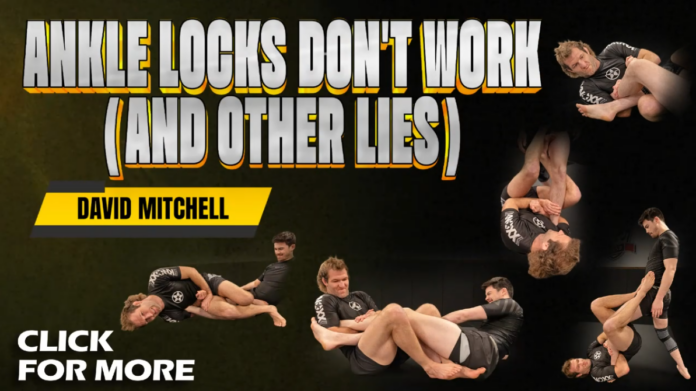
ANKLE LOCKS DON’T WORK DAVID MITCHELL DVD DOWNLOAD HERE
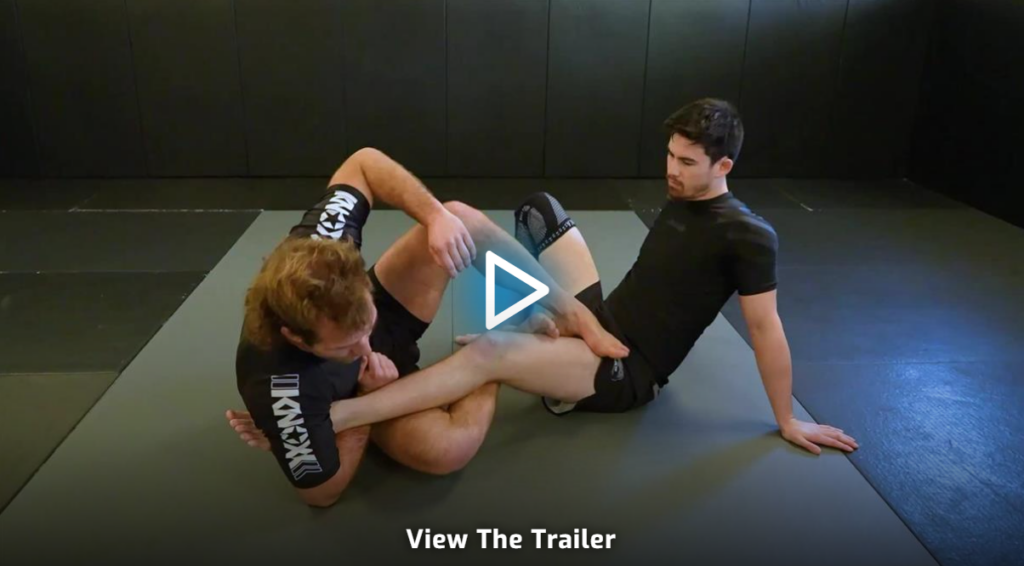
Ankle locks have a weird reputation in modern grappling: everyone knows they work, but plenty of people still treat them like the “budget leg lock” you threaten with until you can move on to something else. Ankle Locks Don’t Work David Mitchell DVD is basically a full-on rebuttal to that mindset—taught through a very specific lens: build a straight ankle lock that finishes even when your opponent does all the right defensive things.
Mitchell’s style here feels like it comes from real competitive friction: he’s not teaching the ankle lock as a single move, but as a chain of control problems you solve in order—bite, posture, inside space, pressure angle, and reaction. If your straight ankle lock has ever felt like it’s “almost there” until someone stands up, boots hard, or hand-fights you into nothing… this No-Gi leg lock instructional is designed for exactly that moment.
Ankle Locks Don’t Work (And Other Lies)
The straight ankle lock is one of the most misunderstood submissions in No-Gi because the finishing looks deceptively simple. People assume it’s about yanking the foot. In practice, the high-percentage finish is closer to a wedge-and-fold: you’re controlling the foot’s ability to rotate, controlling the knee line so they can’t run, and creating an angle where their defensive structures collapse under pressure.
That’s why positions like Butterfly Ashi remain gold even in a heel hook-heavy era: they give you a stable lever on the leg while keeping your upper body free to win the grip battle. When done right, you’re not “chasing” the ankle lock—you’re forcing your partner to carry your structure, then tightening the trap.
The big hidden advantage, especially for IBJJF legal leg locks purposes, is how often a clean straight ankle lock forces a predictable sequence: boot → stand → rotate → hand-fight → give up balance. A truly good ankle lock system doesn’t just finish—it creates sweeps, back-takes, and passes because the defense is so scripted. That’s the lane this instructional lives in: turning the ankle lock into a game plan, not a “hope submission.”

All About Leg Locks: David Mitchell
David Mitchell (often listed as David Charles Mitchell in event results) is a competitive Black Belt with strong credentials in Masters divisions, particularly in No-Gi. He won the Masters 2 Black Belt Open Class at the IBJJF No-Gi Worlds in 2023 and also medaled in his weight category at that same event—proof that his leg lock approach isn’t theoretical or purely gym-room.
That matters for this topic because straight ankle locks are one of the most tested submissions in the sport—everyone has a defense, everyone has an opinion, and the meta has moved fast. Mitchell’s credibility here comes from the fact that he’s building a system around the ankle lock that holds up against experienced opponents who know exactly what you’re trying to do.
The Full Ankle Locks Don’t Work David Mitchell DVD Review
This course is structured like a practical conversion kit: it starts from the end (finishing), then builds the grip framework, then adds pain/pressure escalations, then shows entry routes. Then, it spends serious time on troubleshooting and common reactions (especially standing defense), and finally ties it into 50/50 and saddle situations before ending with drills and positional work.
Volume 1 – Short X Foundations
Mitchell opens by planting a flag: he wants you to become a Short X king, and he frames the ankle lock as something you should understand from the finish backward. Instead of dumping you into a bunch of entries, he prioritizes what submits actually bite—your relationship to their hip line, the way you structure your legs, and the kind of angle you need before you ever squeeze.
This volume feels like it’s designed to fix the common “looks right, doesn’t tap” problem. He layers in the small adjustments that change everything: how your secondary leg helps control rotation, where your body should be relative to their knee line, and how you choose between committing to the finish versus coming up for the sweep when the defense gives you that option. The troubleshooting section is especially important here because it establishes the tone of the whole series: you’re not just learning a move; you’re learning what to do when the move doesn’t work immediately.
Volume 2 – Grip Frameworks & the Apollo Lock
If Volume 1 is the lower-body structure, the second portion of this DVD is the upper-body engine. Mitchell outlines multiple grip options and then organizes them in a way that makes decision-making faster—so you’re not always improvising your hands mid-scramble. The point isn’t “use grip A always,” but rather understanding what each grip gives you: better control, better squeeze mechanics, better ability to survive hand-fighting, or better angle for the finish.
He also introduces the Apollo Lock concept here as a way to reinforce the break when a standard finish isn’t getting the reaction you want. The value of this volume is that it makes your ankle lock less fragile: if your partner is good at peeling hands, stripping grips, or riding out pressure, the grip system becomes your toolkit for re-attacking without losing the leg.
Volume 3 – Pressure Escalation & Pain Management
Volume 3 has a clear theme: if your opponent is durable—or if your mechanics are close but not quite perfect—you need ways to escalate pressure without losing position. Mitchell introduces options like the elbow kickstand and other named variations (including the Sole Crusher and the 404) to give you finishing tools that feel more like “pressure locks” than quick snaps.
This is where the instructional starts to feel very competition-friendly. Rather than encouraging frantic reaping of the ankle, it teaches how to keep your structure while increasing discomfort and limiting the opponent’s ability to rotate out.
Volume 4 – Half Guard and K-Guard
This is the “how do I get there?” volume, and it’s also where Mitchell starts connecting leg attacks to broader positional outcomes. He covers entry routes like the half guard swim-through and multiple paths from K-Guard into X and Short X.
The emphasis is less on flashy inversion and more on getting your hips and legs aligned so you land in the position ready to finish, not ready to scramble. What makes part 4 especially useful is that it doesn’t treat the ankle lock as a dead-end. Mitchell includes follow-ups around passing—both “passing on feet” and “passing on knees”—which is exactly how a real match often plays out: you attack, they defend hard, and now they’re compromised in a way that should let you advance.
The “dynamic entries” section reinforces that you’re rarely entering on a perfectly still opponent; you’re entering in motion, and your job is to arrive with control rather than chasing speed.
Volume 5 – Troubleshooting
If there’s a meat and potatoes section of this instructional, it’s this volume. Mitchell explicitly addresses why he prefers Short X to outside ashi in this context, then spends serious time on the real-world problems that kill ankle locks: distance management, booting, subtle adjustments to re-bite, and the exact moments where you need to reset rather than force.
He also goes hard on standing defense—arguably the most common survival tactic once someone feels the lock. This includes proactive answers (like transitioning to variations such as the Aoki-style finish when appropriate), decisions about when to go belly-down, and how to keep control when your opponent is rising and trying to shake you off. le.
There’s also an advanced link here connecting shin-on-shin into single leg X into Short X, which helps bridge the gap for grapplers who like to play open guard and want a consistent path into their finishing position.
Volume 6 – 50/50 and Saddle
In modern No-Gi, you don’t always get to live in your preferred entanglement—sometimes you land in 50/50, sometimes you hit a saddle-style position, sometimes you’re forced into a leg pummeling exchange. Mitchell addresses both 50/50 and saddle as practical realities and shows how to apply his approach inside those frameworks.
The important takeaway is that he’s not trying to turn this into a heel hook course. Instead, he’s showing how the straight ankle lock remains relevant—even in positions where people assume the “real” threat must be rotational. If you compete in rulesets that limit heel hooks, or you simply want a submission that’s available more often, this integration helps you keep your game coherent when the entanglement changes.
Volume 7 – Drills, Positionals, and Making it Stick
The final volume is where the instructional becomes easiest to implement. Mitchell provides drills and positional sparring ideas that reinforce the key habits: clean entry alignment, grip retention, angle creation, and reacting correctly to common defenses. This matters because ankle locks aren’t just technique—they’re timing and feel. If you only “watch” ankle locks, you’ll still miss the micro-adjustments that make the finish click.
Ankle Locks Scare People – Use Them More!
To get real value out of this instructional, treat it like a short training block, not a one-night binge. A realistic plan looks like this: spend your first week living in the Volume 1 world—finish mechanics and structure—because everything else collapses if you can’t actually make people respect the bite. In week two, add the grip framework from Volume 2 and one pressure escalation from Volume 3, then immediately test it in positional rounds starting from Short X.
Week three is when you start building the game: pick one entry route (half guard swim-through or a K-Guard path) and make it your default way to arrive in position. Then spend a full week using Volume 5 as your troubleshooting map—especially the standing defense sections—because that’s the point where most straight ankle locks fail in sparring.
Finally, sprinkle in Volume 6 only as needed: if your room constantly forces 50/50 or saddle exchanges, use it to keep your ankle lock threat alive without changing who you are as a grappler.
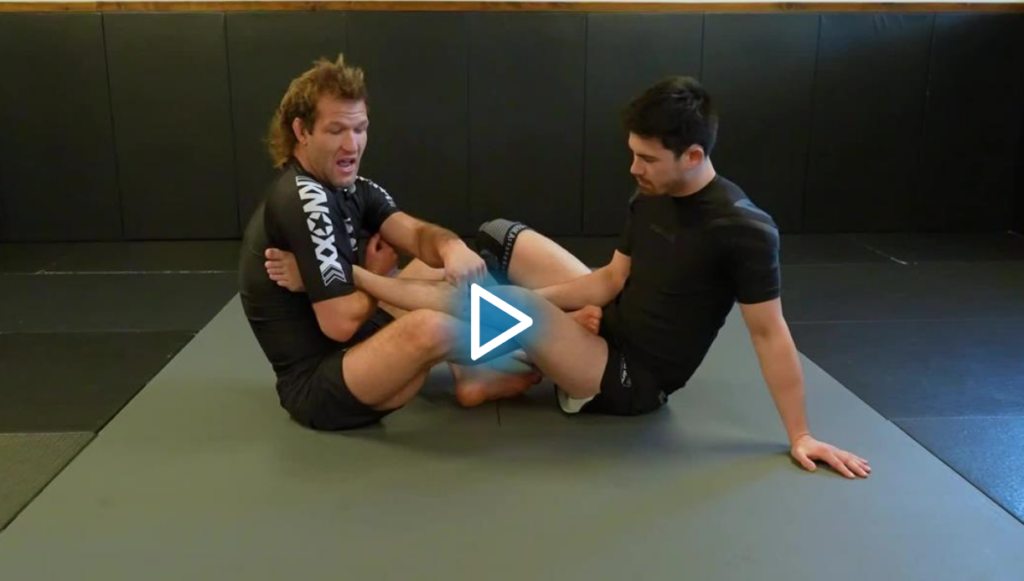
AVAILABLE HERE: ANKLE LOCKS DON’T WORK DAVID MITCHELL DVD
Who Is This For?
This instructional is a strong fit for solid white belts through purple belts who already understand basic leg entanglement positioning but haven’t developed a truly consistent finish. Early white belts can still benefit, but they may need a coach to help them recognize knee line, inside space, and angle before they can fully apply the details.
Style-wise, it’s great for No-Gi players who want a high-percentage straight ankle lock system that works in live rounds without relying on athletic scrambling and modern guard players who like shin-on-shin, single leg X, or K-Guard and want a direct path to a finish.
Maybe skip this one if you only want heel hooks and see the straight ankle as secondary—you’ll still learn a lot, but you need to buy into the premise. Pure Gi specialists who rarely play No-Gi leg entanglements will find that the concepts translate, but the emphasis here is clearly No-Gi reality and reactions.
Pros & Potential Drawbacks
Pros:
Clear “start from the end” teaching approach that fixes the biggest problem: getting the finish to actually work under resistance.
Strong troubleshooting layer (especially for standing defense and boot defense), which is where most ankle lock instructionals fall short.
Practical grip framework that helps you win hand-fighting battles instead of constantly losing your bite mid-attack.
Entries connect naturally to real guard scenarios and include pass follow-ups, so your leg attacks feed your overall game.
Drills and positional sparring guidance makes it easier to build the skill into your rounds, not just your knowledge.
Potential Drawbacks:
If you want a wide “encyclopedia” of entries, this is more of a focused finishing-and-reaction system than a huge catalog.
Some named variations will click best for grapplers who already have decent positional control; brand-new players may need extra reps to feel the differences.
Heavy No-Gi emphasis—Gi-only players will need to adapt grips and reactions to their environment.
Ankle Locks Work!
If your ankle locks have felt like a gamble—strong on compliant partners, weak on anyone good—this is the type of instructional that can genuinely change that. The biggest win is how Mitchell frames the straight ankle lock as a sequence of solvable problems: structure, grip, angle, inside space, and reaction.
Ankle Locks Don’t Work David Mitchell DVD earns its title by attacking the exact reason people say ankle locks “don’t work”: they’re doing them without control layers. Mitchell gives those layers, then backs them with troubleshooting and training methods that translate to live sparring.