










- Teen chokes to death with Jiu-Jitsu belt while attempting a viral TikTok challenge.
- Six families are suing TikTok and ByteDance, alleging the app’s recommendation system pushed a dangerous “Blackout Challenge” to minors.
- The Delaware portion of the case involves Michelle Ortiz, who says her 17-year-old son Jaedon Bovell died in 2020 after attempting the trend using a Jiu-Jitsu belt.
- Five UK families are tied into the same filing, pushing for “Jools’ Law” to preserve a child’s platform data after a death.
- TikTok is trying to dismiss the case, setting up a wider legal test around algorithmic recommendations and responsibility.
Mom Sues TikTok After Son Dies Attempting Viral “Blackout Challenge”
A Delaware lawsuit is dragging a grim, very BJJ-adjacent detail into the mainstream: Teen chokes to death with Jiu-Jitsu belt is the headline-level shorthand for what one family says happened after a dangerous “Blackout Challenge” trend surfaced on TikTok.
At the center of the Delaware claim is Michelle Ortiz, who says her son, 17-year-old Jaedon Bovell, died in 2020 after allegedly attempting the challenge.
Five other families from the United Kingdom are part of the same legal action, arguing that platform design and recommendation systems can accelerate risky behavior faster than parents—or even schools—can realistically keep up.
The case is now sitting at a crucial early stage: if the judge allows it to proceed, the families hope the legal process will force disclosure about what content their children were shown, how it was recommended, and what internal safeguards existed (or didn’t) at the time.
What The Lawsuit Claims And Why Jiu-Jitsu Gear Is In The Headline
The families’ core argument isn’t just “dangerous videos exist online.” It’s that the delivery system matters. They claim TikTok’s “For You” feed is engineered to keep users watching—and that, for minors, that can mean being served more extreme material once the algorithm thinks it’s found a hook.

For grapplers, the Jiu-Jitsu belt detail hits differently because it’s familiar household gear: thick cotton, long, and easy to leave in a gym bag or draped over a chair in a bedroom.
No one in Jiu-Jitsu is “responsible” for a viral trend, obviously—but the detail underscores a bigger point: a platform-fueled dare can hijack everyday objects in the worst way possible.
TikTok, for its part, has argued it shouldn’t be held liable for content created by third parties, and has leaned on longstanding legal protections that tech companies often cite in these cases.

The families’ side is pushing the opposite framing: that algorithmic recommendation is not passive hosting—it’s an active product feature with foreseeable consequences. This incident, where a teen chokes to death with Jiu-Jitsu belt is not as isolated as it may seem.
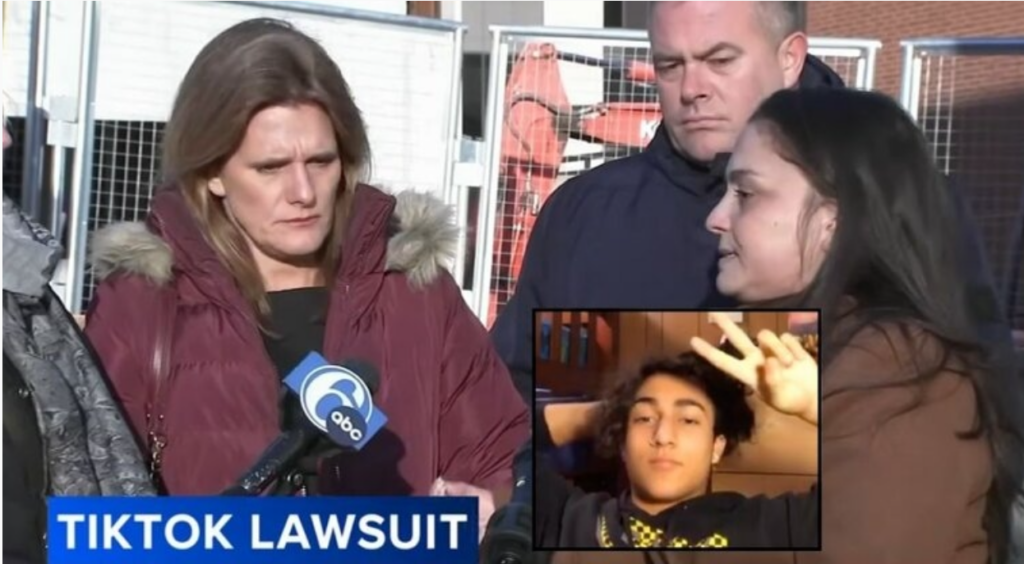
Teen Chokes to Death with Jiu-Jitsu Belt: What Michelle Ortiz Alleges Happened
Ortiz’s claim centers on her son’s death in 2020, and her allegation that TikTok’s design exposed him to a trend with life-or-death stakes. The lawsuit’s broader theme is that minors don’t engage with a neutral library of content—they engage with a system that decides what comes next.
Children make decisions not knowing finality like adults do, and they bank on this.
– Michelle Ortiz –
That idea—kids making impulsive choices inside an environment engineered for compulsion—shows up repeatedly in how families are talking about the case. The parents involved say they’re not only seeking damages; they’re trying to force changes that reduce the chance another family ends up living the same nightmare.
And for BJJ readers, it’s hard to ignore how the phrase Teen chokes to death with Jiu-Jitsu belt lands: it’s not a “martial arts story,” but martial arts equipment is now part of the public conversation around online safety.
The UK Families, “Jools’ Law,” And The Bigger Data Fight
Alongside the Delaware family, five UK families are tied into the filing, with their own painful common thread: they believe an online trend played a role in their children’s deaths, but they say they can’t fully prove what their kids saw because they can’t access the relevant platform data.
That’s where “Jools’ Law” enters the picture—an effort that would require social media companies to preserve a child’s data quickly after a death, rather than letting it vanish behind retention policies, privacy arguments, or jurisdictional roadblocks.
In plain terms: parents are arguing that “we deleted it” shouldn’t be the end of the story when a child dies and a platform may hold the answers.
This is also why the courtroom stage matters. If the case moves into discovery, families hope they’ll finally learn what content was served to their children and why.
TikTok has suggested that, especially for UK-based accounts, the matter should be addressed in the UK rather than in a US court—another layer in a legal battle that’s as much about geography as it is about technology.
TikTok has a For You page that deluges young kids with dangerous material… material they can’t turn away from.
– Matthew Bergman, Attorney For The Families –

What Parents And Coaches Can Do Right Now
While courts argue about liability, families and coaches are stuck dealing with the reality: viral challenges move at the speed of an algorithm.
A few practical takeaways that don’t depend on lawsuits or legislation:
- Don’t wait for a kid to call it “self-harm.” These trends are framed as “challenges,” “tests,” or “dares”—and that language can lower the perceived risk.
- Use restrictions, but assume workarounds exist. Time limits and content controls help, yet reposts, coded captions, and reaction clips can slip through.
- Explain how the feed works. A useful conversation isn’t “don’t do dumb things.” It’s: the app learns what holds your attention and then escalates what it serves you.
- Make training gear boring and safe at home. If your household has Jiu-Jitsu belts (or anything long and strap-like), don’t treat it like a harmless accessory in a teen’s room. Basic risk reduction beats wishful thinking.
- For coaches: a 60-second reminder can matter. You don’t need a lecture—just normalize that internet “challenges” are real, and training gear isn’t for messing around.
Because the headline phrase Teen chokes to death with Jiu-Jitsu belt shouldn’t just function as clickbait—it should function as a warning.
This lawsuit is a collision between two realities: parents live in consequences; platforms live in engagement metrics. The families argue that when recommendation systems amplify dangerous trends, harm isn’t a freak accident—it’s a predictable risk of design choices that prioritize watch time.
Whatever the judge decides next, the grappling community will keep seeing these stories for a simple reason: Jiu-Jitsu is mainstream now. Belts, rash guards, and gear are common in homes—especially with teens who train. And as long as viral dares exist, the risk won’t stay “online.”