






Key Takeaways
- A Gi closed guard system that’s all about slowing the round down and turning pressure passers into predictable, controllable problems.
- Strong emphasis on getting to the clamp from common “real life” situations: classic entries, bad spots, and even off failed attacks.
- Attacks are sweep-first, then submission-heavy: triangles, armlocks, and follow-ups that keep the top player stuck choosing between bad options.
- Best suited for guard players (and competitors) who like structured progression over endless variations.
- Rating: 8.5/10
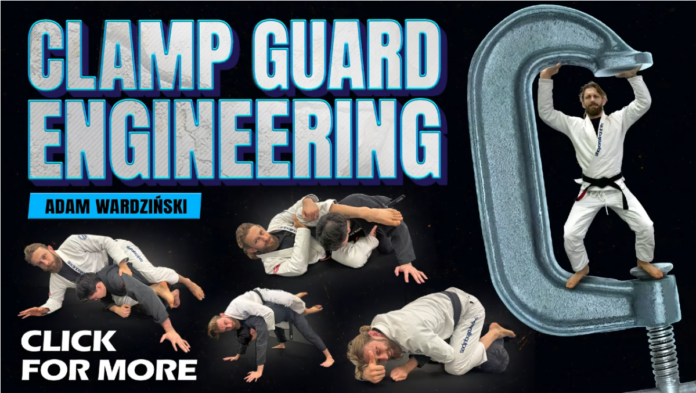
CLAMP GUARD ENGENEERING ADAM WARDZINSKI DVD DOWNLOAD
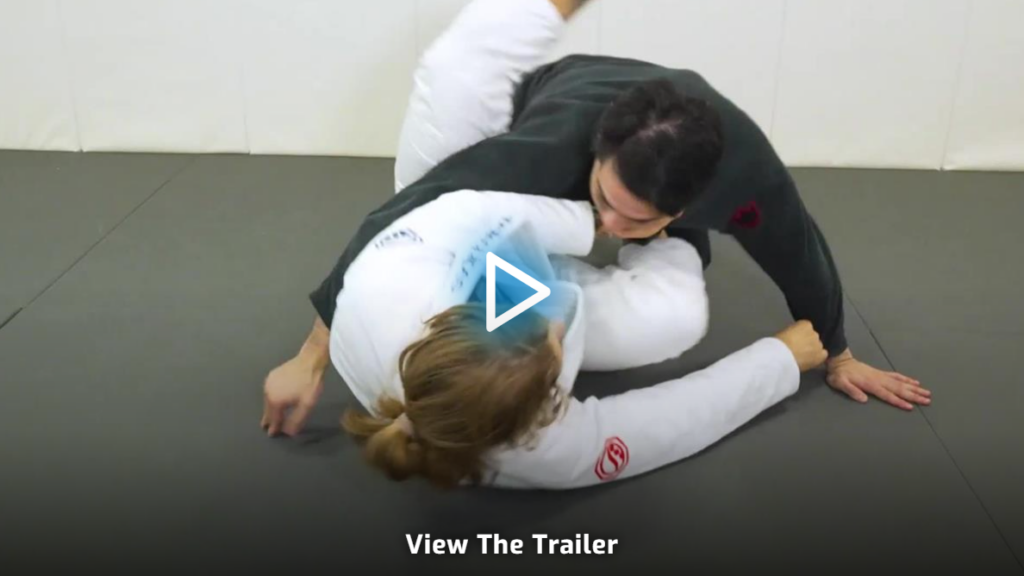
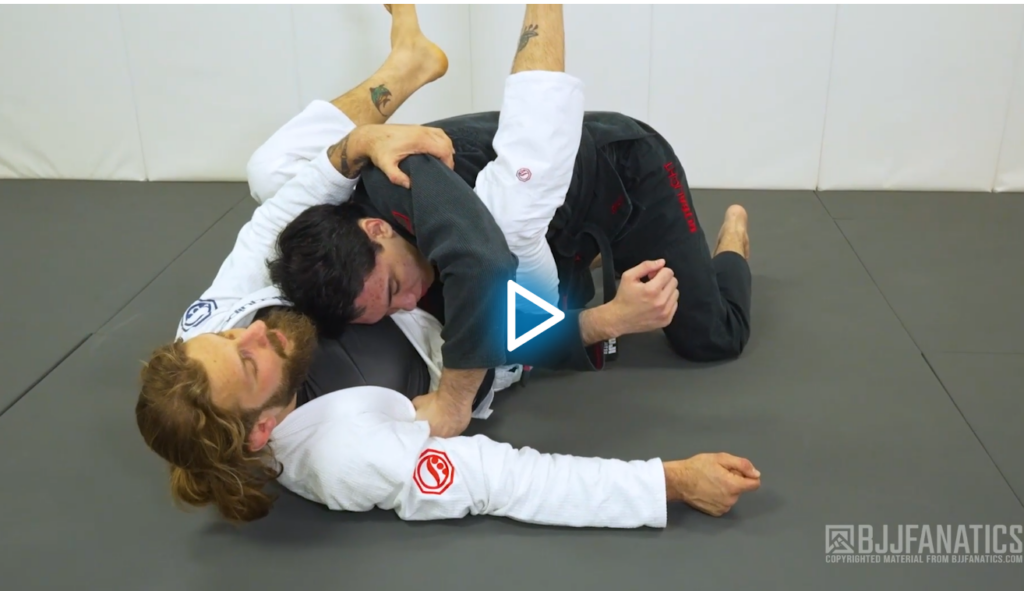
If you’ve ever watched Adam Wardziński compete in the Gi, you’ve probably seen that particular kind of guard control that feels unfair: the opponent looks like they’re passing… and then suddenly they’re glued in place, posture compromised, and getting tipped over by a hook sweep that barely looks like a sweep. The Clamp Guard Engineering Adam Wardzinski DVD is essentially a deep explanation of that feeling—how clamp guard sweeps and submissions work, why it’s such a reliable speed limiter, and how to use it.
The big promise here isn’t flashy innovation. It’s engineering: small mechanical priorities that make a classic guard idea hold up under modern pressure passing. Wardziński’s approach sits in a sweet spot—simple enough to repeat, structured enough to systematize, and meaningful enough to score in competition.
The Next Step in BJJ Guard Evolution
The clamp guard, broadly speaking, is one of those positions that doesn’t look like much until you feel it. It’s not open guard activity in the modern sense—there’s no constant spinning, no leg pummeling marathon. It’s more like a seatbelt for the bottom player: it limits the passer’s ability to freely posture, step out, and build passing layers.
That matters because most successful Gi guard passing today is built on rhythm. A good passer wins by stacking tiny advantages—clearing a knee line, forcing a frame to collapse, standing to break connections, then driving chest pressure. The clamp’s core value is that it interrupts that rhythm. It forces the top player to deal with a stable entanglement before they can even start “real passing.”
And once you can reliably pause the passer, you get to play the part that most guard players actually want: off-balancing into sweeps, and attacks that punish posture. If you like guard games where your best technique is keeping someone exactly where you want them, a clamp guard Gi approach is basically a permission slip to be patient, heavy, and annoying—in the best possible way.

The Always Entertaining Adam Wardziński
Adam Wardziński is a Checkmat black belt known for building a competition style around high-percentage guard control rather than highlight-reel variety. He’s often nicknamed “Megatron,” and the reputation fits: his game tends to feel mechanical, relentless, and weirdly calm while it’s dismantling you.
From a credibility standpoint, what makes him a strong instructor for this topic is the consistency of his competitive identity. Even when opponents know the general idea—hooks, posture control, slow strangulation of movement—they still get forced into the same set of losing reactions. That’s usually the sign you’re looking at a system rather than a bag of tricks.
In terms of accolades and competitive markers, Wardziński has notable results across major international circuits (including ADCC trials success and UAEJJF/IBJJF Open-level achievements). More importantly for a guard instructional, he’s someone whose A-game is clearly built around repeatable mechanics: win the connection battle first, then sweep/submit off the reactions. That’s exactly the lens Clamp Guard Engineering Adam Wardzinski DVD is trying to deliver.

Full Clamp Guard Engineering Adam Wardzinski DVD Review
The instructional is divided into four volumes that flow in a clean progression: get to the clamp reliably, sweep and triangle from it, layer armlocks and back takes, then connect the clamp to a Side Scissor framework that opens even more positional routes.
Volume 1 – Clamp Entries
Volume 1 is where Wardziński earns the engineering part of the title. He doesn’t treat the clamp like a random stop you happen to hit; he frames it as a position you can build toward from the situations guard players actually see every day.
You get entries from butterfly and closed guard, which is already useful because it ties the clamp to two of the most common engagement points in Gi Jiu-Jitsu. The more valuable layer, though, is the emphasis on entering from “bad” moments: when you’re losing the exchange, when something fails, or when you’re forced to recover structure under pressure.
That’s the difference between a position that works in drilling and a position that shows up in live rounds. The inclusion of clamp entries off failed submissions and even off a failed John Wayne sweep is a nice touch, because it frames the clamp as a safety net: miss an attack, don’t panic—clamp and re-stabilize.
Volume 2 – Attacks
The second part moves straight into offense, and it does it in the right order. Instead of immediately chasing submissions from a loose position, the clamp is treated like a control platform that naturally creates tipping points.
The main sweep option is introduced first, and that matters because sweeps are often the highest-percentage “proof” that your guard control is real. If you can consistently off-balance and reverse someone who’s trying to pass, your guard isn’t theoretical—it’s functional.
From there, triangles come in as the next layer, which makes sense for a clamp-based system: once posture is managed and the opponent’s reactions become predictable, triangle setups tend to appear without needing a ton of athletic repositioning. The reverse triangle options add a useful wrinkle too—because even when opponents start defending the “obvious” triangle line, the geometry of the clamp gives you alternate angles to keep them stuck in danger.
This is the part of Clamp Guard Engineering Adam Wardzinski DVD that will click fastest for competitors: sweep threat forces posture, posture creates triangle windows, triangle threat opens the next wave of attacks.
Volume 3 – Armlock Options
In part 3 it’s all about armlocks and the kind of top-player panic that armlocks create when their posture is already compromised. The simple armlock options framing is important: instead of presenting ten fancy finishes, Wardziński leans into reliable routes that come from controlling alignment first.
A straight armlock and a rolling armbar cover two different realities: one where the opponent is trying to stay square and safe, and one where the opponent is forced into motion to escape. You also get an omoplata concept section, which is valuable even if you don’t become an omoplata specialist—because it teaches you how to treat shoulder control as a positional lever, not just a submission.
The volume rounds out with a back take option, which fits the“punish reactions theme. When someone is stuck in a clamp and starts making desperate posture decisions, back exposure can show up as a byproduct of them trying to free themselves.
Volume 4 – The Side Scissor
Volume 4 is where the system expands into a related structure: the Side Scissor. This is essentially Wardziński showing how the clamp isn’t a dead-end position—it’s a connector that can shift into a new control framework with its own offensive routes.
You get multiple back take variations (including a specific look at back taking when the opponent goes to all fours), plus transitions that turn failed back takes into mount paths. That sequence matters: it shows a very competition-friendly mindset—don’t treat missed attacks as failure; treat them as steering wheels into the next dominant pin.
There’s also an armlock route off attempted back takes, and a flower sweep from the side scissor. The final “putting the clamp and side scissor together” segment is basically the summary glue: how the two positions feed each other so you can keep someone trapped in your preferred style of bottom control until you sweep, submit, or climb to a pin.
Starting to Clamp
The fastest way to make this Adam Wardzinski Clamp Guard instructional pay off is to treat it like a training block, not a binge-watch. Pick one entry route (closed guard or butterfly), then pick one “rescue” route (entries from bad positions), and build your first month around reliably finding the clamp in live rounds.
A practical training method:
- Entry-only goal. Your “win condition” is getting to the clamp and holding it for 5–10 seconds without rushing.
- Add the primary sweep. Positional spar: start in clamp, top tries to posture/pass, bottom’s only goal is the sweep.
- Introduce triangle layer. Same sparring format, but now you alternate between sweep attempts and triangle threats depending on posture.
- Choose one armlock and one transition to the side scissor. Your goal becomes chaining: clamp → attack → re-clamp or side scissor.
If you approach Clamp Guard Engineering Adam Wardzinski DVD this way, you’ll build something rare in guard training: predictability for you, unpredictability for them. You know exactly what you’re hunting. They know you’re hunting it too—and they still end up stuck dealing with the same traps.
GET HERE CLAMP GUARD ENGENEERING ADAM WARDZINSKI DVD
Who Is This For?
This is a Gi player’s instructional, first and foremost. If you spend most of your time in No-Gi, you’ll still learn ideas about connection and posture control, but the system is clearly designed for Gi realities: grip fighting, pressure passing, and the slower battle for alignment.
Belt-level wise, motivated white belts can absolutely take pieces from it—especially the core clamp mechanics and early sweep threats. That said, the people who will squeeze the most value out of this are solid blue belts through black belts, because they already understand the “why” of guard retention and can immediately plug clamp entries into existing guard frameworks.
Style fit:
- Great for guard players who like butterfly/half-butterfly style engagement, and anyone who enjoys closed guard concepts but wants a more modern, pressure-resistant structure.
- Strong for competitors who want a system that produces two-point reversals and positional climbs (mount/back) rather than living and dying by low-percentage submissions.
- Less ideal for players who prefer constant mobility guards and don’t enjoy playing a “sticky” control game.
Pros & Potential Drawbacks
Pros:
- Entry emphasis from realistic scenarios: not just perfect setups—also bad spots and failed attacks, which is where systems either work or die.
- Clear sweep-to-submission layering: the clamp becomes a control platform that forces predictable reactions, making attacks feel earned rather than forced.
- Triangle and armlock coverage complements the position: you’re not just sweeping—you’re building a full threat tree off posture control.
- Strong connector volume (clamp ↔ side scissor): helps prevent the common “cool position, now what?” problem.
- Competition-friendly decision-making: missed attacks are treated as routes to the next control point, not as resets.
Potential Drawbacks:
- Very Gi-specific: No-Gi-only athletes will get less direct application.
- Narrow focus (by design): if you’re looking for a giant “full guard encyclopedia,” this is a deep dive into one major tool, not a broad survey.
- Some value depends on mat time: the clamp is about feel—newer grapplers may need repetition before it clicks under pressure.
If It Works for Adam…
There are instructionals that try to impress you with volume, and there are instructionals that try to change the way your rounds feel. This one is the second type. The Clamp Guard Engineering Adam Wardzinski DVD delivers a structured, pressure-resistant guard control tool that naturally leads into sweeps, triangles, and armlocks—and then shows how to widen the system by connecting it to a side scissor framework.