










- A new student says a coach pitched a BJJ blue belt after one month—for $800—because the student had a wrestling background.
- The student claims he declined and left; the story reignites the belt-mill debate: testing fees vs. selling rank.
- We break down why a transactional BJJ blue belt after one month is a red flag, what real first-belt standards look like, and how to vet a gym in a single drop-in.
Wrestler Offered BJJ Blue Belt After One Month for $800
A first-month student says a coach offered him a BJJ blue belt after one month of classes—if he paid $800 up front.
The allegation, shared publicly by the student and picked up by BJJ outlets, has ignited a familiar debate inside jiu-jitsu: where legitimate testing fees end and selling rank begins.
According to the student, the pitch leaned on his past as a wrestler, framing the fee as a fast track beyond the white-belt grind and into a BJJ blue belt after one month. He says he initially laughed, thinking it was a joke, before realizing the offer was serious.
“He told me that given my wrestling background he can just promote me to blue belt if I pay him 800.”
– Student account –
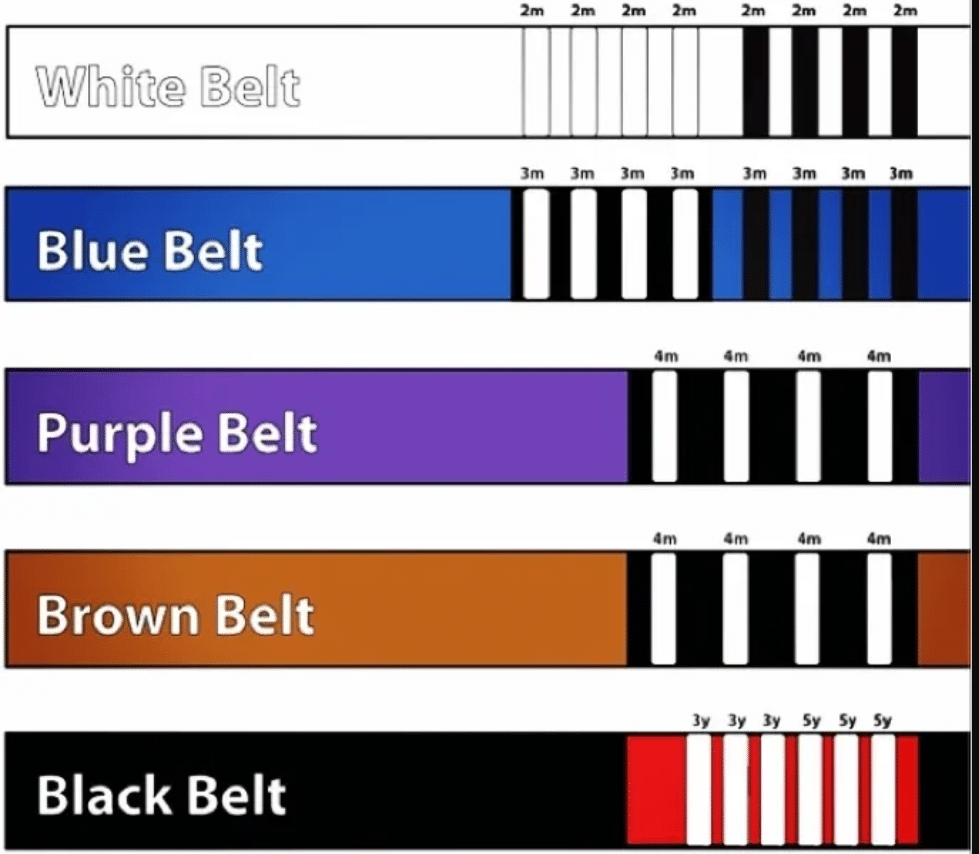
Testing Fee Or Rank For Sale?
On paper, jiu-jitsu’s promotion culture varies widely. Some gyms schedule formal evaluations and charge modest administrative fees to cover belts, certificates, and event logistics.

Others promote organically—no test, no fee—when coaches are convinced a student consistently rolls at the target level.
What touched a nerve here is that the outcome, a BJJ blue belt after one month, was allegedly tied to a lump-sum payment and a calendar date rather than demonstrated, BJJ-specific competence.
“At first I laughed… then I realized he was serious. I said no and left.”
– Student account –
Coaches who weighed in online were blunt: the distinction between an admin fee and a purchased belt isn’t semantic, it’s structural.

One pays for a process; the other pays for a result. When the result—BJJ blue belt after one month—is promised in advance, the signal that rank is supposed to send to training partners becomes unreliable.
Wrestling Helps. It Doesn’t Replace BJJ.
Part of the controversy is the “wrestler exception.” A strong wrestling base does accelerate certain pieces of jiu-jitsu: entries, balance, top pressure, and pacing under contact.
But blue-belt competency lives in BJJ-only zones—guard work, submission defense, and positional escapes that wrestlers don’t learn by default.
A brand-new wrestler can dominate from top and still gift their arms and neck to basic attacks. That’s why credible programs insist on seeing live rounds that stress BJJ-specific defense before a promotion enters the conversation.
The student at the center of this story echoed that logic himself, saying he didn’t want a shortcut that would crumble the first time he rolled hard with established blues.
“I don’t want a belt I didn’t earn. I want to roll with blues and know I belong there.”
– Student account –
What Legit BJJ Promotions Usually Look Like
Talk to a dozen reputable academies and you’ll hear similar themes delivered in different ways. Coaches look for months of consistent mat time, not weeks.
They want to see safe habits—clean taps, no cranking, control under fatigue—alongside technical thresholds: retaining and passing guard on both sides; escaping mount, side, and back with intention; defending common submission chains when tired.
Some gyms formalize that audit on a designated test day; many conduct it informally across regular sessions. Fees, if they exist, are transparent and modest—and never a pay-to-pass gate.
That is why a prepaid, guaranteed BJJ blue belt after one month landed as more than a tacky upsell.
It undercuts the shared trust that lets partners roll hard without hurting each other. If a belt stops meaning “this person reliably operates at X level,” the room gets more dangerous, and the good students leave.

After The Post Went Viral, What Now?
The student says he declined and switched gyms. That’s one way these stories often end: quietly, with a different room and a different set of standards.
The fallout for the original academy—if any—tends to hinge on local reputation. In tight-knit scenes, word travels faster than marketing copy, and “calendar + cash” promotions are hard to hide.
The broader lesson is less about internet outrage and more about due diligence. New students can ask straightforward questions without being combative: how does promotion work here? What do you look for before a blue belt?
If there’s a test, what’s on it? How much is the admin fee, and what does it cover? The answers don’t need to be identical from gym to gym, but they should be anchored in skills rather than schedules.
The Price Of A Shortcut
Even in a sport with wildly different promotion cultures, a guaranteed BJJ blue belt after one month tied to an $800 payment crosses a line most coaches recognize.
Wrestling experience is an asset; it isn’t a substitute for BJJ defense under live pressure. Belts are a trust contract—between the student who wears them and the partners who take the risk of rolling with them.
When a rank can be bought on a timetable, that contract breaks, and so does the room. If you’re ever offered a shortcut like this, the play is simple: decline, walk, and find a mat where rank reflects repeatable reality.
The promotion will come when your jiu-jitsu—under pressure—leaves no doubt.